
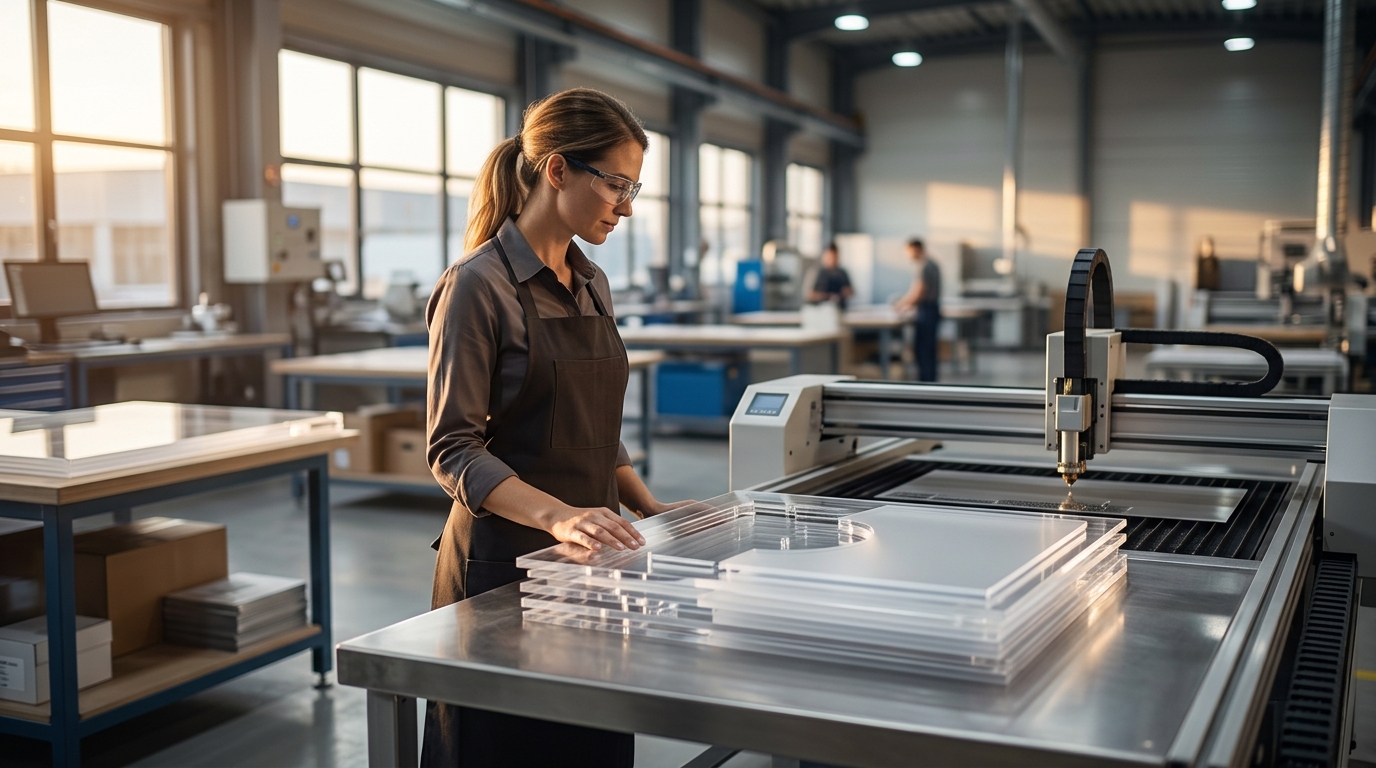
CO2 lasers deliver unmatched speed, edge quality, and material versatility for high-volume acrylic production. Kern Lasers designs these systems to handle continuous production schedules while maintaining the precision required for commercial signage and awards. This guide explores the specific operational advantages that make CO2 technology the industry standard for acrylic processing.
Speed and Throughput Efficiency
High-volume production demands consistent speed without sacrificing accuracy. CO2 lasers are exceptionally efficient at cutting acrylic because the material absorbs the specific wavelength of the CO2 beam. This absorption allows for rapid melting and vaporization, resulting in significantly faster cut speeds compared to other laser types when working with transparent plastics.
For manufacturers processing large batches of signage or display components, this speed translates directly into higher daily output. The OptiFlex system, for example, is engineered for high-performance large format cutting. It allows operators to process complex vector files quickly, reducing the time each job spends on the machine. This efficiency is critical for meeting tight production deadlines in the signage and awards industries.
Edge Quality and Finish
One of the most distinct benefits of CO2 laser cutting is the flame-polished edge it produces on acrylic. As the laser beam melts the material, the edges cool and solidify into a smooth, transparent finish. This natural polishing effect eliminates the need for secondary sanding or polishing steps, which saves labor costs and time.
The quality of the edge is a primary selling point for end customers in the commercial signage sector. A clean, glass-like edge enhances the aesthetic value of the final product. Kern Lasers utilizes interchangeable lens assemblies to optimize beam characteristics for different acrylic thicknesses. This ensures that whether you are cutting a thin sheet for a small tag or a thick block for a trophy base, the edge remains consistent and high-quality.
Material Versatility and Thickness
While acrylic is the primary focus, high-volume shops often handle a variety of materials. CO2 lasers are versatile enough to cut wood, textiles, foam, and light gauge metals alongside acrylic. This versatility allows a single machine to serve multiple product lines, maximizing the return on investment. For instance, a shop producing awards might cut acrylic bases, engrave wooden plaques, and cut foam tool kits on the same system.
Thickness capability is another key factor. CO2 lasers can handle a wide range of acrylic thicknesses, from thin sheets to thick blocks. The EcoFlex system offers an economical entry point for those starting with standard thicknesses, while larger systems can accommodate thicker materials. This range ensures that your equipment can grow with your business needs without requiring a complete replacement of your hardware.
Software and Automation Integration
Efficiency in high-volume cutting is heavily dependent on software integration. The KCAM Laser Software is developed in-house by Kern to streamline the workflow from design to cut. It features a built-in time estimator that calculates run times automatically, which is invaluable for quoting jobs accurately. This feature helps operators plan their production schedules and manage customer expectations effectively.
Additionally, KCAM allows for the management of multiple vector layers with independent parameters. This means you can set different power and speed settings for cutting and engraving within the same file. The software also includes a cut optimizer that arranges parts to minimize travel time and material waste. These automation features reduce the cognitive load on operators and minimize the potential for human error during long production runs.
Safety and Compliance Standards
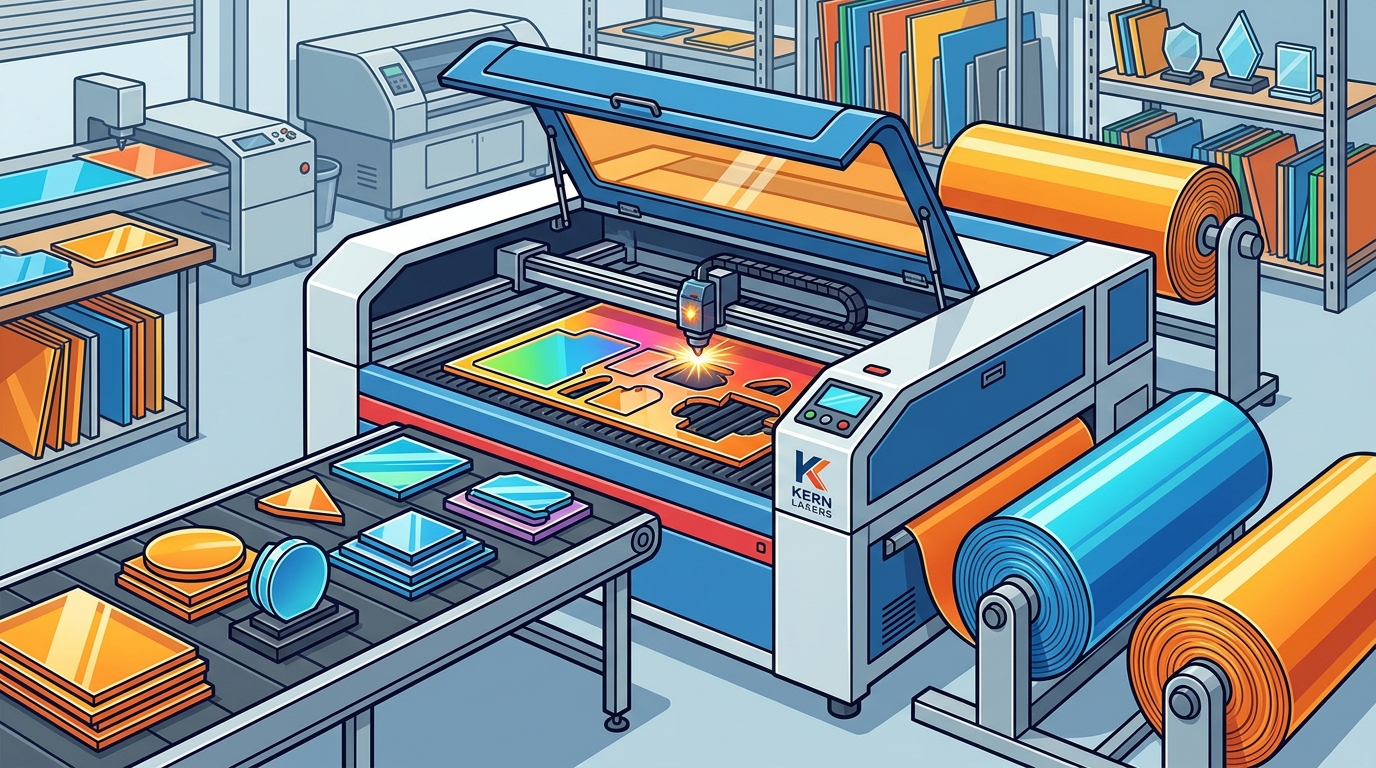
Operating high-power lasers requires strict adherence to safety protocols. Kern Lasers designs its systems to meet or exceed safety standards set by CDRH, UL, CE, and ANSI. For Class 4 laser systems, appointing a Laser Safety Officer is mandatory. This officer is responsible for defining control measures, such as assigning safety glasses and implementing safe operational procedures.
The Laser Safety page on the Kern website provides detailed information on these protocols. Enclosed systems like the LaserCELL offer an additional layer of protection by containing the laser beam within a sealed enclosure. This is particularly important in high-volume environments where multiple operators may be working in close proximity. Prioritizing safety not only protects your employees but also ensures compliance with local and federal regulations.
Key Takeaways
- CO2 lasers offer superior speed for acrylic cutting due to high material absorption.
- The flame-polished edge finish eliminates the need for secondary polishing steps.
- Interchangeable lenses allow for consistent quality across various acrylic thicknesses.
- KCAM software streamlines workflow with features like time estimation and cut optimization.
- Enclosed systems like the LaserCELL enhance operator safety in high-volume settings.
- CO2 lasers provide versatility to handle other materials like wood and foam.
- Adhering to ANSI and UL safety standards is critical for Class 4 laser operations.
Frequently Asked Questions
What is the maximum thickness of acrylic a CO2 laser can cut?
The maximum thickness depends on the laser power and the specific system configuration. Generally, high-power CO2 lasers can cut acrylic up to several inches thick, though cut speed decreases as thickness increases. Kern Lasers offers systems capable of handling a wide range of thicknesses to suit different production needs.
How does a CO2 laser compare to a fiber laser for acrylic?
CO2 lasers are the preferred choice for acrylic because the material absorbs the CO2 wavelength efficiently. Fiber lasers, which operate at a different wavelength, are not effective for cutting acrylic. Fiber lasers are better suited for metal cutting applications.
What software is required to operate a Kern laser system?
Kern laser systems use KCAM Laser Software, which is developed in-house. This software provides control over cutting parameters, file management, and automation features. It is designed to be user-friendly and integrates seamlessly with the hardware.
Is it necessary to have a Laser Safety Officer?
Yes, for Class 4 laser systems, a Laser Safety Officer must be appointed. This individual is responsible for monitoring safe usage and implementing control measures to protect employees from laser hazards.
Can CO2 lasers engrave as well as cut?
Yes, CO2 lasers are capable of both cutting and engraving. Engraving involves using lower power settings to mark the surface of the material without cutting through it. This allows for the creation of detailed text and images on acrylic and other materials.
What are the common applications for CO2 laser cut acrylic?
Common applications include commercial signage, awards and trophies, point-of-purchase displays, and interior design elements. The clean edge and transparency of laser-cut acrylic make it ideal for these aesthetic-focused products.
How does the flame-polished edge work?
The flame-polished edge is a natural result of the laser cutting process. As the laser melts the acrylic, the edges cool and solidify into a smooth, transparent finish. This process eliminates the need for manual polishing and results in a high-quality surface.
Conclusion
CO2 lasers remain the gold standard for high-volume acrylic cutting due to their speed, edge quality, and versatility. By leveraging systems like the OptiFlex and EcoFlex, manufacturers can achieve efficient production while maintaining the high standards required for commercial products. Kern Lasers provides the technology and support needed to integrate these systems into your workflow effectively. To explore how a CO2 laser can enhance your production capabilities, to discuss your specific requirements.