
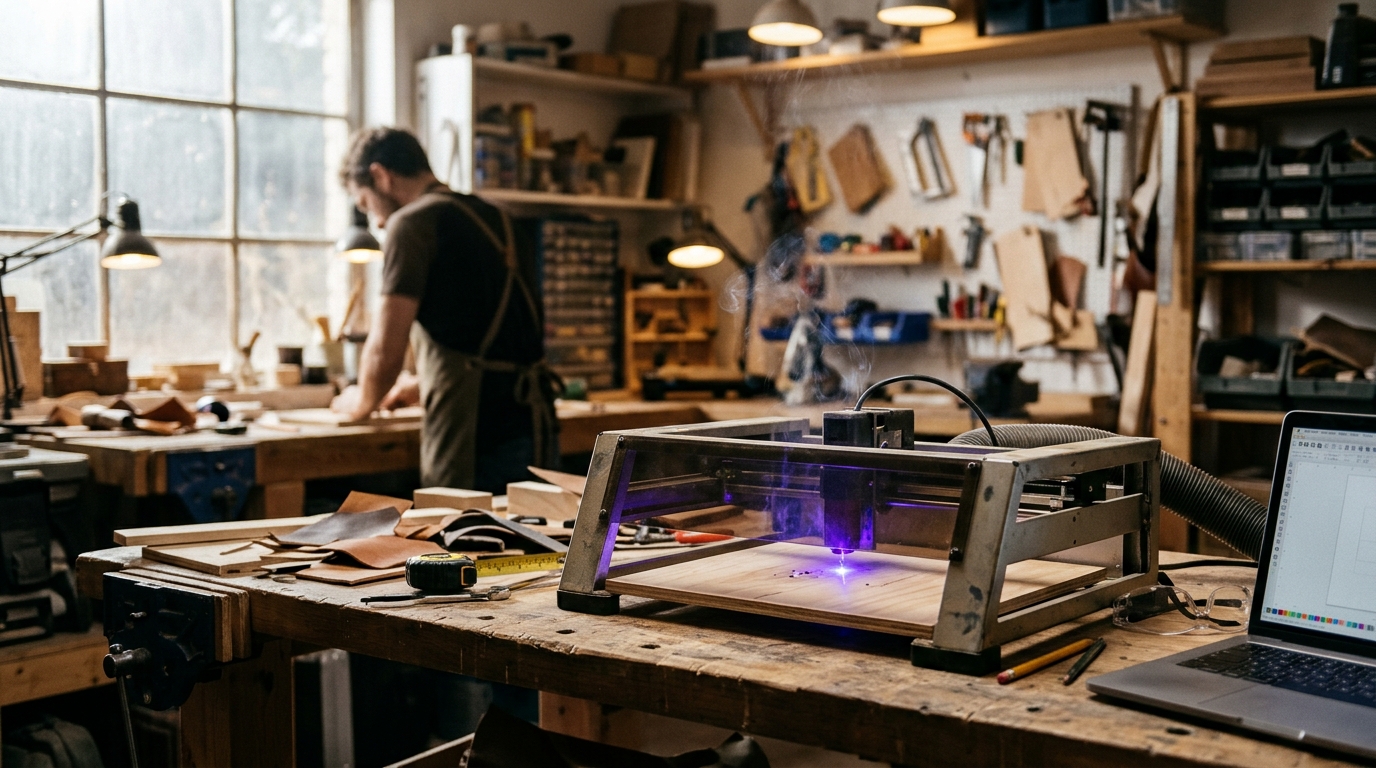
Compact diode lasers are small, affordable machines that use semiconductor diodes to generate a laser beam for cutting and engraving. They are popular in small workshops due to their low cost and compact footprint. However, they are generally limited to thin, non-metallic materials like wood, leather, and thin acrylic. For serious production work involving thicker materials or metals, a dedicated CO2 or fiber laser system is typically required.
What Are Compact Diode Lasers?
A compact diode laser is a laser system that uses a semiconductor diode as its light source, similar to the technology found in laser pointers but scaled up for industrial or hobbyist use. Unlike traditional CO2 lasers that use a gas mixture, diode lasers are solid-state devices that are smaller, lighter, and significantly less expensive to manufacture. This technology has democratized laser access, allowing hobbyists and small businesses to own a laser cutter without a massive capital investment.
The beam from a diode laser is typically in the visible red or near-infrared spectrum. While these lasers are excellent for engraving and marking, their cutting capability is constrained by the power output of the diode. Most consumer-grade diode lasers range from 10 watts to 100 watts. At these power levels, the beam can cut thin materials but struggles with anything thicker than a few millimeters. Understanding this fundamental difference in technology is the first step in determining if a diode laser fits your specific workshop needs.
Cutting Capabilities and Limitations
The primary limitation of a compact diode laser is its inability to cut thick or dense materials. A 50-watt diode laser, for example, can cut 3mm to 5mm of plywood or thin leather, but it will fail to cut through 10mm acrylic or any metal. The beam diameter is also larger than that of a focused CO2 laser, which results in a wider kerf and less precise edges on thicker materials. This makes diode lasers ideal for prototyping, jewelry making, and light-duty signage, but unsuitable for heavy fabrication.
When evaluating a diode laser for a small workshop, you must look at the specific wattage and the type of material you intend to process. If your business model relies on cutting thick acrylic for LED panels or stainless steel for nameplates, a diode laser is not the right tool. Instead, you should consider a system designed for those specific tasks. For instance, the Kern Micro laser system offers a compact footprint with the power of a CO2 laser, bridging the gap between small space constraints and serious cutting capability.
Space and Footprint Considerations
One of the biggest advantages of a compact diode laser is its size. These machines can often fit on a standard desk or a small workbench, making them perfect for workshops with limited square footage. They do not require the large ventilation systems or dedicated rooms that high-power industrial lasers often demand. This ease of integration allows small businesses to add laser capabilities without renovating their facility.
However, space is not the only factor to consider. You must also account for the material size the machine can handle. A compact diode laser might have a small working area, such as 8x8 inches or 12x12 inches. If you need to cut larger sheets of material, a compact diode laser will not suffice. In this case, a mid-size enclosed system like the Kern Studio laser provides a larger working area while still maintaining a relatively small footprint compared to large format machines.
Safety and Operational Requirements
Diode lasers are generally classified as Class 3B or Class 4, depending on the power output. This means they pose a significant eye hazard and require strict safety protocols. Operators must wear appropriate laser safety glasses and ensure that the workspace is secure to prevent accidental exposure. While the machines are smaller, the safety risks associated with high-power diodes are real and must be managed carefully.
Operational simplicity is another key factor. Diode lasers are often plug-and-play, requiring minimal setup and maintenance. In contrast, CO2 and fiber lasers require more complex maintenance, including lens cleaning and gas management. For a small workshop with limited technical staff, the low maintenance nature of a diode laser can be a significant advantage. However, if you are moving into production, the reliability and uptime of a professional system become more critical. Kern's laser safety resources provide detailed guidance on implementing safe operational procedures for any laser system.
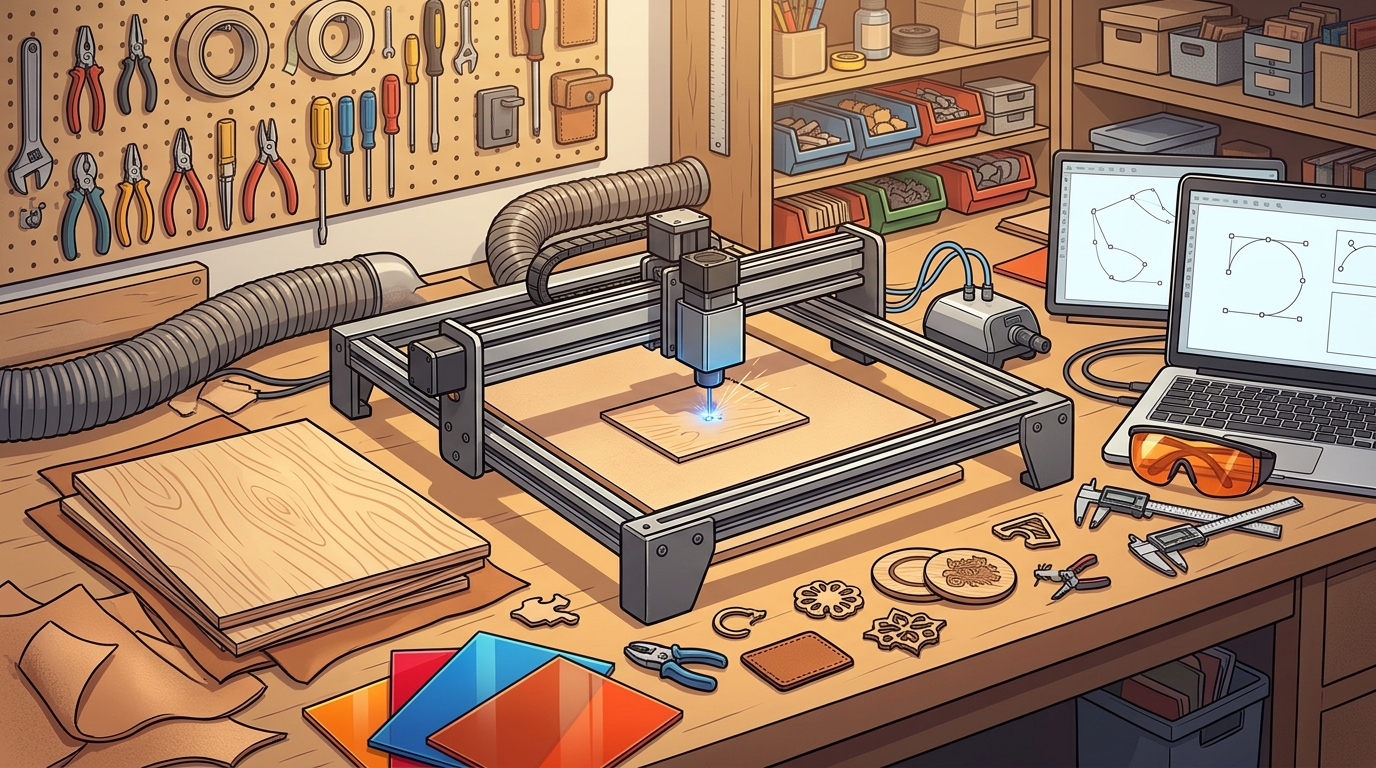
When to Choose a Dedicated Laser
There comes a point where a compact diode laser is no longer sufficient for your business needs. If you are receiving orders for thicker materials, metals, or larger formats, you need to upgrade to a dedicated laser system. CO2 lasers are the industry standard for cutting non-metals like acrylic, wood, and fabric. They offer higher power, better beam quality, and the ability to cut thicker materials with cleaner edges. Fiber lasers, on the other hand, are the go-to solution for metal cutting, offering high efficiency and speed for steel, aluminum, and brass.
Making the jump from a diode laser to a dedicated system is a significant investment, but it is often necessary for business growth. It allows you to take on higher-value jobs and expand your material capabilities. For example, if you are in the signage industry, the ability to cut thick acrylic and etch detailed designs is crucial. The Kern OptiFlex is a high-performance CO2 laser that can handle a wide range of materials and thicknesses, making it a versatile choice for growing businesses.
Key Takeaways
- Compact diode lasers are affordable and small, making them ideal for hobbyists and light-duty tasks.
- They are limited to thin, non-metallic materials and cannot cut metals or thick plastics.
- For serious production work, a CO2 or fiber laser is required to handle thicker materials and metals.
- Safety protocols are critical for all laser types, but diode lasers require specific eye protection.
- Consider your material list and order volume before choosing a laser type.
- Upgrading to a dedicated laser system can unlock new business opportunities and higher margins.
Frequently Asked Questions
Can a diode laser cut metal?
No, standard compact diode lasers cannot cut metal. They are designed for non-metallic materials like wood, leather, and thin acrylic. For metal cutting, you need a fiber laser or a high-power CO2 laser with specific metal cutting capabilities.
What is the maximum thickness a diode laser can cut?
The maximum thickness depends on the wattage of the laser. A 50-watt diode laser can typically cut up to 5mm of plywood or 3mm of acrylic. Higher wattage lasers can cut slightly thicker materials, but they still have significant limitations compared to CO2 lasers.
Are diode lasers safe to use in a small workshop?
Yes, if proper safety protocols are followed. You must use appropriate laser safety glasses, ensure the workspace is secure, and follow the manufacturer's guidelines. Diode lasers are Class 3B or Class 4, so they pose a real eye hazard.
How much does a compact diode laser cost?
Compact diode lasers are generally the most affordable type of laser cutter, with prices ranging from a few hundred to a few thousand dollars. This makes them accessible for hobbyists and small businesses with limited budgets.
Can I upgrade from a diode laser to a CO2 laser?
Yes, many businesses start with a diode laser for prototyping and then upgrade to a CO2 or fiber laser for production. This allows them to test the market and grow their capabilities as their business expands.
What materials can a diode laser engrave?
Diode lasers can engrave a wide variety of materials, including wood, leather, anodized aluminum, and glass. They are particularly good for detailed engraving on non-metallic surfaces.
Conclusion
Compact diode lasers are a great entry point into laser technology, offering affordability and convenience for small workshops. However, they are not a one-size-fits-all solution. If your business requires cutting thick materials or metals, you will need to look beyond diode technology. To discuss your specific needs and find the right laser system for your workshop, contact our team.