
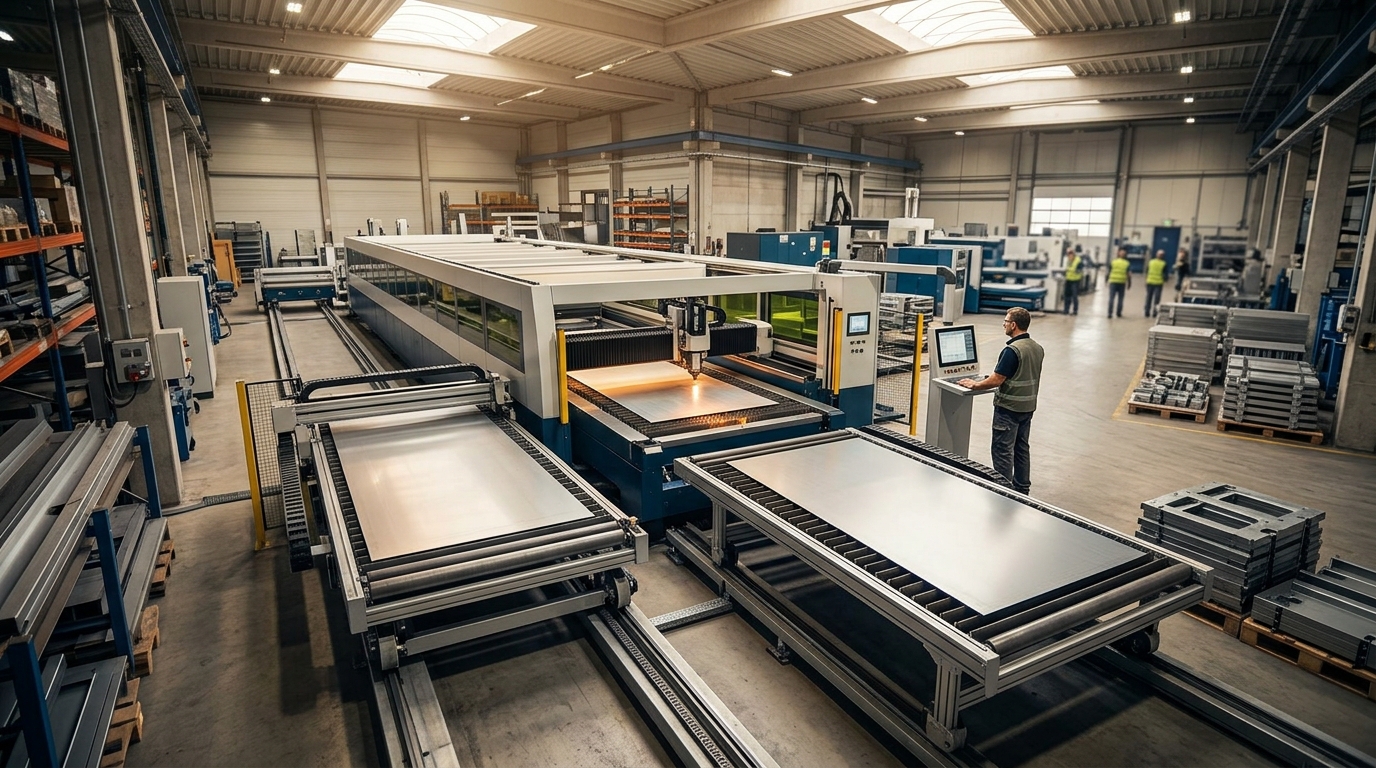
Automated material handling improves efficiency in high-volume laser production by minimizing machine downtime and eliminating manual loading bottlenecks. Systems like dual-table shuttles allow operators to prepare new materials while the laser processes the current job. This continuous workflow maximizes throughput and reduces labor costs for manufacturers. Kern Laser Systems integrates these features into its large-format equipment to support demanding production schedules.
Reducing Downtime with Dual-Table Systems
Machine downtime is the primary enemy of high-volume production. Every minute a laser sits idle waiting for a new sheet of material is lost revenue. Automated material handling systems address this by decoupling the loading process from the cutting process. When one table is being processed, the operator can load and secure the next material on the second table.
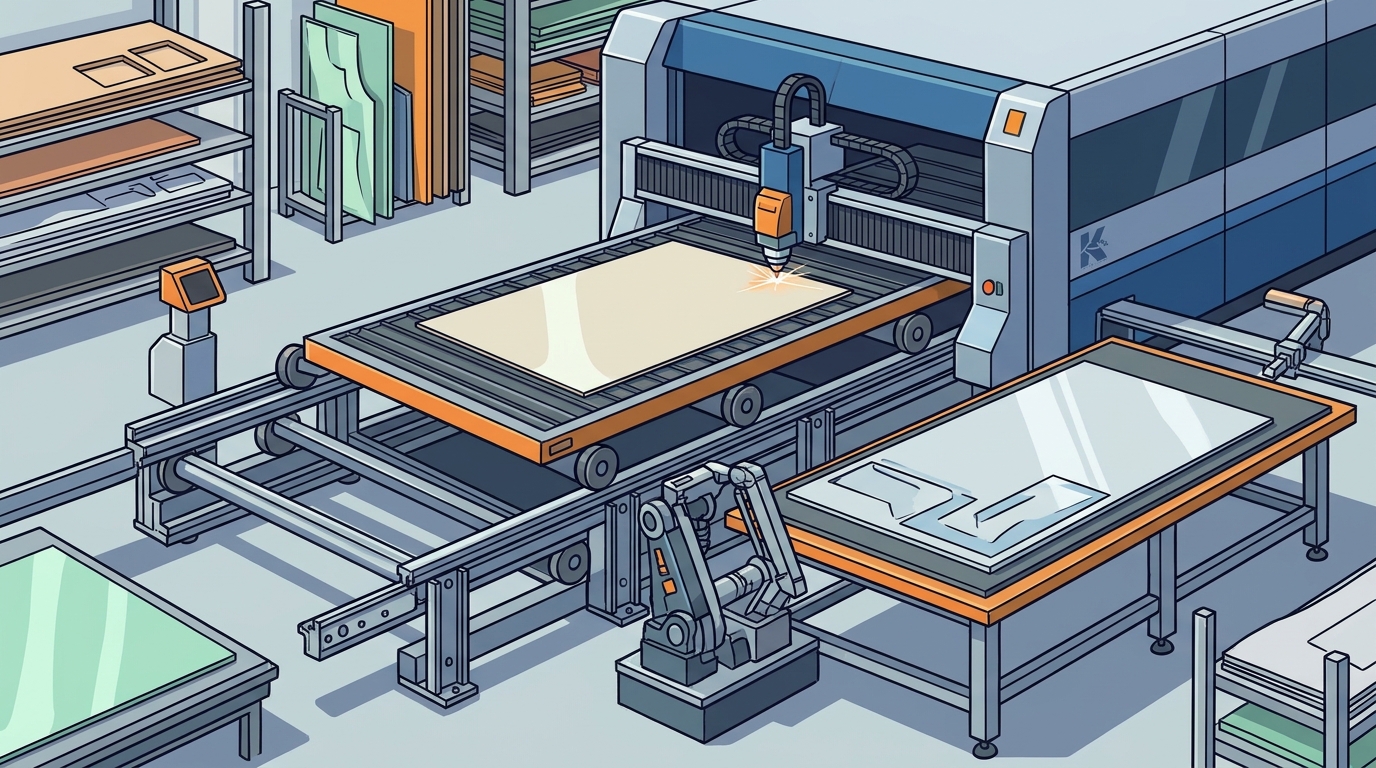
Kern Laser Systems introduced the OptiShuttle, a dual, interchangeable table system compatible with the OptiFlex. This design allows for the quick exchange of tables with a single button press. The result is a near-constant operation cycle. By minimizing the transition time between jobs, manufacturers can significantly increase the total number of parts produced per shift without extending operating hours.
Vacuum Hold-Down and Fume Extraction
Material stability is critical for precision cutting. Manual clamping is slow and often uneven, leading to material movement during high-speed cuts. Automated vacuum hold-down tables use a downdraft system to secure materials flat against the bed. This ensures consistent focus and cut quality across the entire work area. The vacuum system also plays a vital role in fume management.
During laser processing, vaporized material creates off-gases that can damage optics and harm operators. Integrated blower systems remove these fumes through the table and duct them outside or to a filtration unit. Kern’s systems feature improved downdraft vacuum tables that provide consistent hold-down and fume removal. This integrated approach protects the laser source and maintains a safe working environment, which is essential for long, unattended production runs.
Software Integration and Workflow Optimization
Hardware automation is only effective when paired with intelligent software control. The laser control software must coordinate the motion of the tables, the vacuum pumps, and the laser beam. Kern’s proprietary KCAM software provides operators with complete control over these parameters. It includes features like time estimators and cut optimizers that help plan efficient production schedules.
Advanced software allows for the automation of repetitive tasks. For example, the system can automatically adjust air pressure for different material types or manage pierce delays for metal cutting. This reduces the cognitive load on operators and minimizes human error. By streamlining the workflow from file preparation to part removal, software integration ensures that the hardware automation delivers its full potential in a high-volume environment.
Space Efficiency and Ergonomics
High-volume production often requires multiple machines, which can strain available floor space. Automated material handling systems are designed to maximize the utility of each machine footprint. Enclosed systems like the LaserCELL and FiberCELL offer safe, compact designs that can be placed in high-traffic areas. These systems feature access points on multiple sides, making part loading and maintenance convenient for operators.
Ergonomics is another key benefit. Manual handling of heavy or large sheets is physically demanding and can lead to worker fatigue or injury. Automated systems reduce the need for heavy lifting by using vacuum tables and shuttle mechanisms. This improves operator comfort and safety, which is particularly important for shifts that last eight hours or more. By reducing physical strain, manufacturers can maintain consistent productivity levels throughout the day.
Scalability and Future-Proofing
Key Takeaways
- Dual-table systems like the OptiShuttle minimize downtime by allowing simultaneous loading and cutting.
- Integrated vacuum hold-down tables ensure material stability and effective fume extraction.
- Software integration is essential for coordinating hardware automation and optimizing workflows.
- Enclosed systems improve safety and ergonomics, reducing physical strain on operators.
- Modular designs allow for scalability as production demands increase over time.
- Automated handling reduces labor costs and increases overall throughput in high-volume environments.
Frequently Asked Questions
What is a dual-table laser system?
A dual-table laser system is a machine equipped with two interchangeable work tables. This allows the operator to load one table while the laser processes the other, significantly reducing idle time.
How does vacuum hold-down improve cut quality?
Vacuum hold-down secures the material flat against the table, preventing movement during high-speed cuts. This stability ensures consistent focus and edge quality, which is critical for precision manufacturing.
Can automated handling be added to existing laser systems?
Depending on the model, some laser systems can be upgraded with automated handling features. Kern Laser Systems offers various configurations and optional packages that can enhance the capabilities of existing equipment.
What role does software play in automated material handling?
Software coordinates the movement of tables, vacuum pumps, and the laser beam. It ensures that all components work in sync, allowing for seamless transitions between jobs and efficient production scheduling.
Is automated material handling suitable for small businesses?
While high-volume production is the primary beneficiary, small businesses with consistent workloads can also benefit. Reduced downtime and improved ergonomics can lead to better productivity and lower labor costs, even at smaller scales.
Conclusion
Automated material handling is a critical component of modern high-volume laser production. By reducing downtime, improving safety, and optimizing workflows, these systems enable manufacturers to achieve greater efficiency and profitability. Kern Laser Systems provides a range of solutions, from the OptiFlex with its OptiShuttle to the enclosed LaserCELL, designed to meet the diverse needs of the industry. To explore how automated material handling can transform your production line, contact our team for a personalized consultation. Learn more: Contact Kern Laser Systems.