
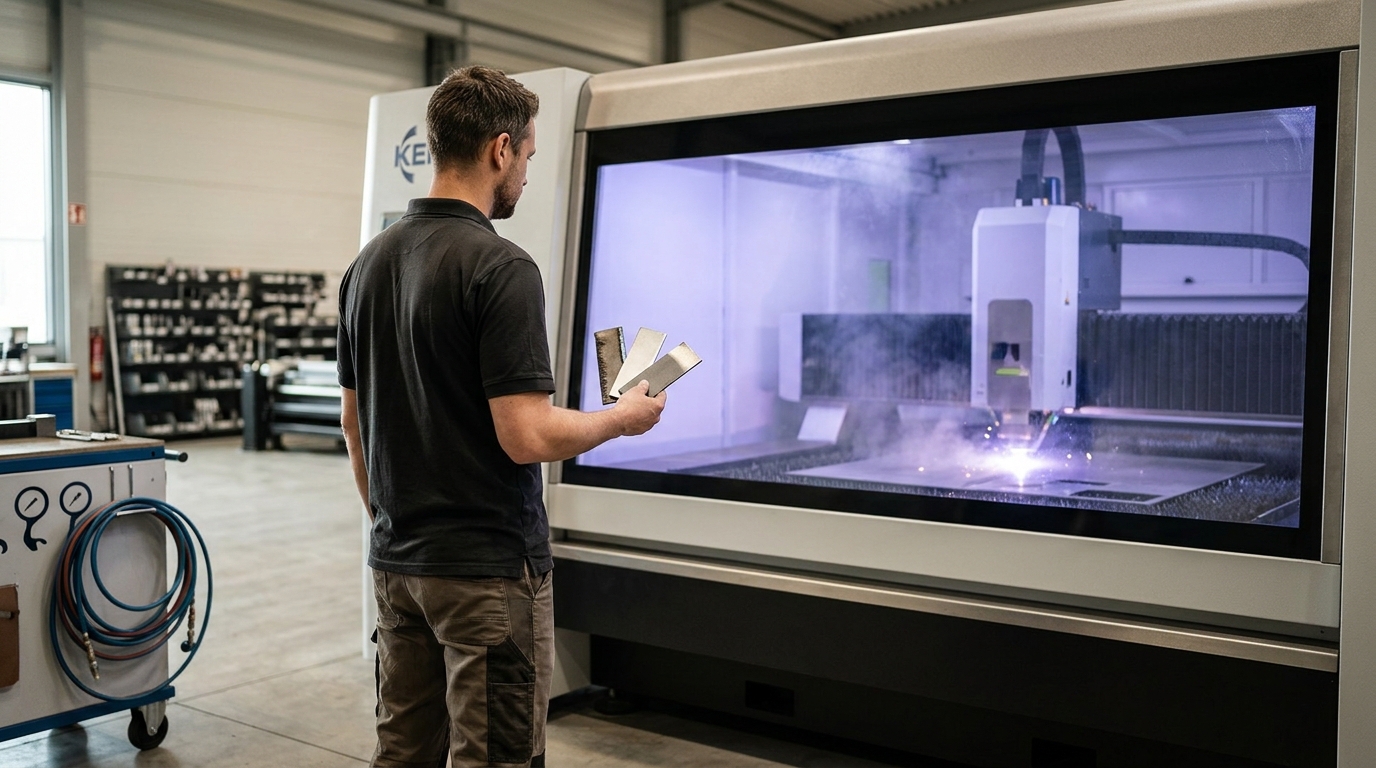
Assist gas is the pressurized gas directed at the laser beam during cutting. It clears molten material and prevents re-solidification. The choice between oxygen, nitrogen, and air directly determines cut edge quality, maximum cutting speed, and operational expense. Selecting the right gas is a critical balance between material compatibility and budget constraints.
The Mechanics of Assist Gas
Assist gas is a high-pressure stream of gas that accompanies the laser beam to the workpiece. Its primary function is to blow away the molten metal ejected from the kerf. Without this gas flow, the molten material would re-solidify on the cut edge, ruining the part. The pressure and flow rate must be calibrated to the material thickness and type.
In fiber laser systems, the gas nozzle is positioned extremely close to the material surface. This proximity requires precise control to avoid turbulence. Turbulence can cause the cut to wander or create dross. A stable, laminar flow ensures a clean, straight cut. The gas also helps cool the surrounding material, reducing the heat-affected zone.
Oxygen vs. Nitrogen: Quality Trade-offs
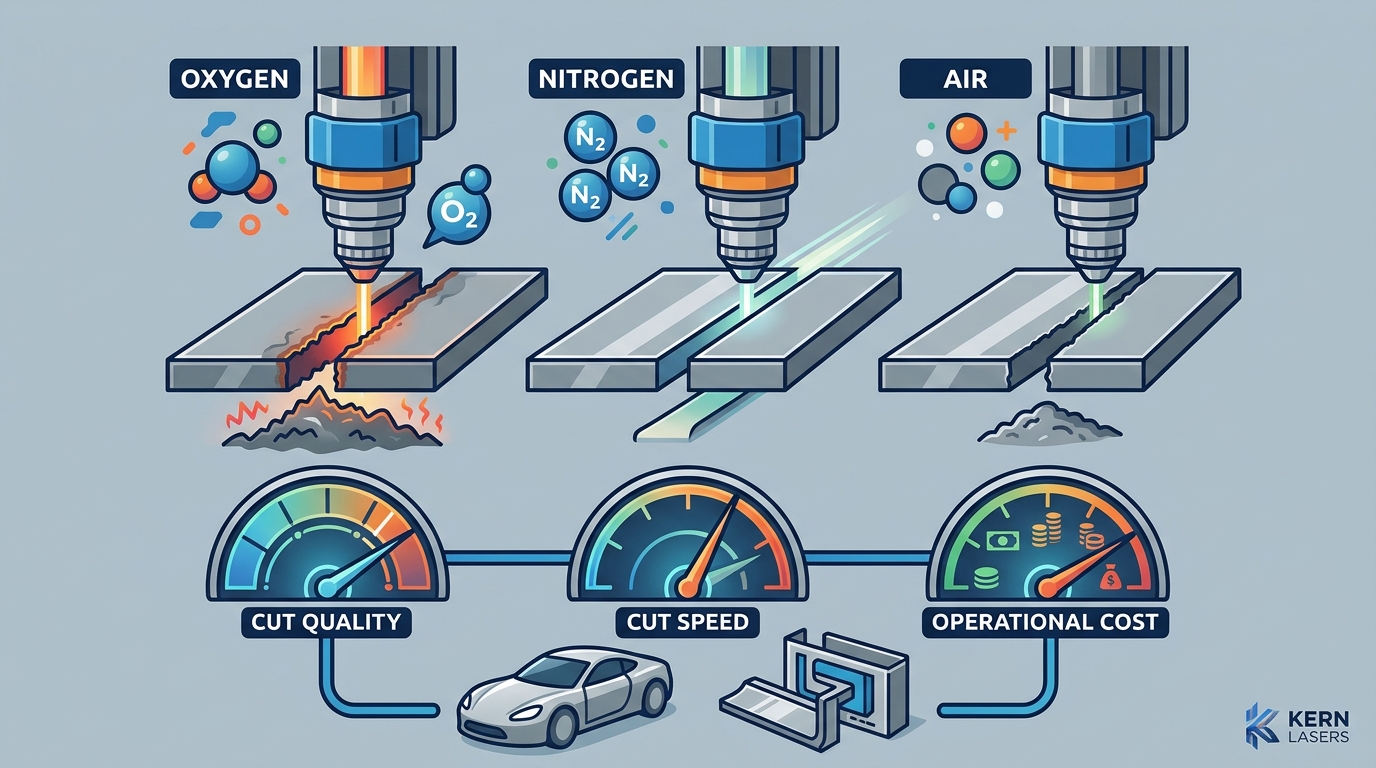
Oxygen is a reactive gas that supports combustion. When used with mild steel, it creates an exothermic reaction that adds energy to the cut. This allows for faster cutting speeds and the ability to cut thicker materials. However, the reaction produces an oxide layer on the cut edge. This oxide layer is often dark and may require secondary finishing.
Nitrogen is an inert gas that does not react with the metal. It provides a clean, oxide-free cut edge. This is essential for materials like stainless steel and aluminum where surface finish is critical. Nitrogen cutting is generally slower than oxygen cutting for mild steel. The trade-off is a higher quality finish that often eliminates the need for post-processing. For applications requiring a polished look, nitrogen is the standard choice.
Operational Cost Analysis
The cost of assist gas is a major component of the total cost of ownership. Oxygen is typically the least expensive gas to produce and purchase. It is widely available and has a low cost per cubic meter. Nitrogen is significantly more expensive due to the energy required to separate it from air. The price difference can be substantial, impacting the profitability of high-volume production runs.
Air is a middle-ground option that is cheaper than nitrogen but more expensive than oxygen. It is a mixture of nitrogen and oxygen. Air cutting produces a cut edge with some oxidation, similar to oxygen but less intense. It is often used for mild steel where a perfect finish is not required. The choice of gas should be based on the value of the finished part. If the part is high-value, the cost of nitrogen is justified by the reduced finishing time.
Material Specific Gas Requirements
Mild steel is the most common material cut with oxygen. The exothermic reaction allows for high speeds and thick cuts. For thin mild steel, nitrogen may be preferred if a clean edge is needed. Stainless steel must be cut with nitrogen or argon. Oxygen causes excessive oxidation and discoloration on stainless steel. This can compromise the structural integrity and appearance of the part.
Aluminum is best cut with nitrogen or argon. Oxygen is not suitable for aluminum as it creates a thick oxide layer. The high reflectivity of aluminum also requires specific laser settings. Copper is similar to aluminum in that it requires an inert gas. The choice of gas is dictated by the material's chemical properties. Understanding these requirements is essential for achieving consistent quality.
System Integration and Safety
Integrating assist gas into a fiber laser system requires careful planning. The gas supply must be regulated to maintain consistent pressure. Fluctuations in pressure can lead to inconsistent cut quality. A reliable gas supply system is critical for production environments. Safety is also a major concern when using oxygen. Oxygen supports combustion and can create fire hazards if not handled properly.
Kern Laser Systems offers fiber laser systems designed to work with various assist gases. Their FiberCELL is a high-performance enclosed metal cutting system. It is ideal for fabrication of mild steel, stainless steel, aluminum, brass, and copper. The system is designed to handle the pressures and flows required for different gases. For those looking to test their specific material, Kern offers a Test Your Material service. This allows you to see how your material responds to the laser capabilities before making a purchase.
Key Takeaways
- Assist gas clears molten metal and prevents re-solidification on the cut edge.
- Oxygen allows faster cutting of mild steel but creates an oxide layer.
- Nitrogen provides a clean, oxide-free finish but is more expensive.
- Air is a cost-effective middle ground for mild steel applications.
- Stainless steel and aluminum require inert gases like nitrogen or argon.
- Gas pressure and flow rate must be calibrated for consistent quality.
- Consider the total cost of ownership, including gas and finishing time.
Frequently Asked Questions
What is the main difference between oxygen and nitrogen cutting?
Oxygen reacts with the metal to create heat, allowing faster cuts but leaving an oxide layer. Nitrogen is inert, providing a clean finish but at a slower speed and higher cost.
Can I use air for cutting stainless steel?
Air is not recommended for stainless steel as it contains oxygen, which causes oxidation and discoloration. Nitrogen or argon should be used for stainless steel.
How does gas pressure affect cut quality?
Pressure must be sufficient to clear molten metal. Too low pressure causes dross, while too high pressure can cause turbulence and a wandering cut.
Is nitrogen worth the extra cost?
If the part requires a clean, oxide-free finish or if post-processing is expensive, nitrogen is often worth the cost. For rough cuts, oxygen or air may be sufficient.
What gas should I use for aluminum?
Aluminum should be cut with nitrogen or argon. Oxygen is not suitable as it creates a thick oxide layer that is difficult to remove.
Does Kern Laser Systems provide gas supply options?
Kern Laser Systems designs their systems to work with standard industrial gas supplies. They can provide guidance on the appropriate gas for your specific materials and applications.
Conclusion
Selecting the right assist gas is a fundamental decision in fiber laser cutting. It impacts quality, speed, and cost. Understanding the properties of oxygen, nitrogen, and air allows you to make informed choices. For more information on how to choose the right system for your needs, contact Kern Laser Systems today. Learn more: Contact Kern Laser Systems.