
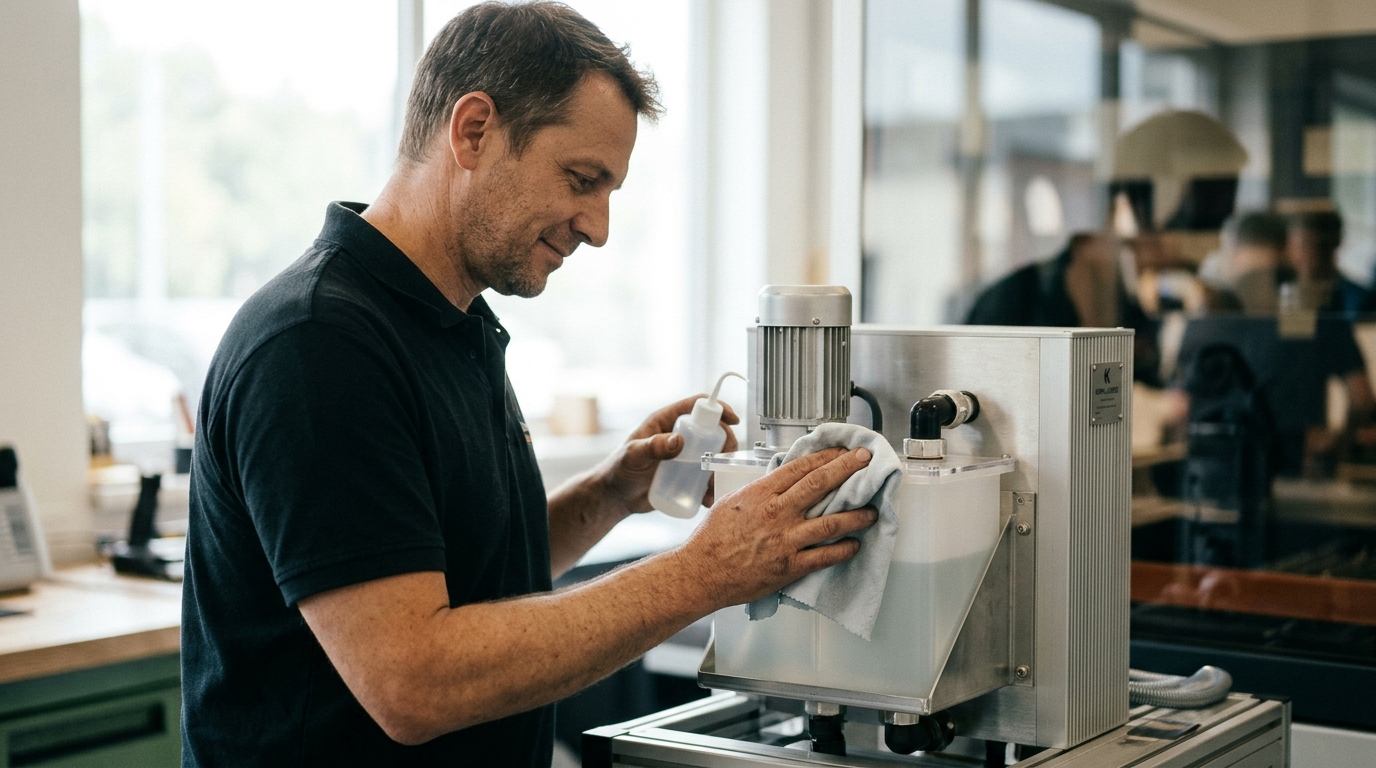
Keeping a laser cutter's cooling system running efficiently requires consistent monitoring of water quality, temperature, and flow rates. Kern Lasers emphasizes that a well-maintained chiller prevents thermal drift, protects the laser source, and ensures consistent cut quality. By following a structured maintenance routine, operators can extend equipment life and avoid costly downtime.
Understanding the Role of the Chiller
A laser chiller is a closed-loop refrigeration system that removes excess heat generated by the laser source and optics. In high-performance systems like those from Kern Lasers, the chiller works in tandem with the laser resonator to maintain stable operating temperatures. Without proper cooling, the laser beam can drift, leading to inconsistent cuts and potential damage to internal components. Understanding this relationship is the first step toward effective maintenance.
Thermal Stability and Beam Quality
Thermal stability is critical for maintaining beam quality. When the cooling system operates within its designed parameters, the laser source remains at a constant temperature, ensuring that the beam stays focused and powerful. Fluctuations in water temperature can cause the beam to expand or contract, resulting in wider kerf widths and reduced precision. Operators should monitor the chiller's temperature display regularly to ensure it remains within the manufacturer's recommended range.
Water Quality and Chemical Management
Water quality is the most significant factor in cooling system longevity. Tap water contains minerals and impurities that can lead to scale buildup, corrosion, and biological growth. Kern Lasers recommends using distilled or deionized water mixed with a specific laser coolant additive. This mixture inhibits corrosion and prevents the growth of algae and bacteria, which can clog filters and reduce heat transfer efficiency. Regular testing of the coolant's pH and conductivity levels is essential to maintain optimal water chemistry.
Preventing Scale and Corrosion
Scale buildup is a common issue in cooling systems that use untreated water. Mineral deposits can accumulate on the chiller's heat exchanger, reducing its ability to dissipate heat. Corrosion, on the other hand, can damage the internal tubing and pump components. By using the correct coolant additive and flushing the system periodically, operators can prevent these issues. A clean cooling system ensures that the laser source operates at peak efficiency, extending its operational life.
Routine Inspection and Cleaning
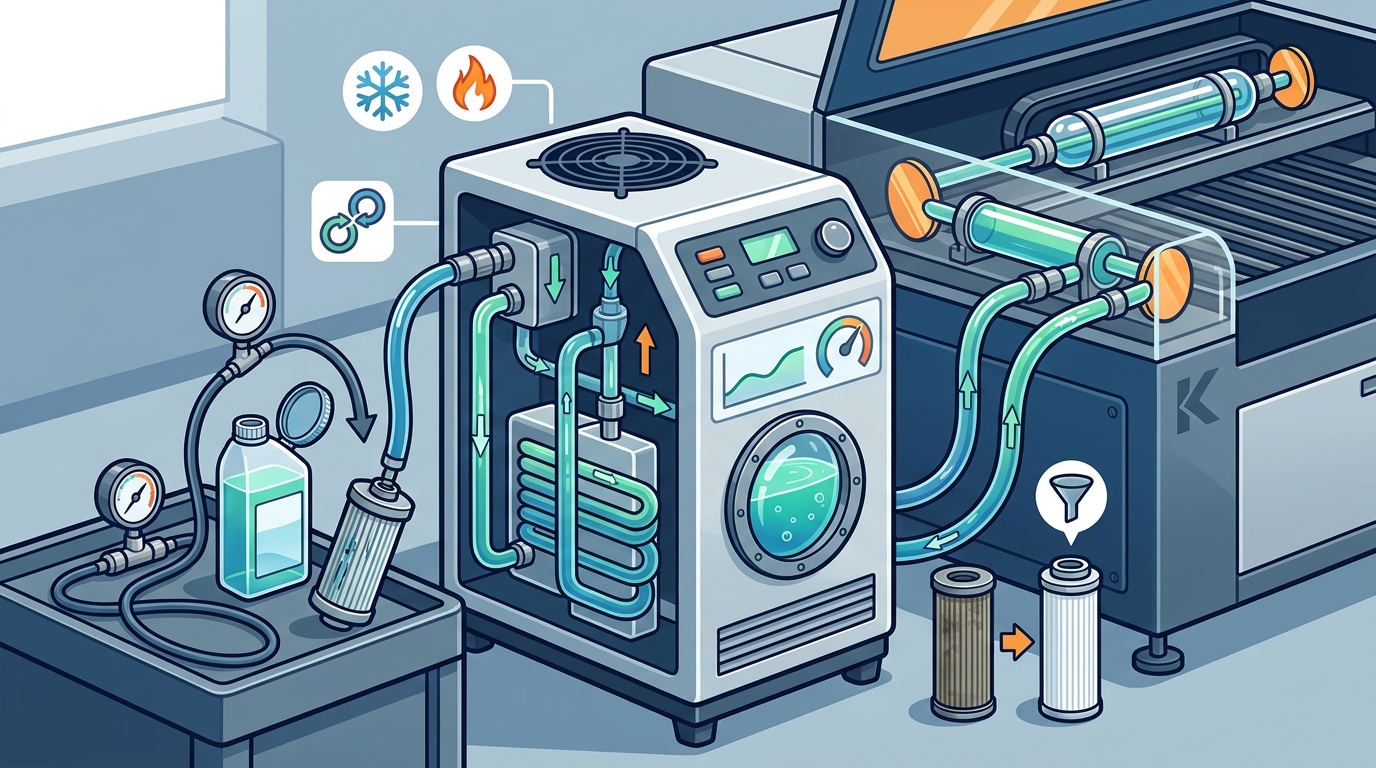
Routine inspection is a key component of an efficient cooling system maintenance plan. Operators should visually inspect the chiller, hoses, and connections for signs of leaks, wear, or damage. Checking the water level in the chiller's reservoir is a simple but important task that should be performed daily. Low water levels can cause the pump to run dry, leading to overheating and potential failure. Additionally, cleaning the chiller's air filter and condenser coils ensures that the system can dissipate heat effectively.
Filter Maintenance and Replacement
Filters play a crucial role in maintaining water quality by trapping debris and contaminants. Over time, filters become clogged, reducing water flow and increasing pressure on the pump. Kern Lasers advises replacing filters according to the manufacturer's schedule or when a pressure drop is detected. A clogged filter can lead to reduced cooling capacity, causing the laser source to overheat. Regular filter maintenance ensures consistent water flow and protects the chiller's internal components.
Monitoring Temperature and Flow Rates
Monitoring temperature and flow rates provides real-time data on the cooling system's performance. Most modern chillers, including those used in Kern Lasers systems, feature digital displays that show water temperature and flow rate. Operators should record these readings daily to establish a baseline and detect any deviations. A sudden increase in temperature or a decrease in flow rate can indicate a problem, such as a clogged filter or a failing pump. Early detection allows for timely intervention, preventing minor issues from becoming major failures.
Interpreting Diagnostic Alerts
Many laser systems include diagnostic alerts that notify operators of potential cooling issues. These alerts can indicate high temperature, low water level, or low flow rate. Understanding what these alerts mean is essential for responding quickly and effectively. For example, a high temperature alert may indicate that the chiller is struggling to remove heat, possibly due to a clogged condenser or a failing compressor. Addressing these alerts promptly ensures that the laser system continues to operate safely and efficiently.
Long-Term Maintenance and System Flushing
Long-term maintenance involves periodic flushing and replacement of the coolant. Over time, even with proper water quality management, contaminants can accumulate in the system. Flushing the cooling system removes these contaminants and restores the chiller's efficiency. Kern Lasers recommends flushing the system annually or as specified by the manufacturer. During the flush, the old coolant is drained, and the system is cleaned with a specialized solution before being refilled with fresh coolant. This process ensures that the cooling system remains in optimal condition for years to come.
Seasonal Adjustments and Environmental Factors
Environmental factors, such as ambient temperature and humidity, can affect the cooling system's performance. In hot and humid environments, the chiller may work harder to maintain the desired water temperature. Operators should consider seasonal adjustments, such as ensuring adequate ventilation around the chiller and cleaning the condenser coils more frequently. By accounting for environmental factors, operators can maintain consistent cooling performance throughout the year.
Key Takeaways
- Use distilled or deionized water with a laser coolant additive to prevent scale and corrosion.
- Monitor water temperature and flow rates daily to detect deviations from baseline readings.
- Inspect hoses, connections, and the chiller reservoir for leaks and low water levels.
- Replace filters according to the manufacturer's schedule to maintain consistent water flow.
- Flush the cooling system annually to remove accumulated contaminants and restore efficiency.
- Respond promptly to diagnostic alerts to prevent minor issues from becoming major failures.
- Consider environmental factors and adjust ventilation and cleaning schedules seasonally.
Frequently Asked Questions
How often should I change the water in my laser chiller?
The frequency of water changes depends on usage and water quality, but Kern Lasers recommends flushing the system annually. For high-volume operations, more frequent changes may be necessary to maintain optimal water chemistry and prevent contamination.
What type of water should I use in my laser cooling system?
Always use distilled or deionized water mixed with a laser coolant additive. Tap water contains minerals that can cause scale buildup and corrosion, leading to reduced cooling efficiency and potential equipment damage.
How can I tell if my chiller is not working properly?
Signs of a malfunctioning chiller include high temperature alerts, low water flow rates, and unusual noises. Regular monitoring of temperature and flow rates can help detect these issues early, allowing for timely maintenance.
Do I need to clean the chiller's air filter?
Yes, cleaning the air filter and condenser coils is essential for maintaining cooling efficiency. A clogged filter can reduce airflow, causing the chiller to overwork and potentially overheat the laser source.
What is the role of the coolant additive?
The coolant additive inhibits corrosion, prevents biological growth, and enhances heat transfer. It is a critical component of the cooling system, ensuring that the water remains clean and effective at removing heat from the laser source.
How does ambient temperature affect my laser cooling system?
Higher ambient temperatures can reduce the chiller's efficiency, causing it to work harder to maintain the desired water temperature. Ensuring adequate ventilation and cleaning the condenser coils more frequently in hot environments can help maintain consistent performance.
Can I use tap water if I flush the system regularly?
No, tap water should never be used in a laser cooling system, even with regular flushing. The minerals in tap water can cause scale buildup and corrosion, which can damage the chiller and reduce its lifespan. Always use distilled or deionized water with a coolant additive.
Conclusion
Maintaining an efficient cooling system is essential for the longevity and performance of your laser cutter. By following a structured maintenance plan that includes water quality management, routine inspections, and regular flushing, you can ensure that your equipment operates at peak efficiency. Kern Lasers provides high-quality laser systems designed with reliability in mind, and proper maintenance is key to getting the most out of your investment. For more information on cooling system maintenance and laser care, visit the Kern Lasers technical support page or contact our team for personalized advice.