
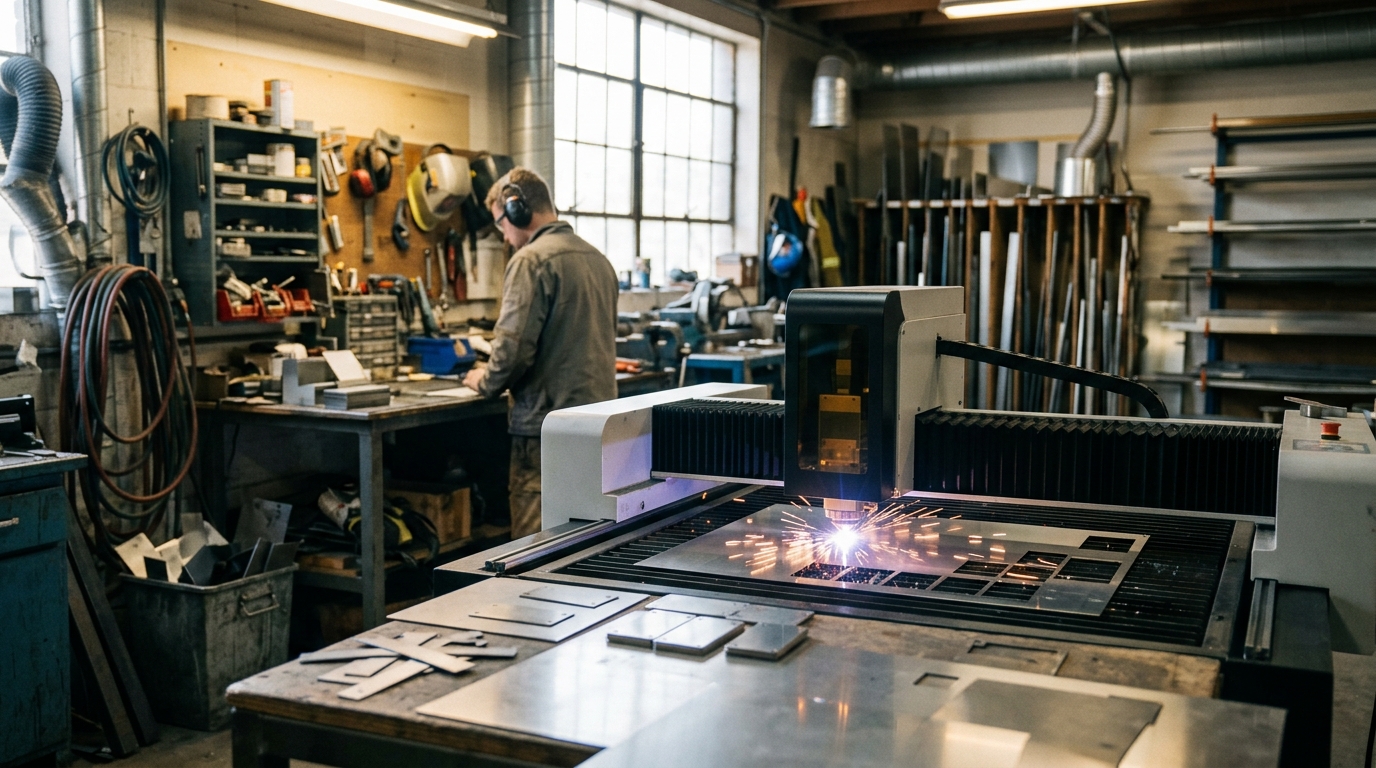
Yes, a small sign shop can realistically afford a laser that cuts stainless steel nameplates reliably. The key is selecting a fiber laser system designed for metal fabrication rather than a standard CO2 laser. Fiber lasers offer the necessary power and efficiency to process stainless steel at a cost-effective price point for small businesses. This approach ensures high-quality, durable nameplates without the prohibitive expense of heavy industrial machinery.
Fiber Lasers Are the Standard for Metal
Many small shops assume that CO2 lasers are the only option for cutting metal. This is a common misconception that leads to poor results and wasted capital. Fiber laser cutting is a process that uses a glass fiber optic cable to transmit the laser beam to the workpiece. Unlike CO2 lasers, which are better suited for non-metals like wood and acrylic, fiber lasers are specifically engineered to cut metals like stainless steel, mild steel, and aluminum with high speed and precision.
The efficiency of fiber lasers is a major factor in their affordability for small shops. They consume less electricity and require less maintenance than CO2 systems. This lower operating cost allows a small business to recoup its initial investment faster. For a shop focused on nameplates, the ability to cut thin stainless steel sheets quickly is the primary driver of profitability.
Reliability in Stainless Steel Processing
Reliability is not just about the machine turning on; it is about consistent cut quality. Stainless steel is a reflective material that can be challenging for some laser systems. A reliable system includes features like an automatic focusing height follower. This technology adjusts the nozzle position to maintain a constant focus point, ensuring clean edges even if the material thickness varies slightly.
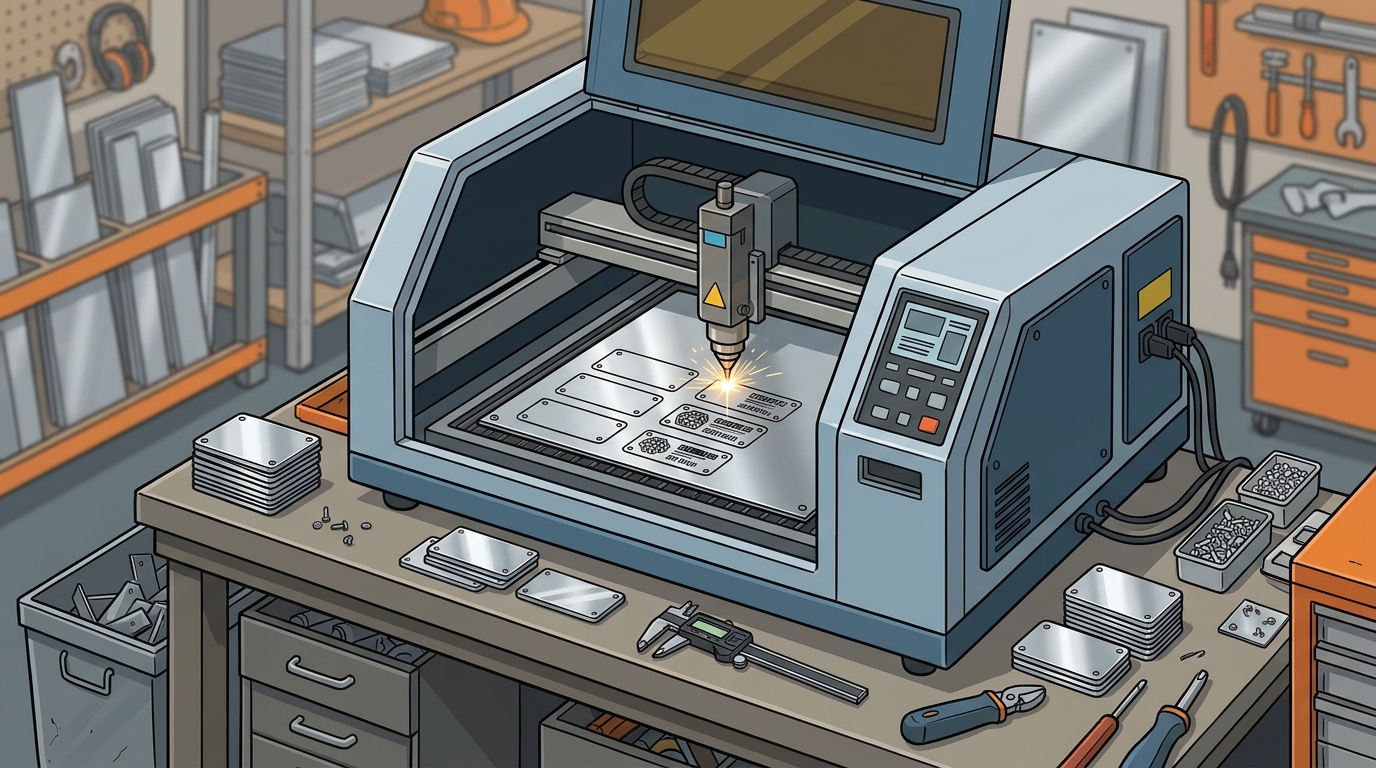
Kern Laser Systems provides the FiberCELL, a high-performance, Class 2 enclosed metal cutting system. This model is ideal for the fabrication of mild steel, stainless steel, aluminum, brass, and copper. The enclosed design meets safety standards while protecting the operator and the machine from debris. For a small shop, this level of integrated safety and precision is essential for maintaining a professional reputation.
Realistic Budgeting for Small Businesses
The term "affordable" is relative, but it generally means a machine that fits within a small business's capital budget without requiring massive financing. Entry-level fiber lasers have become more accessible in recent years. However, the total cost of ownership includes more than just the sticker price. You must consider the cost of assist gases, such as nitrogen or oxygen, which are required for cutting stainless steel.
When evaluating a machine, look at the maximum cutting thickness. For nameplates, you typically work with sheets ranging from 0.020 inches to 0.125 inches. A laser that can cut 0.25 inches of stainless steel provides future-proofing for the business. Kern offers a range of systems, including the FiberCELL, which balances performance with a manageable footprint for smaller facilities.
Software and Workflow Integration
Hardware is only half the equation. The software you use to control the laser determines how easily you can create complex nameplate designs. Laser control software is a program that translates vector files into machine commands. It allows operators to adjust power, speed, and frequency for different materials. Without robust software, even the best laser can produce inconsistent results.
Kern’s KCAM Laser Software is developed in-house and is designed for ease of use. It features a built-in time estimator, which helps you quote jobs accurately. This is a critical feature for small shops that need to manage their time and resources efficiently. The software also supports multiple vector layers, allowing you to separate cutting and engraving operations within a single file. This streamlines the workflow from design to finished product.
Support and Long-Term Value
Buying a laser is a long-term commitment. The support you receive from the manufacturer can make or break your business. A reliable manufacturer provides technical support, training, and access to parts. Kern Laser Systems has been in business since 1982, providing decades of experience in the laser industry. Their team offers technical support and resources to help customers get the most out of their equipment.
For small shops, the ability to test materials before buying is invaluable. Kern offers a Test Your Material service where you can send in your specific stainless steel samples. They will process the material and show you exactly how it responds to their lasers. This removes the guesswork from the purchasing decision and ensures that the machine you buy can handle your specific needs.
Key Takeaways
- Fiber lasers are the preferred technology for cutting stainless steel nameplates due to their efficiency and precision.
- CO2 lasers are generally not suitable for reliable stainless steel cutting and should be avoided for this specific application.
- Look for features like automatic focusing and enclosed safety designs to ensure consistent quality and operator safety.
- Software capabilities, such as time estimators and layer management, are crucial for efficient small shop operations.
- Testing your specific material samples before purchase can validate the machine's capabilities and reduce risk.
- Long-term support and a proven track record from the manufacturer are essential for small business sustainability.
Frequently Asked Questions
Can a CO2 laser cut stainless steel?
While high-power CO2 lasers can cut thin stainless steel, they are not the ideal choice. Fiber lasers are significantly more efficient and produce cleaner cuts on reflective metals. For a shop focused on nameplates, a fiber laser is the standard recommendation.
What thickness of stainless steel can a small shop laser cut?
Most entry-level fiber lasers can cut stainless steel up to 0.25 inches or 6mm. For nameplates, which are typically thinner, this provides ample capability. The exact thickness depends on the wattage of the laser and the type of assist gas used.
Is it safe to operate a fiber laser in a small shop?
Yes, provided the machine is Class 2 enclosed. Enclosed systems contain the laser beam and fumes, protecting the operator. Kern’s FiberCELL is a Class 2 system designed for safe operation in various environments.
How much does a fiber laser cost?
Prices vary based on wattage and features. Entry-level systems are more affordable than heavy industrial machines. To get an accurate quote for your specific needs, you can request a quote from a manufacturer.
Do I need special software to cut nameplates?
You need vector-based software to create the designs. Most laser manufacturers provide control software that works with common design programs. Kern’s KCAM software integrates with popular design tools to streamline the process.
Conclusion
Small sign shops can absolutely afford reliable stainless steel cutting capabilities. By choosing a fiber laser system, you ensure the precision and efficiency needed for high-quality nameplates. Kern Laser Systems offers solutions like the FiberCELL that are designed for this exact application. To see how your specific materials perform, consider using their testing service or contacting their team for a personalized consultation. Learn more: Contact Kern Laser Systems.