
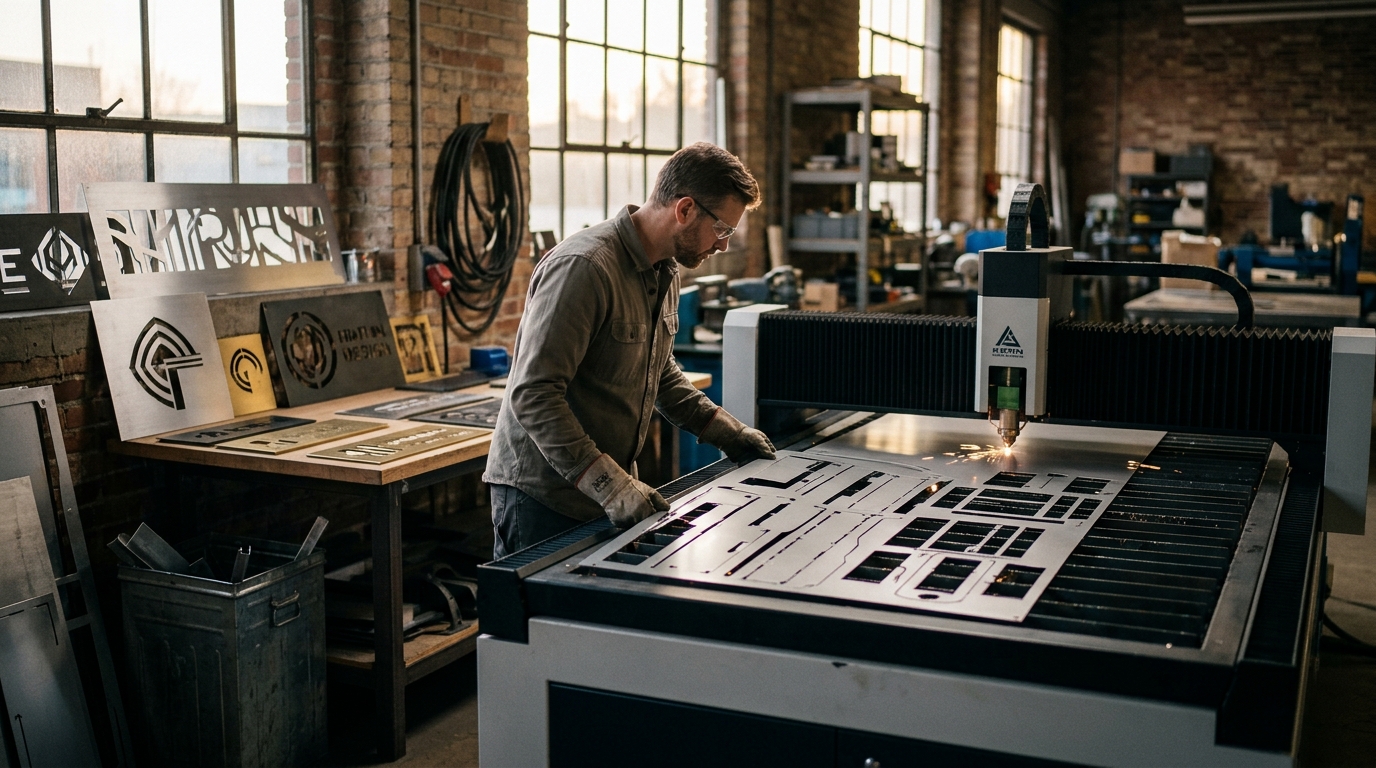
For metal signs and nameplates, a fiber laser cutter is the primary choice for most manufacturers. It offers the speed and precision required for thin sheet metals like stainless steel, aluminum, and brass. This guide covers the specific laser technologies, material capabilities, and operational considerations for producing high-quality metal identification products.
Fiber Laser Cutters
A fiber laser cutter is a machine that uses a laser source based on a doped glass fiber to generate a high-energy beam. This technology is the industry standard for cutting reflective metals. Unlike CO2 lasers, which use a gas mixture, fiber lasers are more efficient and require less maintenance. They are particularly effective for the fabrication of metal signs and nameplates because they can cut thin sheets with high speed and minimal heat-affected zones.
Why Fiber Lasers Dominate Metal Fabrication
Fiber lasers operate at a wavelength that is highly absorbed by metals. This absorption allows the beam to melt and vaporize the material quickly. For nameplate production, this efficiency translates to lower cost per part. The beam quality of a fiber laser is also superior, allowing for finer detail in intricate designs. This makes it ideal for both the cutting of the outline and the engraving of text or logos on the metal surface.
Enclosed Systems and Safety
Safety is a critical factor when working with high-power lasers. Many modern fiber laser systems, such as the FiberCELL from Kern Laser Systems, are enclosed Class 2 machines. This design protects operators from stray light and fumes. The enclosure also helps maintain a clean working environment, which is essential for producing high-quality signage. Using an enclosed system ensures compliance with safety standards while allowing for continuous production.
Metal Materials: Steel, Aluminum, and Brass
Choosing the right metal is as important as choosing the right laser. The three most common materials for metal signs and nameplates are mild steel, aluminum, and brass. Each material has unique properties that affect how it interacts with the laser beam. Understanding these differences helps manufacturers optimize their cutting and engraving parameters.
Steel and Stainless Steel
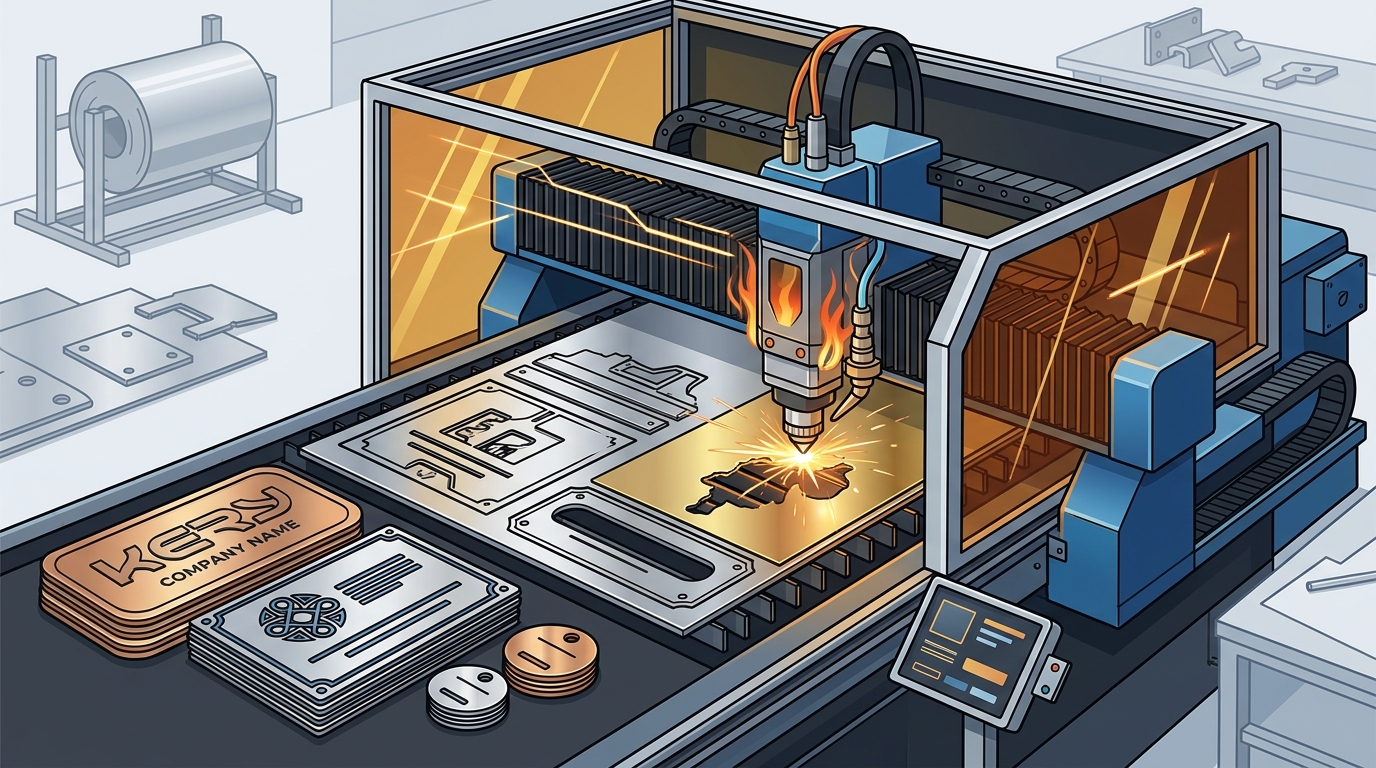
Steel is a versatile material used for a wide range of signage applications. Mild steel is cost-effective and easy to cut, making it suitable for large format signs. Stainless steel offers superior corrosion resistance and a premium finish. It is often used for outdoor signage and high-end nameplates. Fiber lasers can cut both types of steel with ease, though stainless steel may require slightly higher power settings to achieve a clean cut.
Aluminum and Brass
Aluminum is lightweight and resistant to corrosion, making it a popular choice for architectural and industrial signage. It reflects a significant amount of laser energy, which can be challenging for some laser types. However, fiber lasers handle aluminum effectively due to their high power density. Brass is known for its aesthetic appeal and is often used for decorative nameplates and awards. It cuts cleanly and engraves with a high contrast, providing a professional look.
| Material | Primary Use | Cutting Characteristics | Engraving Result |
|---|---|---|---|
| Mild Steel | Large Format Signs | Fast, Cost-Effective | Dark Mark |
| Stainless Steel | Outdoor Signage | Requires Higher Power | High Contrast |
| Aluminum | Architectural Signs | Reflective, Needs Fiber | Light Mark |
| Brass | Decorative Nameplates | Clean Cut | High Contrast |
Thunder Accumetal
Properties and Applications
Thunder Accumetal is known for its resistance to corrosion and its ability to hold a detailed engraving. The coating provides a smooth surface that is ideal for laser processing. It is commonly used for identification labels, nameplates, and tags in industrial settings. The material's durability ensures that the signage remains legible and attractive over time, even in demanding conditions.
Processing Considerations
When working with Thunder Accumetal, it is important to adjust the laser parameters to avoid damaging the coating. A fiber laser cutter provides the precision needed to cut and engrave this material without causing discoloration or warping. The non-contact nature of laser processing ensures that the material's surface integrity is preserved. This makes it a reliable choice for manufacturers looking to produce high-quality metal signs and nameplates.
Key Takeaways
- Fiber laser cutters are the preferred technology for cutting metal signs and nameplates due to their efficiency and beam quality.
- Stainless steel and aluminum are the most common materials for outdoor and architectural signage.
- Brass is ideal for decorative nameplates and awards due to its aesthetic appeal and engraving contrast.
- Enclosed laser systems, such as the FiberCELL, enhance safety and maintain a clean production environment.
- Thunder Accumetal is a durable coated metal used for high-end identification labels and nameplates.
- Optimizing laser parameters is crucial for achieving clean cuts and high-contrast engravings on different metals.
- Software integration, such as KCAM, allows for precise control over cutting and engraving processes.
- Choosing the right laser system depends on the specific materials and production volumes of your business.
Frequently Asked Questions
Can a CO2 laser cut metal signs?
CO2 lasers can cut thin sheets of mild steel and aluminum, but they are less efficient than fiber lasers. For thicker metals or high-volume production, a fiber laser is the better choice. CO2 lasers are more commonly used for non-metallic materials like acrylic and wood.
What is the best metal for laser engraved nameplates?
Stainless steel and brass are the best metals for laser engraved nameplates. They offer high contrast and durability. Stainless steel is ideal for outdoor use, while brass provides a premium look for indoor applications.
How does a fiber laser cut metal?
A fiber laser cuts metal by focusing a high-energy beam onto the surface, melting and vaporizing the material. An assist gas, such as nitrogen or oxygen, blows away the molten metal. This process allows for precise and clean cuts.
Is Thunder Accumetal difficult to process?
Thunder Accumetal requires careful parameter adjustment to avoid damaging the coating. However, with the right laser system and settings, it is a reliable material for high-quality nameplates and labels.
What software is used to control laser cutters?
Laser cutters are controlled by specialized software that manages the cutting and engraving paths. Kern Laser Systems uses KCAM, which offers advanced features for optimizing production and ensuring accuracy.
Are enclosed laser systems necessary?
Enclosed systems are recommended for safety and environmental control. They protect operators from laser light and fumes, and they help maintain a clean workspace. This is particularly important for high-volume production environments.
Can fiber lasers engrave as well as they cut?
Yes, fiber lasers are excellent for both cutting and engraving. They can create high-contrast marks on metals like stainless steel and brass. This dual capability makes them versatile tools for sign and nameplate manufacturers.
Conclusion
Selecting the right laser cutter for metal signs and nameplates requires a clear understanding of the technology and materials involved. Fiber laser cutters offer the speed and precision needed for high-quality metal fabrication. By choosing the appropriate metal, such as stainless steel, aluminum, or brass, and utilizing advanced software, manufacturers can produce durable and visually appealing products. Kern Laser Systems provides the expertise and equipment necessary to help your business succeed in the metal signage industry.