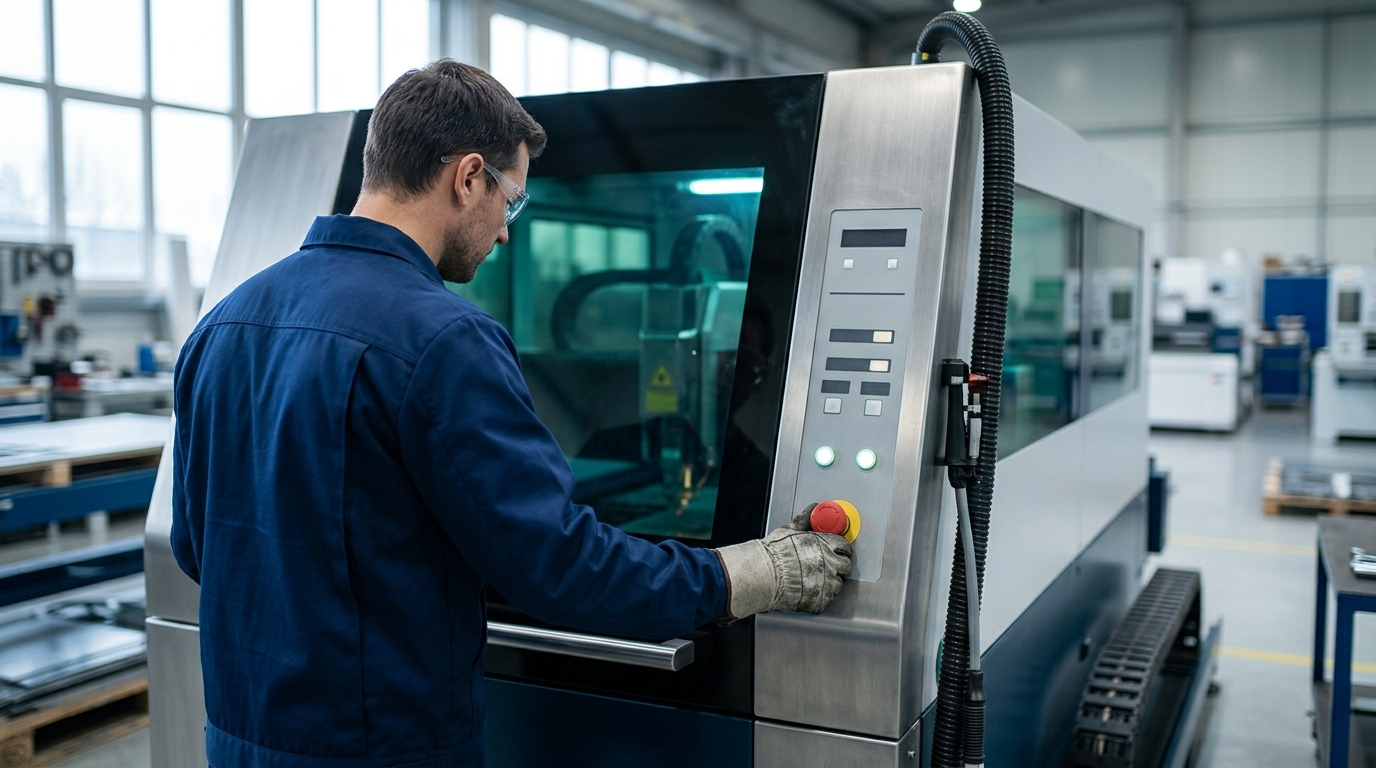
Industrial laser cutting and engraving operations involve high-energy beams that pose significant risks to personnel and facility infrastructure if not managed correctly. According to the American National Standards Institute (ANSI), proper laser safety protocols are mandatory to prevent eye injuries, respiratory hazards, and fire incidents in manufacturing environments. Kern Laser Systems has prioritized safety engineering since its founding in 1982, ensuring that every machine installed meets rigorous Class 2 and Class 4 safety standards. This guide outlines the essential safety protocols, hardware safeguards, and operational best practices required to maintain a secure production floor.
Understanding Laser Safety Classes
Before implementing safety protocols, operators must understand the classification of the laser equipment they are using. Laser safety classes define the potential hazard level of the beam and dictate the necessary protective measures.
Class 1 Lasers are considered safe under all conditions of normal use. The laser is enclosed in a way that prevents human exposure to the beam. Many modern industrial systems, such as the LaserCELL, are designed as Class 1 or Class 2 systems when fully enclosed, allowing them to operate in high-traffic areas without immediate operator intervention.
Class 4 Lasers present the highest level of hazard. These lasers can cause severe eye and skin injuries, as well as pose a fire risk. Even with safety enclosures, maintenance personnel must treat Class 4 lasers with extreme caution. The FiberCELL metal cutter, for instance, utilizes a Class 2 safety enclosure to mitigate risks, but internal components remain high-power Class 4 sources during operation.
Understanding these classifications is the first step in determining the appropriate laser safety infrastructure for your facility. Kern Laser Systems designs its machines to minimize exposure, but operator awareness remains critical.
Engineering Controls and Enclosures
Engineering controls are the first line of defense in laser safety. These physical modifications to the machine prevent accidental exposure to the laser beam and manage byproducts like smoke and fumes.
Safety Enclosures and Interlocks
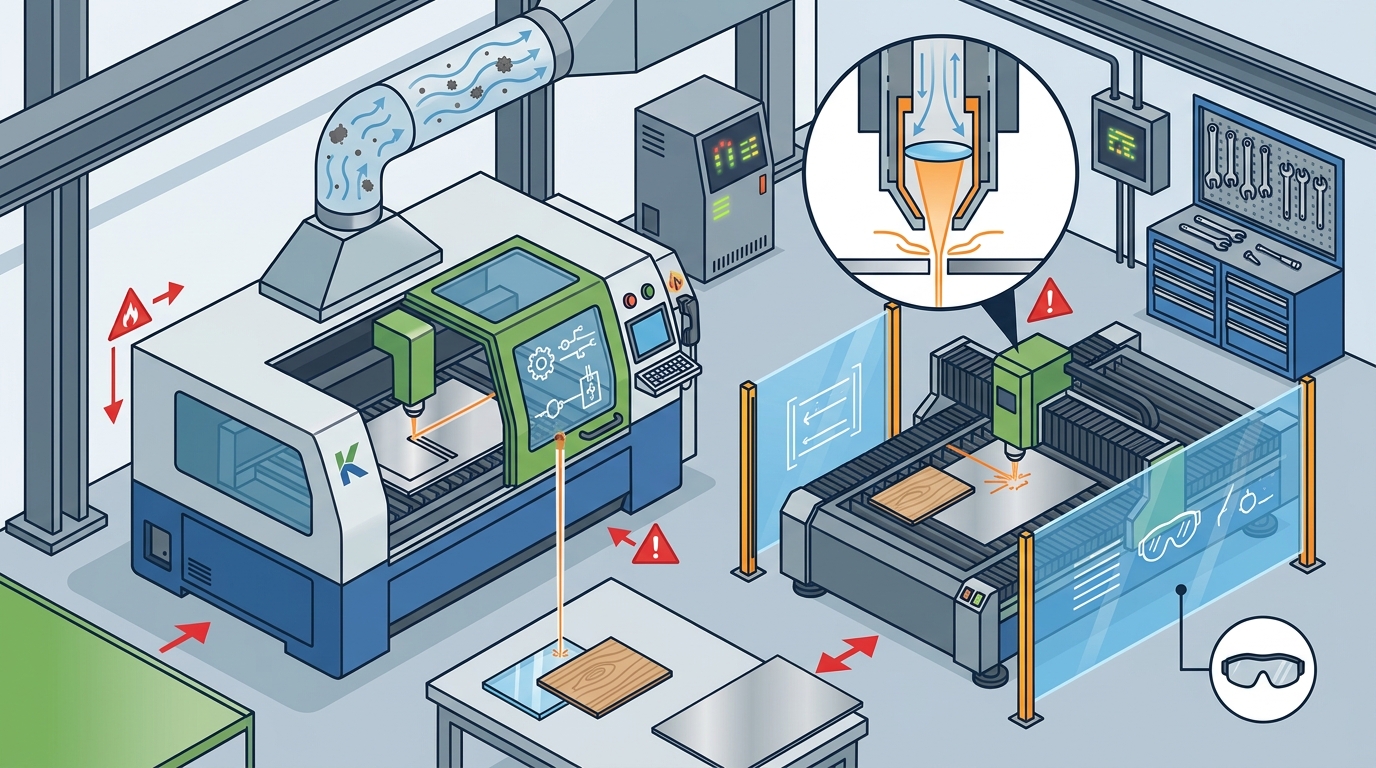
All industrial laser cutting and engraving equipment must be equipped with robust safety enclosures. These enclosures serve two primary functions: containing the laser beam and preventing access to hazardous areas. Kern Laser Systems utilizes fully enclosed designs for its OptiFlex and EcoFlex systems to ensure operator safety.
Interlock switches are critical components of these enclosures. An interlock is a safety device that automatically shuts off the laser beam when the enclosure door is opened. This prevents accidental exposure during material loading or maintenance. Operators must never bypass these interlocks, as doing so voids warranties and creates severe safety hazards.
K-Vision Camera Registration
For operations involving preprinted materials, the K-Vision Camera system provides precise alignment. This technology reduces the need for manual adjustments inside the laser chamber, thereby minimizing operator exposure to potential hazards. By automating registration, the system enhances both efficiency and safety.
Personal Protective Equipment (PPE)
While engineering controls are essential, Personal Protective Equipment (PPE) provides the final layer of protection for operators. The specific PPE required depends on the laser type, wavelength, and power output.
Laser Safety Glasses are mandatory when operating or maintaining Class 4 lasers. These glasses are designed to block specific wavelengths of light. For CO2 lasers, which operate at a wavelength of 10,600 nm, operators must use glasses rated for that specific range. Fiber lasers, which operate at 1,064 nm, require different optical density ratings. Kern Laser Systems recommends consulting the machine manual to determine the correct OD (Optical Density) rating for your specific equipment.
Respiratory Protection is also critical when cutting materials that release toxic fumes. While the machine's ventilation system handles bulk fume extraction, operators may need respirators during maintenance or when handling hazardous materials. Always refer to the Material Safety Data Sheet (MSDS) for the specific material being processed.
Ventilation and Air Quality Management
Laser cutting and engraving generate smoke, fumes, and particulate matter that can be harmful if inhaled. Proper ventilation is not just a comfort issue; it is a critical safety protocol.
Fume Extraction Systems must be installed and maintained regularly. These systems capture fumes at the source and filter them before releasing the air back into the facility or the atmosphere. Kern Laser Systems advises regular inspection of filters and ductwork to ensure optimal airflow. A clogged filter can lead to poor cut quality and increased risk of fire.
Fire Suppression is another vital component of air quality management. Laser cutting can ignite flammable materials like wood, acrylic, and foam. Kern Laser Systems recommends installing fire suppression systems near the laser machine. Additionally, operators should never leave the machine unattended during extended cutting sessions, especially when processing flammable materials.
Standard Operational Procedures
Establishing and adhering to Standard Operational Procedures (SOPs) ensures consistency and safety in the workplace. These procedures should be documented, reviewed regularly, and enforced by management.
Pre-Operation Checks
Before starting any job, operators should perform a series of pre-operation checks. This includes verifying that all safety enclosures are closed and interlocks are functional. Operators should also check the alignment of the laser beam and the condition of the lenses. The KCAM Laser Software provides diagnostic tools to help operators verify system health before production begins.
Material Selection and Processing
Not all materials are safe to process in a laser cutter. Some plastics, such as PVC, release chlorine gas when laser-cut, which is toxic and corrosive to the machine. Kern Laser Systems provides a comprehensive list of applications and materials to guide operators in selecting safe materials for their specific machine.
Operators must also ensure that materials are clean and free of coatings or contaminants that could produce hazardous fumes. Always test a small sample of new materials before running a full production job.
Emergency Response and Maintenance
Despite best efforts, emergencies can occur. Having a clear emergency response plan is essential for minimizing damage and injury.
Emergency Stop Buttons should be easily accessible and clearly marked on all laser machines. In the event of a fire, smoke, or mechanical failure, operators should immediately press the emergency stop button. This cuts power to the laser source and halts all machine movements.
Maintenance Protocols must be strictly followed. Only qualified personnel should perform maintenance on laser systems. The high-voltage components inside the laser source can be lethal if handled incorrectly. Kern Laser Systems offers technical support and training to help operators and maintenance staff understand the specific requirements of their equipment.
Key Takeaways
- Class Classification: Understand the laser class of your equipment. Class 4 lasers require strict PPE and engineering controls.
- Enclosures: Never bypass safety interlocks. Fully enclosed systems like the LaserCELL allow for safer operation in shared spaces.
- PPE: Wear wavelength-specific laser safety glasses and respiratory protection when handling hazardous materials.
- Ventilation: Maintain fume extraction systems regularly to prevent fire hazards and health risks.
- Material Safety: Avoid cutting PVC and other chlorine-containing plastics. Consult the materials guide for safe options.
- Emergency Response: Know the location of emergency stop buttons and fire suppression equipment.
- Training: Ensure all operators are trained on KCAM software and machine safety protocols.
Frequently Asked Questions
What is the difference between Class 2 and Class 4 laser safety?
Class 2 lasers are low-power visible lasers that are generally safe due to the human blink reflex. Class 4 lasers are high-power lasers that can cause immediate eye and skin damage and pose a fire risk. Industrial laser cutters often use Class 4 sources but are enclosed to mitigate risks.
Do I need special glasses for CO2 lasers?
Yes. CO2 lasers operate at a wavelength of 10,600 nm. You must use laser safety glasses specifically rated for this wavelength. Standard glasses for fiber lasers will not provide adequate protection.
How often should I inspect my laser safety enclosures?
Safety enclosures and interlocks should be inspected daily before operation. Any damage to the enclosure or malfunctioning interlocks must be addressed immediately by qualified personnel.
Can I cut acrylic with a Kern Laser?
Yes, acrylic is a common material for laser cutting. However, ensure that the acrylic is clean and free of coatings. Kern Laser Systems recommends testing small samples first to determine optimal power and speed settings.
What should I do if the laser machine catches fire?
Press the emergency stop button immediately. Use a Class C fire extinguisher if available. Do not use water on electrical fires. Evacuate the area if the fire cannot be controlled quickly.
Is professional training required to operate a Kern Laser?
While Kern Laser Systems provides comprehensive training with every machine purchase, it is highly recommended that operators receive formal training on laser safety and machine operation. This ensures compliance with safety standards and optimal machine performance.
How does the K-Vision camera improve safety?
The K-Vision camera automates the registration process for preprinted materials. This reduces the need for operators to manually adjust materials inside the laser chamber, thereby minimizing exposure to potential hazards.
Contact Kern Laser Systems
Ensuring the safety of your industrial laser operations requires the right equipment, rigorous protocols, and ongoing support. Kern Laser Systems is dedicated to providing high-quality, safe, and versatile laser cutting solutions. Whether you need a large format CO2 laser cutter or a compact fiber metal cutter, our team is here to help you implement effective safety measures.
For more information on our safety features, training programs, or to request a quote, please visit our contact page or call us directly. Experience the Kern difference and prioritize safety in your manufacturing process.