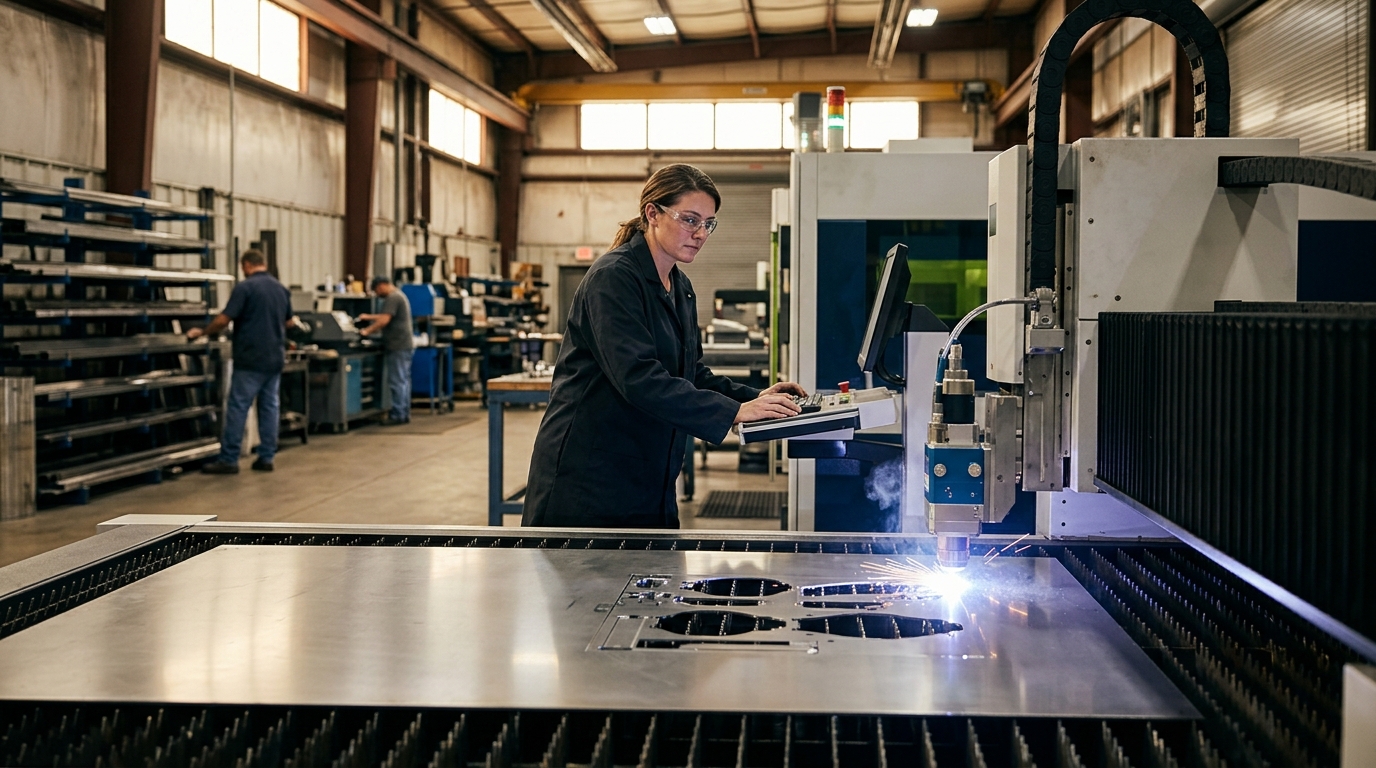
Modern metal fabrication facilities are increasingly shifting from traditional CO2 lasers to fiber laser cutting systems to achieve higher speeds and lower operational costs. Industry reports indicate that fiber laser adoption has grown significantly over the last decade due to their superior wall-plug efficiency and reduced maintenance requirements. This guide provides a structured framework for evaluating these systems to ensure they meet your specific production demands.
Understanding Fiber Laser Technology
Before diving into evaluation metrics, it is essential to understand the fundamental differences between fiber lasers and other cutting technologies. Fiber laser cutting uses a solid-state laser source where the gain medium is an optical fiber doped with rare-earth elements. This design allows for exceptional beam quality and high electrical-to-optical conversion efficiency.
In contrast to CO2 lasers, which require mirrors and gas mixtures, fiber lasers are more compact and require less maintenance. According to industry analyses of manufacturing trends, the shift toward fiber technology is driven by the ability to cut highly reflective metals like copper and brass more effectively than older CO2 systems.
When evaluating a system, you must first define your primary material mix. If your shop frequently processes stainless steel, mild steel, or aluminum, a fiber laser is likely the optimal choice. However, if your work involves thick non-metals like acrylic or wood, a CO2 system might still be relevant for specific applications.
Key Evaluation Criteria
Evaluating a fiber laser cutting system requires a multi-dimensional approach. You must look beyond the initial purchase price and consider the total cost of ownership (TCO). The following criteria are critical for making an informed decision.
1. Laser Source Power and Beam Quality
The power of the laser source, measured in watts, directly impacts cutting speed and material thickness capacity. Higher wattage allows for faster cutting speeds on thicker materials. However, beam quality, often denoted by the M² factor, is equally important. A lower M² value indicates a tighter, more focused beam, which results in narrower kerf widths and sharper corners.
When reviewing specifications, ensure the laser source offers a stable beam profile across its entire power range. Inconsistent beam quality can lead to poor edge finishes and increased dross formation, requiring secondary finishing operations.
2. Cutting Table and Motion System
The cutting table must support your maximum sheet size and weight. Look for systems with robust slat beds or honeycomb tables that provide optimal support for various material types. The motion system, including linear guides and rack-and-pinion drives, determines the machine's acceleration and positioning accuracy.
High-performance motion systems allow for rapid traversal speeds between cut paths, reducing non-cutting time. This is crucial for high-volume production environments where every second counts. Verify that the system includes automatic nozzle changing capabilities to minimize downtime during different cutting operations.
3. Software and Automation Integration
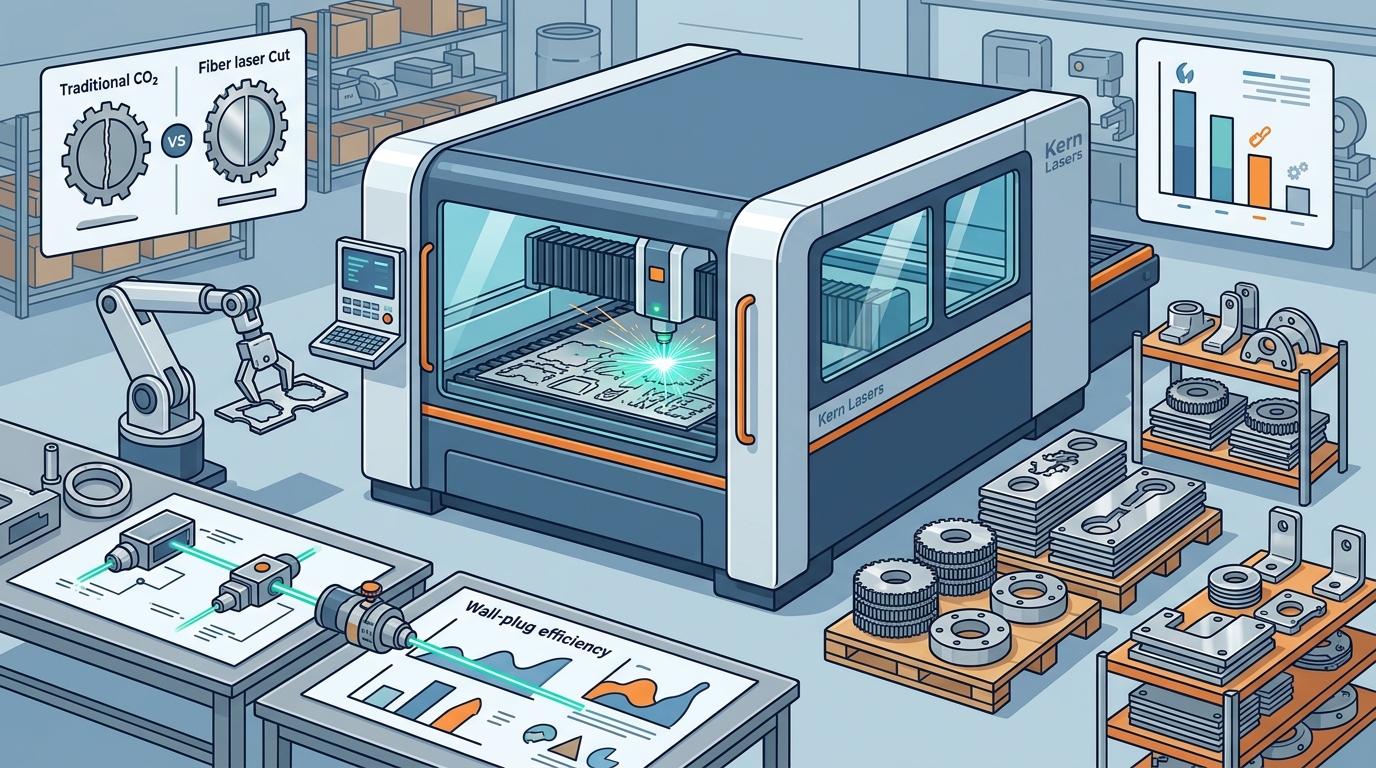
Modern fiber laser systems rely heavily on sophisticated software for nesting, path planning, and machine control. KCAM Laser Software is an example of advanced control systems that streamline the workflow from design to production. Evaluate the software's ability to handle complex geometries and optimize material usage through intelligent nesting algorithms.
Automation features such as part drawers and pallet changers can significantly enhance productivity. These features allow the machine to continue cutting while the operator removes finished parts, maximizing uptime. Ensure the software integrates seamlessly with your existing CAD/CAM workflows to avoid data transfer errors.
Comparing System Options
Different fiber laser systems cater to various production scales and budgets. Below is a comparison of common system types to help you identify the right fit for your fabrication needs.
| System Type | Best For | Key Features | Typical Application |
|---|---|---|---|
| FiberCELL | Sheet Metal Cutting | Compact design, Class 2 safety enclosure | Stainless steel, mild steel, aluminum |
| OptiFlex | Versatile Large Format | High-speed engraving, multi-material capability | Mixed metal and non-metal projects |
| LaserCELL | Safety-First Environments | Full enclosure, low maintenance | University labs, high-traffic floors |
| EcoFlex | Entry-Level Production | Economical pricing, large format | Small to medium batch production |
When comparing these options, consider the specific materials you will be cutting. For instance, the FiberCELL is specifically designed for pure metal cutting with a compact footprint, making it ideal for shops with limited space. Conversely, the OptiFlex offers versatility for shops that need to switch between metals and non-metals like acrylic or wood.
Operational Efficiency and Safety
Operational efficiency is not just about cutting speed. It encompasses energy consumption, maintenance intervals, and operator safety. Fiber lasers are known for their high wall-plug efficiency, converting a significant portion of electrical energy into laser light. This results in lower electricity costs compared to CO2 lasers.
Safety is another critical factor. Systems with Class 2 safety enclosures, such as the LaserCELL, allow for installation in high-traffic areas like factory floors or university classrooms. These enclosures protect operators from laser radiation and flying debris, ensuring compliance with occupational safety standards.
Additionally, evaluate the system's K-Vision Camera registration feature. This technology enables precise alignment of preprinted materials, reducing setup time and material waste. For metal fabrication, similar registration systems can ensure accurate cutting of complex parts with minimal manual intervention.
Vendor Selection and Support
The choice of vendor is as important as the machine itself. A reliable vendor provides comprehensive technical support, training, and spare parts availability. Look for manufacturers with a long-standing history in the industry and a strong reputation for customer service.
Kern Laser Systems, founded in 1982, has established itself as a trusted name in laser manufacturing. Their dedication to quality and customer relationships is evident in their 50 full-time employees and modern 90,000 sq. ft. facility in Minnesota. Choosing a vendor with a strong local presence can facilitate faster response times for service and support.
Furthermore, consider the vendor's financing options and warranty terms. A robust warranty, such as the 3-year warranty on CO2 laser sources offered by Kern, provides peace of mind and protects your investment. Financing programs can also make high-quality equipment more accessible for small to medium-sized businesses.
Key Takeaways
- Technology Shift: Fiber lasers offer superior efficiency and lower maintenance compared to CO2 lasers for metal fabrication.
- Beam Quality: Prioritize low M² beam quality for precise cuts and narrow kerf widths.
- Software Integration: Ensure the control software, such as KCAM, supports your existing CAD/CAM workflows.
- Safety Features: Class 2 enclosures are essential for high-traffic environments to ensure operator safety.
- Vendor History: Choose manufacturers with decades of experience, like Kern Laser Systems, founded in 1982.
- Total Cost of Ownership: Consider energy costs, maintenance, and downtime, not just the initial purchase price.
- Support Network: Verify the availability of local technical support and spare parts.
Frequently Asked Questions
What is the primary advantage of fiber laser cutting over CO2?
Fiber lasers have higher wall-plug efficiency, meaning they consume less electricity and require less maintenance due to the absence of mirrors and gas mixtures.
Can fiber lasers cut reflective metals like copper and brass?
Yes, fiber lasers are particularly effective at cutting highly reflective metals because their shorter wavelength is absorbed more efficiently by these materials compared to CO2 lasers.
What is the K-Vision Camera system?
The K-Vision Camera is a registration system that allows for precise alignment of preprinted materials, ensuring accurate cutting and engraving.
How does the LaserCELL differ from the FiberCELL?
The LaserCELL is a CO2 laser system designed for safety and versatility with a full enclosure, while the FiberCELL is a compact fiber laser specifically for metal cutting.
What warranty is typically offered on laser systems?
Warranty terms vary by manufacturer, but many reputable companies, such as Kern Laser Systems, offer comprehensive warranties on laser sources and key components.
Is financing available for industrial laser equipment?
Yes, many manufacturers and third-party providers offer financing options to help businesses acquire high-quality laser equipment without significant upfront capital.
What materials can be processed by a fiber laser?
Fiber lasers are primarily used for cutting metals such as stainless steel, mild steel, aluminum, brass, and copper. They can also engrave various materials.
Contact Us
Evaluating fiber laser cutting systems requires careful consideration of technical specifications, operational efficiency, and vendor support. By following this guide, you can make an informed decision that aligns with your fabrication goals. For personalized assistance and to explore our range of laser systems, contact Kern Laser Systems today to schedule a consultation or request a quote.