
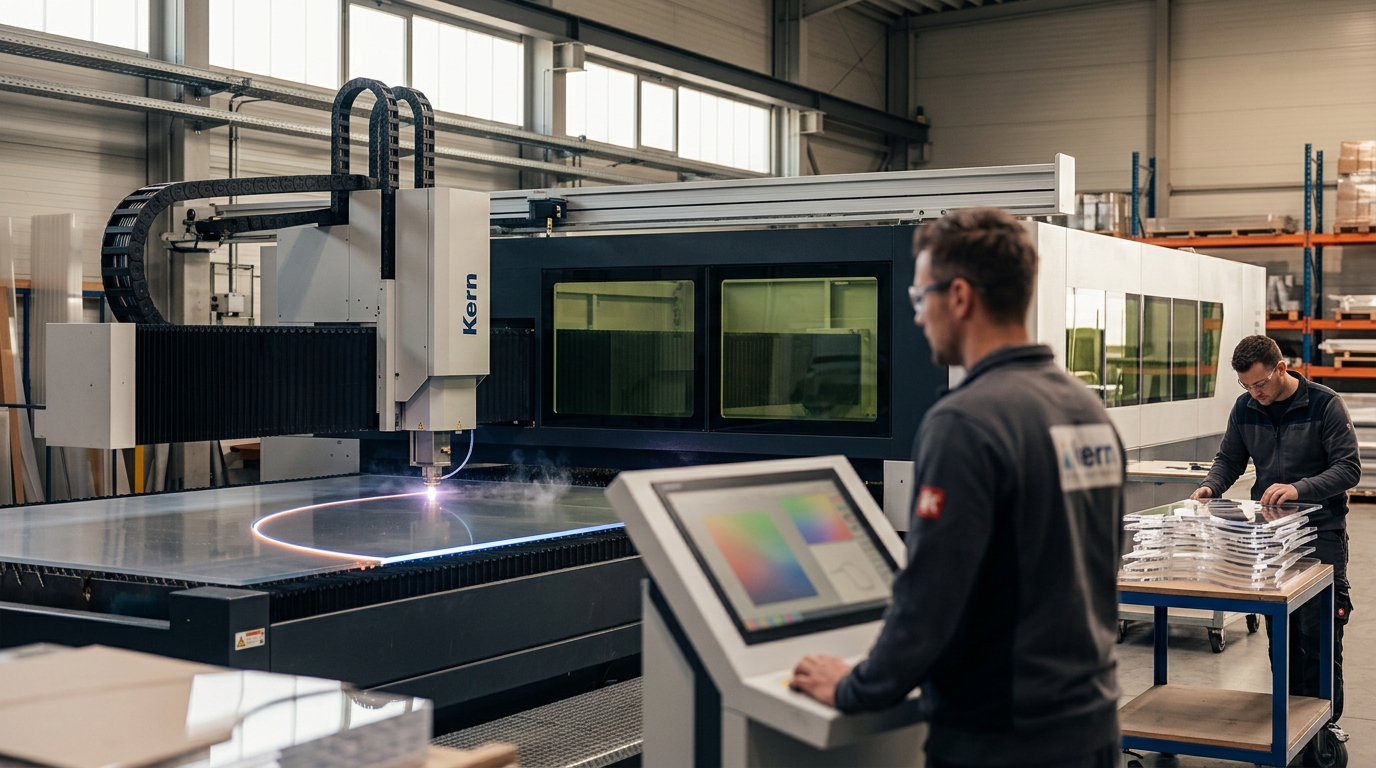
Industrial manufacturing is undergoing a rapid transformation driven by the need for speed and accuracy. According to recent industry analyses, automated laser systems can increase production throughput by up to 40% compared to traditional mechanical cutting methods. This shift is particularly critical for large-scale acrylic projects, where material waste and edge quality directly impact profitability. Kern Laser Systems has been at the forefront of this evolution since 1982, providing robust solutions for complex fabrication needs. (About Kern Laser Systems)
Why CO2 Lasers Dominate Acrylic Processing
When discussing large-scale acrylic fabrication, the choice of technology is paramount. CO2 laser cutting is the industry standard for transparent and translucent materials. Unlike fiber lasers, which are optimized for metal reflection, CO2 lasers emit a wavelength that is efficiently absorbed by acrylic. This absorption creates a clean, polished edge without the need for secondary finishing processes.
The physics behind this process are straightforward yet powerful. The laser beam vaporizes the material along the cut path, leaving a smooth, glass-like finish. This is essential for high-end displays, architectural installations, and signage where clarity and aesthetic appeal are non-negotiable. For manufacturers seeking to automate this process, the reliability of the laser source is the first critical decision.
Kern Laser Systems specializes in high-performance CO2 laser cutters designed specifically for these demanding applications. Their OptiFlex system, for instance, is engineered to handle the thermal dynamics of large acrylic sheets with precision. By utilizing super-pulsed high-quality laser sources, Kern ensures consistent power delivery, which prevents charring and maintains edge clarity across the entire sheet.
Overcoming Large Format Cutting Challenges
Scaling up from small prototypes to large-format production introduces significant engineering hurdles. Large format laser cutting requires specialized motion systems to maintain accuracy over extended distances. As the gantry moves across a 4x8 foot or larger sheet, any deviation in rail alignment or motor synchronization can result in dimensional inaccuracies.
Another major challenge is the management of heat. Large acrylic sheets can warp if heated unevenly. Kern addresses this through advanced cooling systems and precise power modulation. The EcoFlex and OptiFlex models are designed with robust frames that minimize vibration, ensuring that the laser beam remains focused even at high speeds.
Furthermore, the integration of safety enclosures is vital for large-scale operations. The LaserCELL system from Kern offers a fully enclosed Class 2 design. This allows the machine to operate safely in high-traffic factory floors or university classrooms. The enclosure not only protects operators from laser exposure but also contains fumes and debris, maintaining a cleaner and safer work environment.
For projects requiring extreme precision, Kern’s K-Vision Camera registration system provides a technological edge. This feature allows for precise alignment and efficient cutting of preprinted materials. By automatically detecting registration marks, the system adjusts the cut path in real-time, eliminating manual setup errors and reducing material waste.
Comparing Kern Laser Systems for Automation
Selecting the right machine depends on your specific production volume, material thickness, and budget. Below is a comparison of Kern’s primary large-format CO2 laser systems, highlighting their unique capabilities for acrylic automation.
| System Model | Primary Application | Key Feature for Acrylic | Best For |
|---|---|---|---|
| OptiFlex | High-Performance Cutting | Super Pulsed Laser Source | Versatile large-scale production |
| EcoFlex | Economical Large Format | Cost-Effective CO2 Source | Entry-level large format automation |
| LaserCELL | Safety Enclosed Cutting | Class 2 Enclosure | High-traffic environments |
| OptiDual | High Production | Dual Laser Heads | Maximum throughput needs |
The OptiFlex stands out as the most popular and versatile machine in Kern’s lineup. It is ideal for processing not just acrylic, but also wood, textiles, and foam. Its high-speed engraving capabilities make it suitable for detailed work on large surfaces. For businesses prioritizing safety and ease of use, the LaserCELL provides a complete solution with its integrated safety features.
The EcoFlex offers an economical entry point into large-format laser cutting. It is well-known for its high productivity at a lower price point, making it an attractive option for small to medium-sized businesses looking to automate their acrylic workflows. Meanwhile, the OptiDual caters to high-volume manufacturers who need dual laser heads to maximize output.
The Role of KCAM Software in Precision
Hardware is only half of the automation equation. KCAM Laser Software is the brain behind Kern’s cutting systems. This proprietary software is designed to optimize toolpaths, manage laser parameters, and ensure seamless communication between the computer and the machine.
Effective software integration reduces the learning curve for operators and minimizes the risk of human error. KCAM allows users to import vector graphics directly from design software, adjust power and speed settings for different acrylic thicknesses, and simulate the cutting process before execution. This simulation capability is crucial for large-scale projects, as it prevents costly material waste.
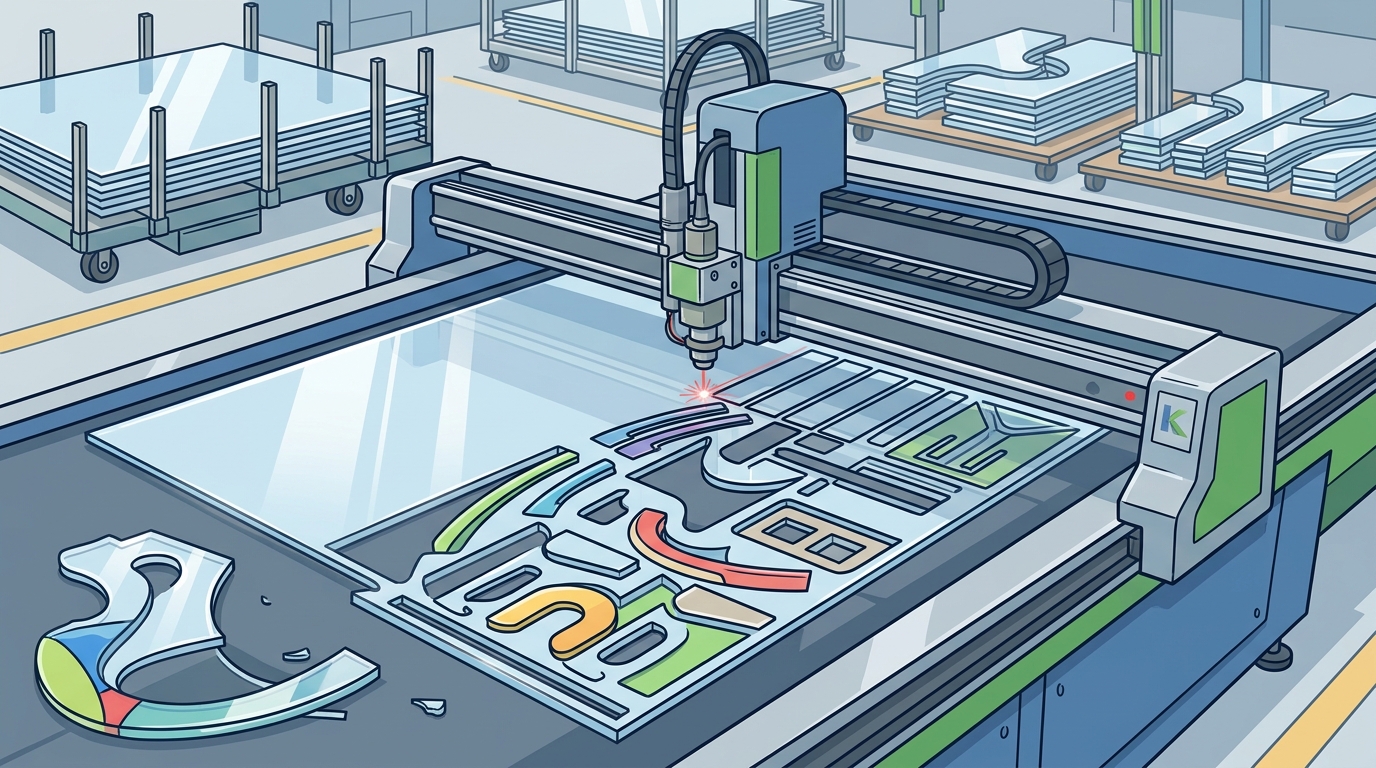
Additionally, KCAM supports advanced features like nesting, which arranges multiple cut paths to maximize material usage. For large acrylic sheets, even a small percentage increase in material efficiency can lead to significant cost savings over time. The software also includes diagnostic tools that help maintain the laser source and optics, ensuring long-term performance and reliability.
Kern’s commitment to software development is evident in their continuous updates and support. The company provides comprehensive technical support and training to help users leverage the full potential of KCAM. This includes online resources, customer login portals, and direct access to technical experts.
Key Takeaways
- CO2 Technology is Essential: CO2 lasers provide the cleanest edges for acrylic, eliminating the need for post-processing.
- Large Format Requires Robust Engineering: Gantry stability and thermal management are critical for accuracy on large sheets.
- K-Vision Camera Enhances Precision: Automated registration marking ensures perfect alignment for preprinted materials.
- KCAM Software Optimizes Workflow: Proprietary software manages toolpaths, nesting, and machine diagnostics for maximum efficiency.
- Safety Enclosures Improve Operations: Class 2 enclosures like those in the LaserCELL allow safe operation in busy environments.
- Domestic Manufacturing Benefits: Kern’s USA-based production ensures high-quality standards and reliable support.
- Versatility Across Materials: Kern systems can process wood, metal, foam, and textiles, offering multi-industry utility.
Frequently Asked Questions
What is the difference between CO2 and fiber lasers for acrylic?
CO2 lasers are preferred for acrylic because their wavelength is efficiently absorbed by the material, resulting in a polished edge. Fiber lasers are designed for metals and can cause cracking or poor edge quality in acrylic.
How does the K-Vision Camera improve cutting accuracy?
The K-Vision Camera automatically detects registration marks on preprinted materials. It then adjusts the laser’s cut path in real-time to align perfectly with the printed design, eliminating manual alignment errors.
Is Kern Laser Systems a USA-based company?
Yes, Kern Laser Systems is proudly manufactured in the USA. Their headquarters and facility are located in Wadena, Minnesota, where they employ a dedicated team of professionals.
What is the warranty coverage for Kern laser systems?
Kern offers a 3-year warranty on their CO2 laser sources. This warranty covers the super-pulsed high-quality laser sources used in their OptiFlex and other CO2 models.
Can Kern lasers cut materials other than acrylic?
Yes, Kern lasers are versatile and can cut and engrave wood, metal, foam, leather, textiles, and natural stone. The OptiFlex and FiberCELL models are particularly noted for their multi-material capabilities.
How does automation reduce material waste in large-scale projects?
Automation through systems like KCAM software allows for precise nesting of cut paths. This maximizes the use of each acrylic sheet, reducing scrap and lowering overall material costs.
What support does Kern provide for new users?
Kern provides comprehensive technical support, including online resources, a customer login portal, and direct access to technical experts. They also offer training to help users master their equipment.
Contact Kern Laser Systems
Ready to automate your large-scale acrylic projects? Kern Laser Systems offers tailored solutions to meet your production needs. Whether you require the high performance of the OptiFlex, the safety of the LaserCELL, or the economy of the EcoFlex, Kern has the expertise to help you succeed.
Contact Kern Laser Systems today to request a quote or schedule a demonstration. Visit their contact page to speak with a specialist. You can also explore their blog for more insights into laser technology and manufacturing trends. For technical support, visit the customer login portal.