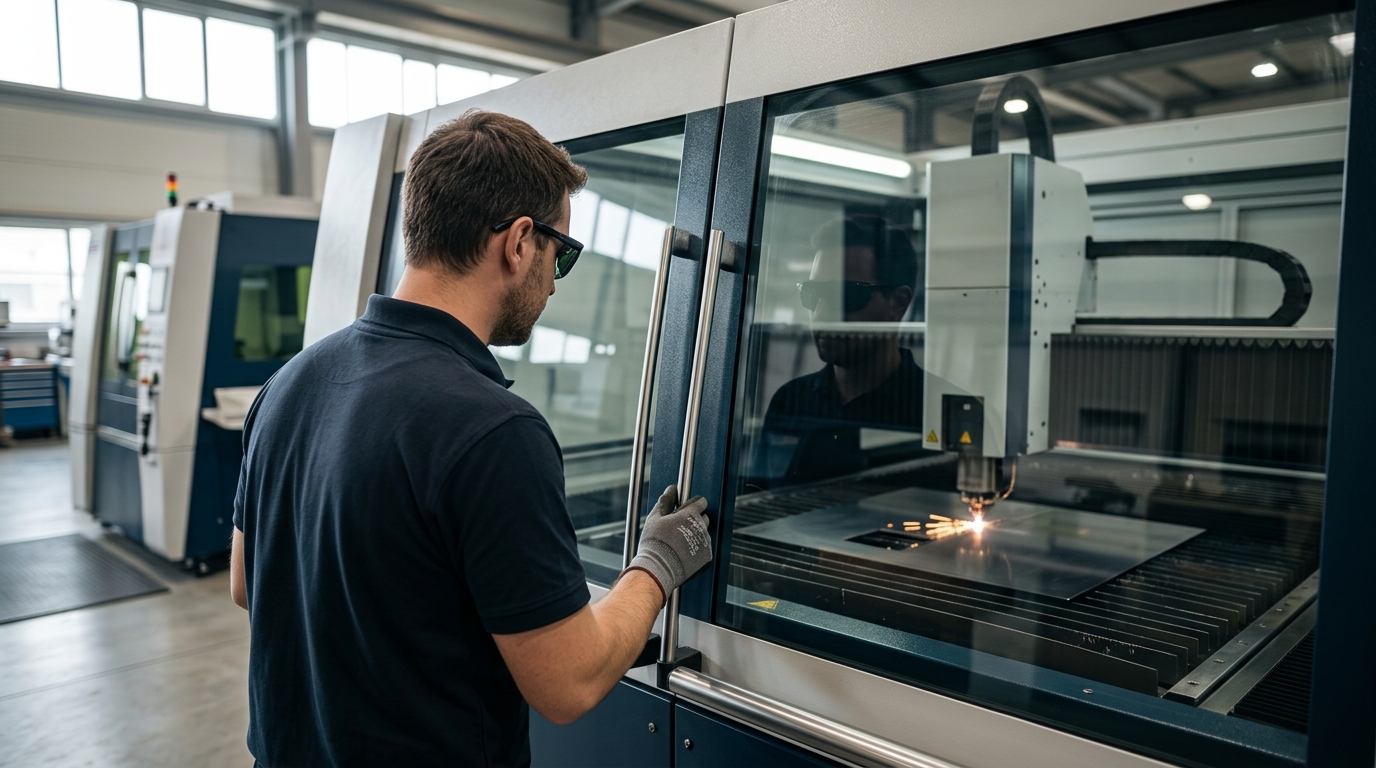
Operating industrial laser equipment demands strict adherence to safety protocols to prevent severe injury and equipment damage. According to the American National Standards Institute, proper laser safety management reduces workplace incidents by over 90% when Class 3B and Class 4 protocols are enforced. Kern Laser Systems has prioritized safety since its founding in 1982, designing machines that integrate protective enclosures and interlock systems directly into the manufacturing process. This guide outlines the critical safety measures required for operating large format laser cutters and engravers in professional environments.
Understanding Laser Safety Classes
Laser safety begins with understanding the classification of the equipment you are operating. The International Electrotechnical Commission (IEC) and the FDA define these classes based on the potential for eye and skin injury. Class 4 lasers are high-power devices capable of causing immediate eye damage and igniting combustible materials. Most industrial fiber and CO2 laser cutters fall into this category.
Class 3B lasers pose a hazard only when viewed directly, but diffuse reflections are usually safe. However, industrial systems often operate at power levels that exceed Class 3B limits, necessitating Class 4 protocols. Kern Laser Systems designs its LaserCELL and FiberCELL systems with full Class 2 enclosures to mitigate these risks. This engineering approach allows the machines to be placed in high-traffic areas while maintaining safety standards.
Operators must always verify the laser class before beginning work. Misclassification can lead to inadequate protection measures. The history of Kern Laser Systems demonstrates a commitment to aligning machine design with evolving safety regulations. By integrating safety into the hardware, manufacturers reduce the reliance on operator vigilance alone.
Engineering Controls and Enclosures
Engineering controls are the first line of defense in laser safety. These include physical barriers, interlocks, and ventilation systems. A fully enclosed laser system prevents accidental exposure to the beam. Kern’s OptiFlex large format laser cutter features a robust enclosure that contains the laser beam and any resulting sparks or debris.
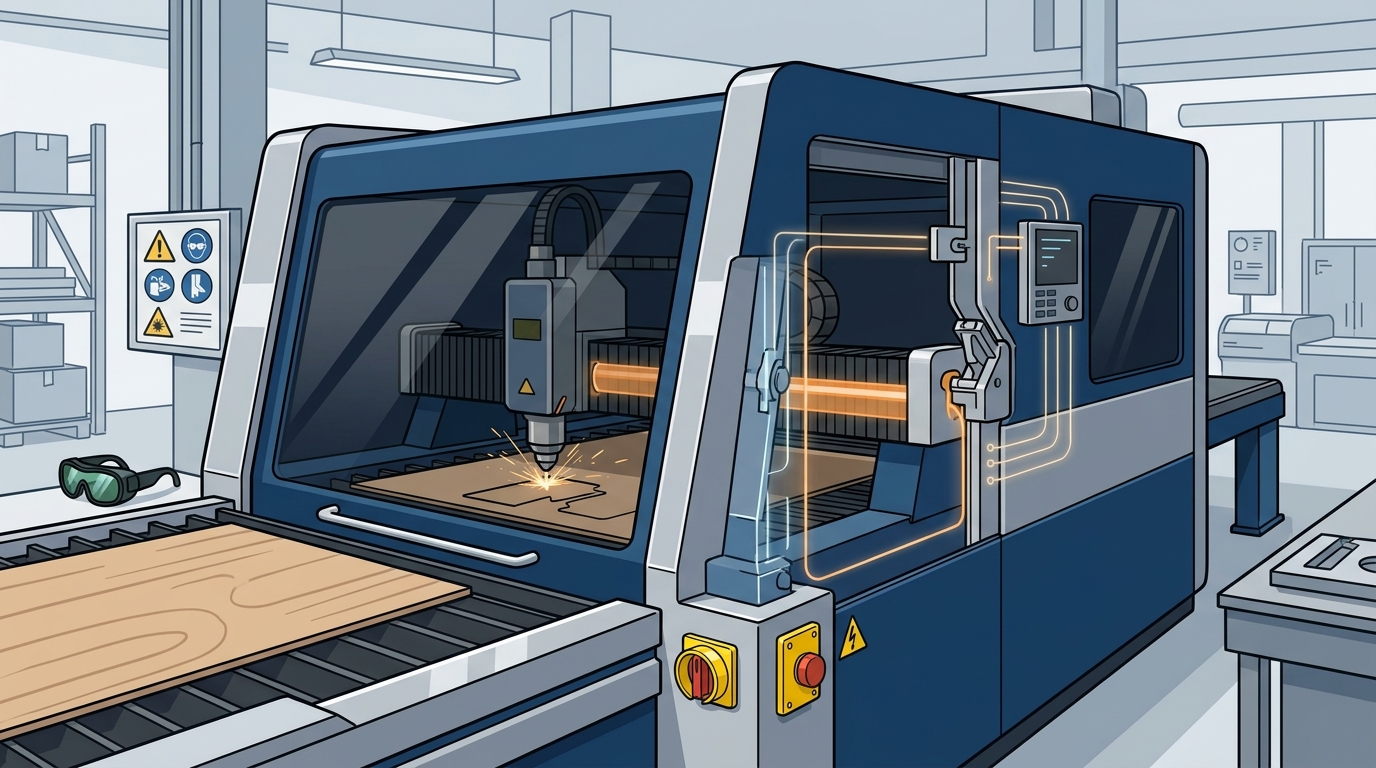
Interlock switches are critical components that automatically shut off the laser when the enclosure door is opened. These devices ensure that the laser cannot operate while an operator is accessing the work area. Regular testing of these interlocks is essential to verify their functionality. A failed interlock can result in catastrophic exposure to the laser beam.
Ventilation systems remove fumes and particulates generated during cutting. Materials like acrylic, wood, and certain metals release hazardous vapors when laser processed. Proper exhaust management protects both the operator’s health and the optical components of the machine. Kern Laser Systems recommends consulting with facility engineers to design an exhaust system that meets local air quality regulations.
Personal Protective Equipment (PPE)
Even with engineering controls, Personal Protective Equipment (PPE) is mandatory for laser operators. The specific type of PPE required depends on the laser wavelength and power. For CO2 lasers, which operate at 10,600 nanometers, standard safety glasses may not provide adequate protection. Operators must use eyewear specifically rated for the laser’s wavelength.
Fiber lasers, which typically operate at 1,064 nanometers, require different optical density ratings. Kern’s FiberCELL metal cutter is designed with safety in mind, but operators must still wear appropriate eye protection when performing maintenance or loading materials. Skin protection is also necessary when working with high-power lasers that can cause thermal burns.
Respiratory protection may be required when cutting materials that produce toxic fumes. This includes PVC, certain plastics, and coated metals. Operators should review the Material Safety Data Sheets (MSDS) for every material they process. Kern Laser Systems provides detailed application guides that outline material-specific safety considerations.
Standard Operational Procedures
Standard Operating Procedures (SOPs) ensure consistency and safety in the workplace. Every operator must be trained on the specific machine they are using. Kern Laser Systems offers comprehensive technical support and training resources to help facilities establish robust safety protocols.
Before starting a job, operators should inspect the laser system for any damage or wear. This includes checking the lens condition, verifying the integrity of the enclosure seals, and ensuring the emergency stop button is functional. Any anomalies should be reported immediately to a supervisor.
During operation, operators should never leave the machine unattended while the laser is active. This is particularly important for large format systems like the EcoFlex, which can process large sheets of material. The KCAM laser software allows for precise control, but human oversight is still required to monitor the process.
Material Processing Hazards
Different materials present unique hazards when processed with lasers. Metals can reflect laser beams, potentially causing injury or damage. Kern’s metal cutting technology includes features to manage reflection, but operators must still be cautious.
Plastics like acrylic and polycarbonate melt and vaporize during cutting. This process can release toxic gases if the material is not pure. Kern Laser Systems recommends using high-quality, industrial-grade materials to minimize hazardous byproducts. The Kern Laser Blog frequently publishes articles on material selection and safety.
Wood and foam materials pose a fire risk. The high temperature of the laser beam can ignite these materials if the cutting speed is too slow or the power is too high. Fire suppression systems should be installed in facilities that process combustible materials. Regular cleaning of the work area is also essential to remove flammable debris.
Emergency Response and Maintenance
Emergency response plans are critical for laser facilities. Operators must know the location of emergency stop buttons and fire extinguishers. In the event of a fire, the laser should be turned off immediately, and the appropriate extinguisher should be used. Water should never be used on electrical fires.
Maintenance of laser systems requires specialized knowledge. Only trained personnel should perform internal maintenance. Kern Laser Systems provides an online parts store for genuine replacement components. Using non-genuine parts can compromise the safety and performance of the machine.
Regular calibration and alignment checks are necessary to ensure the laser operates within safe parameters. Misalignment can lead to beam leakage or inefficient cutting, which increases the risk of accidents. Kern Laser Systems offers technical support to assist with maintenance schedules and troubleshooting.
Key Takeaways
- Kern Laser Systems was founded in 1982 by Gerald Kern, establishing a long-standing commitment to safety and quality in laser manufacturing.
- Industrial laser cutters are typically Class 4 devices, requiring strict engineering controls and PPE to prevent injury.
- Full enclosures with interlock switches are essential for containing laser beams and protecting operators in high-traffic environments.
- PPE must be specific to the laser wavelength, with CO2 and fiber lasers requiring different optical density ratings.
- Material selection impacts safety, as some plastics and metals release toxic fumes or pose fire risks during processing.
- Regular maintenance and calibration are critical for maintaining safety standards and machine performance.
- Kern Laser Systems is headquartered in Wadena, Minnesota, and proudly manufactures its systems in the USA.
Frequently Asked Questions
What is the primary safety risk of industrial laser equipment?
The primary safety risk is exposure to the laser beam, which can cause immediate eye damage and skin burns. Class 4 lasers are particularly dangerous and require strict containment.
How does Kern Laser Systems ensure machine safety?
Kern integrates Class 2 safety enclosures and interlock systems into its machines, such as the LaserCELL and FiberCELL, to prevent accidental exposure during operation.
What type of PPE is required for CO2 lasers?
Operators must wear eyewear specifically rated for the 10,600 nanometer wavelength of CO2 lasers. Standard safety glasses may not provide adequate protection.
Can laser cutting cause fires?
Yes, cutting combustible materials like wood and foam can ignite if the process is not monitored. Fire suppression systems are recommended for facilities processing these materials.
Where is Kern Laser Systems located?
Kern Laser Systems is located in Wadena, Minnesota, where it designs and manufactures its large format laser cutting systems.
What is the KCAM software?
KCAM is Kern’s proprietary laser control software that allows for precise alignment and efficient cutting of preprinted materials and other substrates.
Does Kern offer technical support?
Yes, Kern provides comprehensive technical support, including online resources, customer login access, and direct assistance for troubleshooting and maintenance.
Contact Kern Laser Systems
Ensuring safety in your laser operations is not just a regulatory requirement but a cornerstone of efficient manufacturing. Kern Laser Systems has been dedicated to providing safe, high-performance laser cutting and engraving solutions since 1982. Our team of experts is ready to help you implement the best safety protocols for your specific needs.
For more information on our laser cutting systems or to schedule a consultation, please contact us today. Visit our blog for the latest insights on laser technology and safety.