
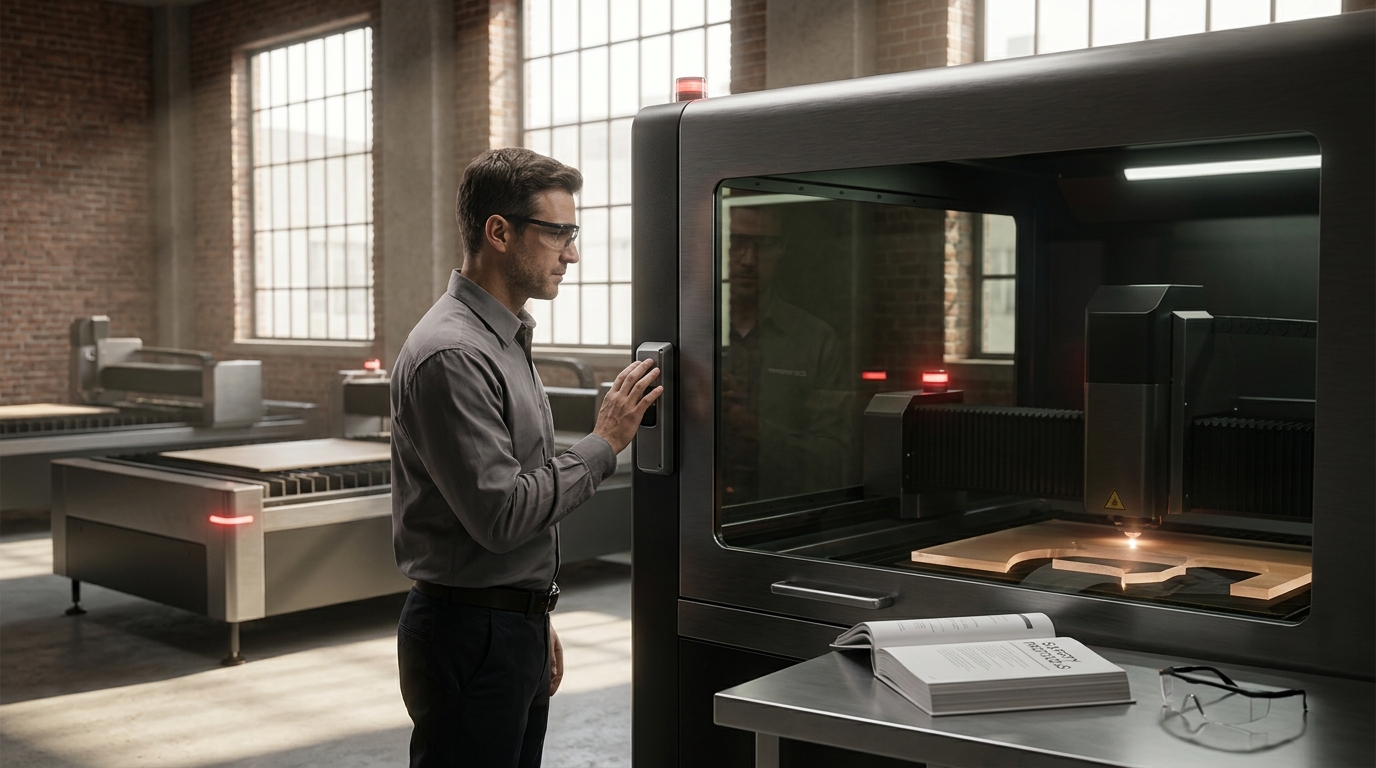
Industrial laser cutting and engraving operations involve high-energy beams that pose significant risks to operators and facility infrastructure. According to the National Institute for Occupational Safety and Health (NIOSH), laser-related injuries in industrial settings often stem from inadequate enclosure protocols or improper eye protection, making strict adherence to safety standards critical for operational continuity. Kern Laser Systems has prioritized safety engineering since its founding in 1982, ensuring that every machine installed in facilities across the USA meets rigorous Class 2 and Class 4 laser safety classifications. This guide outlines the mandatory safety protocols, hardware requirements, and operational procedures necessary to maintain a secure manufacturing environment.
Understanding Laser Classes and Hazards
Before implementing safety protocols, operators must understand the specific hazard class of the equipment they are using. Laser safety is not a one-size-fits-all discipline; it depends entirely on the power output and wavelength of the laser source.
Class 2 Lasers are low-power devices where the human blink reflex typically protects the eye from damage. Kern’s LaserCELL and FiberCELL systems are designed with Class 2 safety enclosures, allowing them to operate safely in high-traffic areas like university classrooms or busy factory floors, provided the enclosure remains closed.
Class 4 Lasers represent the highest hazard category. These high-power beams, such as those found in the OptiFlex and EcoFlex large format systems, can cause immediate eye and skin damage. They also pose a fire hazard and can reflect off shiny surfaces, creating secondary beam paths. Operating Class 4 equipment requires strict access controls, specialized eyewear, and comprehensive facility engineering.
Engineering Controls and Enclosures
Engineering controls are the first line of defense in laser safety. These physical modifications to the machine and facility prevent exposure to hazardous radiation and byproducts.
Full Enclosure Design
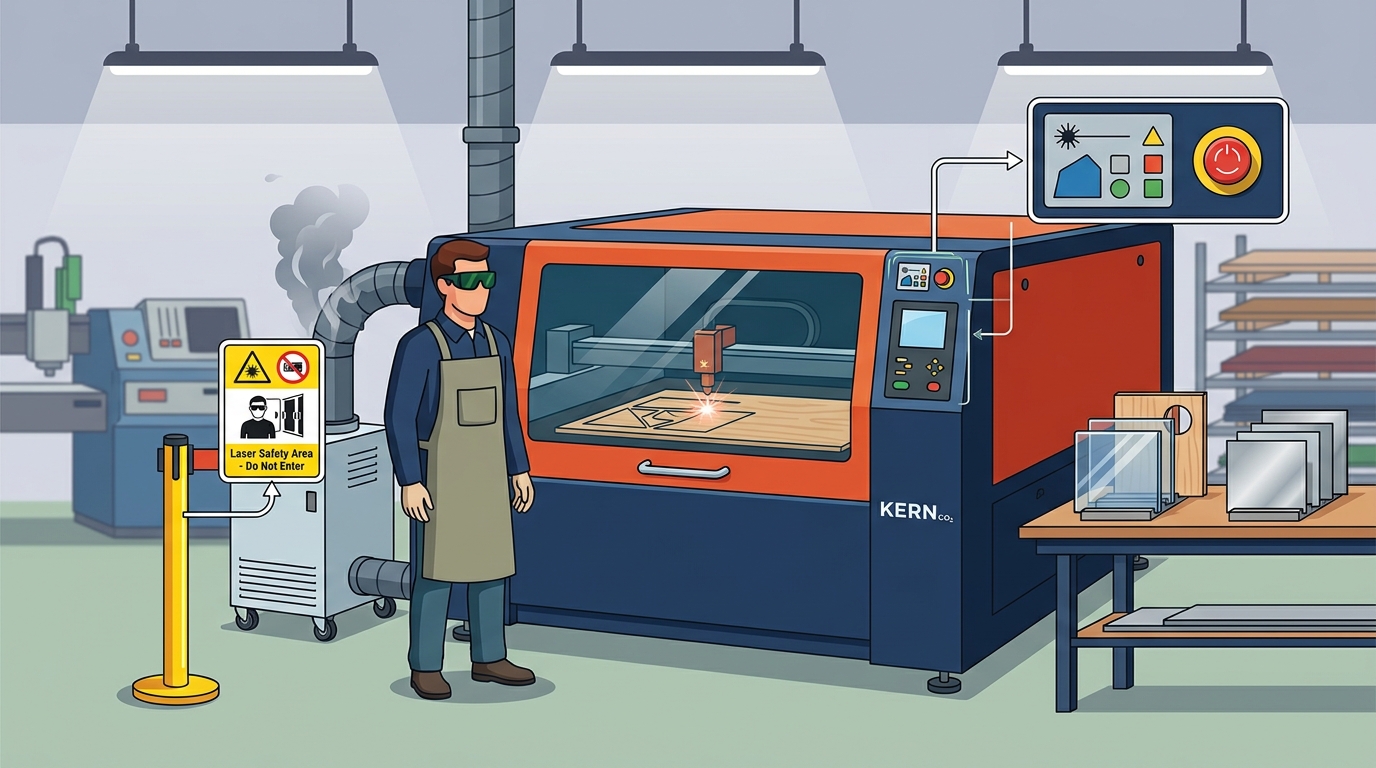
All industrial laser cutting and engraving machines must be housed in fully enclosed cabinets. Kern Laser Systems integrates robust safety enclosures into its FiberCELL and LaserCELL models. These enclosures are constructed with materials that block specific laser wavelengths, preventing leakage. The Laser Safety protocols at Kern emphasize that no operator should ever bypass interlock switches to access the laser head during operation.
Interlock Systems
Interlocks are critical safety switches that automatically shut off the laser source when an enclosure door is opened. These systems must be regularly tested to ensure they function correctly. A malfunctioning interlock can result in accidental exposure to high-intensity radiation. Kern’s KCAM Laser Software also monitors system status, providing alerts if safety parameters are compromised.
Personal Protective Equipment (PPE)
Even with perfect engineering controls, PPE is mandatory for maintenance and setup procedures. The type of PPE required depends on the laser wavelength and power density.
Laser Safety Glasses are the most critical piece of PPE. They must be rated for the specific wavelength of the laser being used (e.g., 10.6 microns for CO2 lasers, 1.06 microns for fiber lasers). Regular sunglasses or generic safety glasses offer zero protection against laser radiation. Operators must ensure their eyewear has the correct Optical Density (OD) rating for the machine’s power output.
Protective Clothing should be flame-resistant and non-reflective. Synthetic fabrics can melt onto skin upon contact with sparks or hot materials. Cotton or specialized flame-retardant garments are recommended for handling hot acrylic, wood, or metal parts after cutting.
Ventilation and Air Quality Management
Laser processing generates fumes, particulates, and gases that are hazardous to breathe. Proper ventilation is not just a comfort issue; it is a critical health safety protocol.
Fume Extraction systems must be installed and maintained regularly. When cutting materials like PVC, ABS, or certain coated metals, toxic gases such as chlorine or cyanide can be released. Kern Laser Systems recommends using dedicated air filtration units that match the volume of the laser enclosure. Filters must be changed according to the manufacturer’s schedule to prevent saturation and potential fire hazards.
Material Safety Data Sheets (MSDS) should be reviewed for every material being processed. Understanding the chemical composition of the material helps in selecting the correct ventilation settings and PPE. For example, cutting acrylic produces different fumes than cutting metal, requiring different filtration strategies.
Standard Operational Procedures
Procedural safety ensures that human error does not compromise the physical safety systems. Kern Laser Systems emphasizes a culture of safety through rigorous training and documentation.
Pre-Operation Checks
Before starting any job, operators must verify that:
- All enclosure doors are securely closed and latched.
- Interlock switches are functional.
- Ventilation systems are running at the correct capacity.
- The correct laser safety glasses are worn.
- The work area is clear of flammable materials.
Material Loading and Unloading
Materials must be loaded only when the laser is in a safe, standby state. The OptiFlex and EcoFlex systems feature pullout tables and part drawers that allow for safe material handling without exposing the operator to the laser beam. Never reach into the laser enclosure while the system is powered on.
Emergency Procedures
Every laser workstation must have a clearly marked emergency stop button. Operators must be trained on how to use it in case of fire, smoke, or mechanical failure. Fire extinguishers rated for electrical and chemical fires should be readily accessible near the machine.
Software Safety Features and Interlocks
Modern laser systems integrate software-based safety features to complement hardware controls. Kern’s KCAM Laser Software includes diagnostic tools that monitor the health of the laser source and cooling systems.
Camera Registration features, such as Kern’s K-Vision Camera, allow operators to verify material placement before initiating the cut. This reduces the need for manual adjustments during operation, minimizing exposure time. The software also logs operational data, which can be used for safety audits and maintenance scheduling.
Key Takeaways
- Class 2 vs. Class 4: Kern’s LaserCELL and FiberCELL are Class 2 enclosed systems, while OptiFlex and EcoFlex are Class 4 systems requiring stricter controls.
- Enclosure Integrity: Never bypass interlock switches; they are the primary barrier against laser radiation exposure.
- PPE Necessity: Laser safety glasses must be wavelength-specific and rated for the machine’s power output.
- Ventilation: Fume extraction is critical to prevent inhalation of toxic byproducts from materials like PVC and coated metals.
- Training: Kern Laser Systems provides comprehensive training on technical support and safety protocols for all new installations.
- Material Awareness: Always review MSDS for materials before processing to understand potential chemical hazards.
- Emergency Readiness: Ensure emergency stop buttons and fire extinguishers are accessible and functional.
Frequently Asked Questions
What is the difference between Class 2 and Class 4 lasers?
Class 2 lasers are low-power and rely on the human blink reflex for eye protection, often allowing operation in open environments if enclosed. Class 4 lasers are high-power and can cause immediate eye and skin damage, requiring strict access controls and specialized PPE.
Do I need special eyewear for Kern laser systems?
Yes. Operators must wear laser safety glasses specifically rated for the wavelength of the laser being used (e.g., CO2 or fiber) and the power density of the machine.
How does Kern ensure laser safety in its machines?
Kern integrates full safety enclosures, interlock switches, and KCAM software diagnostics to monitor system health and prevent unsafe operation.
What materials produce hazardous fumes when laser cut?
Materials like PVC, ABS, and certain coated metals can release toxic gases. Always consult the Material Safety Data Sheet (MSDS) before processing.
Can I operate a Kern laser without ventilation?
No. Proper ventilation and fume extraction are mandatory to remove particulates and toxic gases generated during cutting and engraving.
What should I do in case of a laser-related emergency?
Hit the emergency stop button immediately, evacuate if there is a fire, and follow your facility’s emergency response plan.
Does Kern provide safety training?
Yes, Kern Laser Systems provides comprehensive training on technical support and safety protocols for all new installations.
Contact Kern Laser Systems
Ensuring the safety of your laser operation requires the right equipment, rigorous protocols, and expert support. Kern Laser Systems, with over 40 years of experience, provides top-quality industrial laser cutting and engraving machines designed with safety at their core. Contact us today to discuss your specific safety needs and explore our range of laser systems.