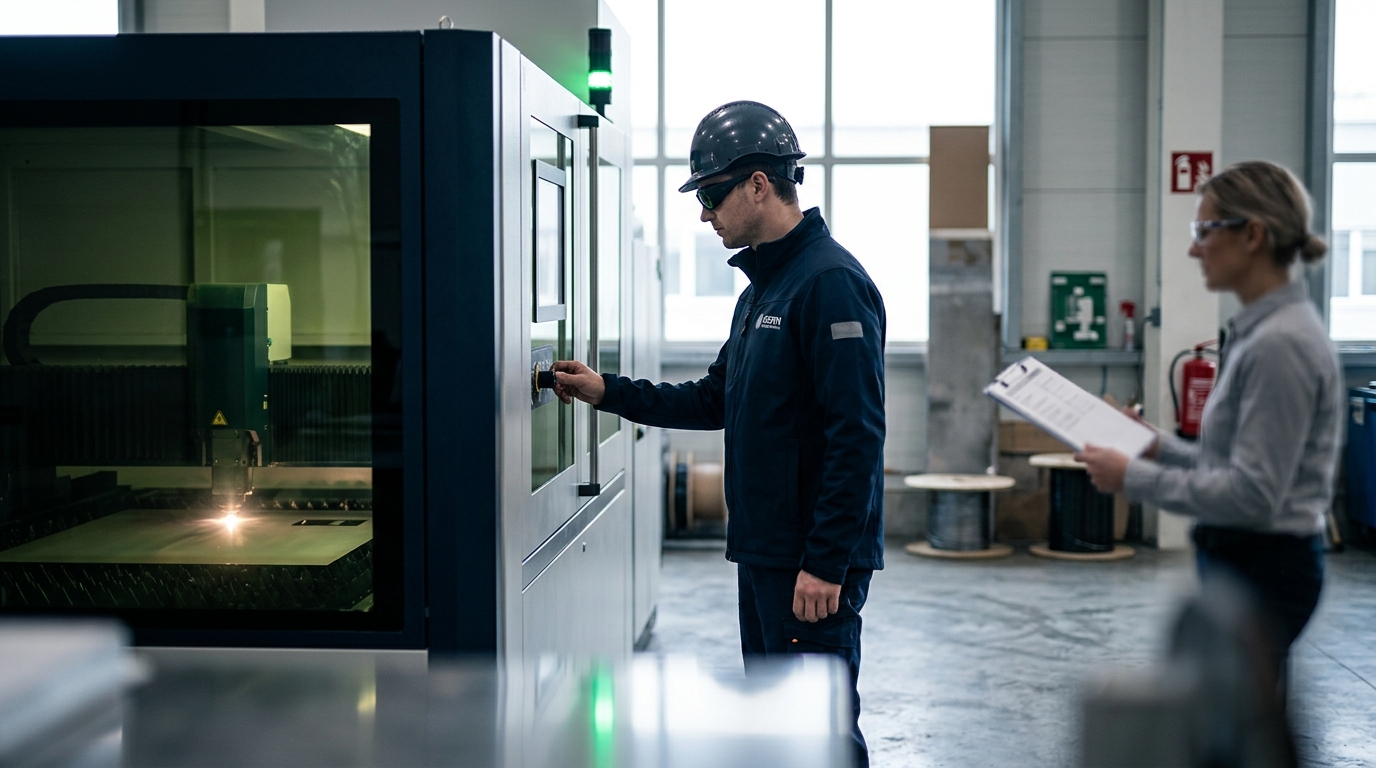
Operating high-power industrial laser equipment requires strict adherence to safety protocols to prevent severe injury and equipment damage. According to the American National Standards Institute, laser safety is a critical component of industrial manufacturing, with Class 4 lasers posing significant risks to both operators and bystanders. Kern Laser Systems has prioritized safety since its founding in 1982, integrating advanced enclosure technologies into every machine to ensure compliance with global safety standards. This guide outlines the mandatory safety measures, hardware protections, and operational best practices necessary for maintaining a secure manufacturing environment. (Kern Customer Login Area)
Understanding Laser Classes and Hazards
Before operating any industrial laser, it is essential to understand the classification system defined by international standards. Laser safety begins with recognizing the specific hazard level of the equipment you are using. (Laser Cutting and Laser)
Class 4 Lasers are high-power devices capable of causing immediate eye and skin damage, as well as igniting combustible materials. Most industrial cutting and engraving machines, including those produced by Kern, fall into this category when the enclosure is open or compromised. These systems require rigorous engineering controls to protect operators. (Large Format Laser Cutting)
Class 1 Lasers are considered safe under all conditions of normal use. This classification is typically achieved by fully enclosing the laser source within a machine frame. When a laser system is enclosed, it is designed to contain all radiation, effectively reducing the hazard to Class 1 for the operator. Kern Laser Systems designs its machines, such as the LaserCELL and FiberCELL, to operate as Class 1 systems when the safety interlocks are engaged.
Understanding these distinctions is not just a regulatory requirement but a fundamental aspect of workplace safety culture. Operators must never bypass safety interlocks or operate a Class 4 laser without proper shielding.
Hardware Safety Features in Modern Systems
Modern industrial laser equipment integrates multiple layers of hardware safety to protect users from accidental exposure. Kern Laser Systems emphasizes the importance of these built-in protections in its manufacturing philosophy.
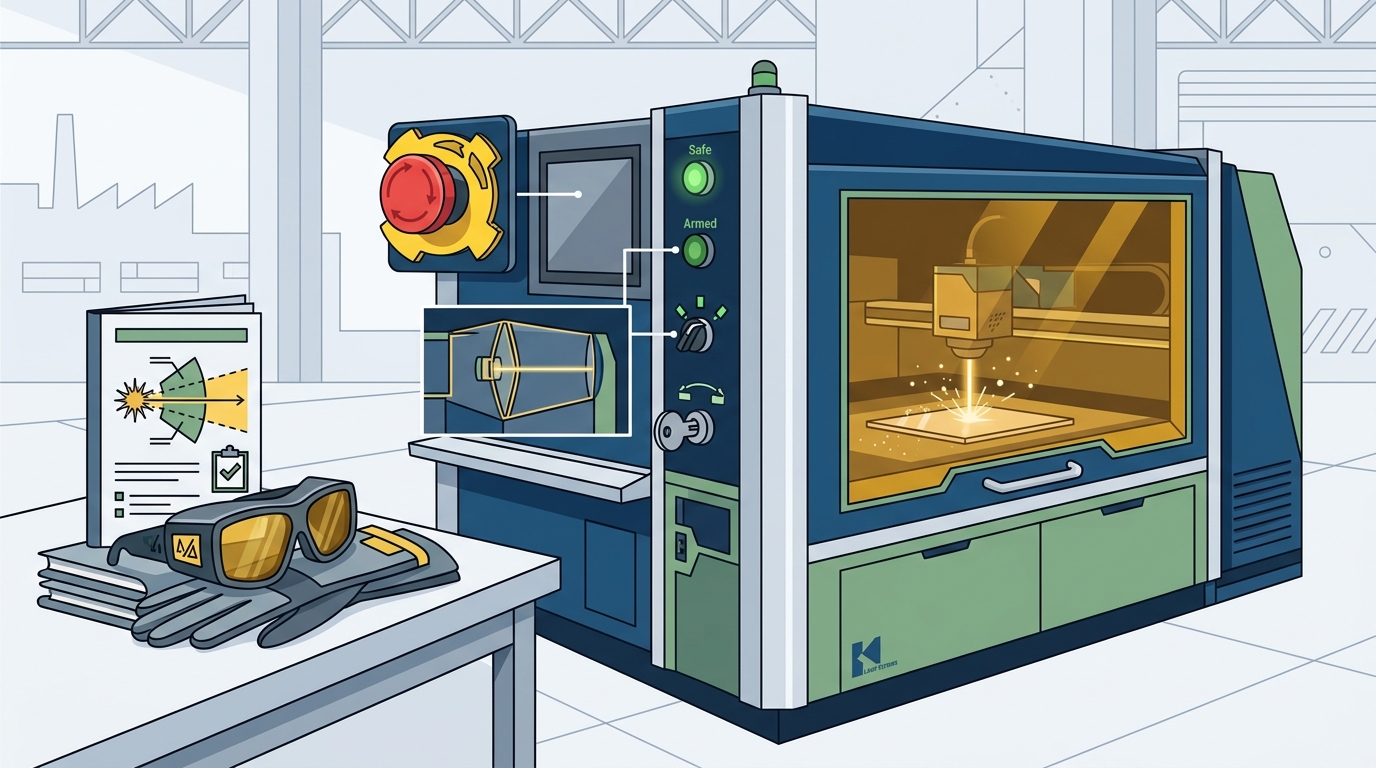
Safety Enclosures are the first line of defense. The LaserCELL and FiberCELL models feature fully enclosed Class 2 designs. These enclosures are constructed from materials that block specific wavelengths of laser radiation. The enclosures are equipped with safety interlocks that immediately shut down the laser source if the door is opened during operation. This prevents accidental exposure to the beam or reflected light.
Emergency Stop Buttons are strategically placed on the control panel and the machine frame. These buttons provide an immediate cutoff to the laser power and motion systems. In the event of a malfunction or unexpected hazard, pressing the emergency stop is the fastest way to mitigate risk.
Interlock Systems monitor the status of all access points. If any door, panel, or cover is not securely closed, the system will not initiate the laser. This fail-safe mechanism ensures that the laser cannot operate unless the machine is properly sealed. Operators should regularly test these interlocks to ensure they are functioning correctly.
K-Vision Camera Registration is another safety-enhancing feature. By using a camera system to align preprinted materials, the K-Vision technology reduces the need for manual adjustments while the laser is active. This minimizes the time operators spend near the cutting area and reduces the risk of accidental exposure during setup.
Personal Protective Equipment (PPE) Requirements
Even with advanced hardware protections, Personal Protective Equipment (PPE) is a critical component of laser safety. PPE serves as the final barrier between the operator and potential hazards.
Laser Safety Glasses are mandatory when operating or maintaining laser equipment. These glasses are specifically designed to block the wavelength of the laser being used. For CO2 lasers, which operate at a wavelength of 10,600 nanometers, specialized glasses with an Optical Density (OD) rating appropriate for that wavelength are required. For fiber lasers, which operate at 1,064 nanometers, different specifications are necessary. Using the wrong type of glasses can result in severe eye injury.
Protective Clothing should be made of non-flammable materials. Synthetic fabrics can melt onto the skin if exposed to heat or sparks. Cotton or other natural fibers are preferred for their resistance to ignition. Long sleeves and pants are recommended to protect the skin from UV radiation and accidental sparks.
Respiratory Protection may be necessary depending on the materials being processed. Cutting or engraving certain plastics, woods, or composites can release toxic fumes and particulates. While the machine's ventilation system handles most of this, operators should wear appropriate masks if working in poorly ventilated areas or processing hazardous materials.
Foot Protection is also important. Heavy machinery and materials pose a risk of foot injury. Steel-toed boots are recommended in industrial environments to protect against falling objects.
Standard Operational Procedures
Establishing and following standard operational procedures (SOPs) is essential for maintaining a safe work environment. These procedures should be documented, communicated, and regularly reviewed.
Pre-Operation Checks should include verifying that all safety interlocks are functional, the enclosure is secure, and the ventilation system is operating correctly. Operators should also ensure that the work area is clean and free of flammable materials. Any obstructions near the laser path should be removed to prevent accidental fires or beam deflection.
Material Preparation is a critical step. Some materials, such as PVC or polyvinyl chloride, release chlorine gas when cut, which is toxic and corrosive to the machine. These materials should never be processed in industrial laser equipment. Always consult the material safety data sheet (MSDS) before processing any new material.
Monitoring During Operation requires constant vigilance. Operators should never leave a running laser unattended. If the machine makes unusual noises, produces excessive smoke, or shows signs of malfunction, the operation should be stopped immediately. The emergency stop button should be used if the situation cannot be resolved quickly.
Post-Operation Procedures include allowing the machine to cool down before handling the workpiece. Hot materials can cause burns or ignite nearby combustibles. The work area should be cleaned of debris and dust to prevent fire hazards. The machine should be powered down and locked out if maintenance is required.
Ventilation and Air Quality Management
Proper ventilation is crucial for maintaining air quality and preventing the accumulation of hazardous fumes and particulates. Industrial laser cutting and engraving generate significant amounts of smoke and dust, which can be harmful to human health and damage the machine.
Extraction Systems must be sized appropriately for the laser's power and the materials being processed. The extraction system should capture fumes at the source, before they can disperse into the workspace. Regular maintenance of the extraction filters and ducts is necessary to ensure optimal performance.
Filtration Units help remove particulates and odors from the exhaust air. HEPA filters can capture fine particles, while carbon filters can absorb toxic gases. The choice of filtration depends on the materials being processed. For example, cutting acrylic produces less toxic fumes than cutting PVC, but both require adequate extraction.
Airflow Monitoring should be conducted regularly to ensure that the ventilation system is maintaining safe air quality levels. Sensors can be installed to detect high levels of particulates or toxic gases, triggering alarms if thresholds are exceeded. This proactive approach helps prevent exposure to harmful substances.
Emergency Response and Maintenance
Preparing for emergencies is a key aspect of laser safety. Operators should be trained on how to respond to various incidents, including fires, equipment malfunctions, and accidental exposure.
Fire Safety is a major concern with Class 4 lasers. Lasers can ignite combustible materials, leading to fires. Fire extinguishers rated for electrical and chemical fires should be readily available. Operators should know how to use them and when to evacuate the area.
Equipment Maintenance must be performed by qualified personnel. Regular inspection of the laser source, optics, and safety interlocks is necessary to ensure they are functioning correctly. Any damaged or worn components should be replaced immediately. Maintenance logs should be kept to track service history and identify potential issues.
Training and Certification are essential for all operators. Laser safety training should cover the specific hazards of the equipment, the proper use of PPE, and emergency procedures. Operators should be certified in laser safety before operating the machine independently. Refresher training should be conducted regularly to reinforce safety practices.
Key Takeaways
- Kern Laser Systems has been manufacturing industrial laser equipment since 1982, prioritizing safety through enclosed Class 1 designs.
- Class 4 lasers pose significant risks, including eye damage and fire hazards, requiring strict engineering controls.
- Safety interlocks automatically shut down the laser if the enclosure is opened, preventing accidental exposure.
- Laser safety glasses must be matched to the specific wavelength of the laser source (e.g., 10,600 nm for CO2).
- Never process PVC or other chlorine-containing materials, as they release toxic gases when cut.
- Proper ventilation and filtration are essential to remove toxic fumes and particulates from the workspace.
- Regular maintenance and operator training are critical for maintaining a safe manufacturing environment.
Frequently Asked Questions
What is the difference between Class 1 and Class 4 lasers?
Class 1 lasers are safe under all conditions of normal use, typically because the laser source is fully enclosed. Class 4 lasers are high-power devices that can cause immediate eye and skin damage and ignite materials, requiring strict safety controls.
Do I need special glasses for Kern laser machines?
Yes, you must wear laser safety glasses rated for the specific wavelength of the laser. For CO2 lasers, this is typically 10,600 nanometers. Using the wrong glasses can result in severe eye injury.
Can I cut PVC with a laser engraver?
No, PVC should never be cut with a laser. It releases chlorine gas, which is toxic to humans and corrosive to the machine's internal components.
How often should I check the safety interlocks?
Safety interlocks should be checked before every operation. Regular testing ensures that the laser shuts down immediately if the enclosure is opened.
What should I do if the laser catches fire?
Press the emergency stop button immediately. Use a fire extinguisher rated for electrical fires if safe to do so. Evacuate the area if the fire cannot be controlled quickly.
Is ventilation necessary for small laser engravers?
Yes, even small lasers produce fumes and particulates that can be harmful. Adequate ventilation is required to maintain air quality and protect the machine.
Who should perform maintenance on the laser?
Maintenance should be performed by qualified personnel or authorized service technicians. Operators should only perform routine cleaning and inspection tasks.
Where is Kern Laser Systems located?
Kern Laser Systems is headquartered in Wadena, Minnesota, in the lakes country of the Midwest. The company operates a 90,000 sq. ft. facility with 50 full-time employees.
Contact Kern Laser Systems
For more information on laser safety, equipment specifications, or to request a quote for a new laser system, please contact Kern Laser Systems directly. Their team of experts is ready to assist you in selecting the right machine for your needs and ensuring your operation meets all safety standards.
Contact Kern Laser Systems to speak with a representative today.