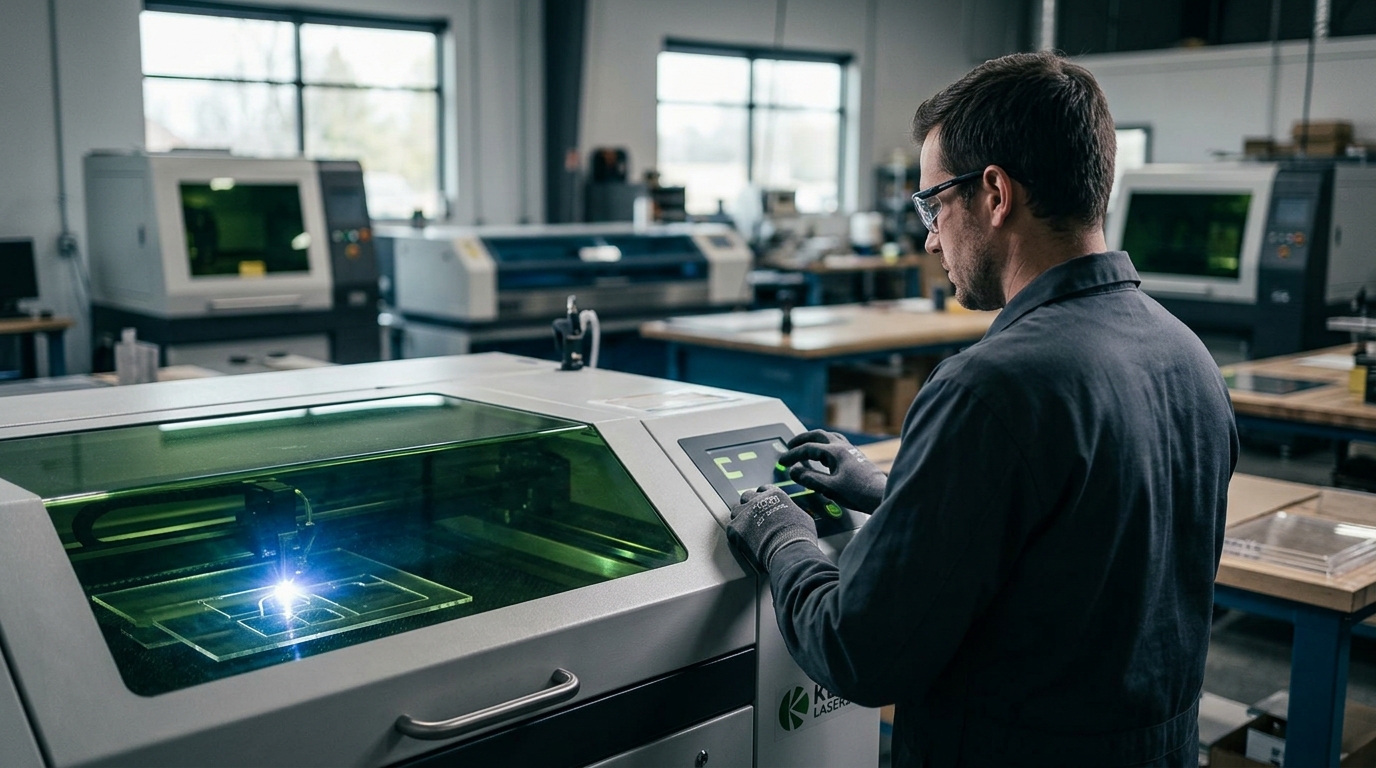
Operating high-power industrial laser equipment requires strict adherence to safety protocols to prevent severe injury and equipment damage. According to the American National Standards Institute (ANSI), proper laser safety programs reduce workplace accidents by over 90% in manufacturing environments. Kern Laser Systems has prioritized safety since its founding in 1982, integrating advanced enclosure technologies into every machine model. This guide outlines the essential safety measures for CO2 and fiber laser operators. (Laser Hazards Hazards)
Understanding Laser Hazards
Laser safety begins with recognizing the specific risks associated with different laser types. Optical radiation is the primary hazard, capable of causing eye damage or skin burns depending on the wavelength and power output. For industrial applications, understanding the difference between Class 1 and Class 4 lasers is critical for compliance. (Guidelines for Laser)
CO2 lasers, which operate at a wavelength of 10.6 micrometers, are absorbed by water in human tissue. This makes them particularly dangerous to the eyes and skin if exposed. Fiber lasers, typically used for metal cutting, emit at 1.06 micrometers and can penetrate deeper into tissue. Both types require rigorous safety controls.
Secondary hazards include electrical shock from high-voltage power supplies and fire risks from flammable materials. Kern Laser Systems designs its machines to mitigate these risks through integrated safety systems. The Laser Safety technology page details the specific engineering controls used in their equipment.
Enclosure Safety Features
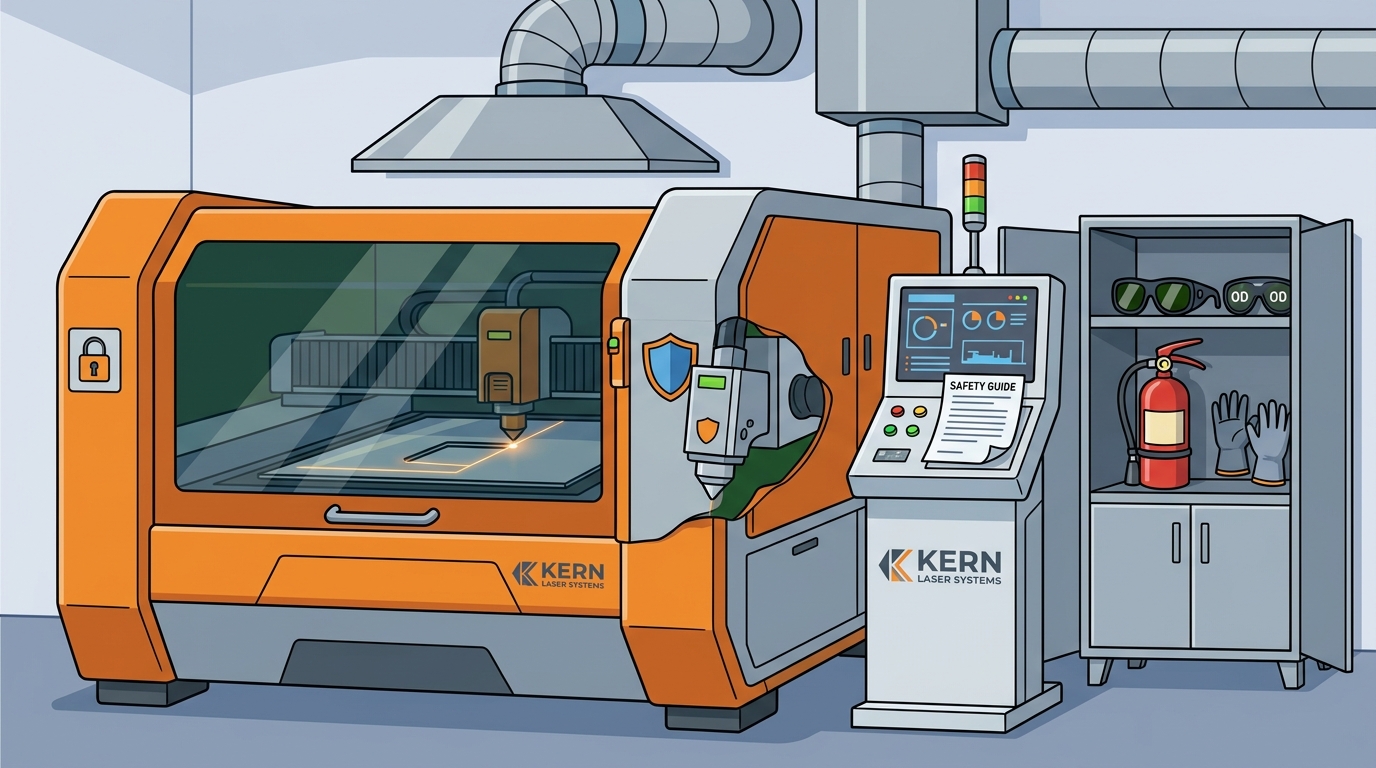
The first line of defense in industrial laser safety is the machine enclosure. Modern systems like the LaserCELL and FiberCELL feature fully enclosed Class 1 designs. This means that under normal operating conditions, the laser radiation is completely contained within the housing. (Laser Safety Guidelines)
Interlock Systems
Safety interlocks are mandatory components that cut power to the laser source when the enclosure is opened. These sensors prevent accidental exposure during maintenance or material loading. Kern’s interlock systems are tested regularly to ensure they function correctly. If an interlock fails, the machine will not operate, preventing unsafe conditions.
Exhaust and Fume Extraction
Laser processing generates fumes, smoke, and particulates that can be hazardous to breathe. Proper ventilation is essential for operator health. Kern systems are designed to connect to external fume extraction units. This ensures that toxic byproducts from materials like acrylic, PVC, or treated metals are removed from the workspace immediately.
Personal Protective Equipment (PPE)
Even with enclosed machines, operators must wear appropriate PPE. Protective eyewear is the most critical piece of equipment. The wavelength of the glasses must match the laser type. CO2 lasers require glasses rated for 10,600 nm, while fiber lasers need glasses rated for 1,060 nm.
Other recommended PPE includes:
- Fire-resistant gloves for handling hot materials.
- Long-sleeved shirts and pants to protect skin from UV radiation.
- Closed-toe shoes to protect against falling objects.
Kern Laser Systems provides detailed specifications for compatible safety glasses on their KCAM Laser Software support pages. Always consult the machine manual for specific PPE requirements.
Operational Safety Procedures
Safe operation requires strict adherence to standard operating procedures. These protocols minimize the risk of accidents and ensure consistent machine performance.
Material Selection and Preparation
Certain materials release toxic gases when laser cut. PVC, vinyl, and materials coated with halogens should never be processed in industrial lasers. Kern’s Applications & Materials guide lists safe materials for processing. Always verify material composition before loading the bed.
Machine Inspection
Before each shift, operators should inspect the machine for damage. Check the interlock sensors, lens cleanliness, and exhaust connections. Any malfunction should be reported immediately. Do not attempt to bypass safety features or remove enclosures while the machine is powered.
Fire Prevention
Lasers can ignite flammable materials. Keep a fire extinguisher rated for electrical fires near the machine. Never leave the laser unattended during operation. Kern’s OptiFlex system includes safety features to monitor for overheating, but human vigilance is still required.
Emergency Response Protocols
Knowing how to respond to emergencies is crucial for safety. In the event of a fire, use the emergency stop button to cut power to the laser. Then, use the appropriate fire extinguisher.
If a laser injury occurs, seek medical attention immediately. Inform the medical staff about the type of laser involved. This helps them provide the correct treatment for optical radiation injuries. Kern Laser Systems recommends documenting all incidents for safety review.
Training and Compliance
Regular training is essential for maintaining a safe work environment. Operators must be certified in laser safety before using industrial equipment. Kern Laser Systems offers technical support and training resources to help companies comply with OSHA and ANSI standards.
Compliance involves more than just training. It requires regular safety audits, equipment maintenance, and updating safety protocols as technology evolves. Kern’s Technical Support team can assist with compliance documentation and safety assessments.
Key Takeaways
- Enclosed Class 1 designs, like those in the LaserCELL, contain radiation effectively. (Laser Hazards Standards)
- Interlock systems are critical for preventing exposure during maintenance.
- PPE must match the laser wavelength, typically 10,600 nm for CO2 or 1,060 nm for fiber. (Keys to Building)
- Never process PVC or halogen-coated materials due to toxic gas risks.
- Regular training and compliance with ANSI Z136 standards are mandatory.
- Fume extraction is essential to protect operator health from airborne particulates.
- Kern Laser Systems has been manufacturing safe, reliable laser equipment since 1982. (Laser safety Risks)
Frequently Asked Questions
What is the primary safety feature of Kern Laser Systems machines?
Kern machines feature fully enclosed Class 1 designs with safety interlocks that cut power when the enclosure is opened. This ensures that laser radiation is contained during normal operation.
Can I process PVC with a CO2 laser?
No, PVC should never be processed with a CO2 laser. It releases chlorine gas, which is toxic to humans and corrosive to the machine. Kern’s Applications page lists safe materials for processing.
What type of PPE is required for fiber laser cutting?
Operators must wear protective eyewear rated for 1,060 nm wavelength. Fire-resistant gloves and long-sleeved clothing are also recommended to protect against UV radiation and hot materials.
How often should laser safety interlocks be tested?
Interlocks should be tested daily before operation. Regular maintenance schedules should include comprehensive testing of all safety systems to ensure they function correctly.
What should I do if the laser fume extraction fails?
Stop the machine immediately. Do not continue processing until the fume extraction system is repaired. Poor ventilation can lead to hazardous air quality and equipment damage.
Is Kern Laser Systems equipment compliant with OSHA standards?
Yes, Kern designs its machines to meet or exceed OSHA and ANSI Z136 safety standards. Their Technical Support team can provide compliance documentation.
What is the warranty on Kern laser sources?
Kern offers a 3-year warranty on CO2 laser sources. This warranty covers defects in materials and workmanship, ensuring long-term reliability for industrial users.
Contact Kern Laser Systems
For more information on laser safety protocols or to request a quote for a safe, high-performance laser system, contact Kern Laser Systems. Their team of experts is ready to help you establish a safe and productive manufacturing environment. Visit the Contact Us page to get started.