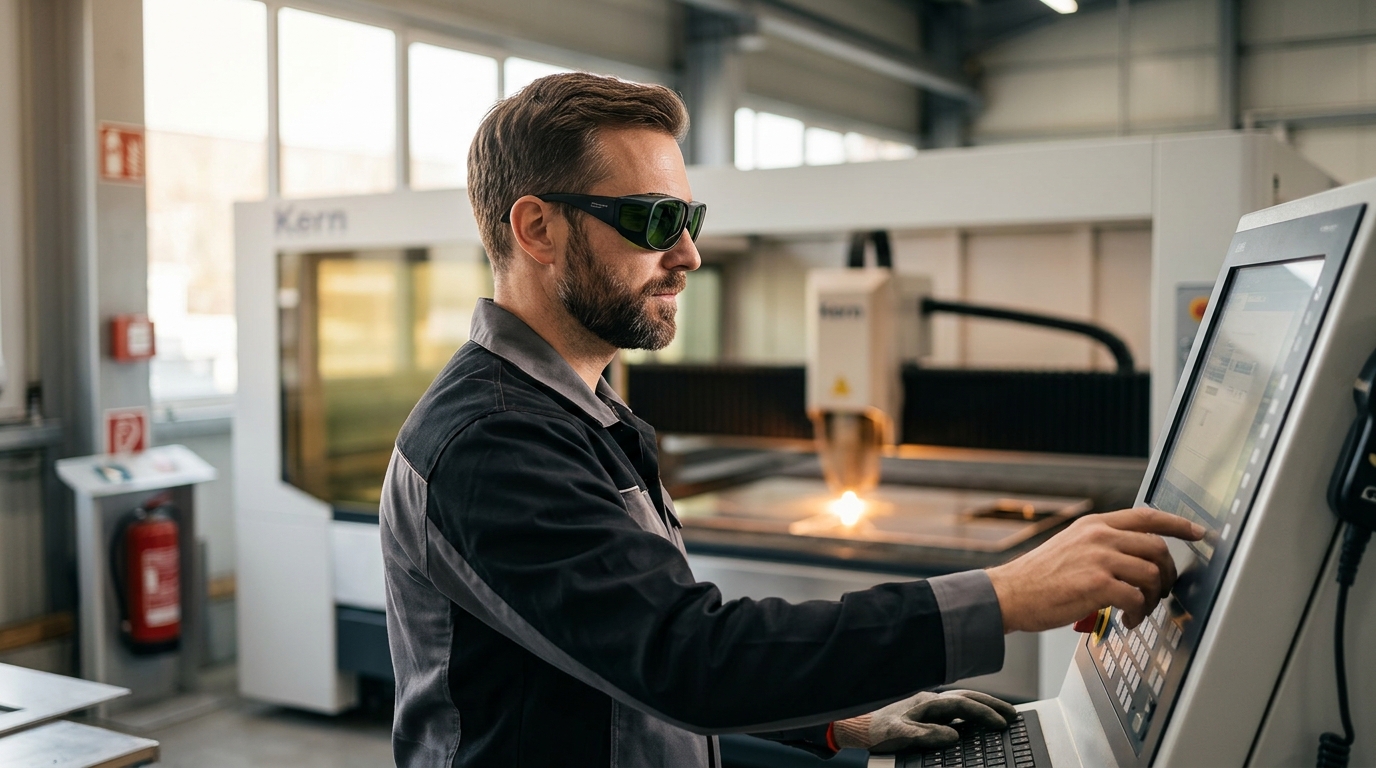
Industrial laser safety is not merely a regulatory checkbox; it is the foundational pillar of sustainable manufacturing operations. According to the American National Standards Institute (ANSI Z136.1), strict adherence to laser safety protocols reduces the risk of severe ocular and dermal injuries by over 90% in high-power environments. As manufacturing facilities increasingly adopt high-wattage CO2 and fiber laser systems for rapid prototyping and mass production, the margin for error shrinks significantly. Operators must navigate a complex landscape of engineering controls, administrative policies, and personal protective equipment (PPE) to ensure both personnel safety and equipment longevity. (Kern Customer Login Area)
Engineering Controls and Enclosures
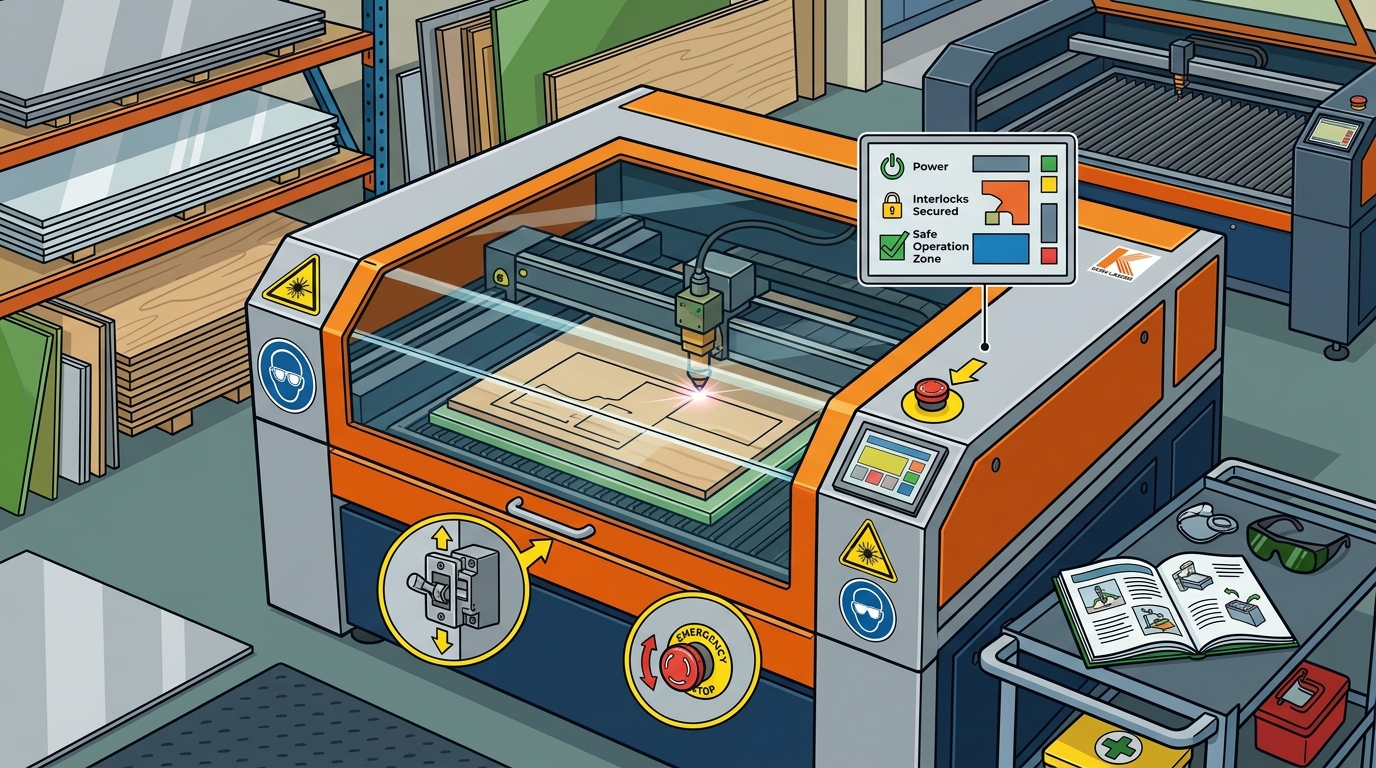
The first line of defense in any industrial laser environment is robust engineering control. These physical barriers are designed to contain the laser beam and prevent accidental exposure to operators and bystanders. For high-power systems, such as those found in heavy manufacturing, interlocked enclosures are mandatory. These systems automatically shut down the laser source if the enclosure is opened or if a safety sensor detects a breach. (About Kern Laser Systems)
Kern Laser Systems emphasizes the importance of integrated safety features in their LaserCell and FiberCell systems. These units come equipped with high-performance safety enclosures that isolate the laser radiation from the operator. The enclosure must be constructed of materials that absorb or reflect the specific wavelength of the laser being used, preventing leakage through seams or viewing windows. (Laser Cutting and Laser)
Interlock Systems
Interlocks are critical components that ensure the laser cannot operate when the safety enclosure is compromised. These devices must be regularly tested to verify their functionality. A failed interlock can result in catastrophic exposure to Class 4 laser radiation, which is capable of causing immediate eye damage and igniting combustible materials.
Beam Path Containment
Beyond the primary enclosure, the entire beam path must be shielded. This includes the delivery mirrors, the focusing lens, and the exhaust system. Any exposed beam path, even for a fraction of a second, poses a significant risk. Proper shielding ensures that stray reflections, which are often the cause of accidental injuries, are contained within the machine's housing.
PPE Requirements and Selection
Personal Protective Equipment (PPE) serves as the final barrier between the operator and potential laser hazards. However, PPE should never be relied upon as the sole method of protection. It is a supplementary measure used when engineering controls are insufficient or during maintenance procedures where the laser must be manually operated.
Selecting the correct laser safety glasses is one of the most critical decisions an operator makes. The eyewear must be rated for the specific wavelength and optical density (OD) of the laser in use. For example, CO2 lasers operate at a wavelength of 10,600 nm, while fiber lasers typically operate at 1,070 nm. Using glasses rated for one wavelength to protect against another can result in complete failure to block the radiation.
Optical Density Ratings
Optical Density (OD) measures the attenuation of the laser beam. An OD of 4+ means the glasses reduce the laser intensity by a factor of 10,000. For high-power industrial lasers, an OD rating that provides sufficient attenuation for the maximum power output is essential. Operators must consult the laser's safety data sheet to determine the required OD for their specific application.
Additional PPE
Depending on the material being processed, operators may also require flame-resistant clothing, respirators, and hearing protection. Laser cutting and engraving can generate fumes, particulates, and noise that pose secondary health risks. Proper PPE selection must account for all potential hazards associated with the specific manufacturing process.
Administrative Procedures and Training
Engineering controls and PPE are ineffective without a strong administrative framework. This includes comprehensive training programs, clear operating procedures, and designated safety zones. The Laser Safety Officer (LSO) plays a pivotal role in enforcing these protocols and ensuring compliance with local and international safety standards.
Training must be ongoing and tailored to the specific equipment and materials used in the facility. Operators should understand the principles of laser safety, the hazards associated with their specific machine, and the emergency procedures to follow in case of an accident. Regular drills and refresher courses help reinforce these concepts and keep safety top of mind.
Access Control
Access to laser operating areas should be strictly controlled. Only trained and authorized personnel should be allowed to operate or maintain the equipment. Warning signs and laser hazard labels must be clearly visible at all entry points to the laser area. These signs should indicate the class of the laser, the wavelength, and the maximum power output.
Standard Operating Procedures (SOPs)
Developing and maintaining detailed SOPs is crucial for consistent safety performance. These documents should outline step-by-step instructions for startup, operation, shutdown, and emergency response. SOPs must be reviewed and updated regularly to reflect changes in equipment, materials, or safety regulations.
Material Processing Hazards
Different materials react differently when exposed to high-intensity laser beams. Understanding these reactions is vital for preventing fires, explosions, and toxic fume exposure. The applications and materials guide provided by manufacturers like Kern Lasers offers valuable insights into how various substances behave under laser processing.
Combustible Materials
Wood, acrylic, and certain plastics are highly susceptible to ignition when cut or engraved with high-power lasers. Proper ventilation and fire suppression systems are essential. Operators must never leave a running laser unattended, especially when processing combustible materials. Fire extinguishers rated for electrical and chemical fires should be readily available in the laser area.
Toxic Fumes
Processing certain materials, such as PVC or treated woods, can release toxic gases like chlorine or cyanide. These fumes are hazardous to human health and can damage the laser optics. An effective exhaust system with appropriate filtration is mandatory to remove these contaminants from the workspace. Regular monitoring of air quality ensures that fume levels remain within safe limits.
Reflective Materials
Metals and other reflective surfaces pose a unique challenge. Uncontrolled reflections can bounce off the material and strike the operator or other equipment. Using matte finishes or applying anti-reflective coatings can help mitigate this risk. Additionally, ensuring that the beam path is properly aligned and shielded reduces the likelihood of stray reflections.
Emergency Response Protocols
Despite rigorous safety measures, emergencies can still occur. Having a clear and practiced emergency response plan is essential for minimizing harm. This plan should include procedures for laser malfunction, fire, electrical shock, and medical emergencies.
Emergency Stop Buttons
Every laser system must be equipped with easily accessible emergency stop buttons. These buttons should immediately cut power to the laser source and activate any safety interlocks. Operators must be trained on the location and function of these buttons and encouraged to use them in any situation where safety is compromised.
Fire Response
In the event of a fire, the laser should be shut down immediately, and the fire suppression system activated if available. If the fire is small and contained, a suitable fire extinguisher can be used. However, if the fire spreads or involves electrical components, the area should be evacuated, and emergency services contacted.
Medical Emergencies
If an operator suffers from laser eye injury or skin burns, immediate medical attention is required. First aid kits should be stocked with supplies for treating eye injuries and burns. All incidents, regardless of severity, must be reported and investigated to prevent future occurrences.
Key Takeaways
- Engineering Controls are Primary: Interlocked enclosures and beam path shielding are the most effective ways to prevent laser exposure.
- PPE Must Be Specific: Laser safety glasses must match the wavelength and power of the laser in use; generic glasses offer no protection.
- Training is Continuous: Regular updates on safety protocols and emergency procedures are essential for all personnel.
- Material Hazards Vary: Different materials produce different risks, including fire, toxic fumes, and reflections.
- Emergency Preparedness: Clear protocols for fire, medical, and equipment emergencies save lives and property.
- Compliance is Mandatory: Adhering to ANSI Z136.1 and local regulations is not optional for industrial operations.
- Manufacturer Guidelines: Always follow the specific safety recommendations provided by the laser equipment manufacturer.
Frequently Asked Questions
What is the most critical safety feature in an industrial laser system?
The most critical safety feature is the interlocked safety enclosure. This system prevents the laser from operating when the enclosure is open, protecting operators from direct and reflected beam exposure.
How often should laser safety glasses be replaced?
Laser safety glasses should be replaced immediately if they are scratched, cracked, or damaged. Even minor damage can compromise the optical density and fail to protect the eyes. Regular inspection is recommended.
Can I operate a laser without an enclosure?
No, operating a Class 4 industrial laser without an enclosure is extremely dangerous and often illegal. Enclosures are required to contain the beam and prevent accidental exposure to personnel.
What should I do if I smell burning during laser operation?
Stop the laser immediately. Check for smoldering materials or electrical issues. Ensure the exhaust system is functioning correctly. Do not resume operation until the cause is identified and resolved.
Are there specific regulations for laser safety in the USA?
Yes, the American National Standards Institute (ANSI) publishes Z136.1, which is the primary standard for laser safety in the United States. Compliance with this standard is widely regarded as best practice.
How do I choose the right exhaust system for my laser?
The exhaust system must be matched to the materials being processed. Consider the volume of fumes generated, the toxicity of the byproducts, and the filtration requirements. Consult with the laser manufacturer for recommendations.
What is the role of a Laser Safety Officer (LSO)?
An LSO is responsible for overseeing the laser safety program, conducting audits, ensuring training compliance, and investigating incidents. They act as the primary point of contact for all laser safety matters.
Secure Your Manufacturing Operations Today
Implementing robust laser safety protocols is an investment in your workforce and your business continuity. By prioritizing engineering controls, proper PPE, and comprehensive training, you create a safer, more efficient manufacturing environment. Explore our range of high-performance laser systems designed with safety at their core. Contact our team to discuss how we can help you achieve operational excellence. Visit our contact page to request a quote or schedule a consultation.