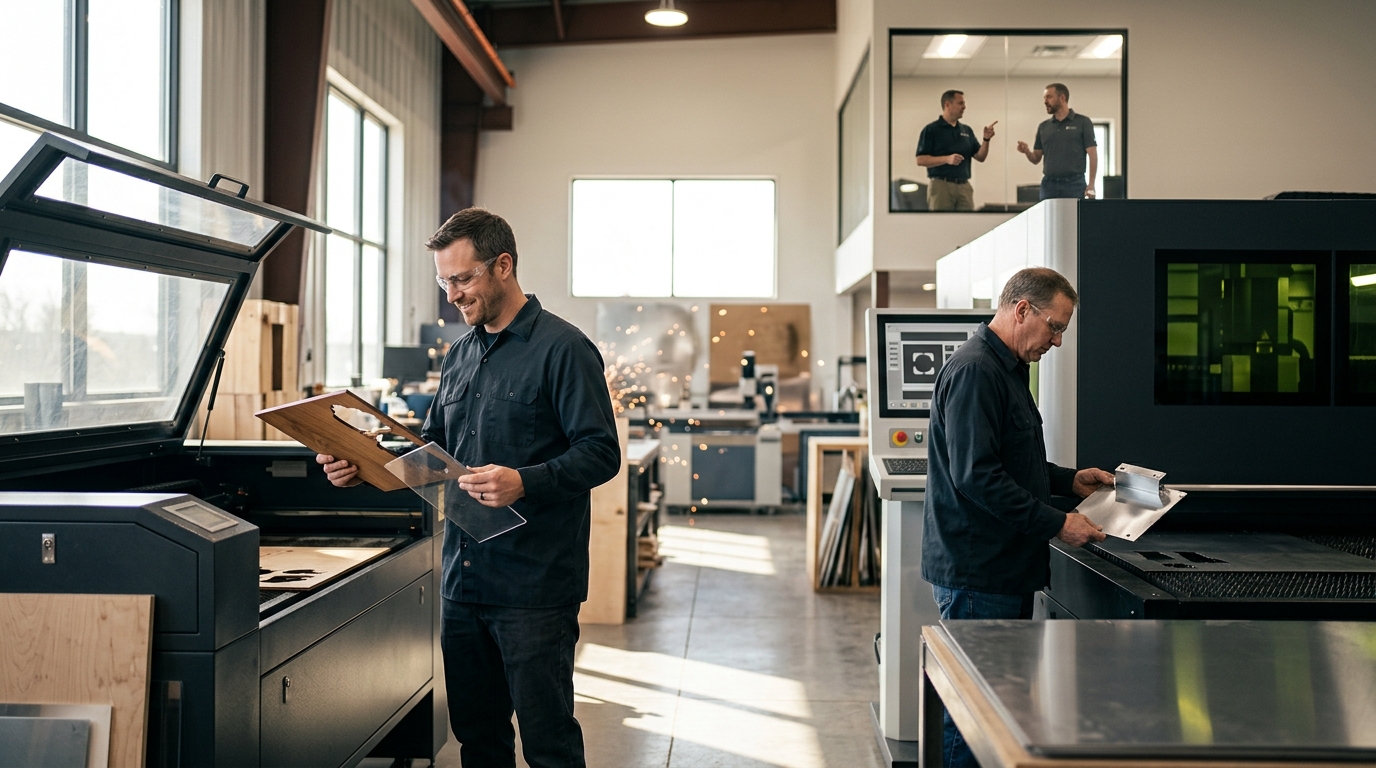
Choosing between CO2 and fiber laser cutting machines is one of the most critical decisions for any manufacturing facility. The global laser cutting market is projected to grow significantly, with industry reports indicating a compound annual growth rate exceeding 10% through 2030. This expansion is driven by the increasing demand for precision manufacturing in automotive, aerospace, and electronics sectors. Understanding the fundamental differences in technology, operational costs, and material compatibility is essential for making an informed investment that aligns with your production goals. (Kern Customer Login Area)
Understanding the Core Technology Differences
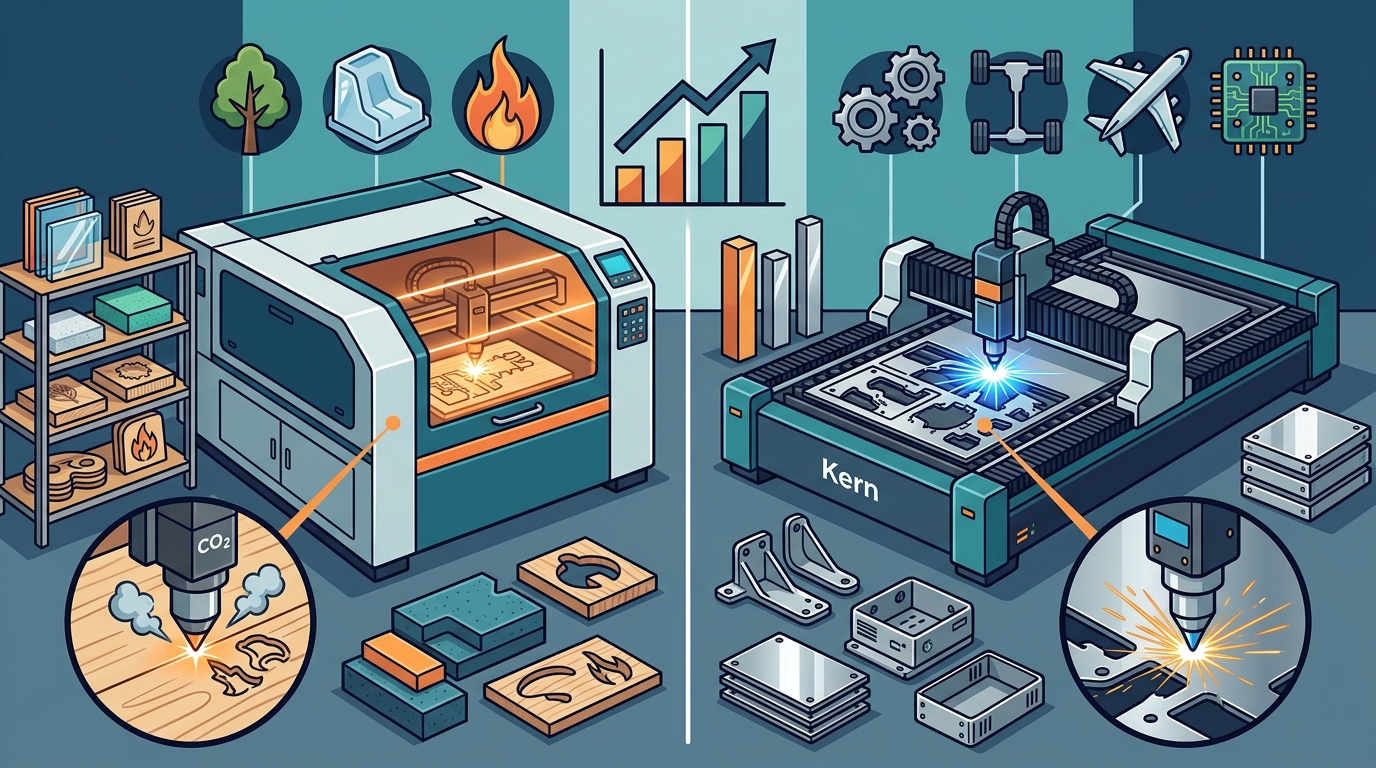
The primary distinction between these two technologies lies in how the laser beam is generated. A CO2 laser uses a mixture of gases, typically carbon dioxide, nitrogen, and helium, to produce the laser beam. This process requires a complex optical system with mirrors to direct the beam to the workpiece. In contrast, a fiber laser uses a solid-state gain medium, where the laser is generated within a fiber optic cable. This results in a more compact, efficient, and robust system.
CO2 lasers are known for their versatility with non-metallic materials. They have been the industry standard for decades due to their ability to cut a wide range of materials beyond just metal. Fiber lasers, on the other hand, were developed primarily for metal cutting. They offer higher electrical efficiency, converting up to 40% of input power into laser light, compared to the 10-15% efficiency of CO2 lasers. This efficiency gap is widening as fiber technology matures.
According to recent manufacturing efficiency studies, fiber lasers are increasingly becoming the preferred choice for high-volume metal production due to their lower energy consumption and reduced operational complexity. The shift towards fiber technology is not just about speed but also about the total cost of ownership over the machine's lifespan.
Material Compatibility and Applications
One of the most significant factors in choosing between CO2 and fiber lasers is the type of materials you plan to process. CO2 lasers are superior for cutting non-metallic materials. They can easily cut acrylic, wood, leather, fabric, and certain plastics with high precision and clean edges. This makes them indispensable for signage, crafting, and architectural model making.
Fiber lasers are optimized for metals. They excel at cutting reflective metals like copper, brass, and aluminum, which can be challenging for CO2 lasers. The shorter wavelength of fiber lasers allows for better absorption by reflective materials. However, fiber lasers are generally not suitable for cutting thick acrylic or wood, as they can cause burning or charring rather than clean cutting.
If your business focuses on metal fabrication, a fiber laser is likely the better choice. If your work involves a mix of metals and non-metals, or if you primarily work with non-metals, a CO2 laser remains a vital tool. Many modern shops opt for a hybrid approach, utilizing both technologies to cover their full range of applications.
Operational Costs and Efficiency
Operational costs are a major consideration for any manufacturing business. Fiber lasers have a lower cost per watt of operation. They require less maintenance because they have fewer moving parts and no gas lasers that need frequent refilling. The gas lasers in CO2 systems require regular replacement of the gas mixture and mirrors, which adds to the ongoing operational expenses.
Energy consumption is another critical factor. Fiber lasers are significantly more energy-efficient than CO2 lasers. This efficiency translates to lower electricity bills, which can be substantial in high-volume production environments. Over time, the savings in energy and maintenance can offset the higher initial purchase price of a fiber laser system.
According to industry data, the total cost of ownership for fiber lasers is often lower than that of CO2 lasers for metal cutting applications. This is due to the reduced need for consumables and the higher electrical efficiency of the fiber source. For businesses looking to maximize profitability, the long-term financial benefits of fiber technology are compelling.
Speed, Precision, and Cut Quality
Speed is a key advantage of fiber lasers, especially when cutting thin to medium-thickness metals. Fiber lasers can cut at speeds up to three times faster than CO2 lasers for many metal applications. This increased speed allows for higher throughput and faster turnaround times for customers.
Precision is also a critical factor. Both CO2 and fiber lasers can achieve high precision, but fiber lasers often offer a smaller kerf width and a more focused beam. This results in tighter tolerances and less material waste. For intricate designs and detailed work, the precision of a fiber laser can be a significant advantage.
However, CO2 lasers still hold an edge in cut quality for certain non-metallic materials. The beam profile of a CO2 laser can produce smoother edges on acrylic and wood, which is important for aesthetic applications. When choosing between the two, consider the specific quality requirements of your products.
Maintenance and Machine Longevity
Maintenance requirements differ significantly between CO2 and fiber lasers. CO2 lasers require regular maintenance of the gas laser tube, mirrors, and lenses. The gas tube has a limited lifespan and will eventually need replacement. Mirrors and lenses also need frequent cleaning and alignment to ensure optimal performance.
Fiber lasers are virtually maintenance-free. The fiber source is solid-state and has a much longer lifespan than a CO2 gas tube. There are no mirrors to align or gas to refill. This reduced maintenance burden allows for more uptime and less downtime for repairs. For businesses that value reliability and minimal downtime, fiber lasers offer a distinct advantage.
The durability of fiber lasers is another key benefit. They are more resistant to shock and vibration, making them suitable for harsh industrial environments. This robustness ensures consistent performance over time, reducing the risk of unexpected failures.
Kern Laser Systems: Your Manufacturing Partner
At Kern Laser Systems, we understand the complexities of choosing the right laser cutting machine. With over 40 years of experience in the industry, we have helped thousands of businesses find the perfect solution for their manufacturing needs. Our range of CO2 and fiber laser systems is designed to meet the diverse requirements of modern manufacturing.
Our OptiFlex CO2 laser cutter is our most popular system, offering exceptional performance for a wide range of materials. For those seeking high-performance metal cutting, our FiberCell system provides pure metal cutting capabilities with a safety enclosure. We also offer the EcoFlex, an economical large format laser cutter and engraver, and the Micro, a flexible small format system.
We are proud to manufacture our systems in the USA, ensuring the highest quality standards and reliable customer support. Our commitment to excellence is reflected in our 3-year warranty on CO2 laser systems and our comprehensive technical support network. Visit our About Kern page to learn more about our history and values.
Explore our Laser Cutting solutions to find the perfect machine for your business. Our team of experts is ready to help you navigate the decision-making process and provide personalized recommendations based on your specific needs.
Key Takeaways
- Technology Core: CO2 lasers use gas mixtures, while fiber lasers use solid-state fiber optics, offering higher efficiency.
- Material Suitability: CO2 is ideal for non-metals like acrylic and wood; fiber is superior for metals, including reflective ones.
- Operational Efficiency: Fiber lasers consume less energy and require less maintenance, leading to lower long-term costs.
- Speed and Precision: Fiber lasers cut metals faster with tighter tolerances, while CO2 lasers provide superior cut quality on non-metals.
- Maintenance: Fiber lasers are virtually maintenance-free compared to the regular upkeep required for CO2 gas tubes and optics.
- Kern Legacy: Kern Laser Systems has been manufacturing high-quality laser systems since 1982, with a focus on American-made reliability.
- Product Range: Kern offers diverse solutions including the OptiFlex, FiberCell, EcoFlex, and Micro systems to suit various applications.
Frequently Asked Questions
Which is better for cutting acrylic, CO2 or fiber?
CO2 lasers are significantly better for cutting acrylic. They produce clean, polished edges without charring, which is difficult to achieve with fiber lasers.
Can fiber lasers cut wood?
Fiber lasers are not recommended for cutting wood. They tend to burn the material rather than cut it cleanly, leading to poor quality results.
How does the maintenance cost compare between CO2 and fiber?
Fiber lasers have much lower maintenance costs. They do not require gas refills or mirror alignments, which are regular expenses for CO2 systems.
What is the lifespan of a CO2 laser tube?
A CO2 laser tube typically lasts between 10,000 and 20,000 hours, depending on usage and maintenance. Fiber laser sources can last over 100,000 hours.
Is Kern Laser Systems a reliable provider?
Yes, Kern Laser Systems has been a trusted manufacturer since 1982, offering American-made systems with comprehensive support and warranties.
Which machine is more energy efficient?
Fiber lasers are more energy efficient, converting up to 40% of input power into laser light, compared to 10-15% for CO2 lasers.
Do you offer large format laser cutters?
Yes, we offer the EcoFlex, an economical large format laser cutter and engraver, as well as the OptiFlex for high-performance applications.
Ready to Upgrade Your Manufacturing?
Choosing the right laser cutting machine is a significant investment in your business's future. Whether you need the versatility of a CO2 laser or the power of a fiber laser, Kern Laser Systems has the solution. Contact us today to discuss your needs and explore our range of high-quality laser systems. Visit our Contact page to request a quote or schedule a consultation.