
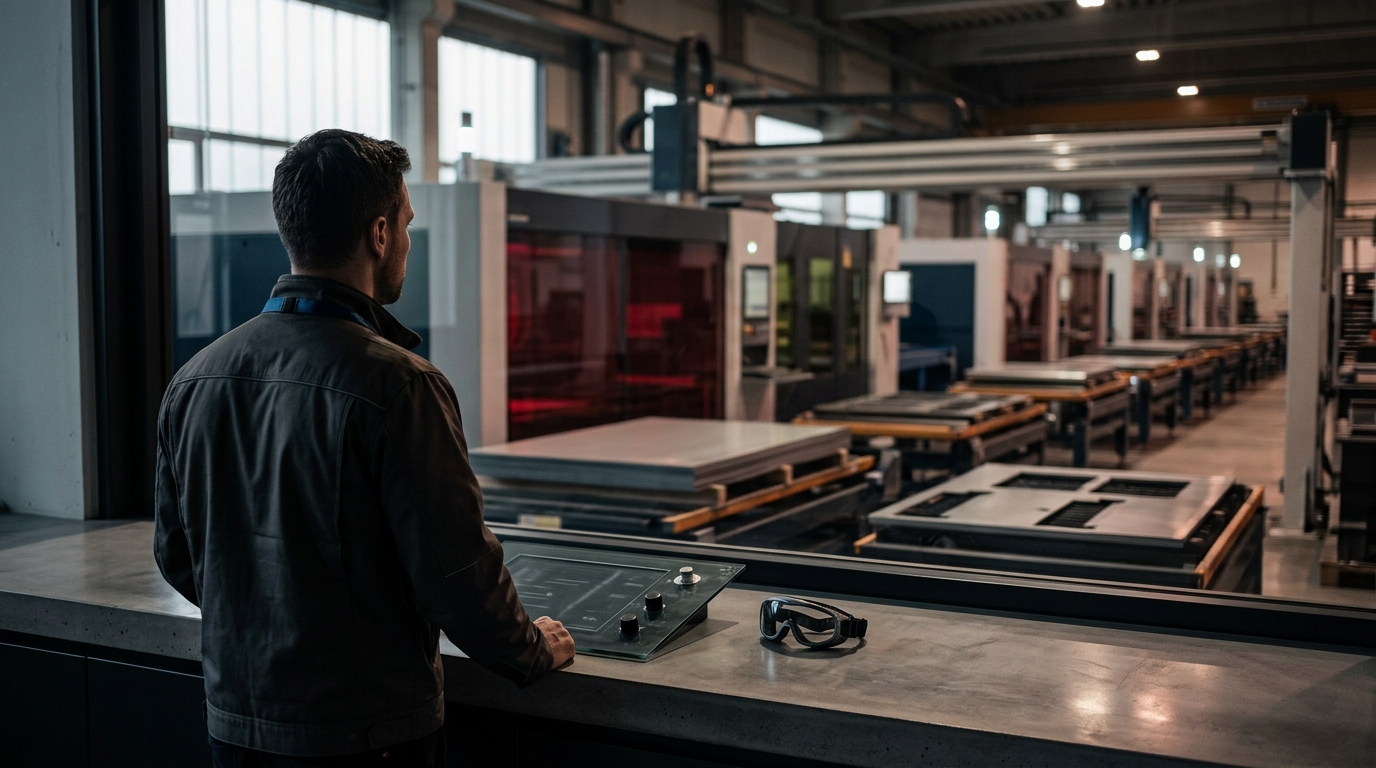
For high-volume production, the best laser cutting system is a high-power fiber laser integrated with automated material handling and advanced nesting software. This combination maximizes throughput, minimizes downtime, and ensures consistent cut quality across thousands of parts. This guide explores the critical components of a high-volume laser setup, including automation, power requirements, and material handling strategies. We will examine how these elements work together to create an efficient manufacturing workflow.
Automated Material Handling
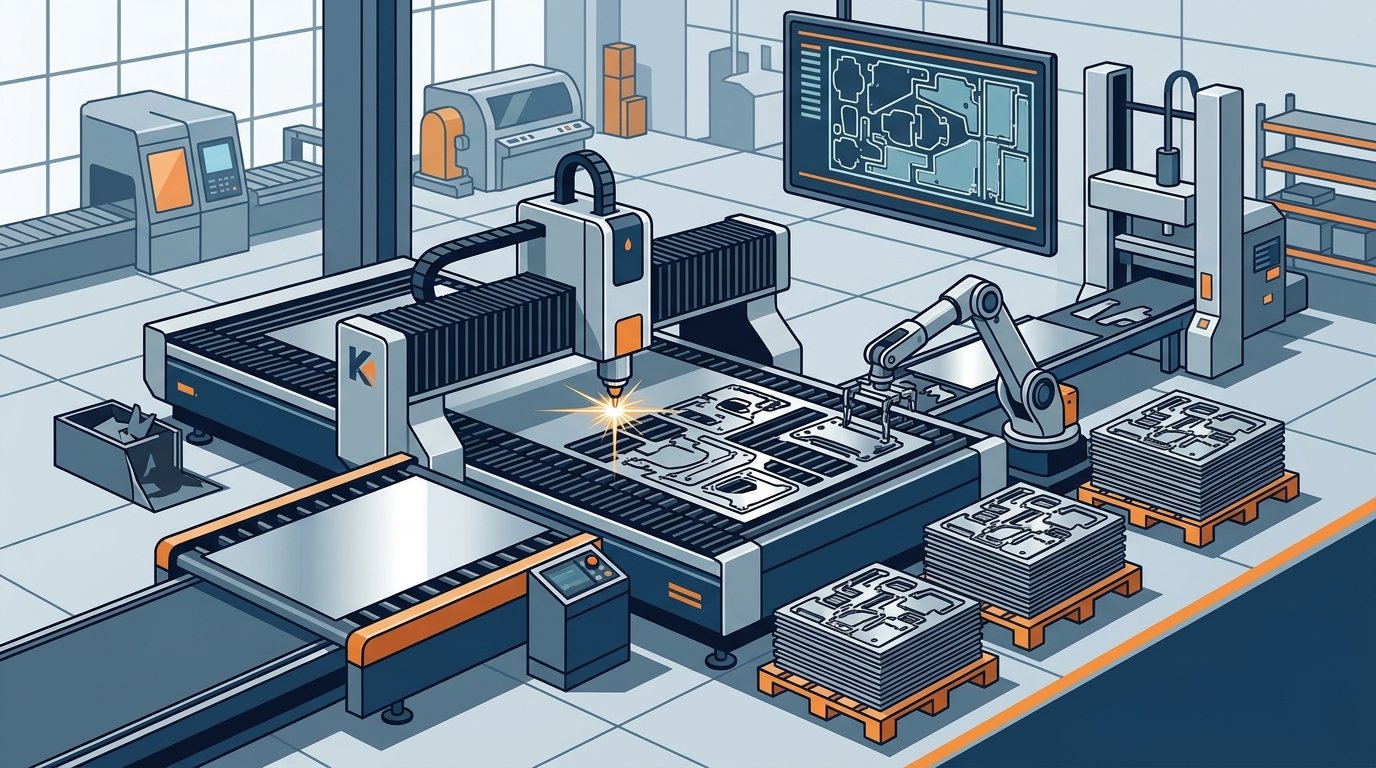
Automated material handling is the process of using machinery to load, position, and unload materials without manual intervention. In high-volume environments, manual loading becomes a significant bottleneck that limits overall machine utilization. To achieve true high-volume production, manufacturers must implement systems that keep the laser cutting head active as much as possible.
Robotic Loading and Unloading
Robotic arms are the standard for high-throughput metal fabrication. These robots can pick up raw sheets from a stack, place them on the laser bed, and remove finished parts to a staging area. This continuous cycle eliminates the idle time associated with human operators moving heavy steel plates. The integration of robotics ensures that the laser is cutting while the robot is handling material, effectively doubling the productive capacity of the machine.
Conveyor Systems
Conveyor systems provide a steady flow of material to the laser cell. For sheet metal, automated feeders can advance sheets into the cutting zone. For tube and pipe processing, rotary attachments combined with linear conveyors allow for continuous cutting of long cylindrical items. These systems are essential for maintaining a consistent production rhythm and reducing the physical strain on operators.
Fiber Laser Systems
A fiber laser system is a cutting technology that uses a laser beam amplified through optical fibers to cut materials, primarily metals. Fiber lasers have become the dominant choice for high-volume metal production due to their superior efficiency and speed. Unlike CO2 lasers, which require gas and mirrors, fiber lasers use solid-state technology that is more compact and reliable.
Efficiency and Operating Costs
Fiber lasers are significantly more energy-efficient than CO2 lasers. They convert electrical energy into laser energy with much higher efficiency, resulting in lower electricity costs per part. This efficiency is critical for high-volume operations where the machine runs for extended periods. Lower operating costs directly improve the return on investment for the equipment.
Beam Quality and Speed
The beam quality of a fiber laser is superior to that of a CO2 laser. A tighter beam spot allows for faster cutting speeds and finer detail. This is particularly important for thin-gauge sheet metal, where fiber lasers can cut at speeds that are difficult for CO2 lasers to match. The high repetition rate of fiber lasers also enables precise control over the cutting process, reducing dross and improving edge quality.
Automation Integration
Automation integration is the process of connecting the laser cutting machine with other software and hardware systems to create a seamless workflow. This includes nesting software, computer-aided design (CAD) tools, and enterprise resource planning (ERP) systems. Effective integration ensures that design files are automatically converted into cutting paths and that production data is tracked in real-time.
Nesting Software
Nesting software is a critical component of high-volume production. It optimizes the placement of parts on the material sheet to maximize yield and minimize waste. Advanced nesting algorithms can handle complex shapes and varying part sizes, ensuring that every square inch of material is used efficiently. This optimization is essential for controlling material costs in high-volume manufacturing.
Software Connectivity
Modern laser systems offer robust software connectivity options. They can interface with CAD programs to import design files directly. They can also connect to ERP systems to receive production orders and report completion status. This connectivity reduces manual data entry and minimizes the risk of errors. It also allows for better planning and scheduling of production runs.
Cutting Speed
Cutting speed is the rate at which the laser head moves across the material while cutting. It is a primary determinant of production throughput. Higher cutting speeds allow more parts to be produced in a given time frame. However, cutting speed must be balanced with cut quality and material thickness.
Factors Affecting Speed
Several factors influence cutting speed. The power of the laser source is the most significant factor. Higher wattage lasers can cut thicker materials at faster speeds. The type of material also plays a role. Aluminum, for example, requires more power and cuts slower than mild steel. The assist gas used during cutting also affects speed. Oxygen is used for mild steel, while nitrogen is used for stainless steel and aluminum. Each gas has different properties that impact the cutting process.
Optimizing for Throughput
To optimize for throughput, manufacturers must find the optimal balance between speed and quality. Cutting too fast can result in poor edge quality and increased dross. Cutting too slow reduces the number of parts produced per hour. Using advanced software and proper parameters, operators can achieve the highest possible speed while maintaining the required quality standards.
Power Requirements
Power requirements refer to the electrical and gas needs of the laser cutting system. High-volume production systems require substantial power to operate efficiently. Understanding these requirements is essential for facility planning and cost management.
Electrical Power
Fiber lasers require significant electrical power, especially at higher wattages. A 6kW fiber laser, for example, requires a three-phase power supply. The power consumption of the laser source, along with the cooling system and auxiliary equipment, must be considered when planning the electrical infrastructure. Ensuring a stable and adequate power supply is critical for preventing interruptions in production.
Gas Supply
The assist gas used in laser cutting also has power and supply requirements. Oxygen and nitrogen are commonly used gases. The pressure and flow rate of the gas must be carefully controlled to achieve the desired cut quality. High-volume operations require a reliable gas supply system to ensure consistent performance. The cost of gas is a significant factor in the overall operating cost of the laser system.
Material Handling
Material handling is the movement, storage, and protection of materials throughout the production process. In high-volume laser cutting, efficient material handling is crucial for maintaining workflow and protecting the quality of the parts. This includes the storage of raw materials, the transport of sheets to the laser, and the handling of finished parts.
Storage and Organization
Proper storage of raw materials is essential for a smooth production flow. Sheets of metal should be stored in a dry and clean environment to prevent rust and contamination. Organizing materials by type, thickness, and size allows for quick retrieval and reduces search time. A well-organized material storage area contributes to overall efficiency and reduces the risk of errors.
Finished Part Handling
Finished parts must be handled carefully to avoid damage. Dross removal, deburring, and packaging are all part of the post-processing workflow. Automated systems can be used to remove dross and package parts for shipment. This automation reduces the need for manual labor and ensures consistent quality. Efficient handling of finished parts is the final step in the high-volume production process.
Key Takeaways
- Automated material handling is essential for maximizing laser utilization in high-volume production.
- Fiber lasers are the preferred technology for high-volume metal cutting due to their speed and efficiency.
- Advanced nesting software is critical for optimizing material yield and reducing costs.
- Cutting speed must be balanced with cut quality to achieve optimal throughput.
- High-power laser systems require significant electrical and gas supply infrastructure.
- Efficient material handling, including storage and post-processing, is vital for a smooth workflow.
- Integration with CAD and ERP systems reduces manual errors and improves production planning.
- Reliable and consistent performance is the hallmark of a high-volume laser cutting system.
Frequently Asked Questions
What is the difference between a fiber laser and a CO2 laser?
A fiber laser uses a solid-state technology to generate a laser beam, while a CO2 laser uses a gas mixture. Fiber lasers are more efficient and faster for cutting metals, making them the preferred choice for high-volume metal production. CO2 lasers are better suited for cutting non-metallic materials like wood and acrylic.
How much power is needed for a high-volume fiber laser?
The power requirement depends on the material and thickness being cut. For high-volume production of thin-gauge sheet metal, a 3kW to 6kW fiber laser is typically sufficient. Thicker materials may require higher power levels. The specific power requirement should be determined based on the production needs and material specifications.
What is the role of nesting software in laser cutting?
Nesting software optimizes the placement of parts on the material sheet to maximize yield and minimize waste. It is a critical tool for controlling material costs in high-volume production. Advanced nesting algorithms can handle complex shapes and varying part sizes, ensuring efficient use of material.
How does automation improve laser cutting efficiency?
Automation improves efficiency by eliminating manual tasks such as loading and unloading materials. This allows the laser to run continuously, increasing throughput. Automation also reduces the risk of errors and improves consistency in cut quality.
What are the main factors affecting cutting speed?
The main factors affecting cutting speed are the power of the laser, the type of material, the thickness of the material, and the assist gas used. Higher power and thinner materials generally allow for faster cutting speeds. The assist gas also plays a role in the cutting process and can impact speed.
How important is material handling in high-volume production?
Material handling is crucial for maintaining a smooth workflow in high-volume production. Efficient storage, transport, and post-processing of materials are essential for maximizing throughput and ensuring quality. Poor material handling can lead to bottlenecks and delays in production.
Can a CO2 laser be used for high-volume metal production?
While CO2 lasers can cut metal, they are generally slower and less efficient than fiber lasers for this application. For high-volume metal production, a fiber laser is the recommended choice due to its superior speed and lower operating costs. CO2 lasers are better suited for non-metallic materials.
What is the role of assist gas in laser cutting?
The assist gas is used to blow away molten material and cool the cut zone. The type of gas used depends on the material being cut. Oxygen is used for mild steel, while nitrogen is used for stainless steel and aluminum. The pressure and flow rate of the gas must be carefully controlled to achieve the desired cut quality.
Conclusion
Selecting the right laser cutting system for high-volume production requires a careful evaluation of several key factors. Automated material handling, fiber laser technology, and advanced software integration are the cornerstones of an efficient high-throughput operation. By focusing on these elements, manufacturers can maximize their productivity and reduce costs. Kern Lasers offers a range of high-performance laser systems designed to meet the demands of modern manufacturing. To explore how a fiber laser system can transform your production capabilities, for a personalized consultation.