
Setting Up an Automated Laser Cutting System for High-Volume Production
Integrating automated laser cutting systems into a high-volume manufacturing workflow is no longer a luxury for large enterprises. It is a fundamental requirement for maintaining competitive margins and precision at scale. According to recent industry analyses, manufacturers who implement automated material handling alongside laser processing can increase throughput by up to 40% while significantly reducing labor costs associated with manual loading and unloading. This shift from manual operation to automated continuous processing defines the modern industrial standard.
Choosing the Right Laser Technology for Automation
The foundation of any high-volume automated system is the laser source itself. The choice between CO2 and fiber laser technology dictates the materials you can process and the speed at which you can operate. CO2 laser cutting is traditionally favored for non-metals such as acrylic, wood, and textiles, offering superior edge quality on transparent materials. Conversely, fiber laser cutting has revolutionized metal processing, providing faster cutting speeds for thin to medium-gauge metals with significantly lower energy consumption.
For high-volume production, the machine must support continuous operation. Kern Laser Systems has established itself as a leader in this space by manufacturing large format systems designed for industrial durability. Their OptiFlex system, for example, is engineered to handle a diverse range of materials including metal, acrylic, and foam, making it a versatile choice for manufacturers who need to switch between product lines without changing hardware.
When evaluating systems for automation, look for features that facilitate seamless integration. The laser cutting process must be supported by a robust motion control system that can maintain precision even at high speeds. Machines equipped with advanced camera registration systems, such as the K-Vision camera, allow for automated alignment of preprinted materials, which is critical for reducing setup time and waste in high-volume runs.
Integrating Material Handling and Robotics
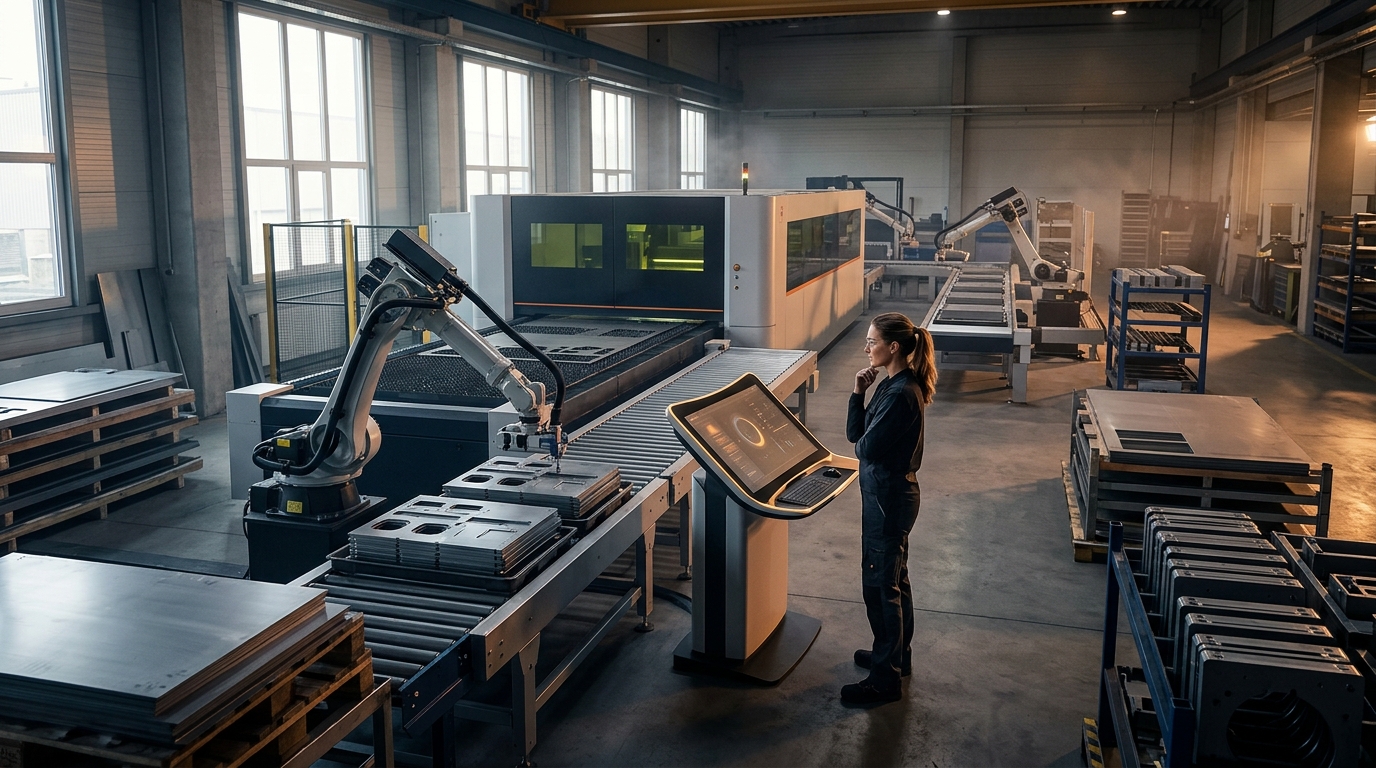
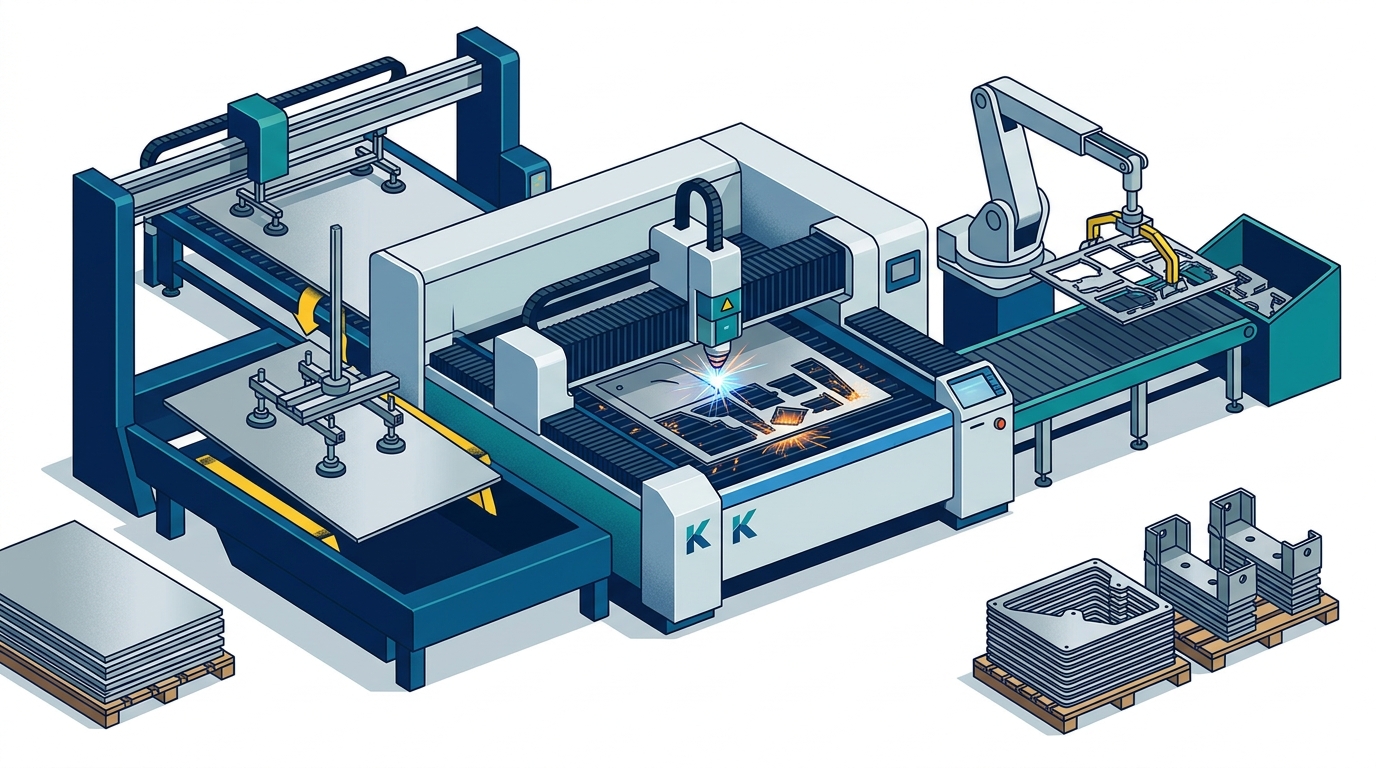
Automation extends far beyond the laser head. The true power of high-volume production lies in the material handling system. A fully automated setup typically includes a pallet changer, a robotic arm, or a continuous roll-to-roll system depending on the material format. This integration ensures that the laser source is never idle, maximizing the return on investment for the capital equipment.
For sheet metal processing, a FiberCELL system with a pullout table and part drawer can significantly reduce cycle times. The ability to load a new sheet of metal while the laser is cutting the previous one creates a continuous workflow. This is particularly effective for industries like aerospace and automotive, where consistency and speed are paramount.
Integrating these systems requires careful planning of the factory floor layout. The automation equipment must be positioned to allow for easy access for maintenance and material replenishment. Kern Laser Systems, with its headquarters in Minnesota, emphasizes the importance of dedication to quality in every aspect of the manufacturing process, including the design of systems that are easy to integrate into existing production lines.
Optimizing the Software Workflow for Speed
Hardware is only half the equation. The software that drives the laser and the automation equipment must be optimized for high-volume throughput. KCAM Laser Software is a prime example of a control system designed to streamline the workflow from design to finished product. It allows operators to nest parts efficiently, minimizing material waste and maximizing the number of parts produced per sheet.
Efficient nesting is crucial for high-volume production. By using advanced algorithms to arrange parts on the material sheet, manufacturers can reduce the distance the laser head travels, thereby increasing the overall cutting speed. Additionally, the software should support automated job queuing, allowing multiple jobs to be processed sequentially without manual intervention.
Furthermore, the software must provide real-time monitoring and diagnostics. This allows operators to identify potential issues before they result in downtime or defective parts. Features such as metal cutting optimization tools help ensure that the laser parameters are adjusted automatically for different material thicknesses and types, maintaining consistent quality across the entire production run.
Safety and Compliance in Automated Environments
As automation increases, so does the need for rigorous safety protocols. Automated laser cutting systems operate at high speeds and involve heavy machinery, making safety a top priority. Laser safety standards require that all systems be properly enclosed to prevent exposure to harmful radiation. Class 2 enclosures, such as those found on the LaserCELL system, allow the machine to be placed in high-traffic areas while ensuring operator safety.
In addition to laser safety, the automation equipment must comply with industrial robotics safety standards. This includes the installation of light curtains, emergency stop buttons, and interlock switches that prevent operation when safety barriers are breached. Regular safety audits and training for operators are essential to maintain a safe working environment.
Kern Laser Systems prioritizes safety in its design philosophy. Their machines are built to meet international safety standards, providing peace of mind for manufacturers who operate in regulated industries. By investing in safe, compliant automation, companies can avoid costly fines and ensure the well-being of their workforce.
Maintenance Protocols for High-Volume Uptime
High-volume production demands high equipment uptime. Any downtime can result in significant financial losses and missed deadlines. Therefore, a proactive maintenance strategy is essential. This includes regular cleaning of optical components, inspection of motion systems, and calibration of the laser source.
Kern Laser Systems offers comprehensive technical support and training to help customers maintain their equipment. Their commitment to customer service ensures that manufacturers have access to the resources they need to keep their systems running smoothly. Additionally, using genuine replacement parts from the manufacturer can help prevent compatibility issues and extend the lifespan of the equipment.
Implementing a predictive maintenance program can further enhance uptime. By monitoring key performance indicators such as laser power output and motion system vibration, manufacturers can identify potential issues before they lead to failure. This data-driven approach allows for maintenance to be scheduled during non-production hours, minimizing disruption to the workflow.
Key Takeaways
- Technology Choice: Select between CO2 and fiber laser systems based on your primary material, with fiber lasers offering superior speed for metals.
- Automation Integration: Utilize pallet changers or robotic arms to eliminate idle time and maximize throughput.
- Software Efficiency: Leverage advanced nesting software like KCAM to minimize waste and optimize cutting paths.
- Safety First: Ensure all automated systems meet Class 2 laser safety standards and industrial robotics regulations.
- Proactive Maintenance: Implement predictive maintenance strategies to prevent unplanned downtime and extend equipment life.
- Brand Reliability: Partner with established manufacturers like Kern Laser Systems, which has been producing quality systems since 1982.
- Support Network: Access robust technical support and training resources to ensure smooth operation and rapid issue resolution.
Frequently Asked Questions
What is the difference between CO2 and fiber laser cutting for high-volume production?
CO2 lasers are generally better for non-metals like acrylic and wood, offering high-quality edges. Fiber lasers are more efficient and faster for cutting metals, particularly thin to medium gauges, making them ideal for high-volume metal fabrication.
How does automation impact the cost per part in laser cutting?
Automation significantly reduces the cost per part by minimizing labor costs and increasing throughput. While the initial investment is higher, the long-term savings from increased efficiency and reduced waste typically result in a lower cost per unit.
What safety features are essential for automated laser cutting systems?
Essential safety features include Class 2 enclosures to contain laser radiation, light curtains to detect operator presence, emergency stop buttons, and interlock switches that halt operation when safety barriers are breached.
Can I integrate an automated laser cutting system with my existing production line?
Yes, most modern automated laser cutting systems are designed to integrate seamlessly with existing production lines. It is important to work with a manufacturer who offers comprehensive integration support and training.
What is the role of software in high-volume laser cutting?
Software plays a critical role in optimizing cutting paths, nesting parts to minimize waste, and managing the automation workflow. Advanced software like KCAM allows for real-time monitoring and diagnostics, ensuring consistent quality and efficiency.
How often should I perform maintenance on my laser cutting system?
Maintenance frequency depends on usage, but generally, daily cleaning of optical components and weekly inspection of motion systems are recommended. A comprehensive maintenance schedule should be developed in consultation with the equipment manufacturer.
What are the benefits of using a large format laser cutter?
Large format laser cutters allow for the processing of larger sheets of material, reducing the need for multiple cuts and minimizing material waste. They are ideal for industries such as signage, aerospace, and construction.
Next Steps for Your Facility
Transitioning to an automated laser cutting system is a strategic move that can transform your manufacturing capabilities. By choosing the right technology, integrating robust automation, and prioritizing safety and maintenance, you can achieve the high-volume production levels required to stay competitive in today's market.
Kern Laser Systems is ready to help you navigate this transition. With decades of experience in designing and manufacturing high-quality laser systems, we offer the expertise and support you need to succeed. Visit our contact page to schedule a consultation and learn how our solutions can meet your specific production needs.