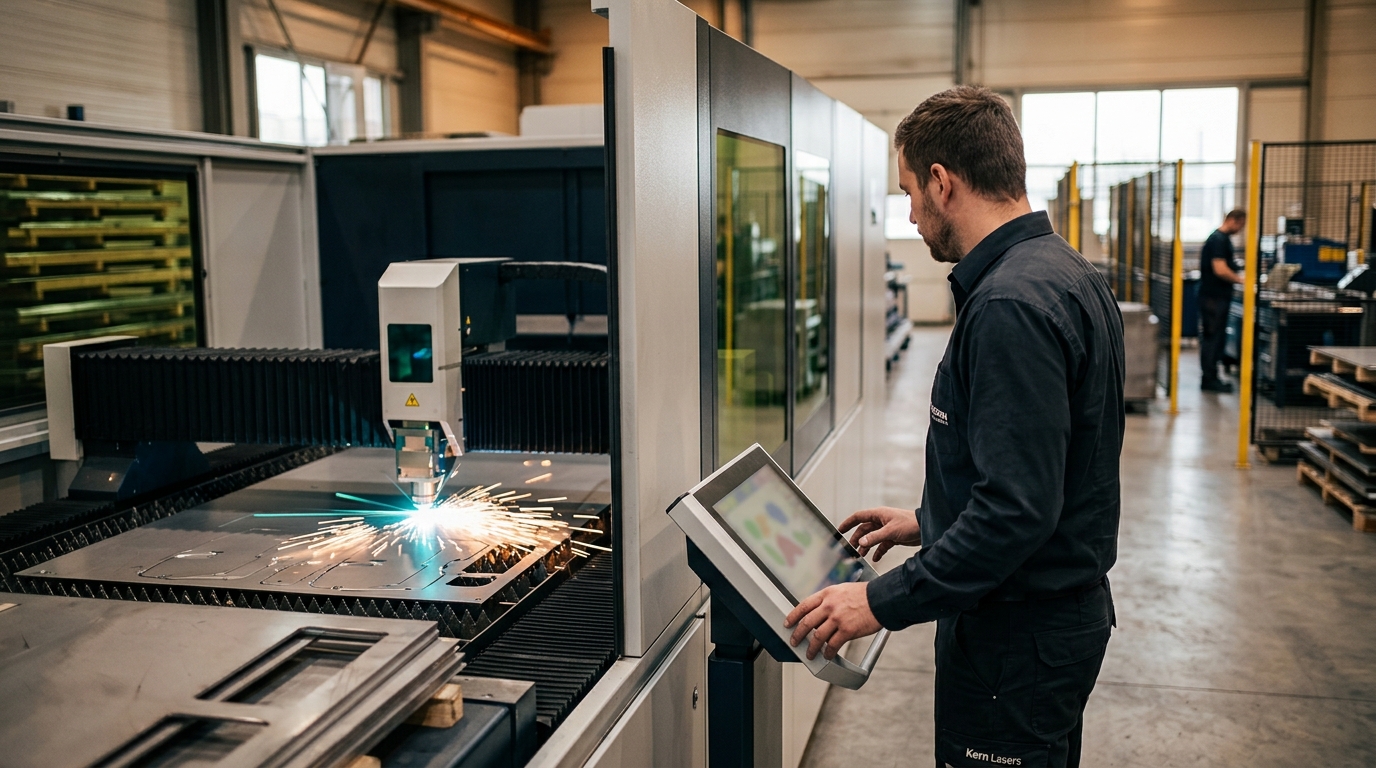
Modern metal fabrication is undergoing a rapid transformation driven by the adoption of fiber laser technology. According to recent industry analyses, fiber lasers have captured a dominant share of the industrial cutting market due to their superior energy efficiency and cutting speeds compared to traditional CO2 systems. For fabrication shops looking to scale operations, selecting the right equipment is not merely a capital expenditure decision but a strategic pivot that dictates long-term profitability and production flexibility. This guide provides a rigorous framework for evaluating these systems, focusing on optical sources, mechanical precision, software integration, and total cost of ownership. (Kern Customer Login Area)
Evaluating Optical Source and Power Output
The heart of any fiber laser cutting system is its optical source. When evaluating these systems, the first metric to consider is the wattage. Higher wattage directly correlates with increased cutting speed and the ability to process thicker materials. For instance, a 1kW to 3kW source is typically sufficient for thin-gauge sheet metal, while 6kW to 12kW sources are required for heavy industrial plate cutting.
Another critical factor is the quality of the laser beam. Beam quality determines the kerf width and edge finish. High-quality sources produce a tighter focal spot, allowing for finer details and smoother edges without secondary finishing. Kern Laser Systems emphasizes the use of super-pulsed high-quality laser sources to ensure consistent performance across diverse materials. This technology reduces thermal distortion and extends the life of the cutting head.
Furthermore, consider the maintenance requirements of the optical source. Fiber lasers are renowned for their solid-state design, which eliminates the need for mirrors and gas refills associated with CO2 lasers. This results in significantly lower operational costs and higher uptime. For more details on the benefits of fiber technology, you can explore industry comparisons of fiber versus CO2 systems.
Mechanical Precision and Frame Stability
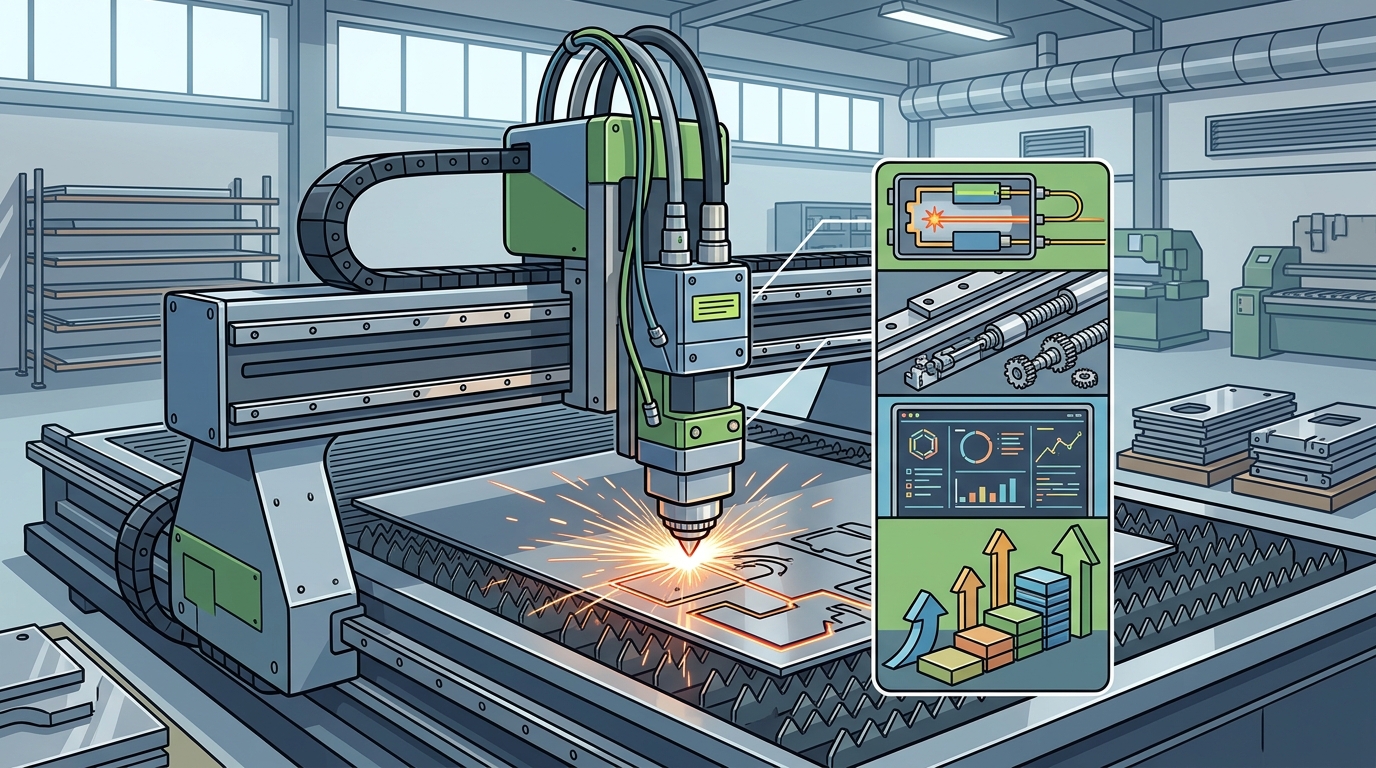
Even the most powerful laser source is ineffective if the mechanical system lacks precision. The gantry design, rail quality, and drive system dictate the machine's acceleration, deceleration, and positional accuracy. A rigid frame is essential to dampen vibrations during high-speed cutting, ensuring that the cut path remains true to the digital model.
Evaluate the machine's working area and payload capacity. Large format systems, such as the OptiFlex CNC System, offer expansive working envelopes that accommodate large sheets of metal, reducing the need for multiple setups. However, larger frames must be engineered to prevent sagging or deflection under load.
Additionally, inspect the rotary axis capabilities if you plan to cut pipe and tube. A high-precision rotary attachment allows for complex 3D cutting and engraving on cylindrical surfaces. Kern Laser Systems offers specialized pipe and tube rotary solutions that integrate seamlessly with their main cutting platforms, expanding the range of fabricable geometries.
Safety Enclosures and Operational Environment
Safety is paramount in any manufacturing environment. Modern fiber laser systems often come with Class 2 safety enclosures that contain the laser radiation, sparks, and fumes generated during cutting. These enclosures allow the machines to be placed in high-traffic areas, such as busy factory floors or university classrooms, without compromising operator safety.
When evaluating enclosures, check for features like automatic door interlocks, emergency stop buttons, and integrated fume extraction ports. The LaserCELL model from Kern is specifically designed with a fully enclosed Class 2 design, making it ideal for environments where visibility and safety are critical. This design ensures that operators can monitor the cutting process without exposure to harmful laser radiation.
Consider the noise level and heat dissipation of the system. High-power lasers generate significant heat, requiring robust cooling systems. Efficient thermal management not only protects the machine's components but also maintains a comfortable working environment for staff. For more information on laser safety standards, refer to OSHA guidelines on laser safety.
Software Integration and Workflow Efficiency
The efficiency of a laser cutting system is heavily dependent on its control software. Advanced software features, such as nesting algorithms, can maximize material utilization and reduce waste. Nesting optimizes the arrangement of parts on the sheet to minimize scrap, which is crucial for maintaining profitability in metal fabrication.
Kern Laser Systems utilizes KCAM Laser Software to provide precise control over cutting parameters. This software allows users to adjust power, speed, and gas pressure in real-time, ensuring optimal results for different materials. Additionally, look for systems that support camera registration, such as the K-Vision Camera, which enables accurate cutting of preprinted materials by aligning the laser path with existing graphics.
Integration with existing CAD/CAM workflows is another key consideration. The system should seamlessly import files from popular design software, reducing setup time and minimizing the risk of errors. A user-friendly interface that allows for quick learning curves is also beneficial for training new operators.
Material Versatility and Application Scope
While fiber lasers are primarily used for metal cutting, their versatility extends to other materials. Depending on the wavelength and power, fiber lasers can cut stainless steel, mild steel, aluminum, brass, and copper. However, they are less effective on non-metals like wood or acrylic, which are better suited for CO2 lasers.
Evaluate the range of materials your shop frequently processes. If you work with a diverse mix of metals, a high-power fiber laser with adjustable parameters is essential. For applications involving awards, trophies, and identification labels, consider the engraving capabilities of the system. Kern Laser Systems offers specialized solutions for awards and trophies that deliver high-precision engraving on various surfaces.
Additionally, consider the thickness range of the materials you intend to cut. Different materials require different power levels and assist gases. For example, cutting thick steel may require oxygen as an assist gas, while aluminum often benefits from nitrogen. Understanding these nuances will help you select a system that meets your specific production needs.
System Comparison Matrix
The following table compares key features of popular laser cutting systems to aid in your evaluation process.
| System Model | Primary Use Case | Key Feature | Safety Class | Best For |
|---|---|---|---|---|
| OptiFlex | Large Format Cutting | High-Speed Engraving | Class 2 | Versatile Metal & Non-Metal |
| FiberCELL | Pure Metal Cutting | Compact Sheet Metal Focus | Class 2 | Stainless & Mild Steel |
| LaserCELL | Enclosed Processing | Full Safety Enclosure | Class 2 | High-Traffic Environments |
| EcoFlex | Economical Entry | Cost-Effective CO2 | Class 3B | Startups & Light Fabrication |
Key Takeaways
- Optical Source Quality: Prioritize super-pulsed high-quality sources for consistent beam performance and reduced maintenance.
- Frame Rigidity: Ensure the mechanical structure is designed to minimize vibration for high-precision cuts.
- Safety Integration: Choose Class 2 enclosed systems for safe operation in shared or public workspaces.
- Software Ecosystem: Leverage advanced nesting and camera registration tools to maximize material yield and accuracy.
- Material Compatibility: Verify that the laser wavelength and power are suitable for your primary metal types.
- Manufacturer Heritage: Partner with established manufacturers like Kern, founded in 1982, for proven reliability and support.
- Total Cost of Ownership: Factor in energy efficiency and lower consumable costs when calculating ROI.
Frequently Asked Questions
What is the primary advantage of fiber lasers over CO2 lasers?
Fiber lasers offer significantly higher energy efficiency, typically converting 30-50% of electrical power into laser light, compared to 10-15% for CO2 lasers. This results in lower electricity costs and reduced cooling requirements.
Can fiber lasers cut non-metallic materials?
Standard fiber lasers are optimized for metals and are generally not effective on non-metals like wood or acrylic. For these materials, CO2 lasers are the preferred choice due to their interaction with organic compounds.
How does the K-Vision Camera improve cutting accuracy?
The K-Vision Camera uses image recognition to locate preprinted marks on materials. This allows the laser to align its cutting path precisely with the existing graphics, ensuring perfect registration for signs and displays.
What is the typical warranty period for industrial laser systems?
Many manufacturers, including Kern Laser Systems, offer a 3-year warranty on CO2 laser sources and comprehensive coverage on fiber components, reflecting confidence in their durability and performance.
Is it necessary to have a safety enclosure for a fiber laser?
While not always legally required for all power levels, a Class 2 safety enclosure is highly recommended to protect operators from laser radiation and flying debris, especially in busy workshop environments.
How do I determine the right wattage for my needs?
Wattage should be matched to the maximum thickness of metal you need to cut. A general rule is that higher wattage allows for faster cutting of thicker materials, but lower wattage may be more cost-effective for thin-gauge work.
What maintenance is required for a fiber laser cutting system?
Fiber lasers require minimal maintenance compared to CO2 systems. Primary tasks include cleaning lenses, checking assist gas lines, and ensuring the cooling system is functioning correctly. The solid-state design eliminates the need for mirror alignment.
Next Steps for Your Fabrication Shop
Evaluating fiber laser cutting systems requires a careful balance of technical specifications, operational needs, and financial considerations. By focusing on optical quality, mechanical precision, and software integration, you can select a system that drives long-term growth and efficiency. Kern Laser Systems offers a range of solutions tailored to diverse fabrication needs, from the high-performance OptiFlex to the compact FiberCELL.
Ready to upgrade your metal fabrication capabilities? Contact our team of experts to discuss your specific requirements and receive a personalized quote. Visit our Contact Page to schedule a consultation or request a demo of our latest laser technology.