
Critical Safety Standards and Control Measures for Industrial Laser Equipment Operations
Industrial laser systems have become indispensable in modern manufacturing, yet they introduce significant hazards that require rigorous management. According to the Occupational Safety and Health Administration (OSHA), laser-related injuries in industrial settings remain a critical concern, necessitating strict adherence to safety protocols. Kern Laser Systems, a manufacturer with decades of experience in the Midwest, emphasizes that safety is not just a regulatory requirement but a core component of operational efficiency. This guide outlines the essential safety standards, control measures, and best practices for operating industrial laser equipment safely and effectively.
Understanding Laser Hazards and Classifications
Before implementing safety measures, it is crucial to understand the specific hazards associated with industrial lasers. Laser radiation is classified based on its potential to cause eye and skin damage. Laser Class 4 is the highest risk category, encompassing most industrial cutting and engraving systems. These lasers can cause immediate eye injury, skin burns, and pose fire hazards.
According to the American National Standards Institute (ANSI) Z136.1 standard, Class 4 lasers require the most stringent controls. Kern Laser Systems designs its machines, such as the OptiFlex and LaserCELL, with built-in safety features to mitigate these risks. Understanding the classification helps in selecting the appropriate safety gear and engineering controls for your facility.
Core Safety Standards and Regulatory Frameworks
Compliance with international and national safety standards is mandatory for industrial laser operations. The primary standards include ANSI Z136.1 for safe use of lasers and OSHA regulations for workplace safety. These frameworks dictate requirements for machine enclosures, warning labels, interlocks, and operator training.
OSHA guidelines emphasize the employer's responsibility to provide a safe working environment. This includes conducting hazard assessments and implementing controls to reduce exposure to laser radiation. Kern Laser Systems adheres to these standards by integrating laser safety features directly into their machine design. Compliance not only protects employees but also ensures operational continuity by preventing accidents that could lead to downtime or legal issues.
Engineering Controls and Machine Design
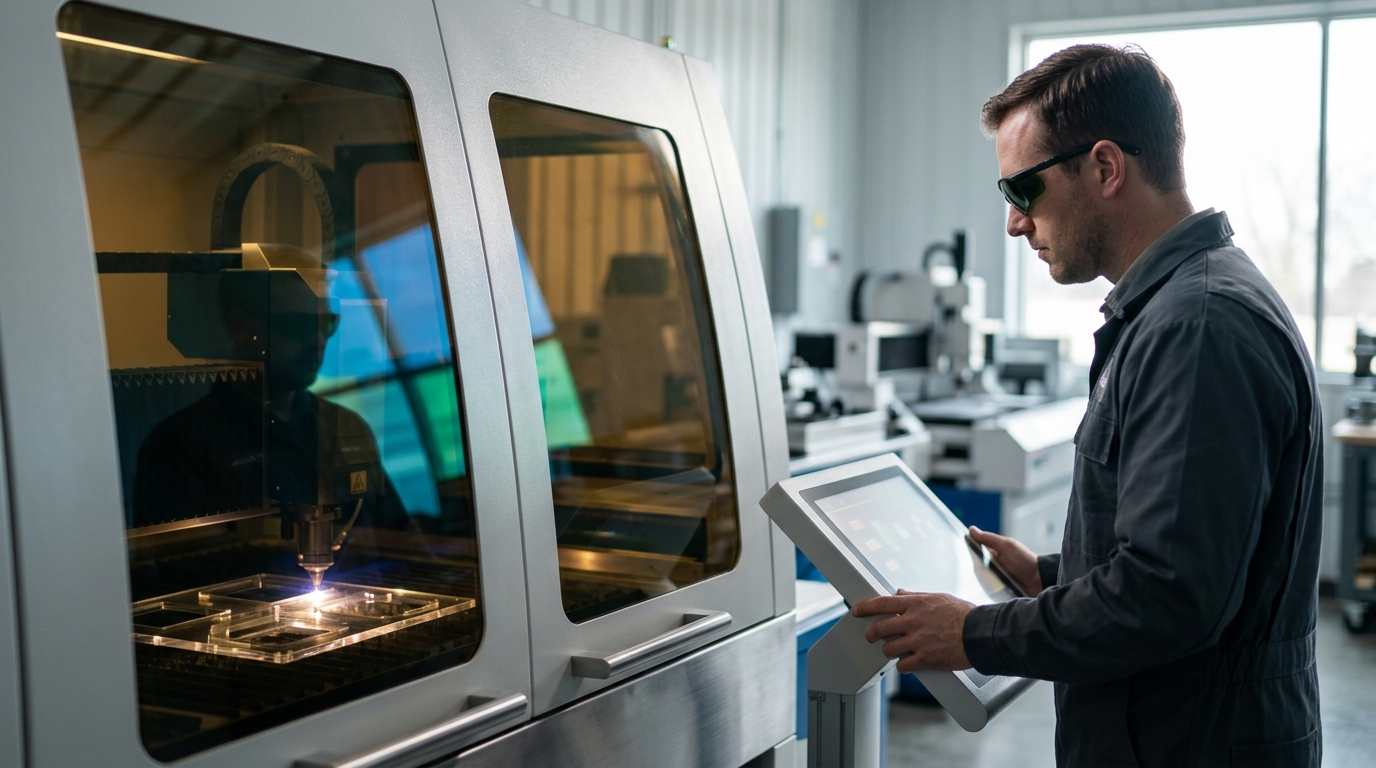
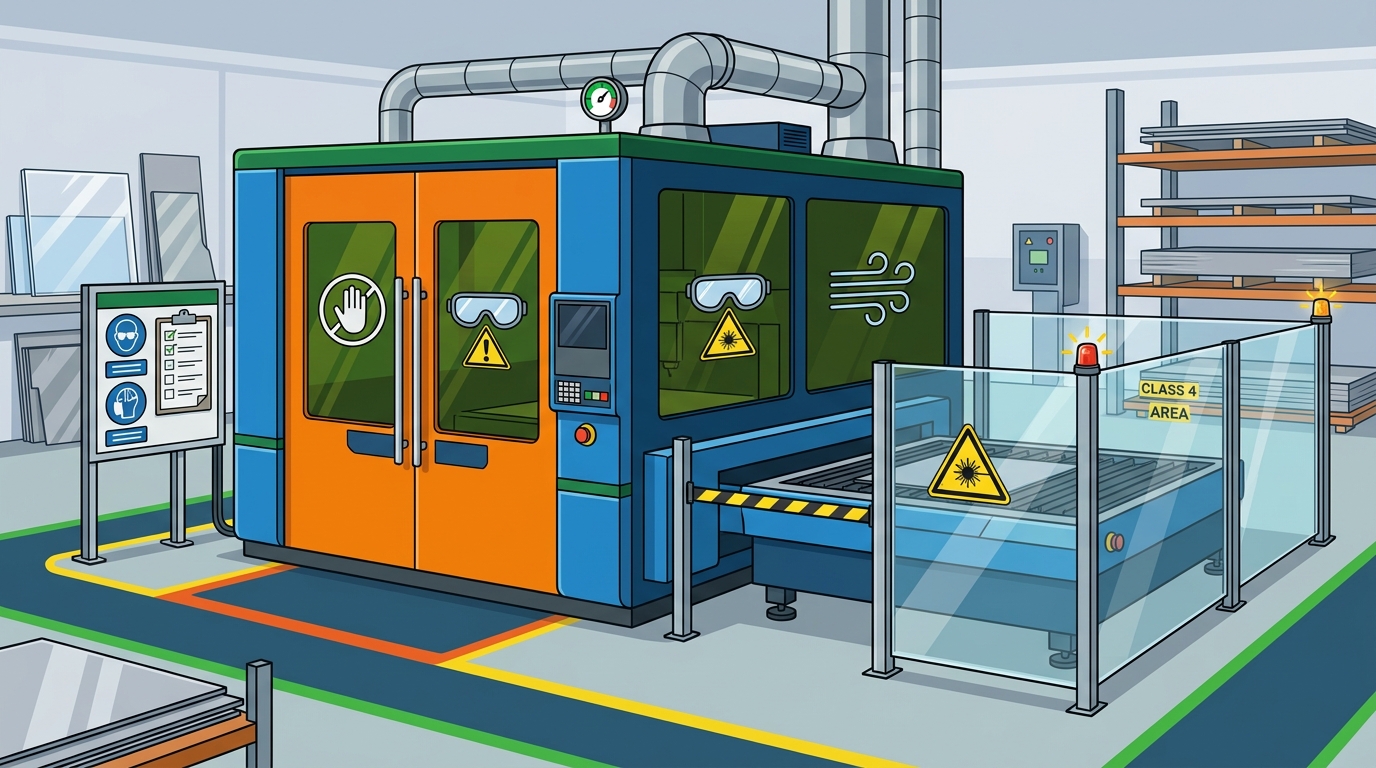
Engineering controls are the first line of defense against laser hazards. These include physical barriers, interlocks, and ventilation systems. Kern Laser Systems prioritizes engineering controls in its product line. For instance, the LaserCELL features a fully enclosed Class 2 design, allowing it to be safely placed in high-traffic areas like factory floors and classrooms.
Key engineering controls include:
- Machine Enclosures: Fully enclosed cabinets prevent laser radiation from escaping during operation. The FiberCELL metal cutter also utilizes a Class 2 safety enclosure for this purpose.
- Interlock Systems: These automatically shut off the laser source when the enclosure is opened. This prevents accidental exposure during maintenance or material loading.
- Emergency Stop Buttons: Easily accessible emergency stops allow operators to immediately halt machine operation in case of an incident.
- Key Management: A key-operated switch ensures that only authorized personnel can activate the laser system.
These features are standard in Kern's large format laser cutting systems, ensuring that safety is integrated into the hardware rather than relying solely on user behavior.
Personal Protective Equipment (PPE) Requirements
While engineering controls are primary, Personal Protective Equipment (PPE) serves as a critical secondary safeguard. The type of PPE required depends on the laser wavelength and power. For CO2 lasers, which operate at 10,600 nm, specialized eyewear is necessary to block the specific radiation wavelength.
According to ANSI Z136.6, the standard for laser safety in healthcare and industrial settings, PPE must have the correct Optical Density (OD) rating for the specific laser parameters. Kern Laser Systems recommends consulting with safety experts to determine the appropriate OD rating for your specific machine and application. Additionally, protective clothing and face shields may be required to protect against skin burns and flying debris.
Proper PPE usage must be enforced through regular training and monitoring. Operators should be trained to inspect their eyewear for scratches or damage before each use. Damaged PPE can compromise safety and should be replaced immediately.
Operational Procedures and Training
Even with robust engineering controls, human error remains a significant risk factor. Comprehensive training programs are essential for all personnel who operate or maintain laser equipment. Training should cover laser hazards, safety protocols, emergency procedures, and proper use of PPE.
Kern Laser Systems provides extensive technical support and resources to help customers develop effective training programs. Key operational procedures include:
- Pre-Operation Checks: Verify that all safety interlocks are functioning and the enclosure is secure before starting the machine.
- Material Loading: Ensure materials are properly secured and that no flammable substances are present near the laser path.
- Post-Operation: Allow the machine to cool down and ensure the area is clear before leaving the workstation.
- Maintenance: Only qualified personnel should perform maintenance, and the laser must be de-energized and locked out before any work begins.
Regular refresher training and safety audits help reinforce these procedures and identify areas for improvement. A culture of safety encourages employees to report hazards and near-misses without fear of reprisal.
Material Safety and Fume Extraction
Laser processing of materials can generate hazardous fumes, particulates, and noise. Proper ventilation and fume extraction systems are critical to maintaining air quality and protecting operator health. The materials being processed determine the type of hazards generated. For example, cutting PVC can release chlorine gas, which is highly toxic.
Kern Laser Systems offers guidance on material safety and recommends using appropriate fume extraction systems for each application. Their applications page details the specific considerations for processing materials like acrylic, metal, wood, and foam. Regular monitoring of air quality and maintenance of extraction systems are essential to ensure effective removal of contaminants.
Additionally, noise levels from laser systems, particularly those with cooling fans and exhaust systems, should be assessed. Hearing protection may be required in high-noise environments. Implementing a comprehensive material safety plan helps mitigate these risks and ensures a healthier work environment.
Key Takeaways
- Class 4 Hazards: Industrial lasers are typically Class 4, requiring strict engineering controls and PPE to prevent eye and skin injury.
- Regulatory Compliance: Adherence to ANSI Z136.1 and OSHA standards is mandatory for safe laser operations.
- Engineering Controls: Features like fully enclosed Class 2 designs, interlocks, and emergency stops are critical for safety.
- PPE Necessity: Correct Optical Density (OD) eyewear is essential for protection against specific laser wavelengths.
- Training Importance: Comprehensive training and regular audits are vital for reducing human error and maintaining a safety culture.
- Fume Extraction: Proper ventilation is required to remove hazardous fumes generated during material processing.
- Kern's Commitment: Kern Laser Systems integrates safety into its machine design, offering robust solutions like the LaserCELL and FiberCELL.
Frequently Asked Questions
What is the primary safety standard for industrial lasers?
The primary safety standard is ANSI Z136.1, which provides guidelines for the safe use of lasers in industrial settings. It covers classifications, engineering controls, and administrative procedures.
How does Kern Laser Systems ensure machine safety?
Kern integrates safety features such as fully enclosed Class 2 designs, automatic interlocks, and key-operated switches into machines like the LaserCELL and FiberCELL to prevent accidental exposure.
What type of PPE is required for CO2 lasers?
Specialized eyewear with the correct Optical Density (OD) rating for the 10,600 nm wavelength is required. The specific OD depends on the laser's power output and exposure time.
Why is fume extraction important in laser operations?
Fume extraction removes hazardous particulates and gases generated during material processing, protecting operator health and maintaining air quality in the workspace.
Can laser machines be used in high-traffic areas?
Yes, machines with Class 2 safety enclosures, like the LaserCELL, are designed to be safe for use in high-traffic areas such as factory floors and classrooms.
Who should perform maintenance on laser equipment?
Only qualified personnel should perform maintenance, and the laser must be de-energized and locked out to ensure safety during service.
What are the common hazards associated with laser cutting?
Common hazards include eye injury from radiation, skin burns, fire risks, and exposure to hazardous fumes. Proper controls mitigate these risks.
Contact Kern Laser Systems
For more information on laser safety standards and how Kern Laser Systems can help you implement effective control measures, contact our team of experts. We offer comprehensive support, from machine selection to ongoing technical assistance. Visit our Contact Page to request a quote or schedule a consultation. Explore our range of safe, high-performance laser systems at kernlasers.com.