
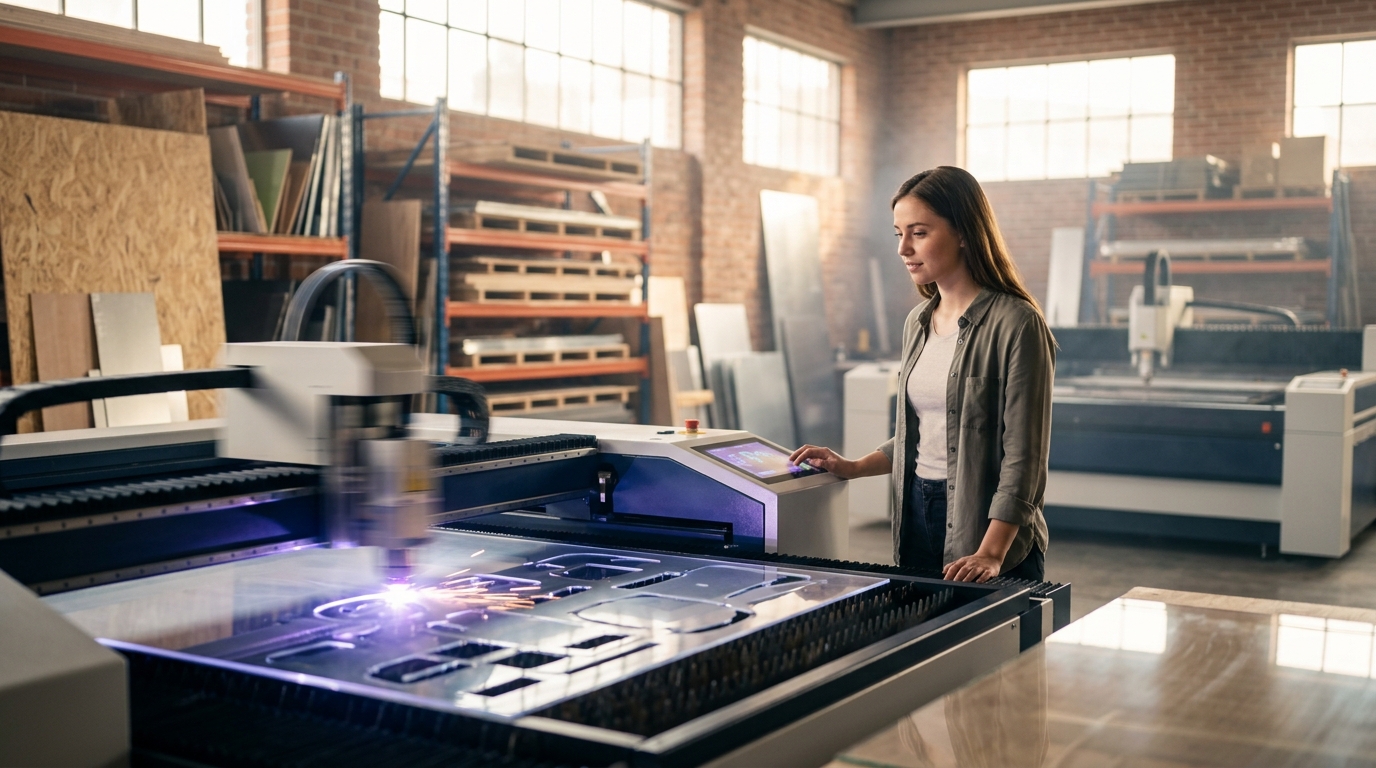
Large format laser cutting has transformed modern manufacturing by enabling precise, high-speed processing of diverse materials. According to industry data, the global laser cutting market is projected to grow significantly through 2030, driven by demand in automotive, aerospace, and custom fabrication sectors. This guide provides a foundational understanding of how large format CO2 and fiber laser systems operate, helping beginners navigate the complexities of industrial-grade equipment. (Kern Customer Login Area)
What is Large Format Laser Cutting?
Large format laser cutting refers to the use of industrial laser systems with a working area typically exceeding 4 feet by 8 feet. This size allows manufacturers to process full sheets of material without the need for secondary operations or joining multiple cuts. Large format laser cutting is the process of using a high-power laser beam to precisely cut or engrave materials across a wide workspace.
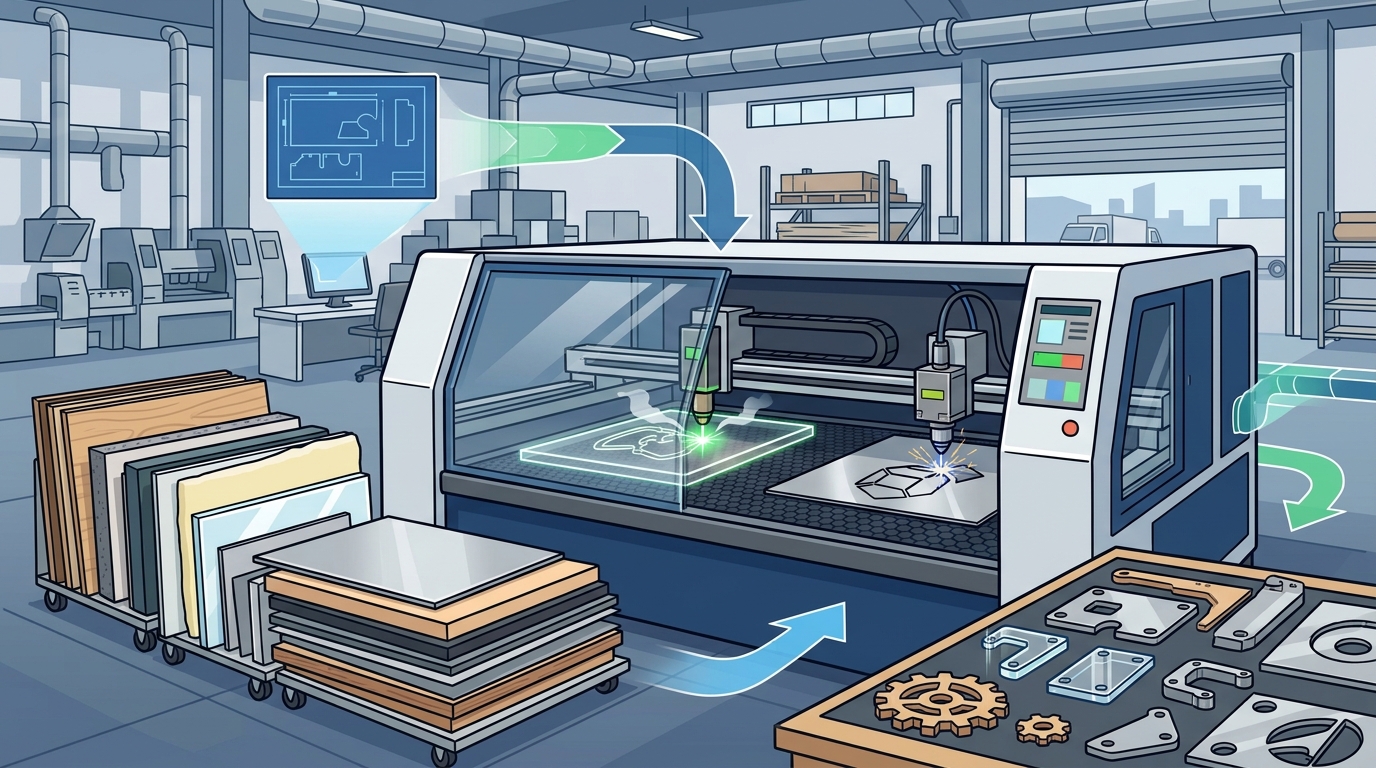
Unlike standard desktop engravers, these systems are designed for heavy-duty production environments. They often feature robust gantry structures, advanced cooling systems, and sophisticated motion control software. The ability to handle large sheets of acrylic, metal, or wood makes these machines indispensable for commercial signage, architectural fabrication, and custom manufacturing.
For beginners, understanding the scale of these machines is crucial. They require dedicated floor space, specialized ventilation, and trained operators. However, the efficiency gains from processing large sheets in a single pass often outweigh the initial setup complexity.
CO2 vs. Fiber: Choosing the Right Technology
Selecting the correct laser source is the first major decision for any beginner. The two primary technologies used in large format systems are CO2 and Fiber lasers. Each has distinct advantages depending on the materials you intend to process.
CO2 Laser Systems
CO2 lasers are the industry standard for non-metallic materials. They excel at cutting and engraving acrylic, wood, leather, foam, and textiles. The beam quality of a CO2 laser allows for smooth edges on transparent materials, making it ideal for signage and display fabrication. CO2 laser cutting is the preferred method for organic and plastic materials due to its ability to vaporize them cleanly.
Systems like the OptiFlex offer high-speed engraving capabilities alongside powerful cutting performance. They are versatile enough to handle a wide range of thicknesses, from thin vinyl to thick acrylic sheets.
Fiber Laser Systems
Fiber lasers are designed specifically for metal processing. They offer superior efficiency and lower operating costs compared to CO2 lasers when cutting reflective metals like copper, brass, and aluminum. The beam is delivered via a flexible fiber optic cable, allowing for more compact machine designs and reduced maintenance.
For beginners focusing on metal fabrication, a fiber system is essential. However, it is important to note that fiber lasers generally cannot process non-metallic materials effectively. The choice between CO2 and fiber depends entirely on your primary material workflow.
Key Large Format Laser Systems
Kern Laser Systems offers a range of large format solutions tailored to different production needs. Understanding the specific capabilities of each system helps beginners align their investment with their business goals.
OptiFlex
The OptiFlex is Kern’s most popular large format CO2 laser cutter and engraver. It is designed for high-performance processing of metal, acrylic, wood, textiles, and foam. Its versatility makes it an excellent starting point for businesses that require a multi-material workflow. The system features high-speed engraving capabilities and a robust frame for consistent precision.
LaserCELL
The LaserCELL is a complete laser engraving and cutting machine that prioritizes safety. Its fully enclosed Class 2 design allows it to be placed in high-traffic areas, such as factory floors or university classrooms. This makes it an ideal choice for educational institutions or environments where operator visibility and safety are paramount.
FiberCELL
For metal-focused operations, the FiberCELL provides a compact sheet metal cutting solution. It is capable of cutting stainless steel, mild steel, aluminum, brass, and copper. Like the LaserCELL, it features a Class 2 safety enclosure, ensuring safe operation in busy industrial settings.
EcoFlex
The EcoFlex is an entry-level large format laser engraving and cutting system. It offers the productivity of a CO2 laser system at an economical price point. This system is well-suited for small businesses or startups looking to enter the large format market without a massive capital investment.
Materials Suitable for Large Format Processing
Large format laser systems can process a wide variety of materials. Understanding the properties of each material is critical for achieving optimal cut quality and machine longevity.
Acrylic and Plastics
Acrylic is one of the most common materials for CO2 laser cutting. It cuts cleanly with a polished edge, often requiring no post-processing. Other plastics, such as PET and PVC, can also be processed, but caution is advised as some plastics release toxic fumes when laser-cut.
Wood and MDF
Wood and Medium Density Fiberboard (MDF) are popular for signage and custom fabrication. CO2 lasers can cut and engrave these materials with high precision. However, the grain structure of wood can affect cut quality, and thicker pieces may require multiple passes.
Metals
Fiber lasers are required for cutting metals. Mild steel, stainless steel, aluminum, brass, and copper can all be processed. The thickness of the metal determines the required laser power. Beginners should start with thinner gauges to understand the machine’s capabilities before attempting thicker materials.
Foam and Textiles
Foam and textiles are increasingly used in packaging, apparel, and prototyping. CO2 lasers can cut these materials with minimal fraying or melting, provided the correct power settings are used. Proper ventilation is essential to remove particulate matter generated during cutting.
Common Industrial Applications
Large format laser cutting is used across numerous industries. Understanding these applications helps beginners identify potential market opportunities.
Commercial Signage
Signage is one of the largest markets for large format laser cutting. Acrylic letters, metal signs, and illuminated displays are commonly produced using these systems. The precision of laser cutting allows for intricate designs that are difficult to achieve with traditional methods.
Awards and Trophies
Custom awards and trophies often require detailed engraving on acrylic, wood, or metal. Large format systems allow for the processing of large trophy blanks, enabling high-volume production of personalized awards.
Industrial Fabrication
From panel enclosures to custom scale models, large format lasers are used in industrial fabrication. The ability to cut complex geometries quickly makes these systems valuable for prototyping and low-volume production runs.
Education and Research
Universities and technical schools use large format laser systems for research and education. The safety features of systems like the LaserCELL make them suitable for classroom environments where students learn about manufacturing processes.
Safety and Operational Considerations
Safety is a critical aspect of operating large format laser systems. Beginners must adhere to strict safety protocols to prevent injury and equipment damage.
Enclosure and Ventilation
Most large format systems feature Class 2 safety enclosures that prevent laser radiation from escaping. However, proper ventilation is still required to remove fumes and particulates generated during cutting. An effective exhaust system is essential for maintaining air quality in the workspace.
Material Compatibility
Not all materials are safe to laser cut. PVC and other chlorine-containing plastics release toxic chlorine gas when exposed to laser light. Beginners must always verify material safety data sheets before processing any new substance.
Regular Maintenance
Regular maintenance ensures the longevity and performance of the laser system. This includes cleaning optical components, checking gas levels for CO2 lasers, and inspecting the motion system for wear. Kern Laser Systems provides comprehensive technical support to help operators maintain their equipment.
Key Takeaways
- Large format laser cutting involves processing materials on sheets larger than 4x8 feet, increasing efficiency for commercial fabrication.
- CO2 lasers are ideal for non-metals like acrylic, wood, and foam, while fiber lasers are required for metal cutting.
- Kern Laser Systems offers specialized systems such as the OptiFlex, LaserCELL, FiberCELL, and EcoFlex to meet diverse production needs.
- Safety enclosures and proper ventilation are critical for operating large format laser systems in high-traffic environments.
- Applications range from commercial signage and awards to industrial fabrication and educational research.
- Material compatibility must be verified to avoid toxic fumes and ensure optimal cut quality.
- Regular maintenance of optical and motion components is essential for consistent machine performance.
Frequently Asked Questions
What is the difference between CO2 and fiber laser cutting?
CO2 lasers use a gas mixture to generate a beam ideal for cutting non-metals like acrylic, wood, and fabric. Fiber lasers use a solid-state gain medium and are optimized for cutting metals such as steel, aluminum, and brass. The choice depends on your primary material workflow.
How large is a typical large format laser cutting area?
Large format laser systems typically feature a working area of 4 feet by 8 feet or larger. This size allows for the processing of standard sheet materials without the need for secondary operations.
Is large format laser cutting safe for educational environments?
Yes, systems like the LaserCELL are designed with Class 2 safety enclosures, making them suitable for high-traffic areas such as university classrooms and technical schools.
What materials should never be laser cut?
Materials containing chlorine, such as PVC, should never be laser cut as they release toxic chlorine gas. Additionally, certain carbon fiber composites and polycarbonate can produce hazardous fumes or poor cut quality.
How much maintenance does a large format laser system require?
Regular maintenance includes cleaning optical lenses, checking gas levels, and inspecting the motion system. Kern Laser Systems provides technical support and parts to help operators maintain their equipment efficiently.
Can large format lasers cut thick metals?
Fiber laser systems can cut thick metals, but the maximum thickness depends on the laser power. Beginners should start with thinner gauges to understand the machine’s capabilities.
What is the OptiFlex system used for?
The OptiFlex is a high-performance large format CO2 laser cutter and engraver. It is versatile enough to process metal, acrylic, wood, textiles, and foam, making it ideal for multi-material workflows.
Where are Kern Laser Systems manufactured?
Kern Laser Systems are proudly manufactured in the USA, specifically in Minnesota. The company emphasizes its Midwestern work ethic and dedication to quality.
Get Started with Kern Laser Systems
Entering the world of large format laser cutting requires the right equipment and guidance. Kern Laser Systems offers a comprehensive range of CO2 and fiber laser solutions tailored to your specific needs. Whether you are looking for the versatility of the OptiFlex, the safety of the LaserCELL, or the metal-cutting power of the FiberCELL, Kern has a solution for you.
Contact Kern Laser Systems today to discuss your project requirements and explore our range of large format laser cutting systems. Visit our Contact Page to request a quote or schedule a consultation. Explore our Blog for more insights into laser technology and manufacturing trends. Learn more about our Company History and commitment to quality. Discover the full range of Laser Cutting Solutions available for your business.