
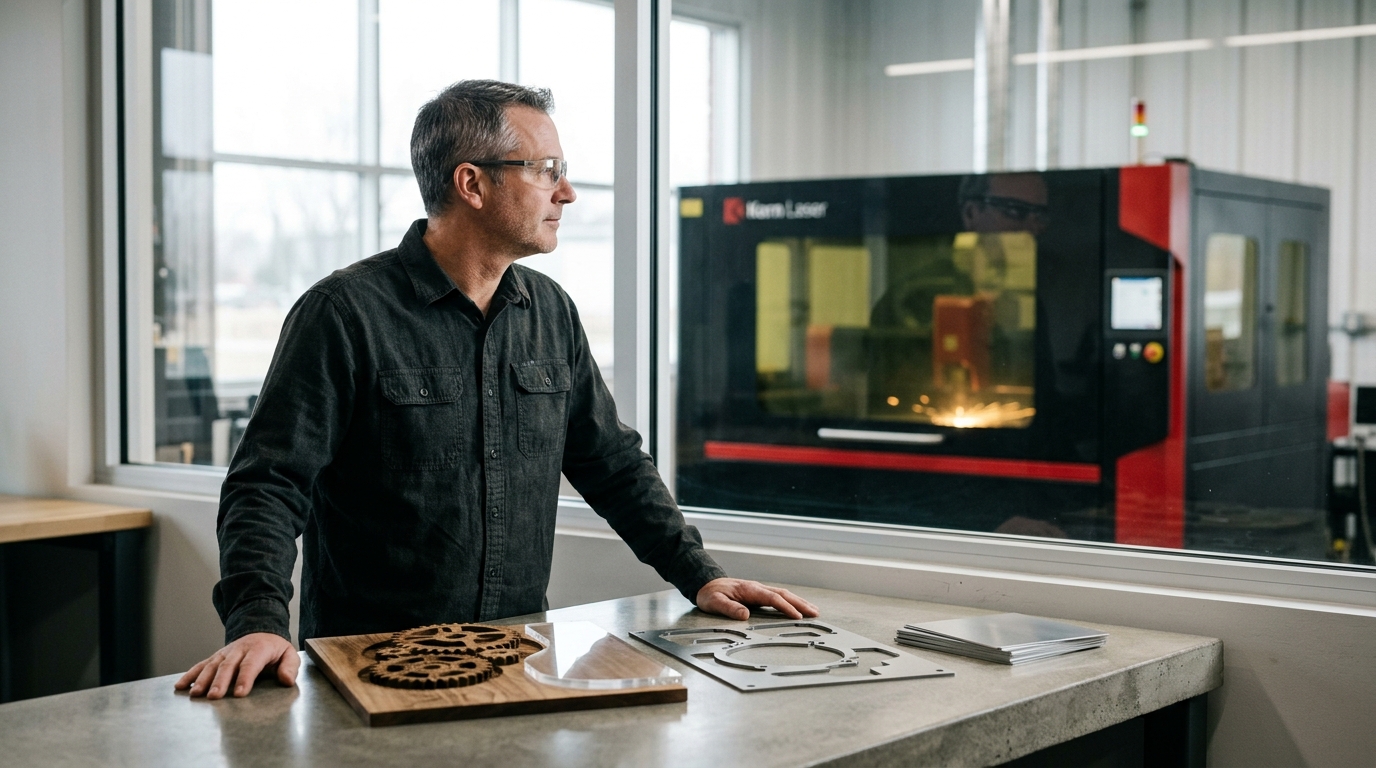
Choosing the right industrial laser system is a critical capital decision that defines your manufacturing capabilities for years to come. According to industry data, the global laser cutting market is projected to grow at a significant compound annual rate through 2030, driven by demand for precision in aerospace, automotive, and custom fabrication sectors. This rapid expansion means that beginners must navigate a complex landscape of technologies, power outputs, and material compatibilities. Understanding the fundamental differences between Carbon Dioxide (CO2) and Fiber laser sources is the first step toward operational success.
Understanding Laser Sources: CO2 vs Fiber
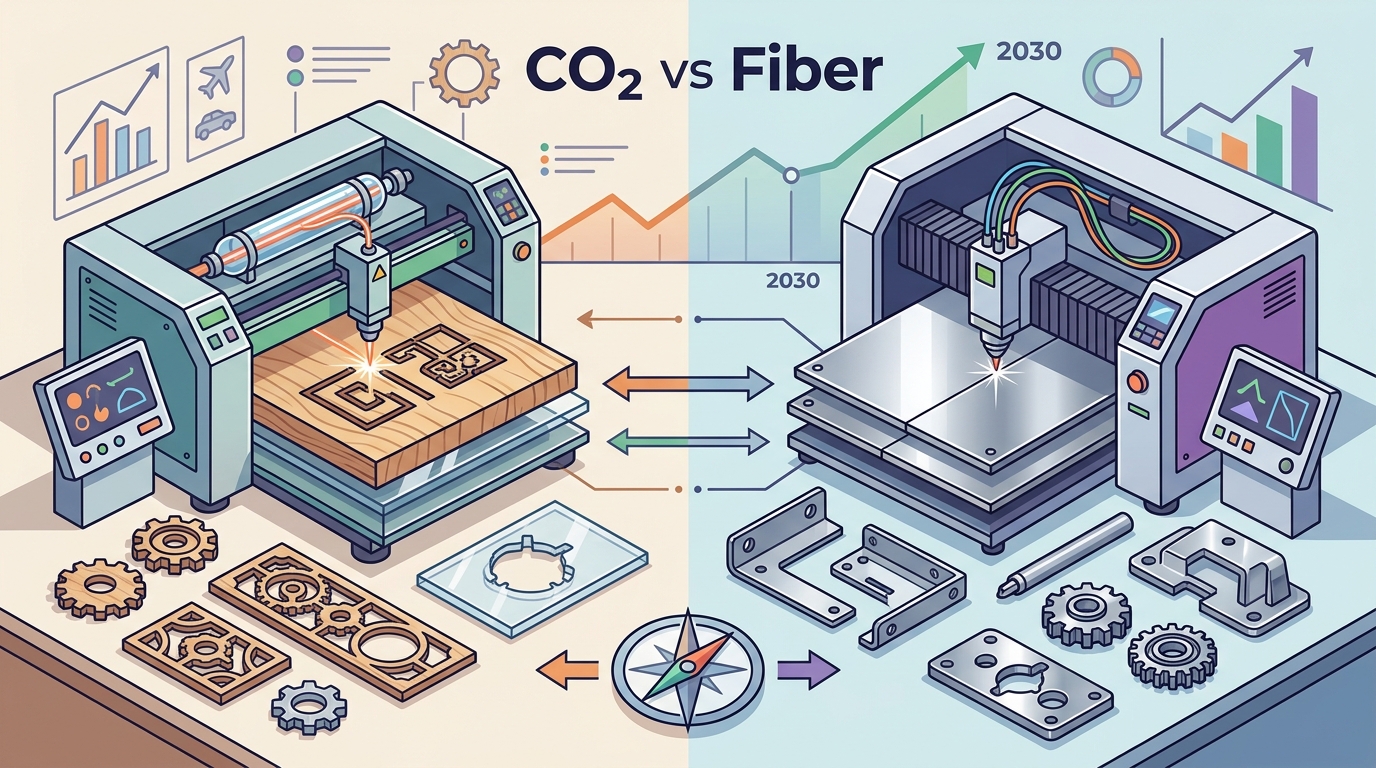
The core distinction between laser cutting systems lies in the generation of the beam. CO2 lasers use a gas mixture to generate a beam with a wavelength of 10.6 micrometers. This wavelength is highly absorbed by non-metals, making CO2 systems the traditional standard for cutting organic materials. Fiber lasers, conversely, use a solid-state gain medium doped with rare-earth elements. The beam is delivered via a flexible fiber optic cable, resulting in a wavelength of approximately 1.07 micrometers. This shorter wavelength is efficiently absorbed by reflective metals, giving fiber lasers a distinct advantage in metal processing.
For beginners, the choice often depends on the primary material you intend to process. If your focus is on acrylic, wood, or leather, a CO2 system like the OptiFlex offers superior cut quality and versatility. However, if your business model revolves around stainless steel, aluminum, or brass, a fiber system such as the FiberCELL provides the necessary power density and speed.
Material Compatibility and Processing
Material selection dictates the hardware requirements of your laser cutting machine. CO2 lasers excel at cutting non-metals because the 10.6-micrometer wavelength is readily absorbed by these materials. This makes them ideal for acrylic, where they produce a polished, flame-cut edge without additional finishing. They also process wood, leather, and foam with high precision, enabling detailed engraving and intricate cutting patterns.
Conversely, fiber lasers are engineered for metal cutting. The shorter wavelength allows fiber lasers to cut highly reflective metals like copper and brass, which often reflect CO2 beams and damage the laser source. According to manufacturing efficiency reports, fiber lasers can cut mild steel up to three times faster than CO2 lasers of equivalent power. This speed advantage is critical for high-volume production environments where throughput directly impacts revenue.
Kern Laser Systems addresses these material needs through specialized product lines. The EcoFlex provides an economical entry point for large-format CO2 cutting, while the LaserCELL offers a safe, enclosed environment for processing diverse materials in educational or high-traffic settings.
Efficiency, Speed, and Operating Costs
Operational efficiency is a major differentiator between CO2 and fiber technologies. Fiber lasers boast an electrical-to-optical conversion efficiency of approximately 30 to 50 percent. In contrast, CO2 lasers typically operate at 10 to 15 percent efficiency. This means fiber lasers consume significantly less electricity to produce the same cutting power, leading to lower utility costs over the machine's lifespan.
Maintenance costs also favor fiber systems. CO2 lasers require periodic replacement of the laser gas tube, mirrors, and lenses. These consumables add to the total cost of ownership. Fiber lasers, however, are solid-state systems with no gas tubes to replace. The primary maintenance involves cleaning optics and ensuring the chiller operates correctly. This reduced maintenance burden allows for higher machine uptime, which is essential for meeting tight production schedules.
Speed is another critical factor. Fiber lasers deliver higher power densities, enabling faster cutting speeds on metals. For example, cutting 1-inch mild steel with a 2kW fiber laser is substantially faster than with a comparable CO2 system. This speed advantage translates directly to increased daily output and improved profitability for manufacturing beginners.
Safety Features and Enclosure Design
Safety is paramount when operating industrial laser equipment. Both CO2 and fiber lasers emit high-energy beams that can cause severe eye and skin injuries. Therefore, proper enclosure design is non-negotiable. Kern Laser Systems integrates Class 2 safety enclosures into its LaserCELL and FiberCELL models. These enclosures prevent laser radiation from escaping during operation, protecting operators and bystanders.
Additionally, enclosed systems contain fumes and debris generated during cutting. This is particularly important when processing materials like acrylic or wood, which produce significant smoke. Proper ventilation and filtration systems are essential to maintain air quality in the workshop. The KCAM software interface also includes safety protocols to ensure the machine operates only when the enclosure is securely closed.
For beginners, the ability to place the machine in a busy factory floor or classroom is a significant advantage. The safety features of modern enclosed systems allow for collaborative manufacturing environments where multiple users can work safely around the equipment.
Software Integration and Control Systems
The brain of any laser cutting machine is its control software. KCAM is Kern’s proprietary software designed to streamline the workflow from design to production. It supports a wide range of file formats and offers intuitive tools for nesting, which maximizes material utilization and reduces waste. For beginners, an intuitive interface is crucial for reducing the learning curve and minimizing operational errors.
KCAM also integrates with the K-Vision Camera registration system. This feature uses a camera to align the laser beam with pre-printed materials, ensuring precise cutting and engraving. This is particularly valuable for applications like commercial signage and awards, where accuracy is critical. The software’s ability to handle complex vector graphics and raster images makes it versatile for various manufacturing tasks.
Furthermore, Kern provides comprehensive technical support to assist users with software configuration and troubleshooting. This support is invaluable for beginners who may encounter challenges during the initial setup or operation phases.
Comparative Analysis Summary
The following table summarizes the key differences between CO2 and Fiber laser systems to assist in your decision-making process.
| Feature | CO2 Laser Systems | Fiber Laser Systems |
|---|---|---|
| Primary Materials | Acrylic, Wood, Leather, Foam | Steel, Aluminum, Brass, Copper |
| Beam Wavelength | 10.6 micrometers | 1.07 micrometers |
| Efficiency | 10-15% | 30-50% |
| Maintenance | High (Gas tubes, mirrors) | Low (Solid-state) |
| Cutting Speed (Metals) | Slower | Faster |
| Best For | Custom signage, crafts, non-metals | Industrial fabrication, metal parts |
Key Takeaways for New Buyers
- Material First: Choose CO2 for non-metals and Fiber for metals. This is the primary determinant of your system's capability.
- Efficiency Matters: Fiber lasers offer higher electrical efficiency, reducing long-term operating costs significantly.
- Maintenance Costs: CO2 systems require more frequent consumable replacements, impacting total cost of ownership.
- Safety is Standard: Modern systems like the LaserCELL include Class 2 enclosures for safe operation in shared spaces.
- Software Integration: Tools like KCAM and K-Vision camera registration enhance precision and ease of use.
- Brand Heritage: Kern Laser Systems has been manufacturing in the USA since 1982, ensuring reliability and support.
- Scalability: Kern offers a range of systems, from the entry-level EcoFlex to high-production OptiDual models.
Frequently Asked Questions
What is the main difference between CO2 and Fiber lasers?
CO2 lasers use a gas mixture to generate a beam ideal for cutting non-metals like acrylic and wood. Fiber lasers use a solid-state source with a shorter wavelength, making them superior for cutting reflective metals like copper and aluminum.
Which laser system is better for beginners?
For beginners focusing on crafts, signage, or custom gifts, a CO2 system like the OptiFlex is often recommended due to its versatility with non-metals. For those entering industrial metal fabrication, a Fiber system is the appropriate choice.
Do I need an enclosed laser cutting machine?
Yes, safety enclosures are critical for protecting operators from laser radiation and containing fumes. Kern’s LaserCELL and FiberCELL models include Class 2 enclosures for safe operation in high-traffic areas.
How does Kern Laser Systems support new users?
Kern provides comprehensive technical support, detailed documentation, and access to a community of users. Their KCAM software is designed to be user-friendly, reducing the learning curve for new operators.
What materials can a CO2 laser cut?
CO2 lasers can cut a wide variety of non-metallic materials, including acrylic, wood, leather, foam, fabric, and paper. They are also used for engraving on glass and coated metals.
Is fiber laser cutting more expensive to operate?
No, fiber lasers are generally more cost-effective to operate due to their higher electrical efficiency and lower maintenance requirements. They do not require gas tube replacements, which are a recurring cost for CO2 systems.
Where is Kern Laser Systems located?
Kern Laser Systems is headquartered in Wadena, Minnesota, in the beautiful lakes country of the Midwest. The company has been proudly manufacturing its systems in the USA since its founding in 1982.
Next Steps: Start Your Manufacturing Journey
Choosing the right laser cutting machine is a pivotal decision that will shape your manufacturing capabilities. Whether you are drawn to the versatility of CO2 systems for non-metals or the power of Fiber lasers for metal fabrication, Kern Laser Systems offers a range of solutions tailored to your needs. Explore our laser cutting options to find the perfect fit for your business.
Ready to take the next step? Contact our team of experts to discuss your specific requirements and receive a personalized quote. Visit our contact page to schedule a consultation or request more information about our blog resources for further insights.