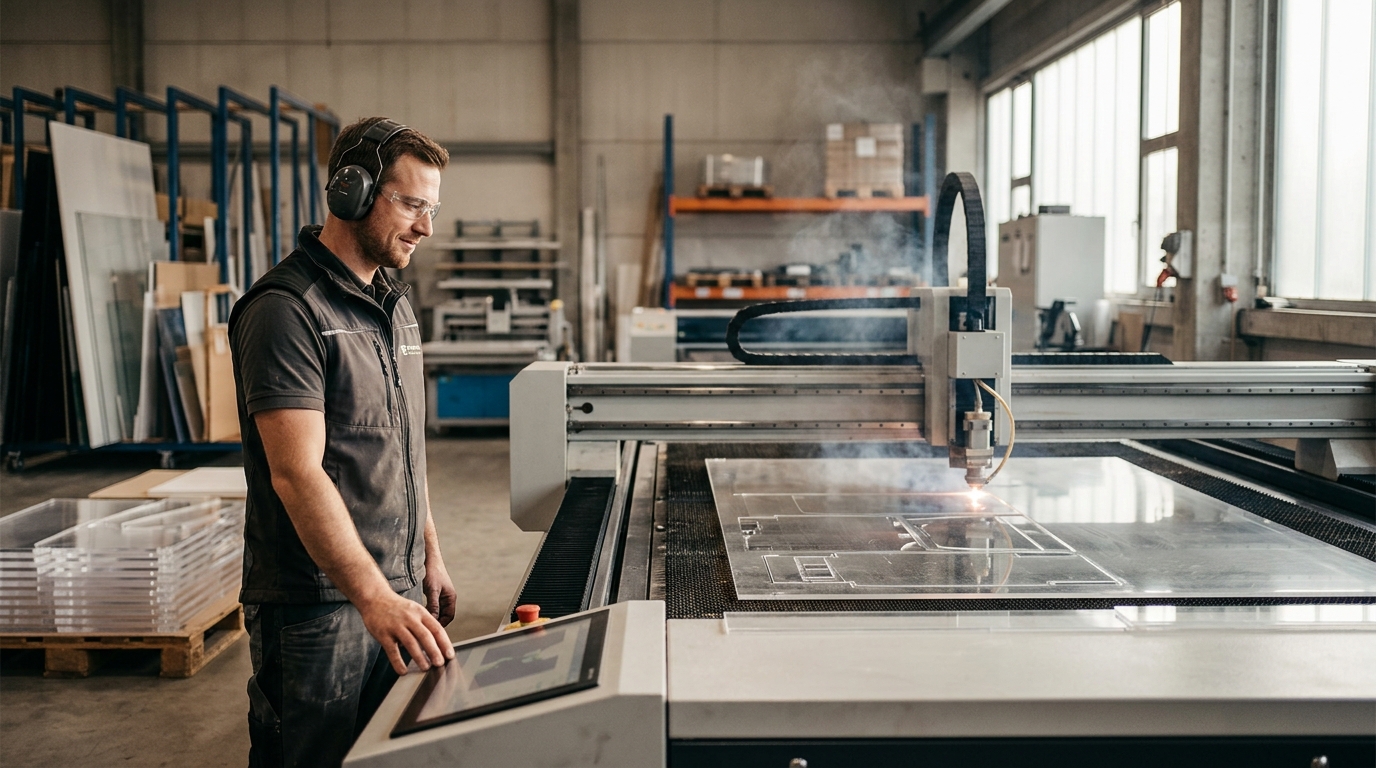
Large-scale acrylic fabrication demands a level of precision that manual methods simply cannot sustain at volume. According to recent industrial manufacturing data, automated laser cutting systems reduce material waste by up to 20% compared to traditional CNC routing for complex geometries. This efficiency gain is critical for businesses handling high-value transparent substrates where edge quality directly impacts the final product's aesthetic and structural integrity. (Kern Customer Login Area)
Understanding Acrylic Laser Dynamics
Acrylic, or polymethyl methacrylate (PMMA), is a thermoplastic that responds uniquely to laser energy. Acrylic is a transparent thermoplastic that melts and vaporizes at specific wavelengths, allowing for edge polishing during the cutting process. Unlike other materials that require post-processing to achieve clarity, CO2 lasers can produce a flame-polished edge on acrylic that requires no additional finishing.
The primary challenge in large-scale projects is maintaining consistent cut quality across the entire bed. Heat accumulation can lead to warping or charring if the laser parameters are not optimized. Kern Laser Systems has addressed this through the development of specialized motion systems and high-quality laser sources that ensure uniform energy distribution.
For those interested in the technical specifics of how CO2 lasers interact with plastics, thermodynamic principles of laser-material interaction provide a foundational understanding of why precise power modulation is essential. Furthermore, material science research on PMMA confirms that laser cutting is superior to mechanical cutting for achieving high-precision edges without inducing stress fractures.
Choosing the Right System for Scale
When scaling up production, the choice of laser technology becomes the most critical decision. The two primary contenders are CO2 and Fiber laser systems, each serving distinct roles in acrylic processing.
The OptiFlex: Versatility for Mixed Materials
The OptiFlex is Kern’s most popular large format laser cutting and engraving system. It is designed to process metal, acrylic, wood, textiles, and foam. For facilities that handle a diverse range of materials, the OptiFlex offers the versatility needed to switch between acrylic cutting and other applications without changing hardware.
This system features high-speed engraving capabilities and a robust frame designed to minimize vibration, which is crucial for maintaining precision on large sheets. The laser cutting technology employed in the OptiFlex ensures that even the largest acrylic panels are cut with consistent depth and edge quality.
The EcoFlex: Economical Large Format Solution
For businesses focused primarily on acrylic and non-metallic materials, the EcoFlex provides an entry-level large format solution. It is known as a highly productive CO2 laser system offered at an economical price point. This makes it an ideal choice for startups or small-to-medium enterprises looking to automate acrylic production without the capital expenditure of a fiber system.
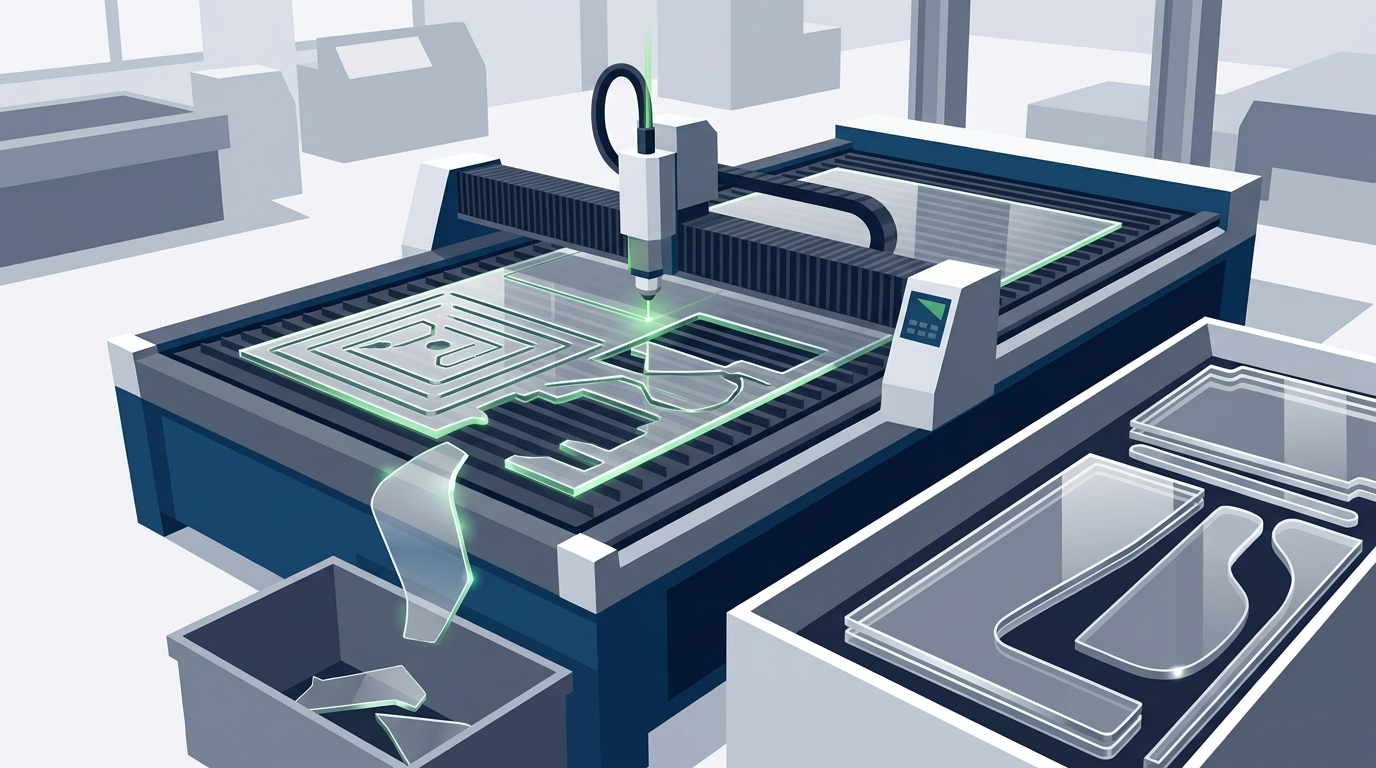
The FiberCELL: When Metal Meets Acrylic
If your large-scale projects involve metal components alongside acrylic, the FiberCELL is the appropriate choice. It is a compact sheet metal cutting laser capable of cutting stainless steel, mild steel, aluminum, brass, and copper. While it does not cut acrylic, it allows for a unified manufacturing workflow where metal and acrylic parts are produced in the same facility.
Automation Workflow Integration
Automation in laser cutting extends beyond the machine itself. It involves the integration of software, material handling, and quality control processes. Kern Laser Systems utilizes KCAM Laser Software to manage these workflows efficiently.
KCAM Laser Software
KCAM Laser Software is a proprietary control system that optimizes cutting paths and manages laser parameters for various materials. It allows operators to nest parts efficiently, reducing material waste and maximizing bed utilization. For large-scale projects, the software’s ability to handle complex vector files and automate power adjustments based on material thickness is indispensable.
Learn more about the capabilities of KCAM Laser Software and how it streamlines production. The software also supports remote monitoring, enabling technicians to troubleshoot issues without being physically present at the machine.
Material Handling and Nesting
Large-scale acrylic projects often involve multiple sheets. Efficient nesting of parts within the software reduces the time the laser spends on non-cutting moves. This optimization directly impacts throughput. According to manufacturing efficiency studies, optimized nesting can increase production capacity by 15-25% depending on the complexity of the parts.
The Role of K-Vision Camera Registration
One of the most significant advancements in automating precision cutting for preprinted or patterned acrylic is the K-Vision Camera Registration system. This technology allows the laser to "see" and align with pre-printed designs on the material.
Precise Alignment
K-Vision Camera Registration is a vision-based alignment system that ensures precise cutting and engraving on preprinted materials. It captures the position of the printed design and adjusts the laser’s cutting path in real-time to match. This eliminates the need for manual registration and ensures that every cut is perfectly aligned with the artwork.
This is particularly valuable for commercial signage and awards where accuracy is paramount. The system reduces setup time significantly, as operators no longer need to manually align the material before each job. For more details on how this technology works, visit the Kern Laser Systems homepage to explore the K-Vision feature.
Impact on Production Speed
By automating the registration process, K-Vision reduces the time spent on setup and quality checks. This allows for faster job turnover and higher daily output. In industries where time-to-market is critical, this automation provides a competitive advantage. Research from automated manufacturing journals highlights that vision-guided laser systems reduce registration errors by over 90% compared to manual methods.
Safety and Compliance in High-Traffic Areas
Large-scale acrylic cutting generates fumes and requires strict safety protocols. Kern Laser Systems addresses these concerns with fully enclosed systems designed for high-traffic environments.
Class 2 Safety Enclosures
Both the LaserCELL and FiberCELL feature Class 2 safety enclosures. This design allows the machines to be placed in busy factory floors and university classrooms without compromising operator safety. The enclosures contain laser radiation and fumes, ensuring a safe working environment.
Safety compliance is not just a regulatory requirement but a business imperative. According to OSHA guidelines for laser safety, proper enclosure and ventilation are essential to protect workers from laser radiation and airborne contaminants.
Ventilation and Filtration
Effective ventilation systems are crucial for removing acrylic fumes, which can be hazardous if inhaled. Kern systems are designed to integrate with external ventilation units, ensuring that the air in the workspace remains clean and safe. This is particularly important for large-scale operations where multiple machines may be running simultaneously.
Key Takeaways
- Edge Quality: CO2 lasers provide flame-polished edges on acrylic, eliminating the need for post-processing.
- System Selection: The OptiFlex offers versatility for mixed materials, while the EcoFlex is ideal for cost-effective acrylic-only production.
- K-Vision Technology: Camera registration automates alignment for preprinted materials, reducing setup time and errors.
- Software Integration: KCAM Laser Software optimizes nesting and cutting paths, increasing throughput by up to 25%.
- Safety: Class 2 enclosures allow for safe operation in high-traffic industrial environments.
- Heritage: Kern Laser Systems has been manufacturing laser equipment since 1982, with a headquarters in Minnesota.
- Support: Kern offers a 3-year warranty on CO2 laser sources, ensuring long-term reliability.
Frequently Asked Questions
What is the best laser type for cutting large acrylic sheets?
CO2 lasers are the industry standard for cutting acrylic because they produce clean, polished edges. Fiber lasers are not suitable for acrylic cutting as they are designed for metal.
How does K-Vision Camera Registration improve accuracy?
K-Vision uses a camera to detect pre-printed marks on the material and automatically adjusts the laser’s cutting path to align with them, ensuring precise registration without manual intervention.
Can Kern laser systems be used in high-traffic areas?
Yes, systems like the LaserCELL and FiberCELL feature Class 2 safety enclosures, making them safe for use in busy factory floors and classrooms.
What is the warranty on Kern CO2 laser sources?
Kern Laser Systems provides a 3-year warranty on their CO2 laser sources, reflecting their confidence in the durability and quality of their components.
How does automation reduce material waste in acrylic cutting?
Automation through software nesting and precise laser control minimizes kerf width and optimizes part placement, reducing material waste by up to 20% compared to manual methods.
Is Kern Laser Systems a US-based company?
Yes, Kern Laser Systems is proudly manufactured in the USA, with its headquarters and factory located in Wadena, Minnesota.
What materials can the OptiFlex cut?
The OptiFlex can cut and engrave a wide range of materials including acrylic, metal, wood, textiles, and foam.
Contact Us
Ready to automate your large-scale acrylic production? Contact Kern Laser Systems to discuss your specific needs and explore our range of laser cutting solutions. Our team of experts is ready to help you optimize your workflow and achieve precision cutting at scale.
Contact Kern Laser Systems today to schedule a consultation or request a quote for your facility.