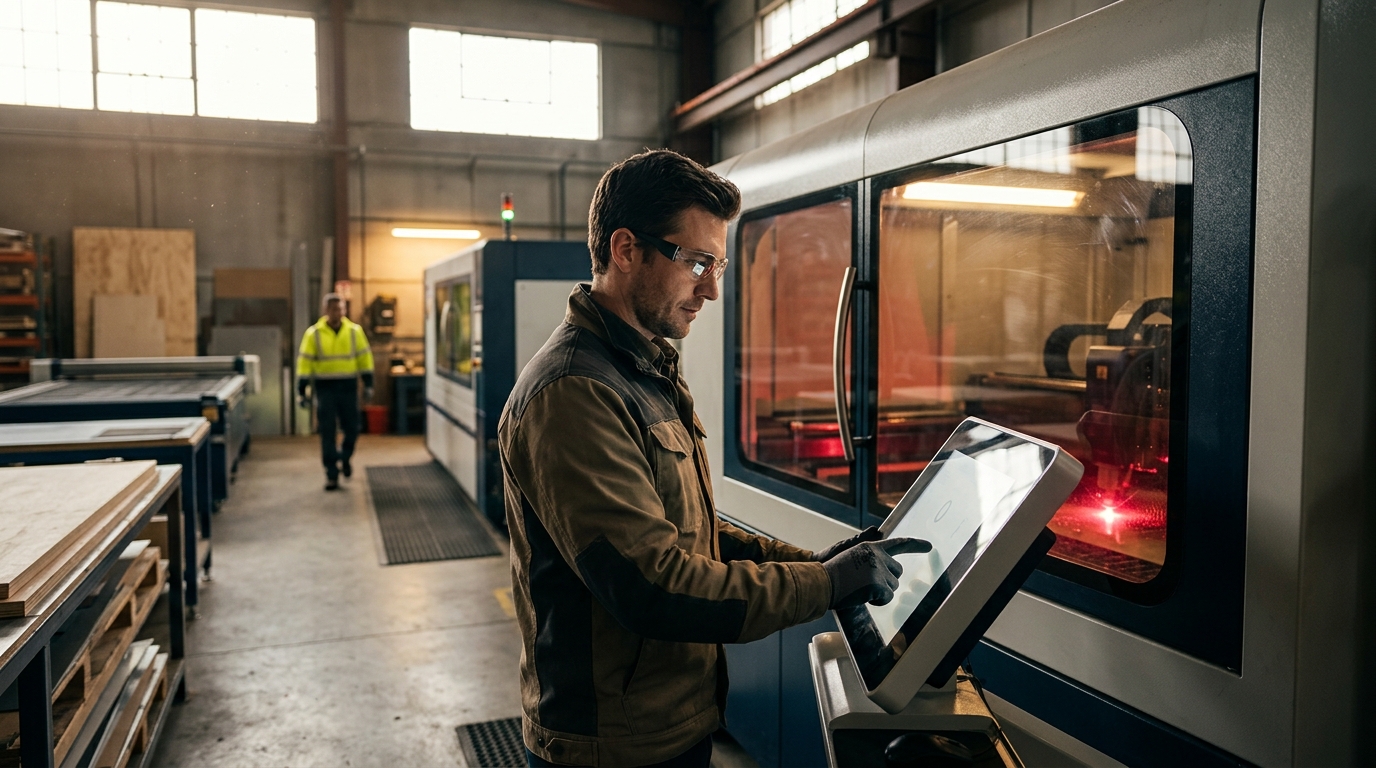
Industrial laser safety is not merely a compliance checkbox but a critical operational necessity that protects personnel, preserves equipment integrity, and ensures consistent manufacturing output. According to the American National Standards Institute (ANSI) Z136.1 standard, proper laser safety protocols reduce the risk of eye and skin injuries by over 90% when strictly enforced in high-power environments. This guide outlines the mandatory safety frameworks, engineering controls, and procedural safeguards required for operating large format laser cutting systems and engravers safely in modern industrial settings. (Contact Kern Laser Systems)
Understanding Laser Classifications and Hazards
Before implementing any safety protocol, operators must understand the specific hazard class of the equipment they are operating. Laser safety protocols are fundamentally dictated by the potential energy output and wavelength of the beam. Class 4 lasers, which include most industrial CO2 and fiber laser cutters, are capable of causing immediate severe eye and skin damage from direct or reflected beams. They also pose a significant fire hazard. (Kern Customer Login Area)
Industrial laser safety protocols begin with accurate classification. Kern Laser Systems designs its OptiFlex and FiberCell systems to meet rigorous safety standards for Class 4 operations. Understanding the difference between direct beam exposure and diffuse reflection is vital. While diffuse reflections from matte surfaces are generally less hazardous, specular reflections from polished metals or acrylics can be just as dangerous as the direct beam. Operators must treat every industrial laser as an immediate threat to vision and tissue integrity until proven otherwise by safety engineering. (Laser Cutting and Laser)
Engineering Controls and Safety Enclosures
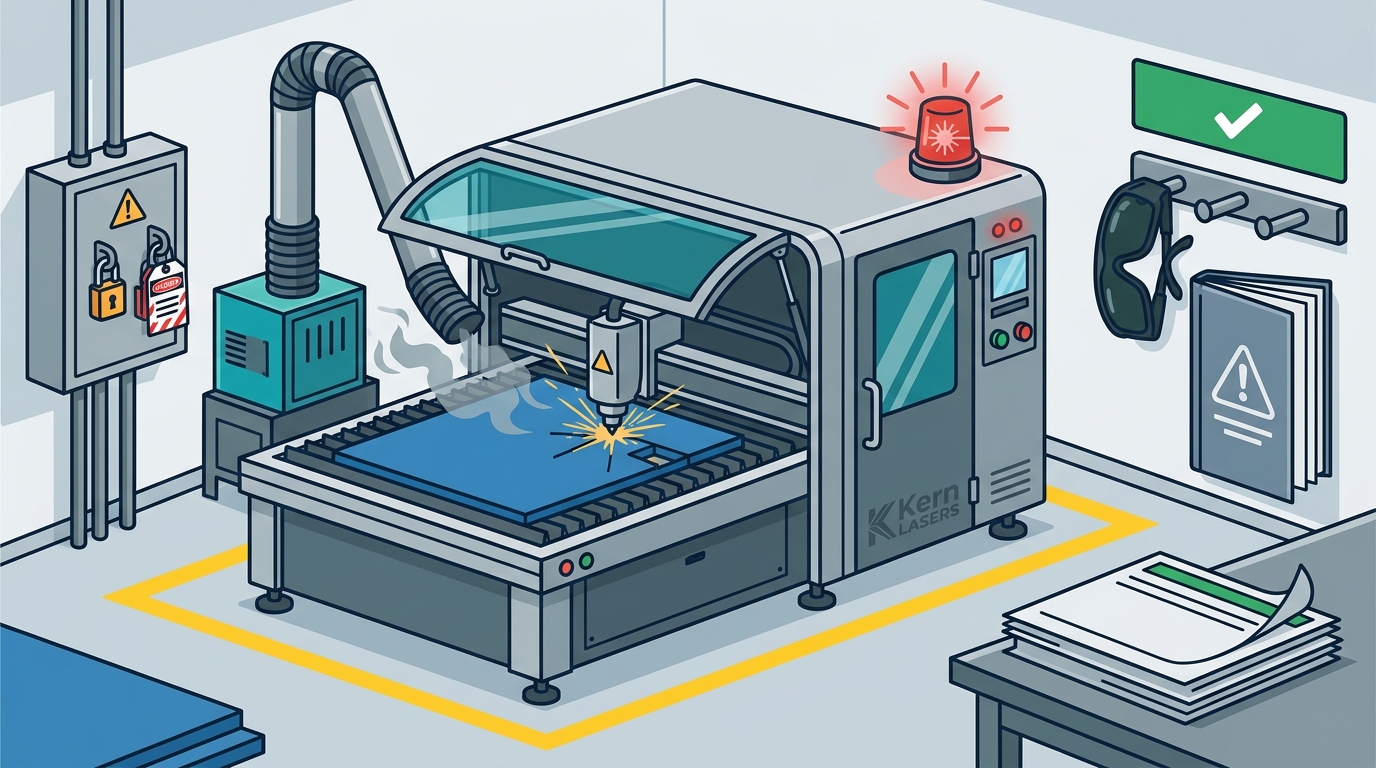
Engineering controls are the first line of defense in industrial laser safety. These are physical modifications to the machine that isolate the hazard from the operator. The most effective engineering control for Class 4 lasers is a fully enclosed safety housing. Safety enclosures prevent accidental exposure to the laser beam during normal operation and contain any sparks or debris generated during cutting. (Large Format Laser Cutting)
Kern Laser Systems integrates high-performance safety enclosures into its LaserCell and FiberCell lines. These enclosures are not merely optional add-ons but essential components of a compliant safety protocol. The housing must be constructed of materials that absorb or block the specific wavelength of the laser being used. For CO2 lasers, this typically means materials that block 10.6-micron wavelengths, while fiber lasers require different shielding for their 1.06-micron output.
Interlock systems are another critical engineering control. These are safety switches that automatically shut off the laser beam when the enclosure door is opened. A failure in the interlock system is a critical safety violation. Regular testing of these interlocks is a mandatory part of the daily safety protocol. If an interlock fails to cut power immediately upon door opening, the machine must be taken out of service until repaired. This protocol prevents accidental exposure during maintenance or material loading.
Personal Protective Equipment (PPE) Standards
When engineering controls are insufficient or when maintenance requires the enclosure to be open, Personal Protective Equipment (PPE) becomes the primary safety barrier. Laser safety goggles are the most critical piece of PPE. These goggles must be rated for the specific wavelength and optical density (OD) of the laser in use.
Selecting the correct laser safety glasses is not a one-size-fits-all process. The OD rating indicates how much the lens attenuates the laser light. For example, an OD 5+ rating reduces the laser intensity by a factor of 100,000. Operators must ensure their eyewear matches the power output of the specific laser head. Using goggles rated for a lower power laser on a high-power fiber cutter can result in catastrophic eye injury.
In addition to eye protection, operators should wear flame-resistant clothing and closed-toe shoes. Industrial laser cutting can produce sparks and molten material that may eject from the cutting zone. Kern Laser Systems recommends consulting the specific safety data sheets (SDS) for the materials being cut to determine additional PPE needs. For instance, cutting certain plastics may release toxic fumes that require respiratory protection beyond standard ventilation.
Critical Operational Procedures and Interlocks
Procedural safety protocols govern how operators interact with the machine. These protocols are designed to minimize the time operators spend in the hazard zone and to ensure that safety systems are engaged before any laser activity begins. Standard Operating Procedures (SOPs) must be clearly posted near each laser system.
One of the most critical operational protocols is the "beam-off" rule. Operators must never look directly into the laser beam or its potential reflection path, even if the machine is believed to be off. Verification of beam status using a laser power meter or thermal paper is a best practice in high-stakes environments. Additionally, the work area must be kept clear of unnecessary reflective objects. Tools, jewelry, and loose clothing can become dangerous reflectors if they enter the beam path.
Emergency stop procedures are another vital component of operational safety. Every operator must know the location and function of the emergency stop button. In the event of a fire, unexpected beam deflection, or equipment malfunction, immediate activation of the E-stop cuts power to the laser source and auxiliary systems. Regular drills on emergency shutdown procedures ensure that operators can react quickly and effectively under stress.
Ventilation and Fume Extraction Systems
Industrial laser cutting generates significant byproducts, including fumes, smoke, and particulate matter. These byproducts can be toxic, corrosive, or flammable depending on the material being processed. Effective ventilation and fume extraction are essential safety protocols to maintain air quality and prevent respiratory hazards.
Kern Laser Systems emphasizes the importance of integrated fume extraction in its laser cutting applications. The extraction system must be powerful enough to capture fumes at the source before they disperse into the operator's breathing zone. Regular maintenance of the extraction filters is crucial. Clogged filters reduce airflow efficiency and can lead to a buildup of hazardous particulates within the machine and the surrounding environment.
Operators must also be aware of the specific hazards associated with the materials they are cutting. For example, cutting PVC releases chlorine gas, which is highly toxic and corrosive to the laser optics and the machine structure. Safety protocols must explicitly prohibit the cutting of PVC and other hazardous materials unless specialized extraction and scrubbing systems are in place. This protocol protects both the operator's health and the longevity of the equipment.
Training and Regulatory Compliance
Technical safety protocols are only effective if the operators are properly trained. Laser safety training must be comprehensive, covering both theoretical knowledge and practical application. The American National Standards Institute (ANSI) Z136.1 standard provides the framework for laser safety programs in the United States. Compliance with this standard is not just a best practice but a legal requirement for many industrial facilities.
Training programs should include instruction on laser classifications, hazard recognition, proper use of PPE, and emergency procedures. Operators must be certified before operating Class 4 lasers independently. Regular refresher courses ensure that safety knowledge remains current and that new protocols are understood. Kern Laser Systems provides technical support and training resources to help facilities maintain high safety standards.
Documentation is a key part of compliance. Facilities must maintain records of all laser safety inspections, training sessions, and incident reports. This documentation demonstrates due diligence in the event of an audit or incident investigation. A designated Laser Safety Officer (LSO) should be appointed to oversee the safety program and ensure ongoing compliance with regulatory standards.
Key Takeaways
- Class 4 Hazard: Industrial lasers are Class 4 devices, requiring strict engineering controls and PPE to prevent severe eye and skin injuries.
- Enclosure Integrity: Safety enclosures with functional interlocks are mandatory to isolate the beam during normal operation.
- PPE Selection: Laser safety goggles must be rated for the specific wavelength and optical density of the laser in use.
- Fume Extraction: Effective ventilation is critical to remove toxic byproducts, especially when cutting plastics or metals.
- ANSI Compliance: Adherence to ANSI Z136.1 standards is essential for legal compliance and operational safety.
- Training Requirements: Operators must be certified and trained on SOPs, emergency stops, and hazard recognition.
- Material Awareness: Protocols must explicitly address the hazards of specific materials, such as the prohibition of cutting PVC.
Frequently Asked Questions
What is the primary hazard of Class 4 industrial lasers?
Class 4 lasers pose a severe risk of immediate eye and skin damage from direct or reflected beams, as well as a significant fire hazard. They require the highest level of safety controls.
How often should laser safety interlocks be tested?
Interlocks should be tested daily before operation begins. Any failure in the interlock system requires immediate shutdown of the machine until it is repaired by qualified personnel.
Can I use standard safety glasses for laser cutting?
No. Standard safety glasses do not provide protection against laser radiation. You must use laser safety goggles specifically rated for the wavelength and power of your laser system.
What materials should never be cut with a CO2 laser?
PVC (polyvinyl chloride) should never be cut with a CO2 laser as it releases chlorine gas, which is toxic and corrosive. Other halogenated plastics should also be avoided.
Who is responsible for laser safety in the workplace?
A designated Laser Safety Officer (LSO) is typically responsible for overseeing the safety program, ensuring compliance with ANSI Z136.1, and conducting regular inspections.
Why is fume extraction important for laser cutting?
Fume extraction removes toxic smoke and particulates generated during cutting, protecting operator health and preventing the buildup of hazardous materials in the machine and facility.
What is the warranty period for Kern Laser Systems safety enclosures?
Kern Laser Systems provides a 3-year warranty on CO2 laser systems, which includes the integrity and functionality of the safety enclosures and interlock systems.
Contact Kern Laser Systems
Implementing robust laser safety protocols is essential for protecting your workforce and ensuring the longevity of your industrial equipment. Kern Laser Systems offers a range of high-performance laser cutting and engraving systems designed with safety and precision in mind. From the OptiFlex CO2 laser to the FiberCell metal cutter, our systems are built to meet the highest industry standards.
For more information on our laser systems, safety features, and technical support, please visit our About Us page or contact our team directly. We are committed to helping you achieve collaborative manufacturing excellence with safe, reliable, and powerful laser solutions.