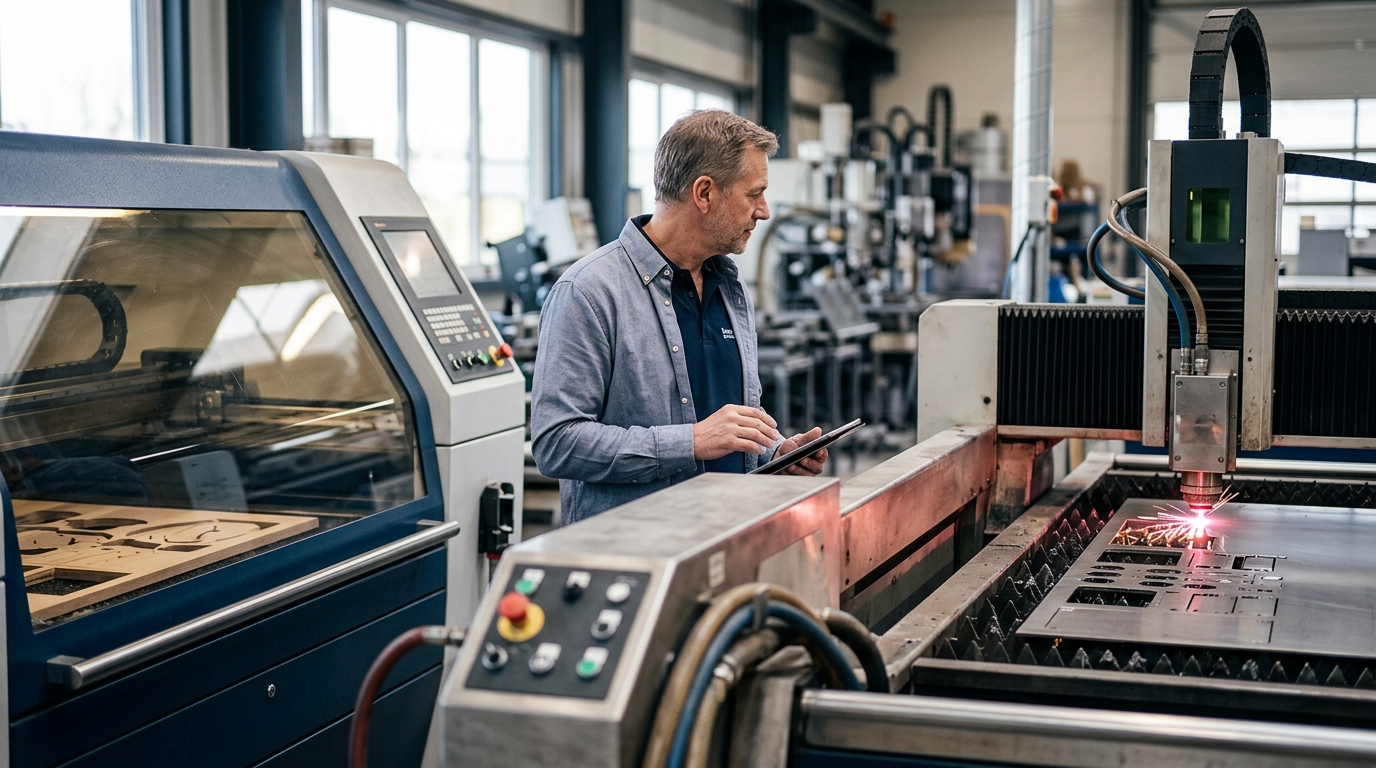
Industrial manufacturing is undergoing a significant technological shift as businesses evaluate their production capabilities. According to recent industry analyses, fiber laser technology has captured a dominant share of the metal cutting market due to its superior energy efficiency and operational speed. This transition forces shop owners to make critical capital allocation decisions that will define their operational capacity for the next decade. Understanding the fundamental differences between CO2 and fiber systems is essential for maximizing return on investment and ensuring long-term production viability.
How CO2 and Fiber Lasers Work
To make an informed decision, you must first understand the underlying physics of each technology. CO2 laser is a gas laser that uses a mixture of carbon dioxide, nitrogen, and helium gases to generate a beam. This beam is typically delivered to the workpiece via a system of mirrors. The process requires high electrical input to maintain the gas mixture and generate the necessary photon energy.
In contrast, fiber laser is a solid-state laser where the gain medium is an optical fiber doped with rare-earth elements. The laser diodes pump energy directly into the fiber, creating a beam that is transmitted through the same fiber used for delivery. This direct generation method eliminates the need for complex mirror alignment and results in a more compact, robust machine architecture.
The fundamental difference in beam generation dictates the performance characteristics. CO2 lasers produce a beam with a longer wavelength, which interacts differently with various materials compared to the shorter wavelength of fiber lasers. This interaction determines how efficiently the material absorbs the energy, which directly impacts cutting speed and edge quality.
Material Compatibility and Applications
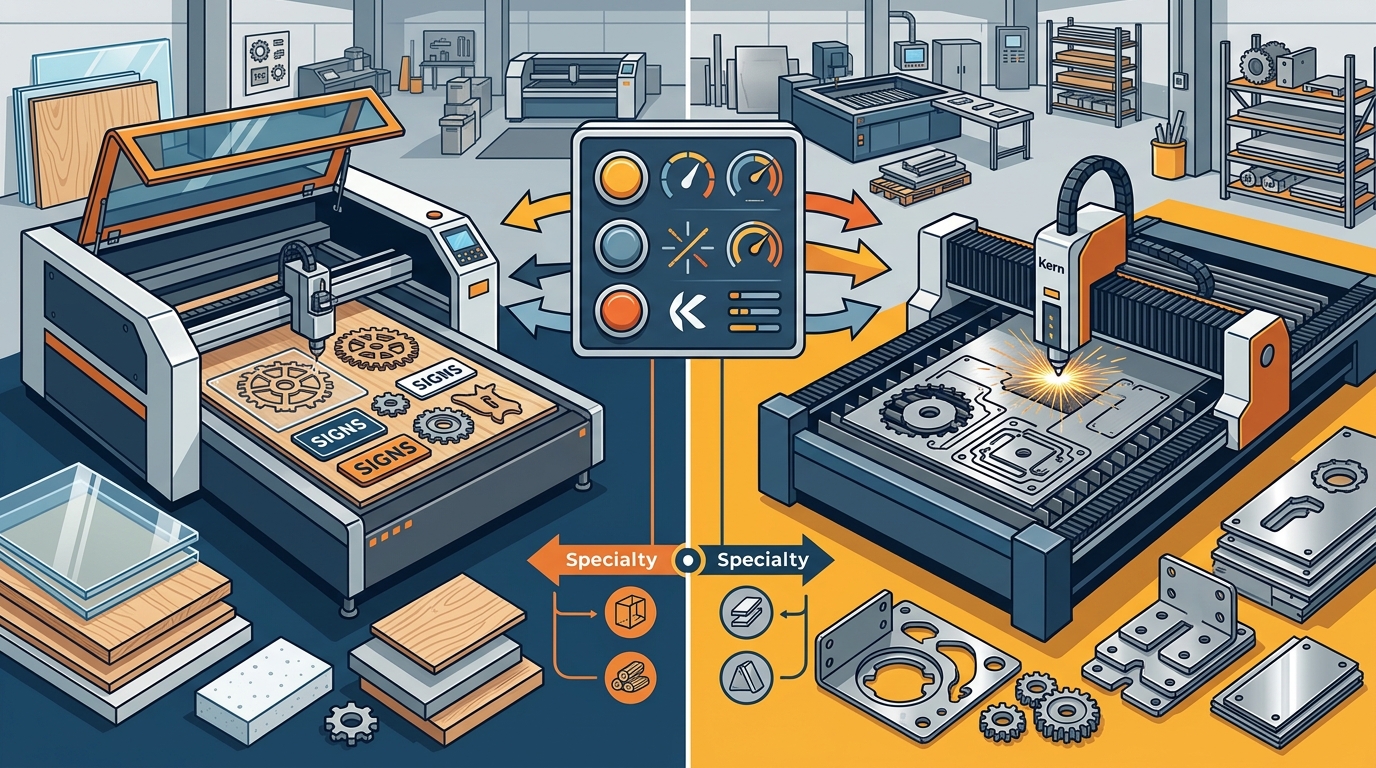
One of the most critical factors in choosing between these systems is the type of material you intend to process. CO2 lasers have historically been the standard for non-metallic materials. They excel at cutting acrylic, wood, leather, and fabrics. The energy absorption profile of these organic and synthetic materials makes CO2 systems highly effective for signage, display, and craft applications.
Fiber lasers, however, are optimized for metals. They cut steel, aluminum, brass, and copper with exceptional speed and precision. While CO2 lasers can cut thin metals, the process is slower and consumes significantly more power. For heavy industrial metal fabrication, fiber lasers are the undisputed choice. They offer deeper penetration and cleaner cuts on reflective metals that often challenge CO2 systems.
Many modern manufacturing environments require versatility. Some businesses choose to invest in both systems to cover the full spectrum of materials. Others look for hybrid solutions or prioritize fiber lasers for their metal cutting dominance while outsourcing non-metallic work. Understanding your primary material mix is the first step in selecting the right equipment.
Efficiency and Operational Costs
Operational efficiency is a major driver for the adoption of fiber laser technology. Fiber lasers are significantly more energy-efficient than CO2 systems. They convert a higher percentage of electrical input into laser light, resulting in lower electricity bills. This efficiency gap widens as the power of the machine increases, making high-power fiber lasers particularly cost-effective for continuous operation.
Maintenance costs also favor fiber lasers. CO2 lasers require regular replacement of gas mixtures, mirrors, and lenses. These consumables add up over time and require skilled technicians to manage. Fiber lasers have a solid-state design with fewer moving parts and no gas to replenish. The primary maintenance involves keeping the optics clean and ensuring the cooling system functions correctly.
Initial capital expenditure is often higher for fiber lasers, especially for high-power models. However, the total cost of ownership (TCO) often favors fiber due to reduced operational expenses. When calculating ROI, consider the savings in energy, maintenance, and increased throughput. For many businesses, the payback period for a fiber laser is shorter than anticipated.
Precision, Speed, and Maintenance
Speed is a critical factor in high-volume production. Fiber lasers cut metals much faster than CO2 lasers. This speed advantage translates directly to higher throughput and lower cost per part. For businesses with tight deadlines and large order volumes, the productivity gains of fiber technology are substantial.
Precision is another key differentiator. Fiber lasers produce a tighter beam focus, allowing for narrower kerf widths and finer details. This precision is essential for intricate metal parts and high-tolerance applications. CO2 lasers can achieve good precision on non-metals, but their beam quality is generally inferior for fine metal cutting.
Maintenance requirements differ significantly between the two technologies. CO2 systems require regular alignment of optical components and replacement of wear parts. Fiber lasers are more robust and require less frequent intervention. This reliability reduces downtime and ensures consistent production quality over time.
Kern Laser Systems Solutions
Kern Laser Systems has been a leader in laser technology since 1982. The company offers a range of systems designed to meet diverse manufacturing needs. Their laser cutting portfolio includes both CO2 and fiber options, ensuring customers can find the right tool for their specific applications.
The OptiFlex is a popular CO2 laser cutter and engraver known for its reliability and versatility. It is ideal for cutting acrylic, wood, and other non-metallic materials. The OptiFlex is often used in signage, awards, and custom fabrication shops.
For metal cutting, Kern offers the FiberCell system. This pure metal cutter features a safety enclosure and high-performance capabilities. It is designed for industrial applications requiring precision and speed. The FiberCell is a robust solution for cutting steel, aluminum, and other metals.
Kern also provides the EcoFlex, an economical large format laser cutter and engraver. This system is suitable for businesses looking for cost-effective CO2 technology for larger materials. Additionally, the LaserCell offers high performance with a safety enclosure, making it a versatile choice for various industrial tasks.
For those interested in advanced software, Kern provides KCAM Laser Software. This software enhances the user experience by providing intuitive controls and precise management of laser operations. It is compatible with Kern systems and helps optimize cutting paths for efficiency.
Kern Laser Systems is proudly manufactured in the USA. This commitment to domestic production ensures high quality standards and reliable support for customers. The company offers a 3-year warranty on CO2 laser systems, demonstrating confidence in their product durability.
Key Takeaways
- Technology Core: CO2 lasers use gas mixtures for non-metals, while fiber lasers use solid-state diodes for metals.
- Efficiency: Fiber lasers are significantly more energy-efficient, reducing operational costs over time.
- Maintenance: Fiber systems require less maintenance due to fewer moving parts and no gas replacements.
- Speed: Fiber lasers cut metals faster than CO2 lasers, increasing throughput for metal fabrication.
- Kern History: Kern Laser Systems was founded in 1982 by Gerald Kern, establishing decades of industry expertise.
- Product Range: Kern offers diverse systems including OptiFlex, FiberCell, and EcoFlex to suit various needs.
- Warranty: Kern provides a 3-year warranty on CO2 laser systems, ensuring long-term reliability.
Frequently Asked Questions
Which is better for cutting acrylic?
CO2 lasers are generally better for cutting acrylic. They produce cleaner edges and require less power to process the material effectively compared to fiber lasers.
Can fiber lasers cut wood?
Fiber lasers are not typically used for cutting wood. They are optimized for metals and can cause charring or uneven cuts on organic materials. CO2 lasers are the standard for wood.
What is the lifespan of a CO2 laser tube?
CO2 laser tubes typically last between 10,000 and 20,000 hours. This lifespan depends on usage intensity and maintenance practices. Fiber laser diodes often have a longer operational life.
Is Kern Laser Systems a US manufacturer?
Yes, Kern Laser Systems is proudly manufactured in the USA. This domestic production supports quality control and provides reliable support for customers.
What software does Kern use?
Kern uses KCAM Laser Software. This software provides intuitive controls and precise management of laser operations for enhanced efficiency.
Do fiber lasers require gas?
No, fiber lasers do not require gas. They use solid-state diodes to generate the laser beam, eliminating the need for gas mixtures and associated maintenance.
What warranty does Kern offer?
Kern offers a 3-year warranty on CO2 laser systems. This warranty covers defects in materials and workmanship, ensuring customer confidence.
Start Your Laser Journey Today
Choosing the right laser cutting machine is a pivotal decision for your manufacturing business. Whether you need the versatility of CO2 for non-metals or the power of fiber for metals, Kern Laser Systems has the solution. Explore our laser systems to find the perfect match for your needs. Contact us today to request a quote or learn more about our company history and commitment to quality.