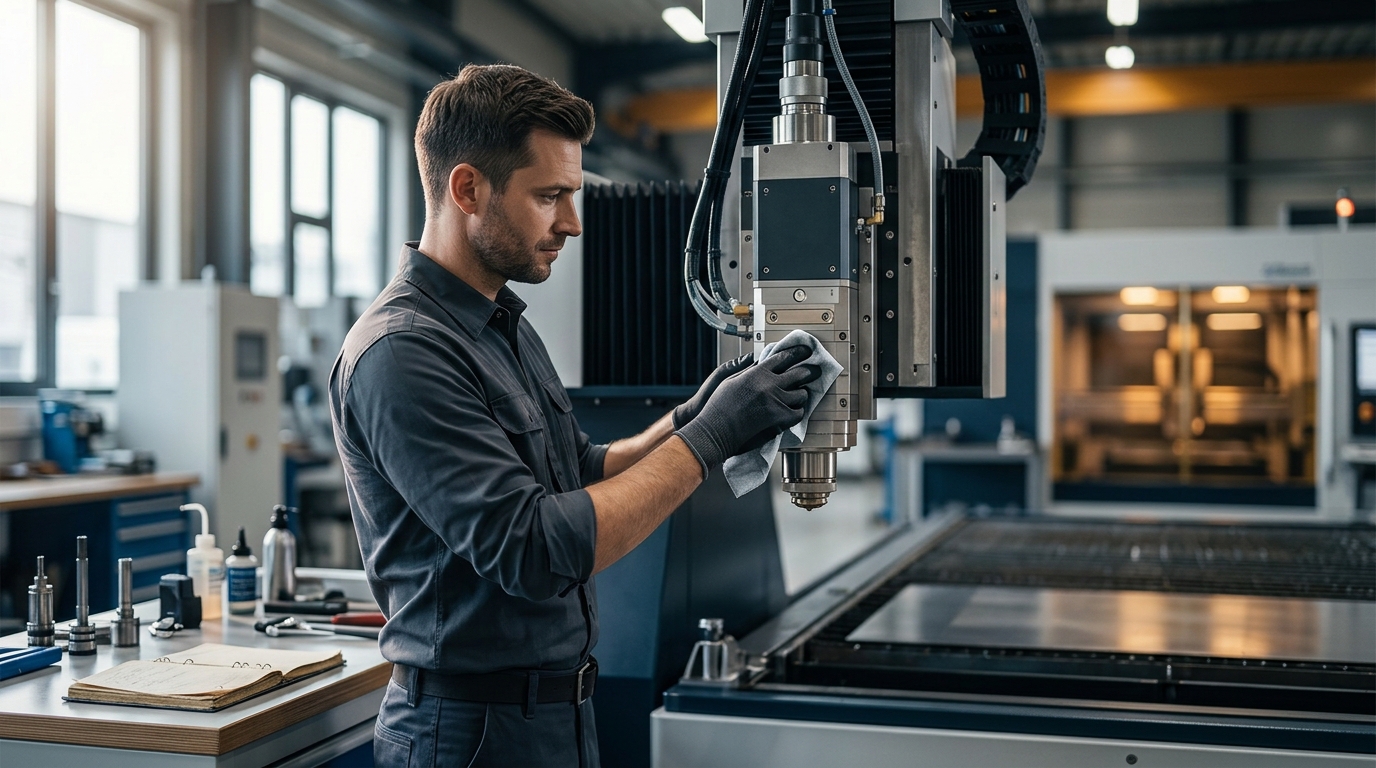
Industrial laser cutting systems represent a significant capital investment for modern manufacturing facilities. According to industry data, proper maintenance routines can extend the operational lifespan of high-performance CO2 and fiber laser systems by up to 40 percent compared to neglected equipment. This statistic underscores the critical relationship between preventive care and long-term return on investment. For facility managers and production engineers, understanding the specific maintenance requirements for equipment like the OptiFlex or FiberCell series is not merely a suggestion. It is an operational necessity to ensure precision, safety, and consistent throughput.
Daily Operational Routines
Every shift begins with a rigorous inspection protocol. The foundation of laser maintenance lies in the daily checks that prevent minor issues from becoming catastrophic failures. Operators must verify the integrity of the assist gas supply lines. Leaks in oxygen, nitrogen, or compressed air lines can drastically alter cut quality and pose safety risks.
Cleaning the worktable and exhaust system is another non-negotiable daily task. Residual material, such as acrylic dust or metal shavings, can accumulate in the ventilation ducts. This accumulation restricts airflow and increases the risk of fire. Kern Laser Systems designs its LaserCell and FiberCell enclosures with safety in mind, but user diligence remains the first line of defense.
Inspecting the nozzle and focusing lens for visible damage is also critical. A cracked nozzle or a contaminated lens can deflect the laser beam, leading to poor cut edges and potential damage to the internal optics. If you notice irregular cut patterns, immediate inspection of these components is required. For detailed guidance on material handling, review our Applications & Materials page.
Optical Component Care
The optical train is the heart of any laser cutting system. In CO2 laser systems, such as the popular OptiFlex, mirrors guide the beam from the laser tube to the cutting head. In fiber systems like the FiberCell, the beam is delivered via a flexible fiber optic cable. Each technology requires distinct maintenance approaches.
Definition: Optical alignment is the precise adjustment of mirrors and lenses to ensure the laser beam travels the correct path with maximum energy efficiency.
For CO2 systems, mirror alignment must be checked weekly using alignment targets. Misalignment causes energy loss and generates excessive heat in the mirror mounts. Cleaning the mirrors requires specialized lens paper and high-purity isopropyl alcohol. Never use standard cloths, as they leave micro-scratches that scatter the beam.
Fiber laser systems generally require less frequent optical maintenance because they lack the complex mirror train of CO2 systems. However, the focusing lens and protective windows in the cutting head still need regular cleaning. A dirty focusing lens can cause the beam to diverge, resulting in wider kerf widths and reduced cutting speed. Kern Laser Systems provides comprehensive Technical Support resources for troubleshooting these specific issues.
Chiller and Cooling System Maintenance
Thermal management is vital for high-performance laser equipment. The laser source, whether a CO2 tube or a fiber diode array, generates significant heat during operation. The chiller system removes this heat to maintain stable output power.
Water quality in the chiller reservoir must be monitored regularly. Distilled or deionized water is required to prevent mineral buildup and electrical conductivity issues. Tap water introduces minerals that can clog internal passages and reduce heat transfer efficiency. According to engineering standards, maintaining water resistivity above 500,000 ohm-cm is essential for stable laser operation.
Filter replacement is another critical maintenance task. Chiller filters trap dust and debris from the air. Clogged filters force the chiller fan to work harder, reducing its lifespan and cooling capacity. Replace filters every three to six months, depending on the shop environment. For more information on our cooling technologies, visit the Kern Lasers homepage.
Mechanical and Motion System Checks
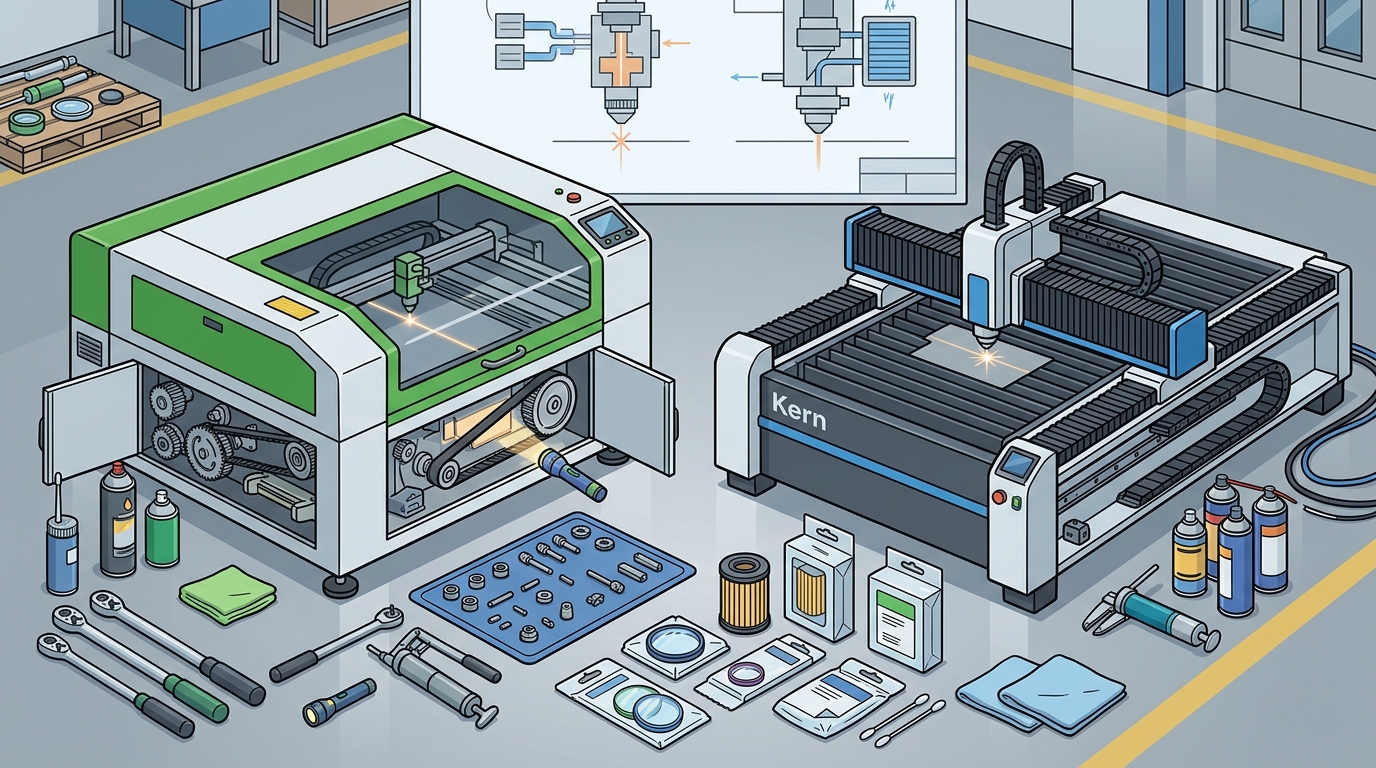
Precision cutting relies on the accuracy of the motion system. The gantry, rails, and linear guides must move smoothly without backlash or vibration. Regular lubrication of these components is necessary to prevent wear and ensure consistent positioning.
Check the tension of the drive belts or gears monthly. Loose belts can cause layering errors in the cut material, where each pass of the laser head is slightly offset from the previous one. Tighten the belts according to the manufacturer's specifications. Over-tightening can damage the motor bearings, while under-tightening leads to slippage.
Inspect the rotary attachment if you are cutting pipe or tube. The rotary axis must be calibrated to ensure that the laser beam cuts evenly around the circumference. Misalignment here results in uneven cuts and wasted material. Our Pipe & Tube Rotary technology is designed for high precision, but it requires regular calibration to maintain that standard.
Software and Firmware Management
Modern laser cutting systems are controlled by sophisticated software. Kern Laser Systems utilizes KCAM Laser Software for optimal performance. Keeping this software updated ensures access to the latest cutting parameters, safety features, and bug fixes.
Firmware updates for the laser controller and motion cards are also important. These updates often improve communication speed between the computer and the machine, reducing latency and improving cut quality. Always back up your current configuration before applying any updates. If you encounter software issues, consult the KCAM Laser Software documentation or contact our support team.
Regular data backups of your job files and material libraries are also recommended. This practice protects your intellectual property and ensures that you can quickly restore your system in case of a hardware failure. For more insights on software integration, check our Blog.
Maintenance Schedule Overview
| Maintenance Task | Frequency | Impact on Performance | Related Resource |
|---|---|---|---|
| Nozzle and Lens Cleaning | Daily | Prevents beam deflection and cut quality loss | Applications Guide |
| Mirror Alignment (CO2) | Weekly | Ensures maximum energy efficiency | Technical Support |
| Chiller Filter Replacement | Quarterly | Maintains thermal stability | Home |
| Drive Belt Inspection | Monthly | Prevents layering errors | Rotary Tech |
| Software Updates | As Released | Improves system stability and features | KCAM Software |
Key Takeaways
- Preventive Care: Daily cleaning of nozzles and lenses is the most effective way to maintain cut quality.
- Thermal Management: Using distilled water and replacing chiller filters regularly prevents overheating and component failure.
- Optical Precision: Weekly mirror alignment for CO2 systems ensures maximum energy efficiency and beam integrity.
- Motion Accuracy: Monthly inspection of drive belts and rotary attachments prevents layering and positional errors.
- Software Hygiene: Regular updates to KCAM Laser Software and firmware improve system performance and security.
- Warranty Compliance: Adhering to the maintenance schedule outlined in your user manual is often required to keep your 3-year warranty valid.
- Safety First: Regular inspection of gas lines and exhaust systems prevents fire hazards and ensures operator safety.
Frequently Asked Questions
How often should I clean the focusing lens?
The focusing lens should be cleaned daily or after every major job. Dust and debris from cutting materials can accumulate on the lens surface, scattering the laser beam and reducing cutting power. Use only lens paper and high-purity isopropyl alcohol to avoid scratching the coating.
What type of water is best for the chiller?
Distilled or deionized water is required for laser chillers. Tap water contains minerals and impurities that can cause electrical conductivity issues and mineral buildup inside the chiller. This buildup reduces cooling efficiency and can lead to laser tube failure.
Does the FiberCell require mirror alignment?
No, the FiberCell uses a fiber optic cable to deliver the laser beam, eliminating the need for the complex mirror alignment required in CO2 systems like the OptiFlex. However, the focusing lens in the cutting head still requires regular cleaning and inspection.
How do I know if my drive belts need adjustment?
If you notice layering errors in your cuts, where the cut edges are not perfectly parallel, your drive belts may be loose. Check the tension of the belts monthly and adjust them according to the manufacturer's specifications. Loose belts can also cause unusual noises during operation.
What is KCAM Laser Software?
KCAM Laser Software is the control software used by Kern Laser Systems to manage laser cutting operations. It provides tools for nesting, cutting parameter selection, and machine control. Keeping this software updated ensures you have access to the latest features and bug fixes.
How long is the warranty on Kern Laser Systems?
Kern Laser Systems offers a 3-year warranty on CO2 laser systems. This warranty covers manufacturing defects and ensures that your investment is protected. Adhering to the recommended maintenance schedule is often a requirement for warranty validity.
Where can I find technical support for my laser cutter?
You can access technical support through the Technical Support page on our website. This resource includes manuals, troubleshooting guides, and contact information for our support team. You can also reach out via our Contact Us page for direct assistance.
Contact Us
Maintaining your high-performance laser cutting equipment is essential for long-term success. If you have questions about maintenance schedules, warranty coverage, or need a quote for new equipment, our team is here to help. Visit our Request A Quote page to get started. For immediate assistance, contact us directly at Kern Lasers Contact.