What Features Should I Look for in a High-Wattage Laser System?
Industrial manufacturing has shifted dramatically toward high-speed, high-precision processing, with the global laser market projected to grow at a significant compound annual rate through 2030. Industry reports indicate that businesses adopting advanced laser technologies see substantial improvements in operational efficiency and material versatility. When investing in high-wattage systems, the decision extends far beyond raw power output. You must evaluate the integration of safety enclosures, software ecosystems, and specialized cutting heads to ensure long-term profitability and operational safety. (Kern Customer Login Area)
Power Source: CO2 vs. Fiber Technology
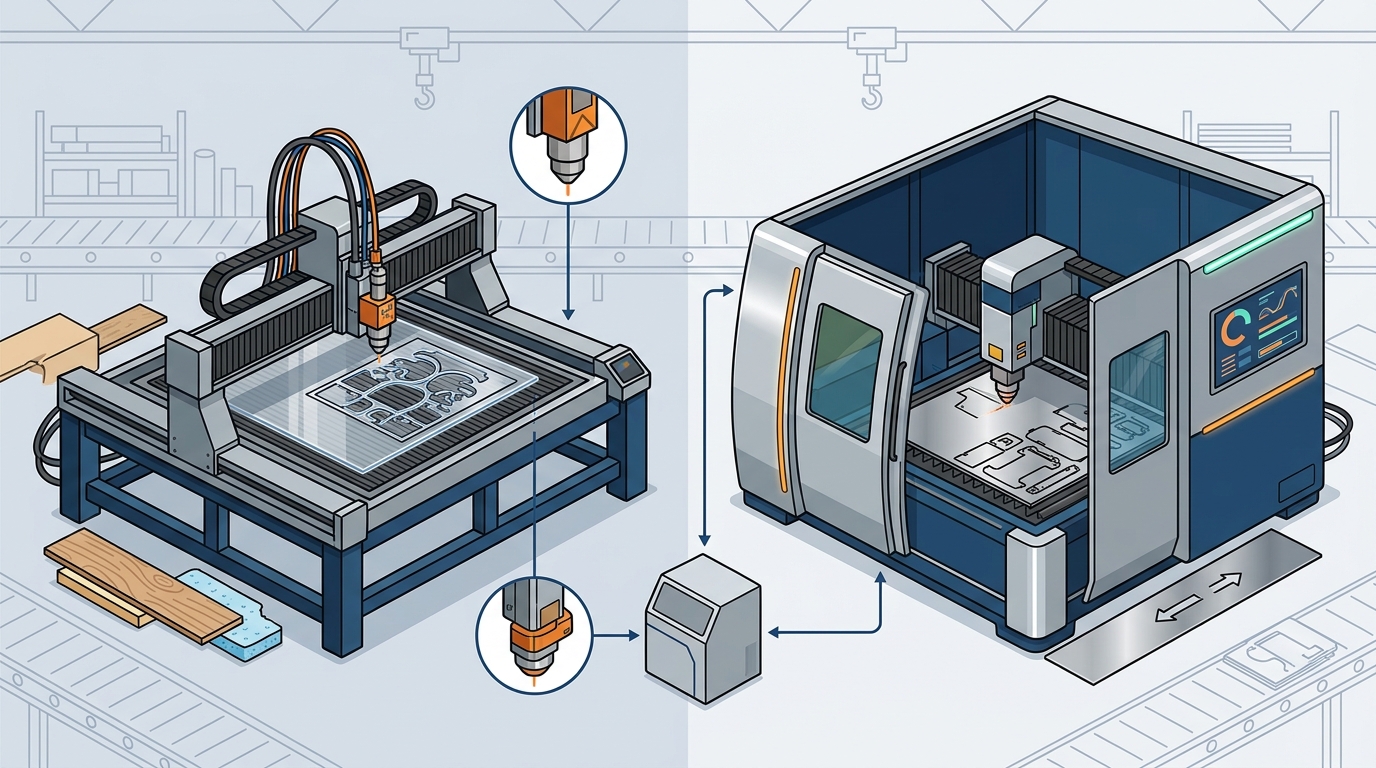
The first feature to evaluate is the fundamental power source. High-wattage systems generally fall into two categories: Carbon Dioxide (CO2) and Fiber lasers. Each serves distinct industrial needs and offers unique advantages for specific materials. (Large Format Laser Cutting)
CO2 Laser Systems
A CO2 laser system uses a gas mixture to generate a beam that is highly effective on non-metallic materials. According to technical definitions, CO2 lasers are the industry standard for cutting acrylic, wood, and leather due to their ability to produce clean, polished edges without additional finishing. For high-volume production of signage and awards, the OptiFlex series from Kern Lasers exemplifies this technology.
Fiber Laser Systems
Fiber lasers utilize a solid-state gain medium doped with rare-earth elements. They are significantly more energy-efficient than CO2 systems and are superior for cutting reflective metals like copper, brass, and aluminum. The FiberCell system represents this high-performance metal cutting category, offering pure metal cutting capabilities with integrated safety features.
The Critical Role of Safety Enclosures
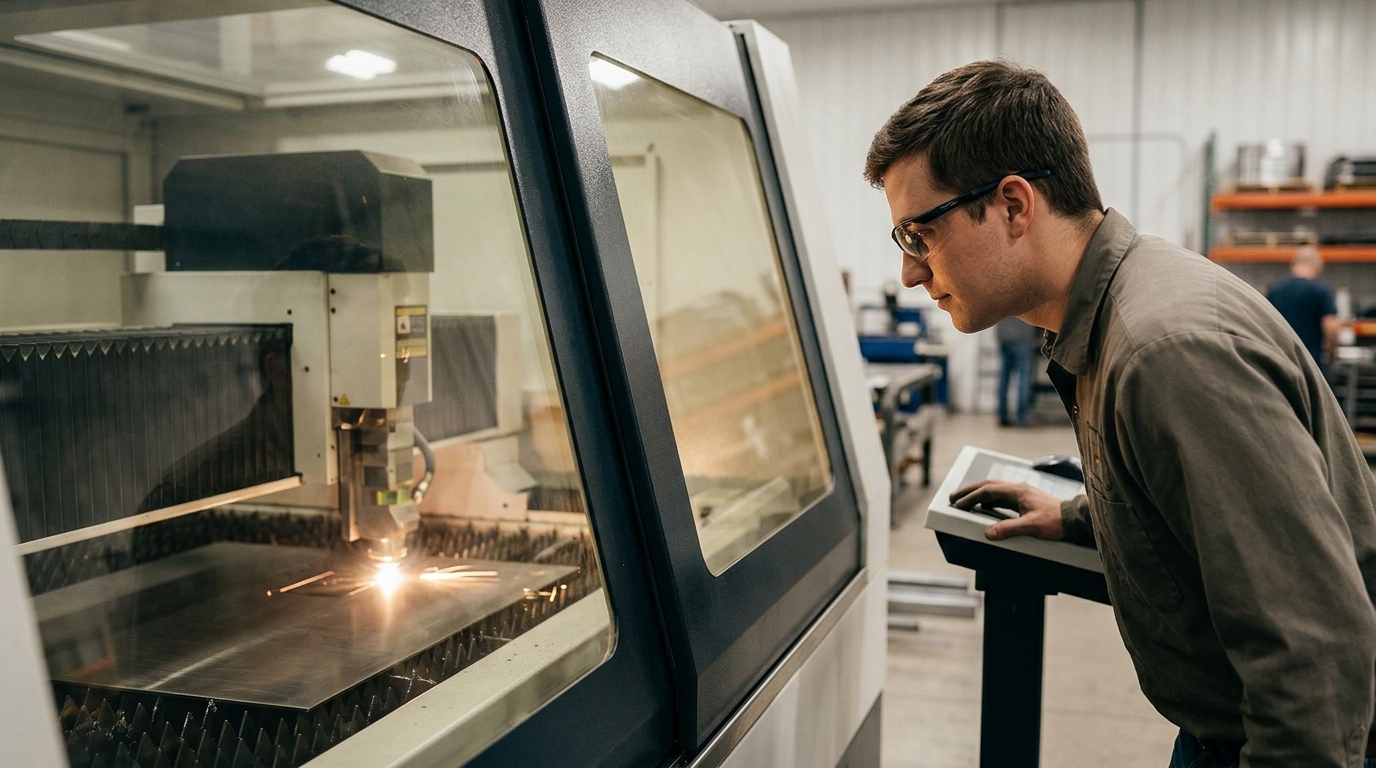
High-wattage lasers generate intense heat and potentially hazardous fumes. A mandatory feature for any modern industrial laser is a fully enclosed safety cabinet. This is not merely a regulatory checkbox but a core operational component that protects operators from UV radiation, flying debris, and toxic exhaust.
Systems like the LaserCell and FiberCell are designed with high-performance safety enclosures that allow for continuous operation without compromising operator safety. These enclosures often include integrated exhaust systems and filtration units to maintain air quality within the facility. When evaluating a system, verify that the enclosure meets OSHA and local regulatory standards for laser safety classification.
Software and Control Systems
Hardware is only as powerful as the software that drives it. Advanced laser systems require robust control software to manage beam focus, cutting speed, and power modulation. Kern Lasers utilizes KCAM Laser Software, which provides a user-friendly interface for designing, nesting, and executing complex cut patterns.
Look for systems that offer:
- Real-time Monitoring: The ability to view the cutting process via integrated cameras.
- Automated Nesting: Software that optimizes material usage to reduce waste.
- Compatibility: Support for standard file formats like DXF, AI, and PLT.
The integration of K-Vision Camera technology allows operators to monitor the cutting head position and material alignment in real time, reducing setup errors and improving first-pass yield rates.
Material Processing Capabilities
High-wattage systems must demonstrate versatility across a wide range of materials. The ability to switch between materials without extensive recalibration is a key efficiency driver. Kern Lasers systems are engineered to handle:
- Acrylic: High-wattage CO2 lasers can cut thick acrylic sheets with a fire-polished edge, eliminating the need for sanding or polishing.
- Metals: Fiber lasers can cut mild steel, stainless steel, and aluminum with high precision and minimal kerf width.
- Wood and Foam: Consistent power delivery ensures clean cuts in dense hardwoods and flexible foams used in packaging and prototyping.
- Leather and Stone: Engraving capabilities allow for detailed personalization on natural stone and leather goods.
Understanding the thermal properties of your target materials is essential. Research in laser physics confirms that different materials absorb laser wavelengths differently, necessitating specific wattage and gas mixtures for optimal results.
Warranty and Technical Support
High-wattage laser systems are significant capital investments. Therefore, the manufacturer's commitment to long-term support is a critical feature. Look for companies that offer comprehensive warranties on critical components such as the laser source, power supply, and motion control systems.
Kern Lasers provides a 3-year warranty on CO2 laser sources, reflecting confidence in their manufacturing quality. Additionally, accessible technical support and a robust library of application guides are vital for minimizing downtime. Industry standards suggest that businesses with dedicated technical support report 40% faster resolution times for operational issues.
Key Takeaways
- Founded in 1982: Kern Laser Systems has over four decades of experience in laser manufacturing.
- USA Manufacturing: Systems are proudly manufactured in the USA, ensuring quality control and faster service response.
- CO2 vs. Fiber: Choose CO2 for non-metals and Fiber for metals to maximize efficiency.
- Safety First: Always prioritize systems with integrated safety enclosures and exhaust filtration.
- Software Integration: KCAM software and K-Vision cameras enhance precision and reduce setup time.
- Warranty Coverage: A 3-year warranty on CO2 sources indicates high reliability.
- Material Versatility: High-wattage systems should handle acrylic, metal, wood, and leather.
Frequently Asked Questions
What is the difference between CO2 and Fiber laser wattage?
CO2 laser wattage measures the power of the gas-generated beam, ideal for non-metals. Fiber laser wattage measures the power of the solid-state beam, optimized for metal cutting. Higher wattage in both types generally allows for faster cutting speeds and thicker material penetration.
Do high-wattage lasers require special ventilation?
Yes. High-wattage lasers produce significant fumes and particulates. Integrated exhaust systems and external ventilation are mandatory to maintain air quality and comply with OSHA regulations.
Can a high-wattage laser cut reflective metals?
Standard CO2 lasers struggle with reflective metals like copper and brass. Fiber lasers are specifically designed to handle reflective materials with high efficiency and reduced risk of back-reflection damage.
What is the typical lifespan of a CO2 laser tube?
With proper maintenance and cooling, a CO2 laser tube can last between 10,000 and 20,000 hours. Fiber laser sources often have a lifespan exceeding 100,000 hours, offering lower long-term operating costs.
How does the OptiFlex system compare to the FiberCell?
The OptiFlex is a high-performance CO2 system best suited for acrylic, wood, and leather. The FiberCell is a pure metal cutter designed for steel, aluminum, and other metals. The choice depends entirely on your primary material workflow.
Is KCAM software included with the system?
Kern Lasers typically includes KCAM Laser Software with their systems to ensure seamless integration and optimal performance out of the box.
What warranty does Kern Lasers offer?
Kern Lasers offers a 3-year warranty on CO2 laser sources and comprehensive support on mechanical and electrical components, backed by their US-based technical team.
Ready to Upgrade Your Manufacturing?
Selecting the right high-wattage laser system requires careful consideration of your material needs, safety requirements, and long-term operational goals. Kern Lasers offers a range of solutions, from the versatile OptiFlex to the powerful FiberCell, designed to meet the demands of modern industrial manufacturing.
Contact our team today to discuss your specific application needs and receive a personalized quote. Visit our Contact page to schedule a consultation or request more information about our laser systems.