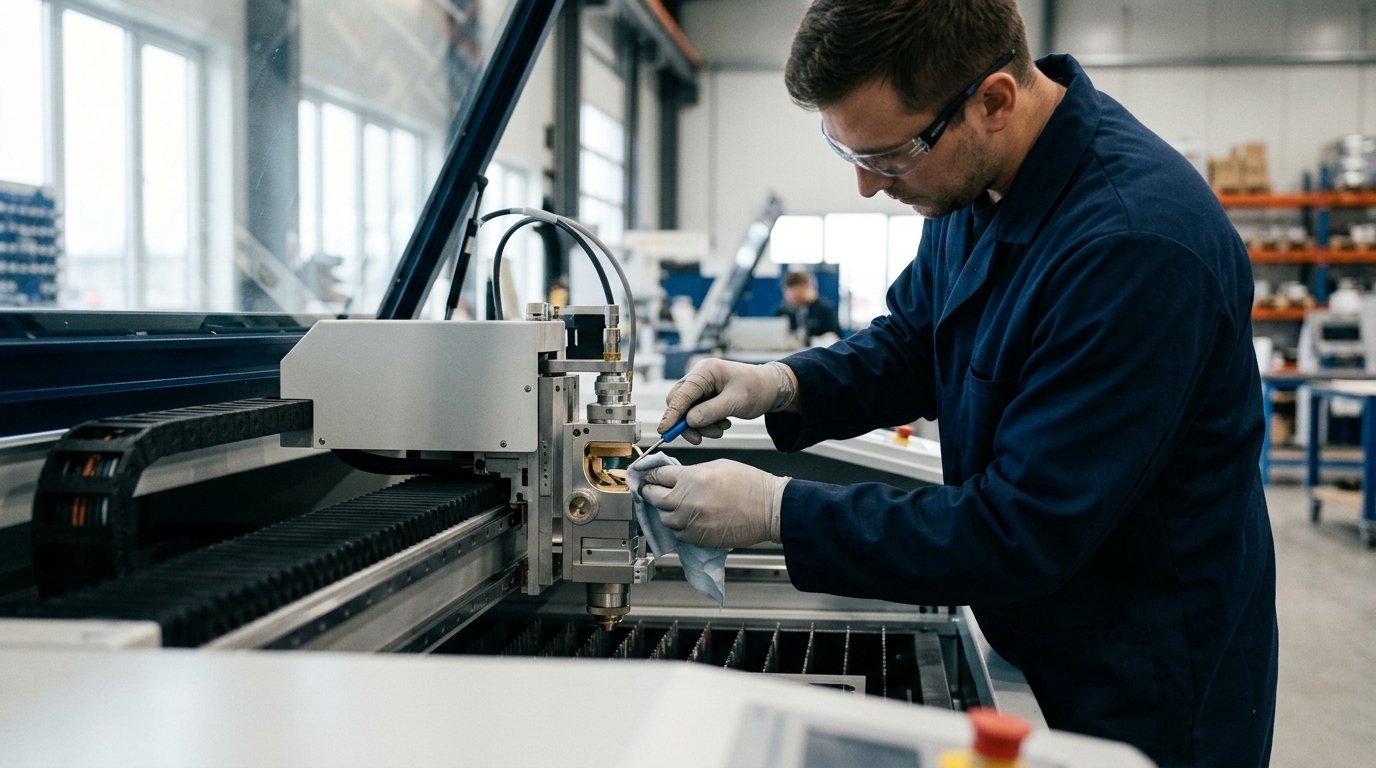
Industrial laser cutting systems represent a significant capital investment for modern manufacturing facilities. According to industry data, proper maintenance can extend the operational lifespan of a CO2 laser source by up to 50% compared to neglected units. This guide outlines the essential maintenance protocols required to keep your equipment running at peak efficiency. (Kern Customer Login Area)
Understanding Laser Source Types
Maintenance requirements vary significantly depending on the type of laser technology installed in your facility. CO2 lasers are the most common for cutting acrylic, wood, and textiles. These systems rely on a gas mixture and require regular mirror alignment and gas refills. Fiber lasers, used primarily for metal cutting, are solid-state systems with fewer moving parts but require strict cooling and lens care. (About Kern Laser Systems)
Kern Laser Systems manufactures both large format CO2 systems like the OptiFlex and fiber systems like the FiberCELL. Understanding your specific machine architecture is the first step in creating an effective maintenance schedule. (Laser Cutting and Laser)
Daily Operational Protocols
Daily maintenance is critical for preventing minor issues from becoming catastrophic failures. The following tasks should be completed before or after every shift.
Air Quality and Chiller Checks
Cutting air and assist gas purity directly impact cut quality. Ensure your air compressor is draining moisture daily. For fiber laser systems, check the chiller water level and temperature. Water quality is paramount for fiber laser cooling systems. Use only deionized water as specified by the manufacturer to prevent electrical shorts and corrosion.
Nozzle and Lens Inspection
Visually inspect the cutting nozzle for dents or debris. A damaged nozzle disrupts the gas flow pattern, leading to poor cut edges. Check the focus lens for splatter or dust. Use compressed air to gently blow away loose particles before wiping with lens paper and appropriate cleaning solution.
Weekly Cleaning and Inspection
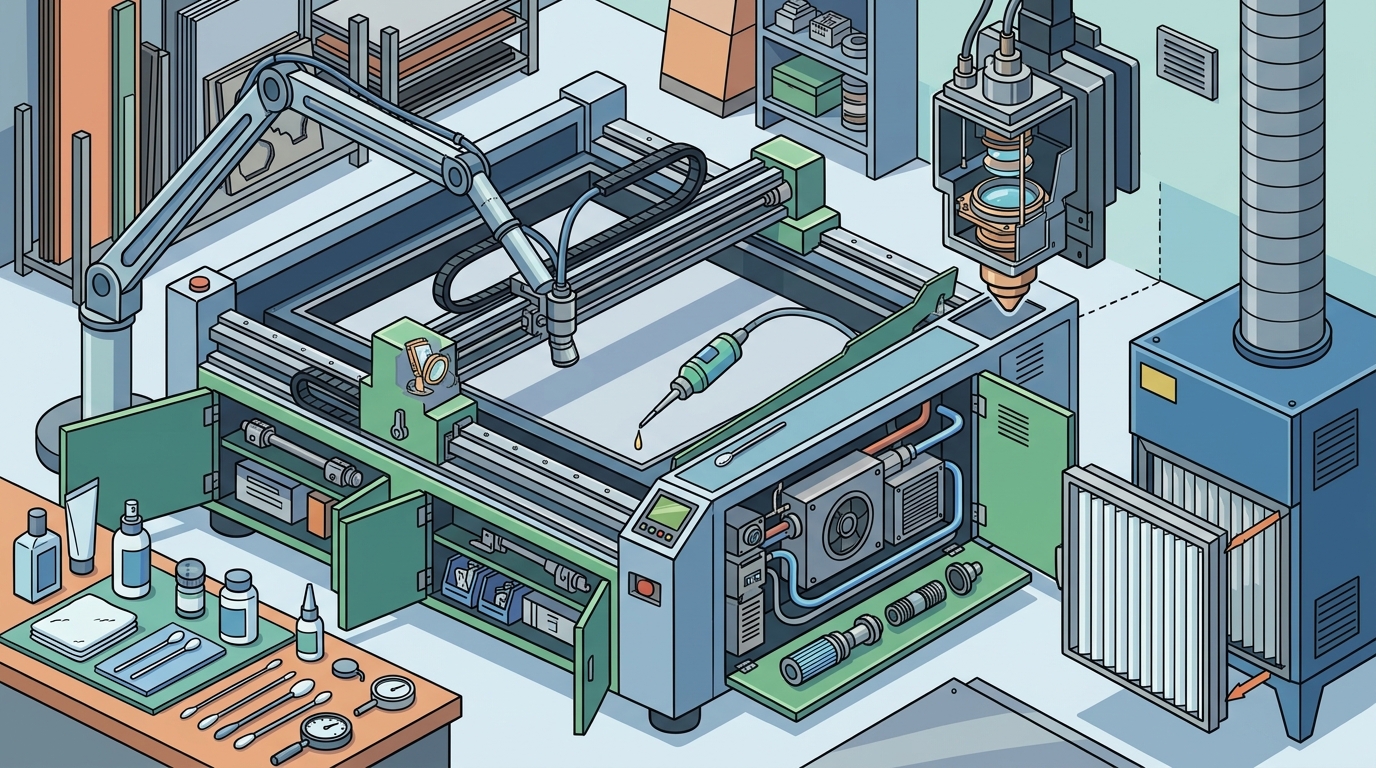
Weekly maintenance involves deeper cleaning of the optical path and mechanical components. This routine prevents the accumulation of particulate matter that can degrade beam quality.
Optical Path Cleaning
For CO2 laser systems, clean the output mirror and focusing lens weekly. Use a lint-free wipe and high-purity isopropyl alcohol. Never touch the optical surfaces with bare hands. Oils from skin can permanently damage the coating. Handle optics with extreme care to maintain beam integrity.
Linear Guide and Rail Lubrication
Clean the linear guides and ball screws of the gantry system. Remove any accumulated dust or debris. Apply the recommended lubricant to ensure smooth movement. Poor lubrication leads to increased friction, wear, and potential positioning errors in your cuts.
Monthly System Checks
Monthly maintenance tasks are more comprehensive and often require a shutdown of the system. These checks ensure the long-term health of the machine.
Beam Alignment Verification
Verify the beam alignment for CO2 lasers. Misalignment reduces power output and can damage internal components. Use the alignment tools provided by Kern Laser Systems to check the path from the laser source to the cutting head. Regular alignment checks are essential for maintaining cut precision.
Electrical Connections
Inspect all electrical connections for tightness and signs of wear. Check the power supply units and control boards for any error codes. Ensure that all safety interlocks and emergency stops are functioning correctly. Safety is the top priority in any industrial environment.
Software and Software Management
Modern laser systems rely heavily on software for operation and diagnostics. Kern Laser Systems utilizes KCAM Laser Software for precise control and monitoring.
Software Updates
Keep your laser control software up to date. Updates often include bug fixes, performance improvements, and new features. Regular backups of your job files and settings are also recommended.
Diagnostic Logs
Review system diagnostic logs regularly. These logs can provide early warnings of potential issues, such as temperature fluctuations or power supply anomalies. Addressing these warnings promptly can prevent unexpected downtime.
Key Takeaways
- CO2 vs. Fiber: CO2 lasers require gas management and mirror alignment, while fiber lasers need strict cooling and lens care.
- Daily Checks: Inspect air quality, chiller levels, and nozzles every day to ensure consistent cut quality.
- Weekly Cleaning: Clean optics and lubricate linear guides weekly to prevent particulate buildup and mechanical wear.
- Monthly Alignment: Verify beam alignment and electrical connections monthly to maintain precision and safety.
- Software Care: Update KCAM software regularly and review diagnostic logs for early issue detection.
- Optical Handling: Never touch optical surfaces with bare hands; use lint-free wipes and high-purity alcohol.
- Water Quality: Use only deionized water in fiber laser chillers to prevent corrosion and electrical shorts.
Frequently Asked Questions
How often should I clean the laser lens?
The laser lens should be inspected daily and cleaned as needed. Weekly deep cleaning is recommended to remove any accumulated debris or splatter.
What type of water is required for fiber laser chillers?
Fiber laser chillers require deionized water to prevent electrical conductivity and corrosion. Tap water should never be used.
How do I know if my CO2 laser beam is misaligned?
Misalignment can result in reduced cutting power, uneven cut edges, and increased wear on the focusing lens. Regular alignment checks using the manufacturer's tools are essential.
Can I perform maintenance on my laser system myself?
Basic cleaning and inspection tasks can be performed by trained operators. Complex repairs, such as beam alignment or electrical work, should be handled by qualified technicians.
What is the role of KCAM software in maintenance?
KCAM software provides diagnostic logs, system monitoring, and control parameters. Regularly reviewing these logs can help identify potential issues before they cause downtime.
How does Kern Laser Systems support maintenance?
Kern Laser Systems offers technical support, training, and replacement parts. Contact our support team for guidance on specific maintenance procedures.
What are the benefits of regular laser maintenance?
Regular maintenance extends the lifespan of your laser system, ensures consistent cut quality, reduces downtime, and lowers long-term operating costs.
Contact Us
For expert guidance on maintaining your high-performance laser cutting equipment, contact Kern Laser Systems. Our team of specialists is ready to assist you with technical support, training, and parts. Visit our Contact Page to get in touch or request a quote for your specific needs.