
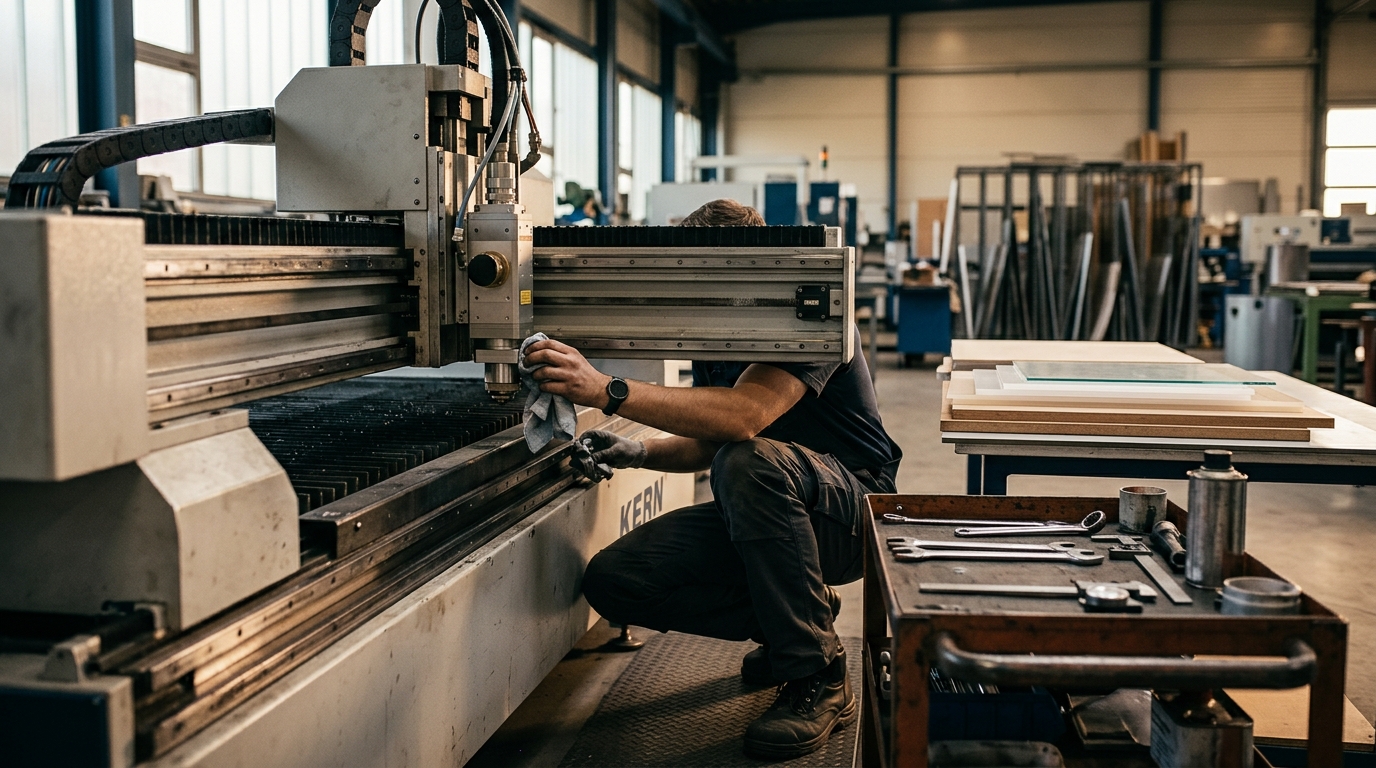
Industrial laser cutting systems require rigorous, scheduled maintenance to sustain precision and maximize operational uptime. Industry data shows that neglecting routine optical and mechanical checks can reduce cutting accuracy by over 15 percent within the first year of operation. This guide outlines the essential maintenance protocols for large format CO2 and fiber laser systems, ensuring your equipment delivers consistent, high-quality results for decades.
Optical System Care and Lens Management
The optical path is the heart of any laser cutting machine. For CO2 systems like the OptiFlex, maintaining clean mirrors and lenses is critical for power delivery. Dust, debris, and vaporized material can accumulate on the focusing lens, causing heat buildup and potential cracking. OSRAM reports that contaminated optics can reduce laser output efficiency by up to 20 percent, leading to inconsistent cut quality and increased energy consumption.
Regular Cleaning Protocols
Operators should inspect the focusing lens daily before starting production. Use only lens-grade cleaning solutions and lint-free wipes. Never touch the optical surface with bare fingers. For the FiberCELL metal cutter, the fiber delivery system is sealed, but the nozzle and focus head require regular inspection for spatter buildup. Spatter can reflect heat back into the lens, causing premature failure.
Replacing Consumables
Reflective mirrors in CO2 lasers have a finite lifespan. Thorlabs data indicates that standard gold-coated mirrors typically last between 1,000 and 2,000 hours of active cutting before reflectivity degrades significantly. Establish a replacement schedule based on your machine's usage hours. Keep spare lenses and mirrors on hand to minimize downtime during unexpected failures.
Chiller and Cooling System Maintenance
Thermal management is vital for laser source longevity. Both CO2 and fiber laser sources generate significant heat during operation. The chiller maintains the laser source and optics at a stable temperature, preventing thermal drift that affects cut precision.
Water Quality and Filtration
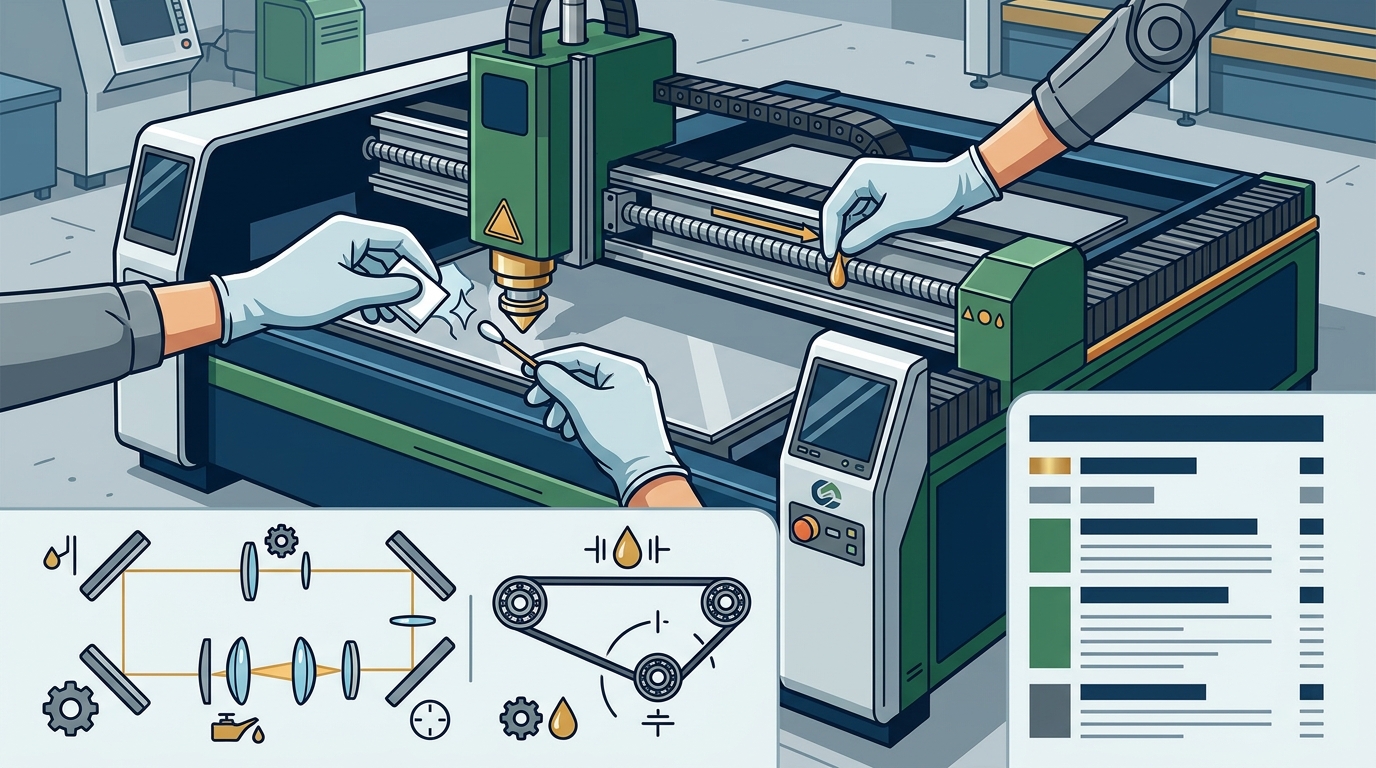
Use only deionized water with a resistivity of at least 1.5 megohm-cm. Tap water contains minerals that will precipitate inside the laser source, causing blockages and overheating. Hach Laboratory studies confirm that poor water quality is the leading cause of chiller pump failure and laser source corrosion. Replace the water filter cartridges every three to six months, depending on usage intensity.
Chiller Inspection
Check the chiller's coolant level and temperature readings daily. Ensure the air intake and exhaust vents are free of dust and debris. A clogged condenser can raise the chiller's operating temperature by 10 degrees Fahrenheit, triggering safety shutdowns. For the LaserCELL system, verify that the internal cooling loops are leak-free during monthly inspections.
Mechanical Components and Motion Systems
The precision of your cuts depends on the accuracy of the motion system. Linear guides, ball screws, and rack-and-pinion drives must be kept clean and properly lubricated.
Lubrication Schedules
Follow the manufacturer's lubrication guidelines strictly. Over-lubrication can attract dust, while under-lubrication causes wear. SKF engineering data shows that proper lubrication extends bearing life by up to 50 percent. Use the recommended grease type for your specific machine model. The EcoFlex large format cutter requires regular inspection of its heavy-duty linear rails due to the weight of the gantry.
Alignment and Calibration
Check the alignment of the laser beam path quarterly. Misalignment can cause uneven cutting depths and increased kerf width. Use a alignment tool or test cuts on uniform material to verify accuracy. For the Micro flexible small format system, ensure the rotary attachment is calibrated for pipe and tube cutting applications.
Safety Enclosure and Interlock Checks
Laser safety is non-negotiable. Machines like the LaserCELL and FiberCELL feature Class 2 safety enclosures. These enclosures protect operators from harmful radiation and contain fumes.
Interlock Verification
Test all door interlocks weekly. If the laser does not shut off immediately when a door is opened, the system is unsafe. OSHA regulations mandate that all laser safety interlocks be functional and regularly tested. Replace worn seals and gaskets to maintain enclosure integrity.
Fume Extraction
Ensure the fume extraction system is operating at peak efficiency. Clogged filters reduce airflow, allowing hazardous particulates to escape the enclosure. Clean or replace filters monthly. For cutting metals, verify that the extraction ducting is sealed to prevent leaks.
Software Updates and Calibration
Kern Laser Systems utilizes KCAM Laser Software for precise control of cutting parameters. Keeping this software updated ensures access to the latest optimization algorithms and safety features.
Parameter Optimization
Regularly review cutting parameters for different materials. ResearchGate publications on laser processing highlight that optimized parameters can reduce material waste by 10 percent. Use the Test Your Material tool to generate new profiles for novel substrates.
Backup and Recovery
Back up your machine configurations and cutting libraries monthly. Store these backups on an external drive or cloud service. In the event of a system crash, quick recovery minimizes production delays.
Key Takeaways
- Optical Integrity: Clean focusing lenses daily and replace CO2 mirrors every 1,000 to 2,000 hours to maintain power efficiency.
- Thermal Management: Use deionized water with resistivity above 1.5 megohm-cm and replace chiller filters every three to six months.
- Motion Precision: Lubricate linear guides and ball screws according to manufacturer specs to extend bearing life by up to 50 percent.
- Safety Compliance: Test door interlocks weekly to ensure immediate laser shutdown, adhering to OSHA safety standards.
- Software Optimization: Update KCAM Laser Software regularly and back up cutting parameters to prevent data loss.
- Fume Extraction: Clean fume filters monthly to maintain airflow and prevent hazardous particulate leaks.
- Brand Trust: Kern Laser Systems has been manufacturing high-quality laser equipment since 1982, with a 90,000 sq. ft. facility in Minnesota.
Frequently Asked Questions
How often should I clean the focusing lens on my CO2 laser?
You should inspect and clean the focusing lens daily before starting production. Daily cleaning prevents debris accumulation that can cause heat buildup and lens cracking.
What type of water is required for the laser chiller?
Only deionized water with a resistivity of at least 1.5 megohm-cm should be used. Tap water contains minerals that cause corrosion and blockages in the laser source.
How do I know when to replace the mirrors in my CO2 laser?
Mirrors typically last between 1,000 and 2,000 hours of active cutting. Replace them when you notice a significant drop in cutting speed or quality, or based on your scheduled maintenance calendar.
Is the LaserCELL safe for high-traffic areas?
Yes, the LaserCELL features a Class 2 safety enclosure, making it safe for placement in busy factory floors and university classrooms. It contains fumes and blocks laser radiation.
What is the warranty coverage for Kern Laser Systems?
Kern offers a 3-year warranty on CO2 laser sources. Full warranty details are available in the equipment documentation or by contacting Kern Laser Systems directly.
How does KCAM software improve cutting performance?
KCAM software provides precise control over cutting parameters, nesting capabilities, and real-time monitoring. Updates often include optimized algorithms for new materials and improved safety features.
Where is Kern Laser Systems located?
Kern Laser Systems is headquartered in Wadena, Minnesota, in a 90,000 sq. ft. facility. The company has been proudly manufacturing in the USA since 1982.
Contact Kern Laser Systems
Ensure your high-performance laser cutting equipment operates at peak efficiency with expert support and genuine parts. Kern Laser Systems provides comprehensive technical support, training, and maintenance guidance for all our machines. Contact Kern Laser Systems today to schedule a service consultation or request a quote for spare parts and upgrades.