
Industrial manufacturing has shifted dramatically toward high-speed, high-precision metal processing. According to recent industry analyses, the global industrial laser market is projected to grow at a compound annual growth rate exceeding 10% through 2030, driven largely by demand for high-wattage fiber laser systems. This growth reflects a broader transition from traditional CO2 technology to fiber optics for thick metal cutting. Businesses investing in these systems must understand the critical features that dictate performance, reliability, and return on investment. Selecting the right machine involves more than just looking at wattage; it requires evaluating the entire ecosystem of the cutting system.
Understanding Wattage Impact on Cutting Speed
Wattage is the primary driver of cutting speed and material thickness capacity. In high-wattage systems, typically ranging from 1kW to 30kW or more, the laser beam delivers significantly more energy to the workpiece. This energy density allows the machine to cut through thick steel, aluminum, and brass much faster than lower-power units. For example, a 6kW fiber laser can cut stainless steel at speeds several times faster than a 1kW unit of the same thickness.
However, higher wattage also demands more robust auxiliary systems. The gas supply, chiller capacity, and optical components must be rated to handle the increased thermal load. Kern Laser Systems designs its FiberCell series specifically to manage these high-energy outputs while maintaining precision. When evaluating a system, consider not just the peak wattage but the continuous power stability. A stable beam ensures consistent cut quality across long production runs, reducing the need for post-processing.
Fiber vs. CO2: Choosing the Right Source
The choice between fiber and CO2 laser sources is fundamental to your operational efficiency. Fiber lasers use a solid-state gain medium, which offers superior electrical-to-optical conversion efficiency. This means they consume less power and require less maintenance compared to CO2 lasers, which rely on gas mixtures and mirrors that degrade over time. According to manufacturing efficiency reports, fiber lasers can achieve up to 30% energy savings compared to traditional CO2 systems.
For thick metal cutting, fiber lasers are generally the superior choice due to their shorter wavelength, which is better absorbed by reflective metals like copper and brass. CO2 lasers, while still effective for non-metals and thin metals, struggle with high reflectivity materials. Kern Laser Systems offers both OptiFlex CO2 systems for versatile material processing and FiberCell systems for pure metal cutting. Understanding your primary material mix will dictate which technology provides the best ROI.
The Necessity of Safety Enclosures
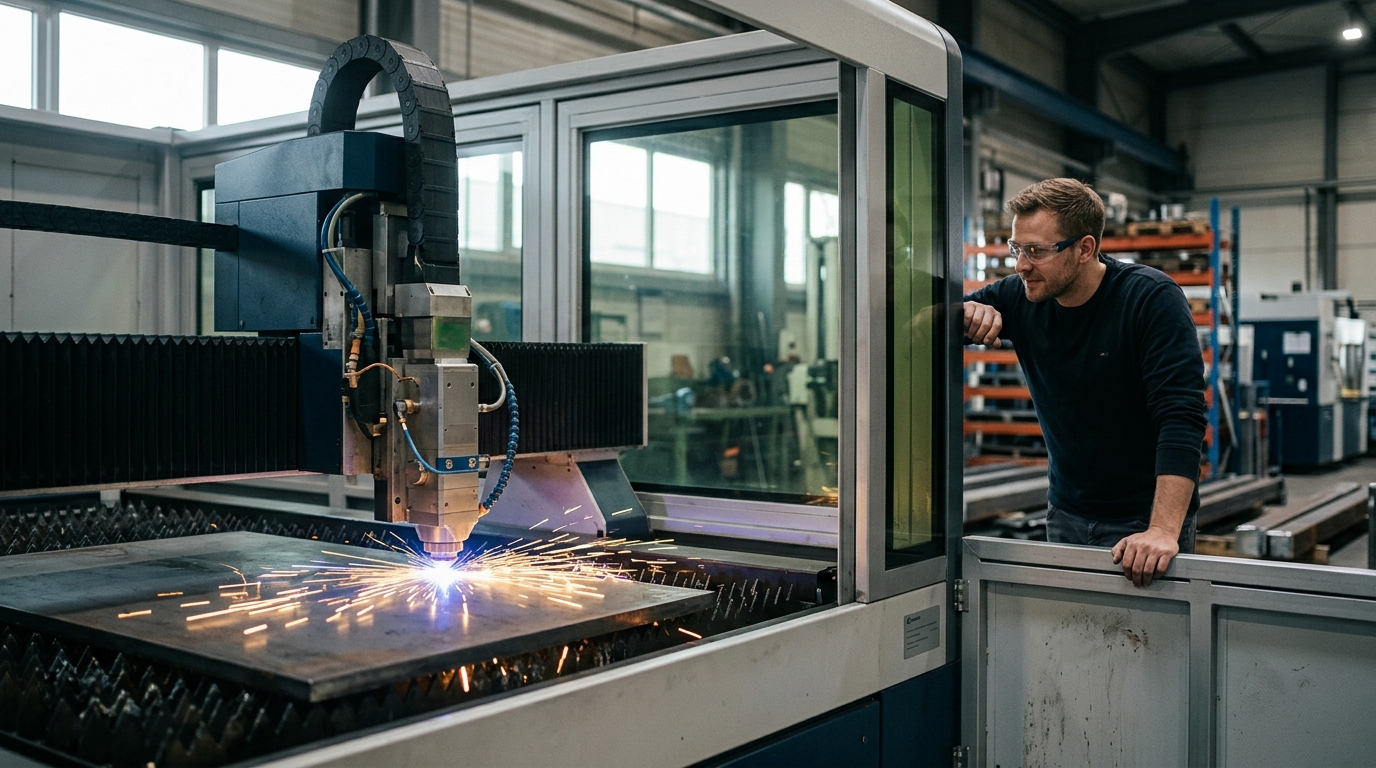
High-wattage lasers generate intense heat, bright light, and potentially hazardous fumes. A fully enclosed safety system is not optional; it is a regulatory and operational necessity. The enclosure protects operators from accidental exposure to the laser beam and contains the exhaust gases generated during cutting. It also dampens the noise associated with high-speed cutting and gas injection.
Look for systems with integrated fume extraction ports and interlocked doors that immediately shut off the laser if opened. The LaserCell series from Kern Laser Systems exemplifies this approach by combining high-performance cutting with a robust safety enclosure. This design ensures compliance with OSHA and other international safety standards. Additionally, the enclosure helps maintain a consistent thermal environment around the laser head, which can improve cutting accuracy by reducing thermal drift.
Software Integration and Workflow
The hardware is only as good as the software that drives it. Advanced laser cutting systems require intuitive software for nesting, path planning, and machine control. Kern Laser Systems utilizes KCAM Laser Software to streamline this process. KCAM allows users to import CAD files, automatically nest parts to minimize material waste, and generate optimized cutting paths.
Key software features to look for include:
- Automatic Nesting: Maximizes material utilization by arranging parts efficiently.
- Parameter Libraries: Pre-set cutting parameters for common materials and thicknesses.
- Simulation Mode: Allows operators to verify paths before cutting to prevent errors.
- Remote Monitoring: Enables tracking of machine status and production metrics from anywhere.
Seamless integration between the software and the machine hardware reduces setup time and minimizes the learning curve for new operators. This efficiency is critical in high-volume production environments where downtime directly impacts profitability.
Rotary and Pipe Cutting Capabilities
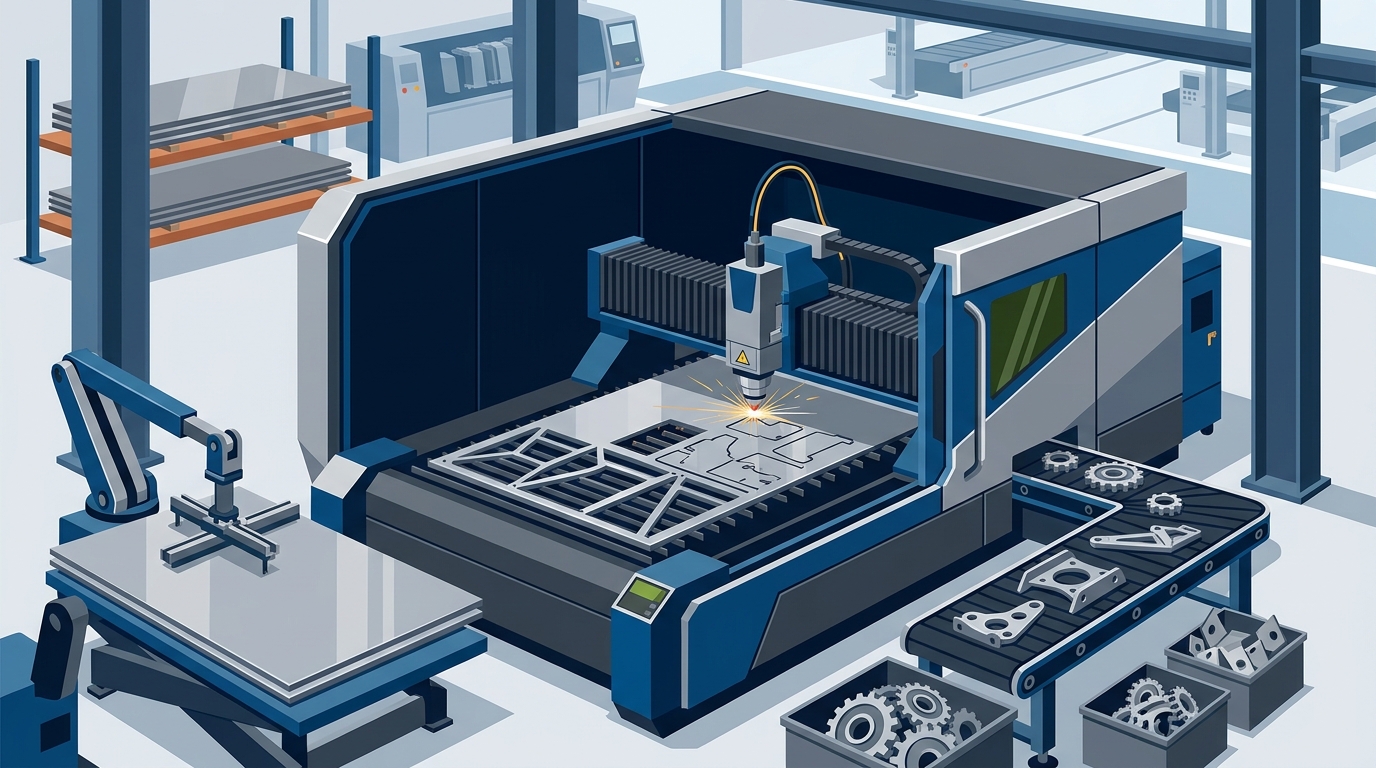
Many industrial applications require cutting cylindrical parts, such as pipes and tubes. A high-wattage system should offer rotary axis compatibility to expand its versatility. The Pipe & Tube Rotary attachment allows for precise cutting of round, square, and rectangular profiles. This capability is essential for industries like automotive, aerospace, and construction.
When evaluating rotary capabilities, consider the maximum diameter and length of pipes the system can handle. Also, look for features like automatic centering and clamping mechanisms that ensure the pipe remains stable during high-speed cutting. Kern Laser Systems provides specialized rotary solutions that integrate seamlessly with their fiber and CO2 platforms, offering a flexible manufacturing solution for diverse geometries.
Warranty and Technical Support
High-wattage laser systems are significant capital investments. Therefore, the manufacturer's warranty and technical support infrastructure are critical factors in the decision-making process. A comprehensive warranty covers not just the laser source but also the optics, motion system, and software. Kern Laser Systems stands behind its products with a 3 Year Warranty on CO2 Laser systems and comparable coverage for fiber models.
Beyond the warranty, look for manufacturers with a strong track record of technical support. This includes access to training resources, spare parts availability, and responsive customer service. Kern Laser Systems, founded in 1982, has built a reputation for reliable support and collaborative manufacturing partnerships. Their About page details their long-standing commitment to quality and innovation in laser technology.
Key Takeaways
- Wattage Matters: Higher wattage increases cutting speed and thickness capacity but requires robust auxiliary systems.
- Fiber Efficiency: Fiber lasers offer superior energy efficiency and better performance on reflective metals compared to CO2.
- Safety First: Integrated safety enclosures are essential for operator protection and regulatory compliance.
- Software Integration: Advanced software like KCAM streamlines workflow and reduces material waste.
- Versatility: Rotary attachments expand capabilities to include pipe and tube cutting.
- Support Structure: Comprehensive warranties and technical support are vital for long-term ROI.
- Brand Heritage: Kern Laser Systems has been manufacturing reliable laser systems since 1982.
Frequently Asked Questions
What is the difference between fiber and CO2 lasers?
Fiber lasers use a solid-state gain medium and are more efficient for cutting metals, especially reflective ones like copper and brass. CO2 lasers use a gas mixture and are often preferred for cutting non-metals and thicker materials where high power density is less critical.
How does wattage affect cutting speed?
Higher wattage delivers more energy to the cut zone, allowing the laser to move faster through the material. This results in significantly increased throughput for thick metals, reducing overall production time.
Is a safety enclosure necessary for high-wattage lasers?
Yes, high-wattage lasers produce intense light, heat, and fumes. A safety enclosure protects operators from harm and ensures compliance with workplace safety regulations. It also helps maintain a stable thermal environment for the machine.
What software is used with Kern Laser Systems?
Kern Laser Systems utilizes KCAM Laser Software, which provides advanced nesting, path planning, and machine control features to optimize production efficiency and material usage.
Does Kern Laser Systems offer rotary cutting options?
Yes, Kern Laser Systems offers Pipe & Tube Rotary attachments that allow for precise cutting of cylindrical profiles, expanding the system's versatility for various industrial applications.
What warranty is provided with Kern Laser Systems?
Kern Laser Systems provides comprehensive warranties, including a 3-year warranty on CO2 laser systems, ensuring long-term reliability and support for your investment.
How long has Kern Laser Systems been in business?
Kern Laser Systems was founded in 1982 by Gerald Kern and has been a leader in laser technology manufacturing for over four decades.
Contact Us
Ready to upgrade your manufacturing capabilities with a high-wattage laser system? Contact Kern Laser Systems today to discuss your specific needs and receive a personalized quote. Our team of experts is ready to help you select the perfect system for your production goals. Visit our Contact page to get started.