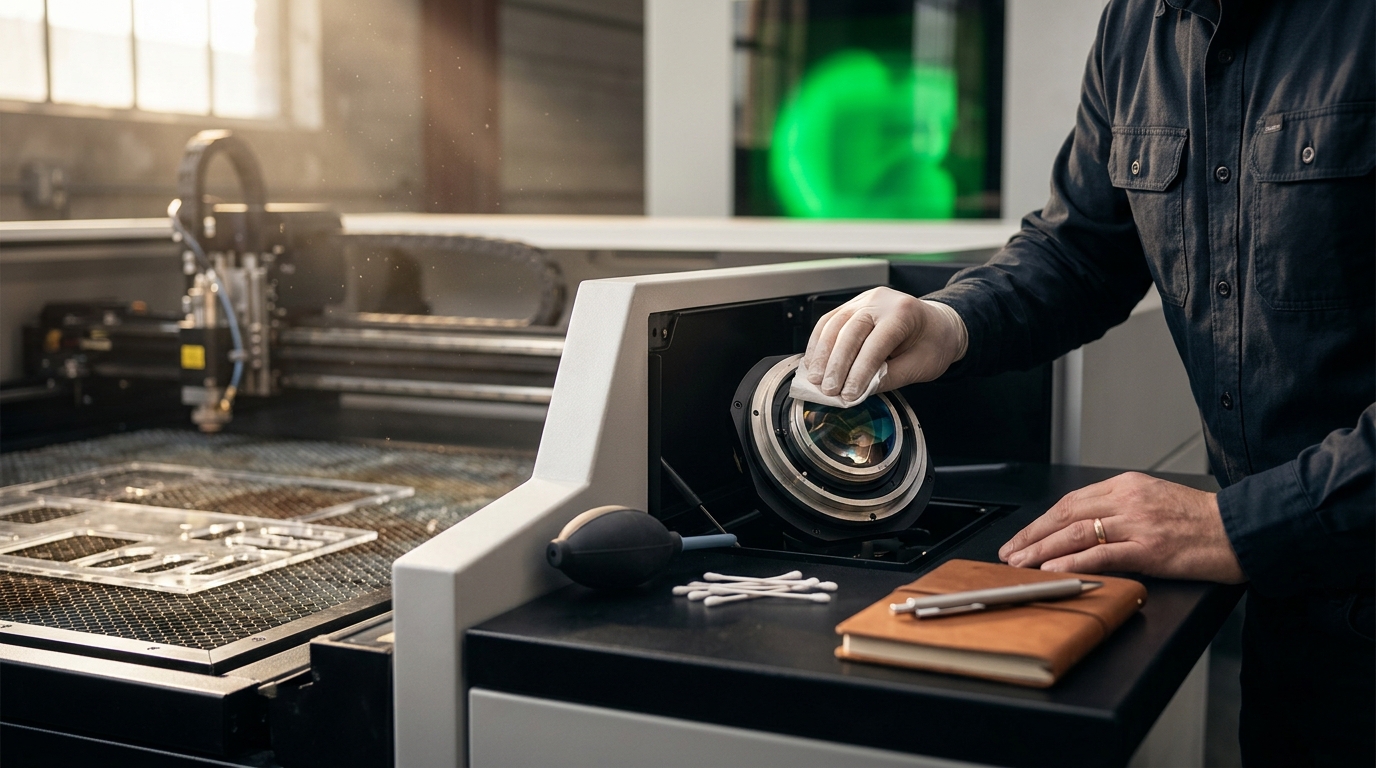
Industrial laser cutting systems represent a significant capital investment for modern manufacturing facilities. According to industry data, proper maintenance can extend the operational lifespan of CO2 and fiber laser systems by up to 40 percent, significantly reducing downtime and repair costs. Neglecting routine care leads to rapid degradation of optical components and mechanical precision. This guide details the essential maintenance protocols required to keep your equipment running at peak efficiency. (Kern Customer Login Area)
Optical Component Care
The optical path is the heart of any laser cutting machine. Mirrors, lenses, and focusing nozzles must remain pristine to ensure beam quality and cutting accuracy. Optical maintenance is the most critical aspect of laser care. Dust, debris, and splatter can permanently damage these components if left unchecked. (About Kern Laser Systems)
Inspecting Mirrors and Lenses
CO2 laser systems rely on a series of high-reflectivity mirrors to direct the beam. These mirrors should be inspected weekly for signs of damage or contamination. Use compressed air to remove loose dust before wiping with a lint-free cloth and appropriate cleaning solution. Fiber laser systems have fewer mirrors but still require regular inspection of the delivery fiber end-face. (Laser Cutting and Laser)
According to technical standards from the International Organization for Standardization, optical cleanliness directly correlates with laser power output stability. Dirty optics absorb energy, leading to thermal lensing and potential component failure. Always handle optics with gloves to prevent oil transfer from skin. (Large Format Laser Cutting)
Focusing Nozzle Alignment
The focusing nozzle directs the assist gas onto the material. Misalignment causes uneven cutting and excessive spatter. Regularly check the nozzle concentricity using a specialized alignment tool. Replace nozzles when signs of wear or deformation appear. Consistent nozzle health ensures a stable kerf width and superior edge quality.
Gas and Air System Management
Assist gases play a vital role in the cutting process. They blow away molten material, cool the cut zone, and protect the lens from splatter. The purity and pressure of these gases are paramount for high-performance results.
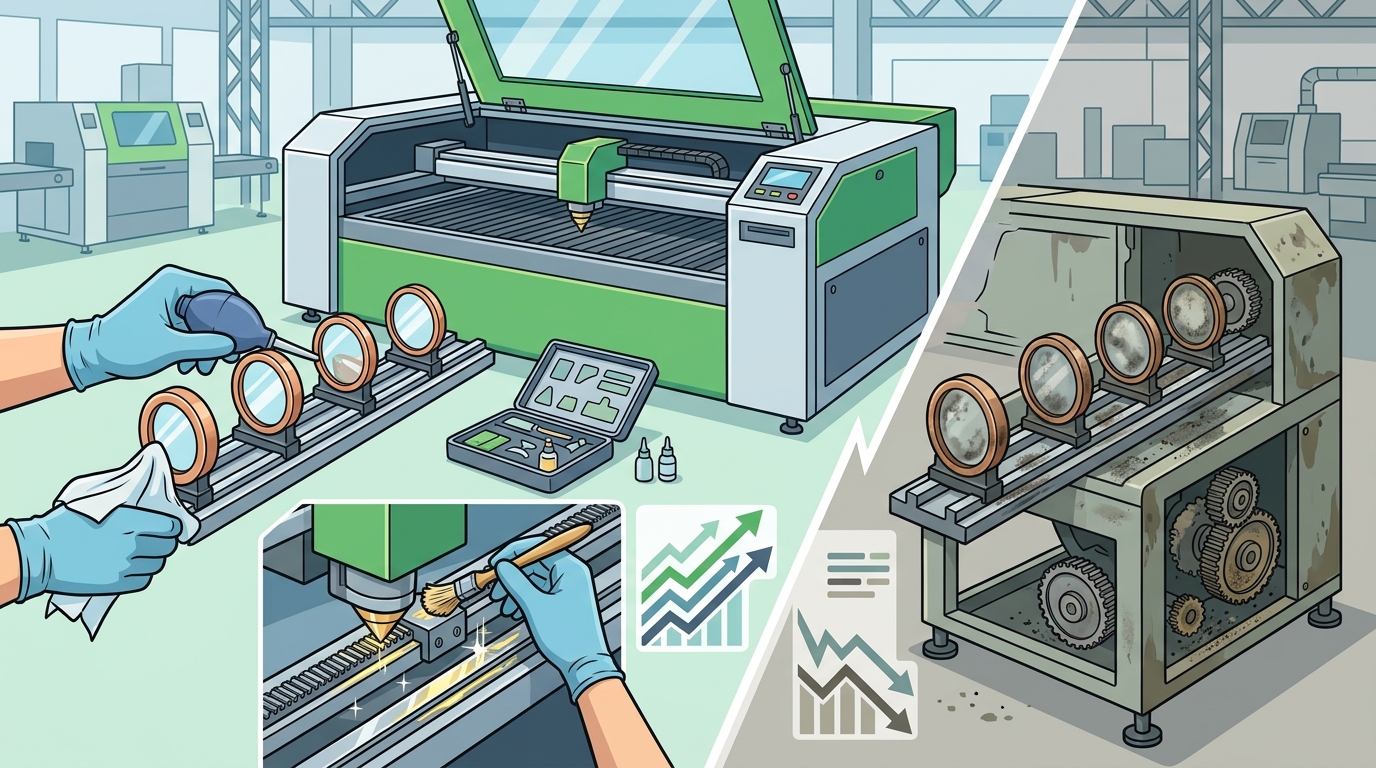
Gas Purity and Pressure
Nitrogen and oxygen are common assist gases. Nitrogen purity should typically exceed 99.995 percent for stainless steel cutting to prevent oxidation. Monitor gas pressure regulators daily. Fluctuations in pressure lead to inconsistent cut depths and poor surface finishes. Install moisture traps to prevent condensation in the gas lines.
Data from manufacturing efficiency reports indicates that improper gas flow is a leading cause of premature lens failure. A clogged or leaking gas line forces the system to work harder, increasing thermal load on the laser source.
Compressed Air Quality
For air-assisted cutting applications, the quality of compressed air is crucial. Moisture and oil in the air supply can contaminate the cutting zone and damage internal pneumatic components. Use high-quality filters and dryers to ensure clean, dry air reaches the cutting head.
Mechanical Component Lubrication
The mechanical structure of the laser cutter must move with precision. Linear guides, ball screws, and racks require regular lubrication to prevent wear and maintain positioning accuracy.
Lubrication Schedules
Follow the manufacturer's lubrication schedule strictly. Use the specified grease type for each component. Over-lubrication can attract dust, while under-lubrication causes friction and heat buildup. Inspect linear guides for scratches or pitting during routine checks.
According to mechanical engineering best practices, proper lubrication reduces friction by up to 90 percent, significantly extending the life of moving parts. Neglecting this step leads to backlash and loss of positional accuracy.
Belts and Chains
Tensioned belts and chains drive the motion system. Check tension regularly and adjust as needed. Loose belts cause slippage and inconsistent cutting speeds. Inspect for wear, fraying, or stretching. Replace components before they fail to avoid unexpected downtime.
Chiller and Cooling System Health
Laser sources generate significant heat. Effective cooling is essential to maintain stable output power and prevent thermal damage to the laser tube or diode array.
Chiller Maintenance
Chillers must be maintained to ensure proper temperature control. Check coolant levels regularly and top up with distilled water or manufacturer-approved coolant. Clean or replace filters on the chiller intake to ensure adequate airflow. Monitor the chiller's temperature display for deviations from the set point.
Research shows that a 1 degree Celsius increase in laser source temperature can result in a measurable drop in output power. Consistent cooling is non-negotiable for high-performance cutting.
Water Quality
Use deionized water with low conductivity to prevent electrical shorts and corrosion inside the laser resonator. Test water conductivity regularly. Replace coolant according to the recommended interval to prevent bacterial growth and mineral buildup.
Software and Calibration
Modern laser cutting systems rely on sophisticated software for control and optimization. Regular software updates and system calibration ensure optimal performance and access to new features.
Software Updates
Keep your control software and firmware up to date. Updates often include bug fixes, performance improvements, and new safety features. Backup your current configuration before applying updates. Consult the manufacturer's blog for release notes and installation instructions.
System Calibration
Regular calibration of the laser head and motion axes is essential. Use calibration tools to verify positioning accuracy and beam focus. Recalibrate after any major maintenance or if cutting quality degrades. Proper calibration ensures that the machine operates within its specified tolerances.
Safety System Verification
Laser cutting involves high-energy beams and moving parts. Safety systems must be verified regularly to protect operators and equipment.
Emergency Stops and Interlocks
Test all emergency stop buttons and safety interlocks weekly. Ensure that the laser shuts down immediately when a safety door is opened. Inspect emergency stop cables for damage. Replace faulty components immediately.
According to occupational safety standards, regular testing of safety systems is a legal requirement in many jurisdictions. Failure to maintain these systems can result in severe injury or death.
Exhaust and Ventilation
Proper exhaust ventilation removes fumes and particulates from the cutting area. Check exhaust fans and ductwork for blockages. Clean filters regularly to maintain airflow. Ensure that the ventilation system meets local environmental and safety regulations.
Key Takeaways
- Optical components require weekly inspection and cleaning to prevent damage and maintain beam quality.
- Gas purity and pressure must be monitored daily to ensure consistent cutting performance and lens protection.
- Mechanical lubrication reduces friction and extends the life of linear guides and ball screws.
- Chiller maintenance is critical for thermal stability, with even small temperature deviations affecting output power.
- Software updates and system calibration ensure optimal machine performance and access to new features.
- Safety systems, including emergency stops and interlocks, must be tested weekly to ensure operator safety.
- Proper exhaust ventilation is essential for removing hazardous fumes and maintaining a safe work environment.
Frequently Asked Questions
How often should I clean the laser optics?
Optics should be inspected weekly and cleaned as needed. Use compressed air to remove dust before wiping with a lint-free cloth and appropriate cleaning solution. Handle optics with gloves to prevent oil transfer.
What type of coolant should I use in my chiller?
Use distilled water or manufacturer-approved coolant. Avoid tap water to prevent mineral buildup and corrosion. Test water conductivity regularly to ensure it remains within specified limits.
How do I know if my assist gas pressure is correct?
Monitor the pressure gauge on the regulator daily. Compare the reading to the recommended pressure for the specific material and thickness being cut. Fluctuations indicate a potential leak or regulator issue.
Why is regular calibration important?
Calibration ensures that the machine moves accurately and the beam focuses correctly. Without regular calibration, cutting quality degrades, and dimensional accuracy is lost. Recalibrate after major maintenance or if quality issues arise.
What are the signs of a failing chiller?
Signs include temperature deviations, unusual noises, or error messages on the control panel. Check coolant levels and filters first. If issues persist, contact technical support for diagnosis and repair.
How often should I replace the focusing nozzle?
Replace the nozzle when signs of wear, deformation, or excessive spatter buildup appear. Regular inspection helps determine the optimal replacement interval based on usage intensity.
What safety checks should I perform weekly?
Test all emergency stop buttons and safety interlocks. Inspect emergency stop cables for damage. Verify that the laser shuts down immediately when a safety door is opened. Check exhaust ventilation for blockages.
Contact Us for Expert Support
Maintaining your high-performance laser cutting equipment requires diligence and expertise. If you need assistance with maintenance protocols, spare parts, or system upgrades, contact our team of experts. We provide comprehensive support to keep your operations running smoothly. Contact Us today to schedule a consultation or request a quote for your maintenance needs.