What Features Should I Look for in a High-Wattage Laser System?
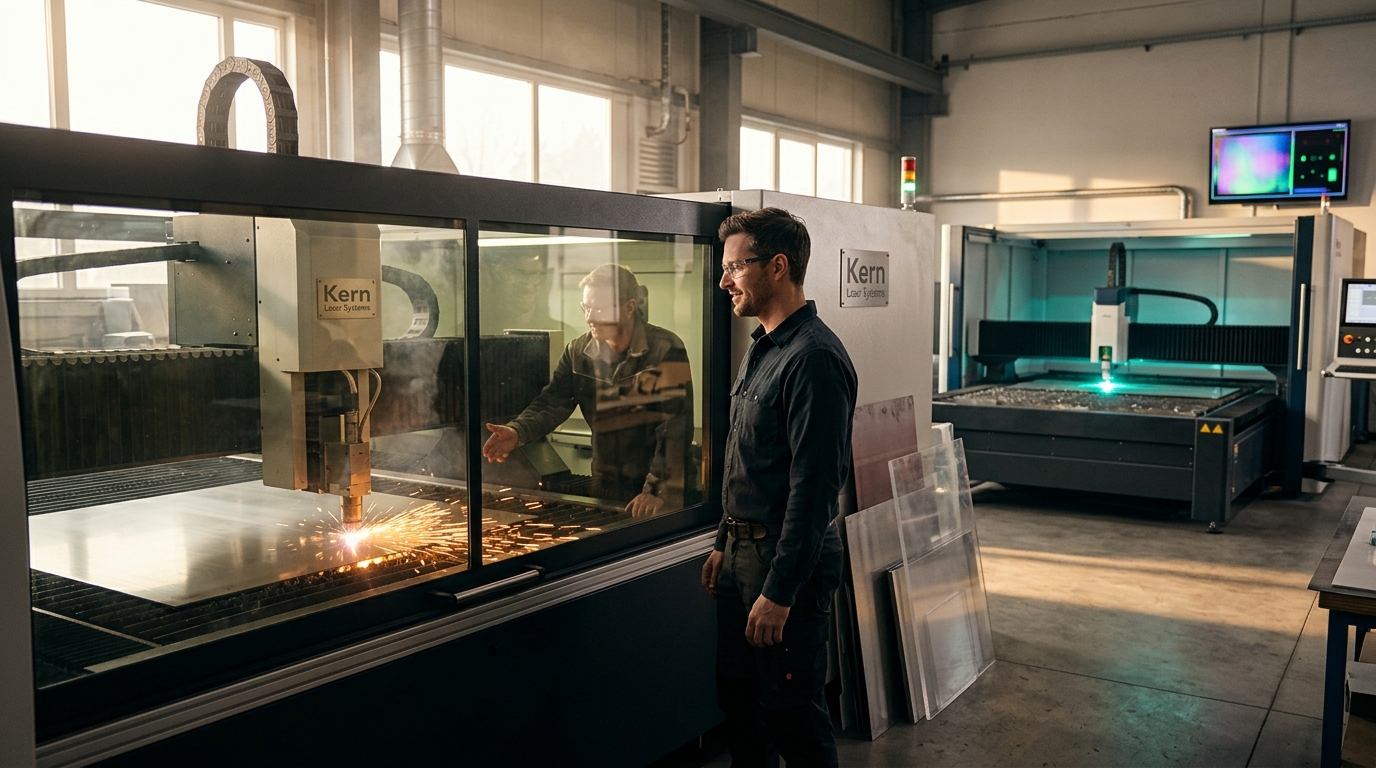
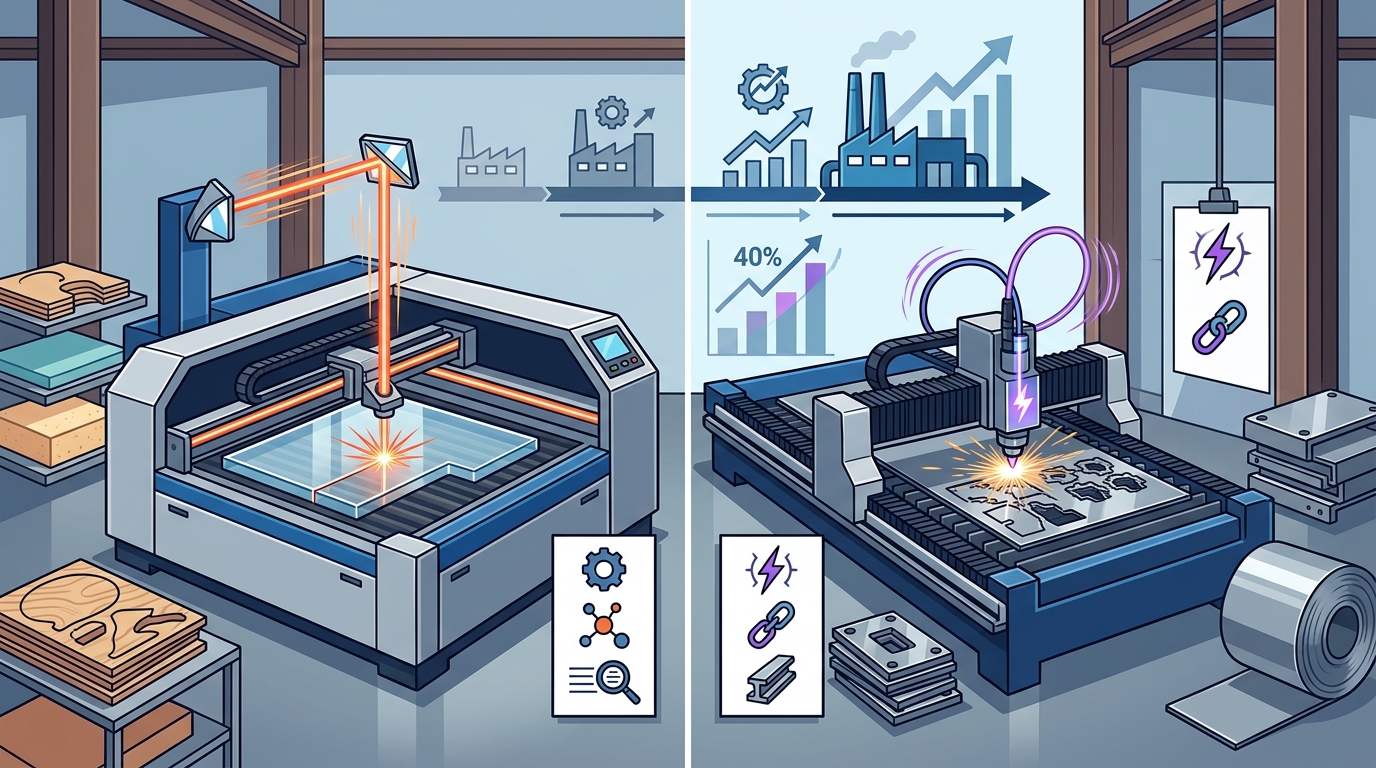
Investing in industrial-grade laser equipment is a significant capital decision that directly impacts your manufacturing throughput and material versatility. According to recent industry analyses, businesses that upgrade to high-wattage CO2 and fiber laser systems often report a 40% increase in production capacity within the first year of operation. This growth is not automatic; it depends entirely on selecting the right hardware architecture for your specific operational needs. Whether you are cutting thick acrylics or engraving hard metals, the features you prioritize will determine your return on investment.
Understanding Power Source: CO2 vs. Fiber
The first feature to evaluate is the laser source itself. High-wattage systems generally fall into two categories: CO2 lasers for non-metals and fiber lasers for metals. Choosing the wrong source limits your material range and reduces efficiency.
CO2 Laser Systems for Versatility
CO2 lasers, such as the OptiFlex, are the industry standard for cutting and engraving organic materials. They excel at processing acrylic, wood, leather, and foam. The primary feature to look for here is the tube quality and the ability to handle large format materials. A high-wattage CO2 system allows for faster cutting speeds on thick materials, reducing cycle times significantly. Kern Laser Systems has been a leader in this space since 1982, ensuring that their CO2 technology is refined for maximum reliability.
Fiber Laser Systems for Metal Precision
For metal fabrication, fiber lasers are the superior choice. The FiberCell system offers pure metal cutting capabilities with a safety enclosure. Fiber lasers are more energy-efficient than CO2 systems and require less maintenance because they have no mirrors to align. If your business focuses on identification labels, nameplates, or metal signage, a high-wattage fiber laser is essential. The beam quality in fiber systems allows for extremely fine detail work that CO2 lasers cannot achieve on reflective metals.
The Critical Role of Safety Enclosures
High-wattage lasers generate intense heat and hazardous fumes. Therefore, the presence of a fully enclosed safety system is a non-negotiable feature. Open-frame lasers are generally unsuitable for high-power industrial environments due to the risk of fire and eye damage.
Systems like the LaserCell are designed with high-performance safety enclosures that protect operators from UV radiation and flying debris. When evaluating a system, check for interlock switches that automatically shut off the laser if the door is opened. Additionally, look for integrated exhaust ports that connect directly to your facility's ventilation system. This feature is crucial for maintaining air quality and complying with OSHA regulations in manufacturing spaces.
KCAM Software and Workflow Integration
Hardware is only as good as the software that drives it. The KCAM Laser Software is a proprietary feature that streamlines the workflow from design to production. It allows users to import vector graphics, adjust power settings, and control the laser head with precision.
Look for software that supports nested cutting to minimize material waste. Efficient nesting can reduce raw material costs by up to 15% in high-volume production runs. Furthermore, the software should offer a user-friendly interface that reduces the learning curve for new operators. Kern Laser Systems integrates KCAM across its product line, ensuring that whether you are using the EcoFlex or the OptiDual, the control experience remains consistent and intuitive.
Precision Motion Systems and K-Vision
Accuracy in high-wattage systems depends on the motion control architecture. Features like the K-Vision Camera provide real-time visual feedback, allowing operators to monitor the cutting process without stopping the machine. This feature is particularly useful for aligning complex designs on preprinted materials or ensuring precise placement on irregular surfaces.
Additionally, consider systems with rotary attachments for pipe and tube processing. The Pipe & Tube Rotary option expands your capabilities beyond flat sheets, enabling you to take on contracts for cylindrical components. High-precision stepper or servo motors are also vital for maintaining consistent speed and acceleration, which prevents material charring or incomplete cuts.
Warranty and Technical Support
High-wattage lasers are complex machines that require regular maintenance. A robust warranty is a key indicator of manufacturer confidence. Kern Laser Systems offers a 3-year warranty on CO2 laser systems, which covers critical components like the laser tube and power supply. This level of support reduces downtime and protects your investment.
Beyond the warranty, evaluate the availability of technical support. Look for manufacturers that provide comprehensive online resources, including technical support portals and detailed documentation. Access to certified technicians and rapid response times for repairs are essential for maintaining production schedules. Companies that manufacture their equipment in the USA, like Kern, often have faster supply chains for replacement parts compared to overseas competitors.
Key Takeaways
- Power Source Selection: Choose CO2 for non-metals like acrylic and wood, and fiber for metals like steel and aluminum.
- Safety First: Always opt for systems with integrated safety enclosures and interlock switches to comply with industrial safety standards.
- Software Efficiency: KCAM software enables precise control and material nesting, which directly impacts profitability.
- Warranty Coverage: A 3-year warranty on CO2 systems is a standard benchmark for quality and reliability in the industry.
- Manufacturing Origin: USA-manufactured systems often provide superior build quality and faster access to technical support.
- Material Versatility: Consider rotary attachments if you plan to process pipe and tube components alongside flat sheets.
- Brand Heritage: Kern Laser Systems has been designing and manufacturing laser systems since 1982, ensuring decades of refined engineering.
Frequently Asked Questions
What is the difference between a CO2 and a fiber laser?
A CO2 laser uses a gas mixture to generate a beam ideal for cutting organic materials like wood, acrylic, and leather. A fiber laser uses a solid-state gain medium, making it more efficient and precise for cutting and engraving metals.
How much maintenance does a high-wattage laser require?
Maintenance varies by type. Fiber lasers generally require less maintenance because they have no mirrors to align. CO2 lasers require periodic cleaning of optics and eventual tube replacement. Regular maintenance schedules are outlined in the technical support documentation.
Is a safety enclosure necessary for high-wattage systems?
Yes, high-wattage lasers produce intense UV radiation and hazardous fumes. A safety enclosure with interlock switches is essential for protecting operators and meeting OSHA regulations.
What materials can the OptiFlex cut?
The OptiFlex is a large format CO2 laser cutter designed to cut a wide range of non-metallic materials, including acrylic, wood, leather, foam, and fabric.
Does Kern Laser Systems offer technical support?
Yes, Kern provides comprehensive technical support and online resources to help users troubleshoot issues and optimize their laser performance.
What is the warranty period for Kern laser systems?
Kern Laser Systems offers a 3-year warranty on their CO2 laser systems, covering critical components to ensure long-term reliability and performance.
Can I cut metal with a CO2 laser?
No, standard CO2 lasers cannot cut metal. For metal applications, you need a fiber laser system like the FiberCell, which is specifically designed for pure metal cutting.
Ready to Upgrade Your Manufacturing?
Selecting the right high-wattage laser system requires careful consideration of your material needs, safety requirements, and production goals. Kern Laser Systems offers a range of solutions, from the versatile OptiFlex to the powerful FiberCell. Contact us today to discuss your specific needs and receive a personalized quote. Visit our contact page to start the conversation.