Laser Cutting Machine Maintenance: The Essential Guide for Peak Performance
Keeping your laser cutting equipment in top condition is not optional. It is the single most important factor in protecting your investment, maintaining cut quality, and avoiding costly downtime. Whether you operate a CO2 laser for acrylic and wood or a fiber laser for sheet metal, a structured maintenance routine ensures reliable output day after day. This guide walks you through every maintenance task your high-performance laser system needs, organized by frequency so you can build a schedule that works for your shop floor.
Why Laser Maintenance Matters
Preventive maintenance is the practice of performing scheduled upkeep tasks to prevent equipment failure before it occurs. Skipping even basic routines can cascade into expensive repairs and lost production hours. A well-maintained laser cutting machine not only performs better but also prevents costly downtime, according to industry maintenance guidelines from Bodor Laser.
For Kern Laser Systems owners, maintenance is refreshingly straightforward. Routine maintenance on Kern laser systems can be completed in as little as 10 minutes per week, with daily, weekly, and monthly schedules outlined in each system manual.
Daily Maintenance Tasks
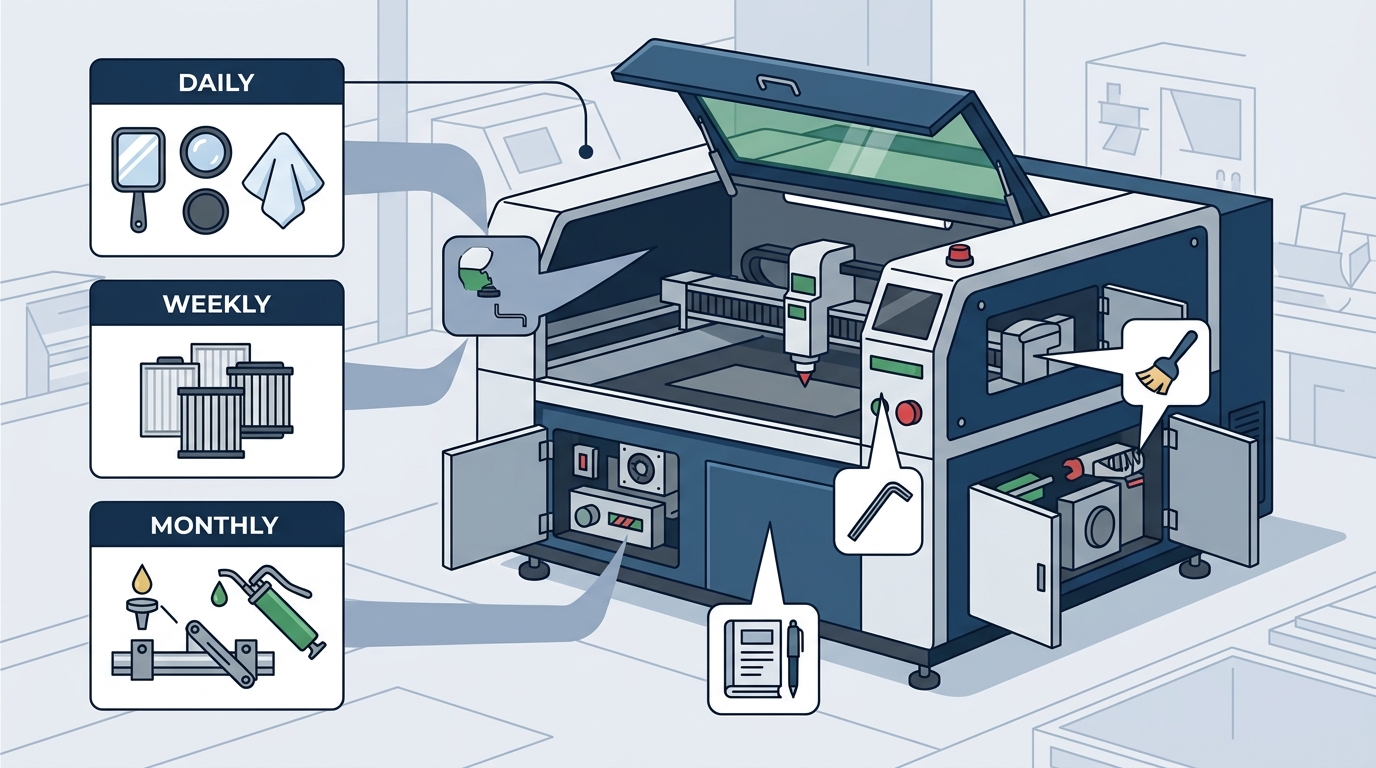
Daily maintenance takes only a few minutes but delivers outsized returns in reliability. These tasks prevent particle buildup that degrades optics and mechanical components over time.
Clean the Cutting Bed
After each shift, vacuum or wipe down the cutting bed to remove debris, dust, and material residue. Accumulated slag can interfere with material hold-down on systems like the Kern OptiDual, which uses an integrated downdraft vacuum table.
Inspect the Laser Head and Nozzle
Check the cutting head for obstructions that could block the laser beam. Verify that nozzle screws are tight and that no spatter has accumulated around the assist gas outlet.
Check Air and Gas Supply
Purge gas quality is a critical and often overlooked daily check. Purge gas is the clean, dry air or nitrogen that protects laser optics from contamination. Kern recommends that purge gas be filtered to remove particles larger than 1 micron, with a dew point at least 18°F lower than the chiller inlet temperature. Learn more in Kern's Purge Gas 101 guide.
Weekly Maintenance Tasks
Weekly tasks focus on the motion system and fluid systems that keep everything running smoothly.
Lubricate Rails and Bearings
Linear guide rails and bearings need regular lubrication to prevent premature wear. Common maintenance procedures include greasing bearings and oiling rails, as outlined in each Kern system manual. Dry or contaminated rails accelerate component failure and degrade cut accuracy.
Clean or Inspect Optics
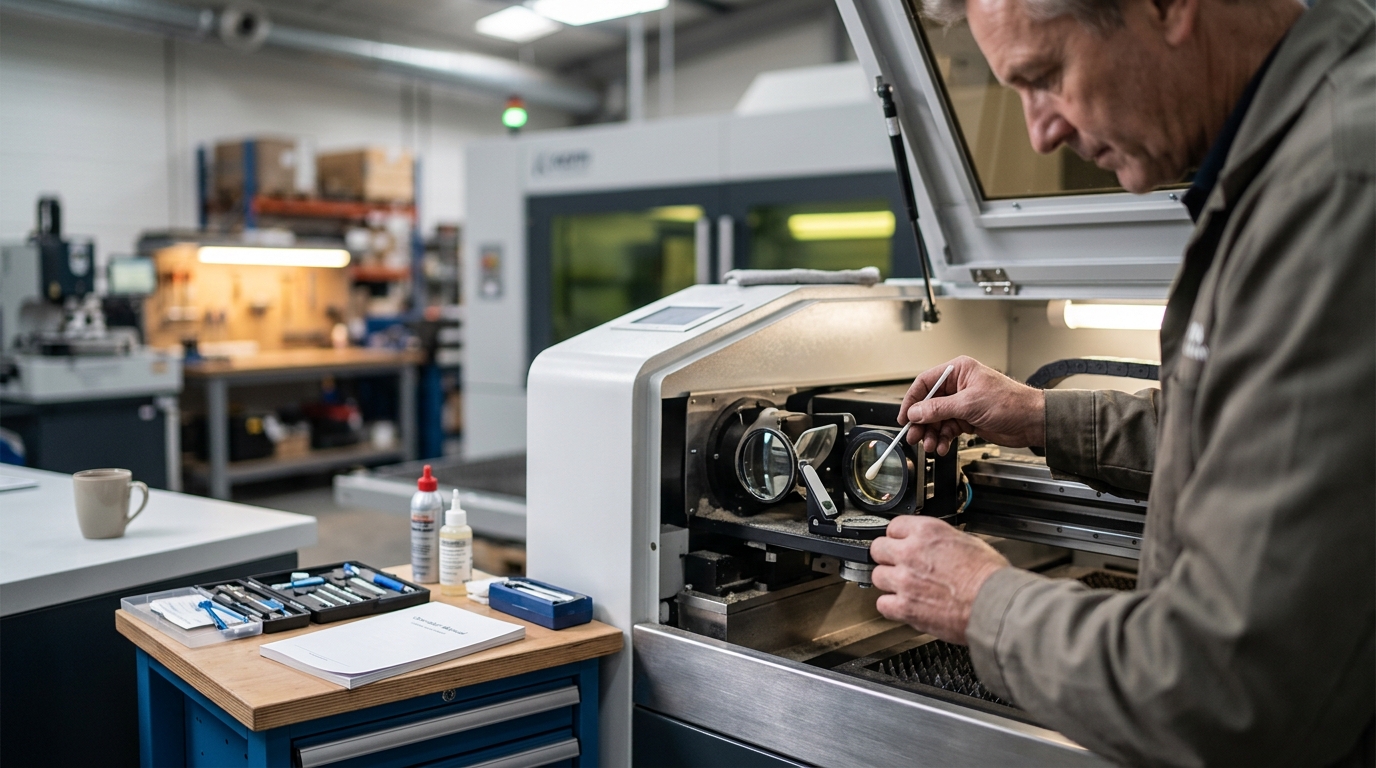
Dirty lenses or mirrors are one of the most common reasons for poor laser performance. Over time, dust, debris, and residue accumulate on optical surfaces, reducing delivered laser power. If you find yourself constantly increasing power to cut through standard materials, inspect your optics immediately. Use lint-free wipes and high-purity isopropyl alcohol for cleaning. A full video on proper optics cleaning is available on the Kern resources page.
Check Filters
Inspect purge air filters and exhaust filters weekly. Kern suggests keeping spare filters in stock and replacing dirty filters immediately to maintain air quality and protect sensitive components.
Monthly and Quarterly Maintenance
Monthly and quarterly tasks address slower-degrading systems that still require attention to avoid compounding issues.
Chiller System Maintenance
A chiller is a closed-loop cooling unit that regulates the temperature of your laser source. Proper chiller maintenance includes checking for water leaks, cleaning or replacing filters, and replacing chiller fluids on schedule. Kern provides detailed chiller maintenance videos covering both Polyscience and S&A units. A well-maintained chiller ensures a long laser lifetime and consistent cutting results.
Inspect Drive Systems and Belts
Check belts, drive chains, and servo motor connections for wear, tension, and debris. On high-production systems like the Kern LaserCELL, the rack-and-pinion motion system should be inspected for proper lubrication and alignment.
Electrical System Inspection
Inspect wiring, connectors, and emergency stop circuits for signs of wear, corrosion, or loose fittings. Safe and stable electrical systems are essential for reliable operation and operator safety.
Annual and Long-Term Maintenance
Annual maintenance addresses components that degrade slowly but can cause major failures if neglected.
Schedule a full laser alignment check and beam quality test at least once per year. Replace coolant pumps and exhaust fan bearings proactively around the five-year mark to prevent unplanned shutdowns. Software updates should also be applied annually to access the latest features and safety patches from your manufacturer.
Kern's support team offers ongoing assistance and advanced training sessions to help operators stay current on best practices. Many customers take advantage of Kern's installation and training resources for refresher courses after a year of operation.
Common Maintenance Mistakes to Avoid
Even experienced operators make avoidable errors. Here are the most common pitfalls.
Neglecting purge air quality: Contaminated purge air with moisture or oil can shorten the life of your laser source. An after-market purge filter assembly acts as a last line of defense for your air system. Kern details this and other pitfalls in their post on common CO2 laser maintenance mistakes.
Skipping scheduled maintenance: Delaying routine tasks is the number one cause of unexpected breakdowns. Most laser cutting failures do not appear suddenly; they result from accumulated neglect.
Using incorrect cleaning materials: Never use standard paper towels or household cleaners on laser optics. Always use manufacturer-recommended lint-free wipes and optical-grade solvents.
Ignoring the chiller: The chiller is easy to forget because it runs quietly in the background. But contaminated or low coolant levels directly impact laser output stability and tube longevity.
Maintenance Schedule at a Glance
| Frequency | Task | Components | Time Estimate |
|---|---|---|---|
| Daily | Clean cutting bed, inspect laser head | Bed, nozzle, gas supply | 5 minutes |
| Weekly | Lubricate rails, clean optics, check filters | Bearings, mirrors, lenses, air filters | 10-15 minutes |
| Monthly | Chiller maintenance, inspect drive system | Coolant, filters, belts, chains | 30-45 minutes |
| Quarterly | Electrical inspection, deep clean | Wiring, connectors, exhaust ducts | 1-2 hours |
| Annually | Full alignment, software update, component replacement | Beam path, firmware, pumps | Half day |
Key Takeaways
- Preventive maintenance prevents the vast majority of laser cutting equipment failures and reduces repair costs significantly.
- Daily cleaning of the cutting bed and laser head takes under five minutes and prevents debris-related quality issues.
- Optics should be inspected weekly; dirty lenses and mirrors are the leading cause of reduced cut quality.
- Purge gas must be clean, dry, and filtered to 1 micron to protect optics and extend laser source life.
- Chiller maintenance, including fluid replacement and filter cleaning, is critical for consistent laser output.
- Kern Laser Systems are designed for easy maintenance, with most weekly routines completed in about 10 minutes.
- Operator training and access to manufacturer support resources ensure long-term equipment reliability.
Frequently Asked Questions
How often should I clean my laser cutting machine's optics?
Inspect lenses and mirrors at least once per week. If you are cutting materials that produce heavy residue, such as acrylic or MDF, check optics more frequently. Clean with lint-free wipes and high-purity isopropyl alcohol only.
What is the most important daily maintenance task?
Cleaning the cutting bed and checking the assist gas supply are the two most critical daily tasks. Debris on the bed affects material hold-down and cut quality, while contaminated air can damage optics.
How long does weekly maintenance take on a Kern laser system?
Kern Laser Systems are engineered for minimal downtime. Routine weekly maintenance can be completed in as little as 10 minutes, covering lubrication, optics inspection, and filter checks.
Why is chiller maintenance important for laser cutting?
The chiller regulates your laser source temperature. Neglected chillers can cause overheating, inconsistent power output, and premature laser tube failure. Regular fluid replacement and filter cleaning keep temperatures stable.
What type of purge gas should I use?
Kern lasers support compressed air or nitrogen as purge gases. Both must be clean and dry, filtered to remove particles larger than 1 micron, and have an appropriate dew point. Nitrogen requires only a simple 1-micron inline filter.
Can I perform maintenance myself or do I need a technician?
Most daily, weekly, and monthly tasks can be performed by trained operators. Kern provides an extensive online video library and remote technical support to guide customers through maintenance procedures. Annual alignment and complex repairs may benefit from professional assistance.
What are signs that my laser needs maintenance?
Warning signs include declining cut quality, needing more power for standard materials, unusual noises from the motion system, visible contamination on optics, and reduced airflow from the exhaust system.
How does proper maintenance affect the lifespan of a laser system?
With consistent maintenance, high-quality laser cutting systems can operate for well over a decade. Kern notes that many of their systems from the late 1990s and early 2000s are still in operation today, a testament to both build quality and owner diligence.
Protect Your Investment with Kern Laser Systems
Whether you are evaluating your first laser system or looking to maximize the life of your current equipment, Kern Laser Systems provides the machines, training, and support you need. Explore the full Kern product line or visit the resources page for maintenance videos, manuals, and technical support. Ready to see what a Kern laser can do with your materials? Request a free sample test today.