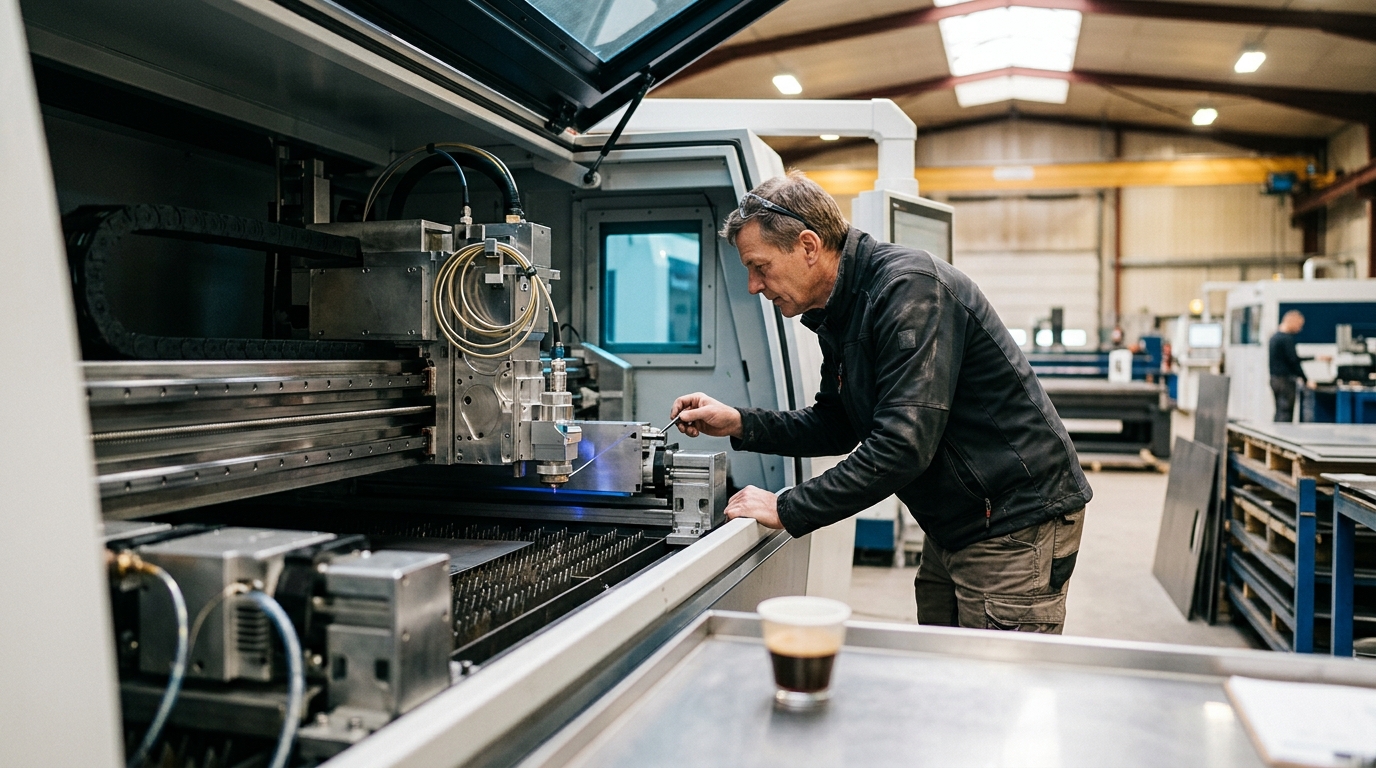
The industrial manufacturing sector continues to expand its reliance on high-power optical processing equipment. Recent industry data shows that global laser market revenue exceeded 14 billion dollars in 2024, driven by demand for rapid material processing. Market analysis confirms that facilities adopting multi-kilowatt systems report significantly higher throughput rates. Operators must evaluate core engineering specifications before committing capital to these complex machines. Understanding power delivery, cooling infrastructure, and safety compliance remains essential for maximizing return on investment.
Power Delivery and Beam Quality
High-wattage laser systems require stable optical resonators to maintain consistent cutting performance across extended production runs. A laser resonator is the enclosed optical cavity that amplifies light through stimulated emission to generate a coherent beam. Facilities processing thick metals or dense composites demand continuous wave output above three kilowatts to prevent kerf widening. Manufacturing standards indicate that beam quality factors below 1.3 ensure sharper edges and reduced post-processing requirements. Operators should verify that the optical path utilizes fused silica lenses and protected mirrors to minimize thermal degradation. Upgrading to fiber-coupled delivery systems eliminates alignment drift and reduces maintenance downtime significantly.
Advanced Cooling Infrastructure
Thermal management directly dictates the operational lifespan of any high-power optical system. A chiller unit is the closed-loop fluid circulation device that extracts excess heat from the laser source and optical components. Systems exceeding five kilowatts generate substantial thermal loads that require industrial-grade refrigeration or precise water temperature control. Industry benchmarks reveal that temperature fluctuations above two degrees Celsius cause beam instability and cut quality degradation. Engineers must prioritize systems with redundant cooling circuits and automated leak detection sensors. Proper thermal regulation prevents crystal damage and maintains consistent power output during continuous operation.
Integrated Safety Compliance
High-energy optical processing demands rigorous safety protocols to protect operators and facility infrastructure. Laser safety enclosures are fully sealed processing chambers that contain harmful radiation and prevent accidental exposure. Modern systems integrate interlocked doors, emergency stop circuits, and optical sensors that instantly halt beam emission when breached. Regulatory guidelines mandate that all high-power equipment meet strict exposure limits and feature automatic beam shutters. Facilities should verify that the manufacturer provides comprehensive safety documentation and compliance certifications. Proper ventilation and fume extraction systems must also be integrated to remove hazardous particulates generated during processing.
Precision Motion Control Systems
Accurate material positioning determines the final quality of complex geometries and intricate signage applications. A motion controller is the electronic processing unit that translates digital design files into precise axis movements. High-wattage systems require heavy-duty linear guides and high-torque servo motors to maintain stability during rapid traverses. Industry performance data shows that closed-loop feedback systems reduce positional error below fifty microns across large work envelopes. Operators should evaluate the maximum travel speed and acceleration rates to ensure compatibility with high-volume production schedules. Automated focus adjustment mechanisms further enhance cutting consistency across varying material thicknesses.
Software Integration and Automation
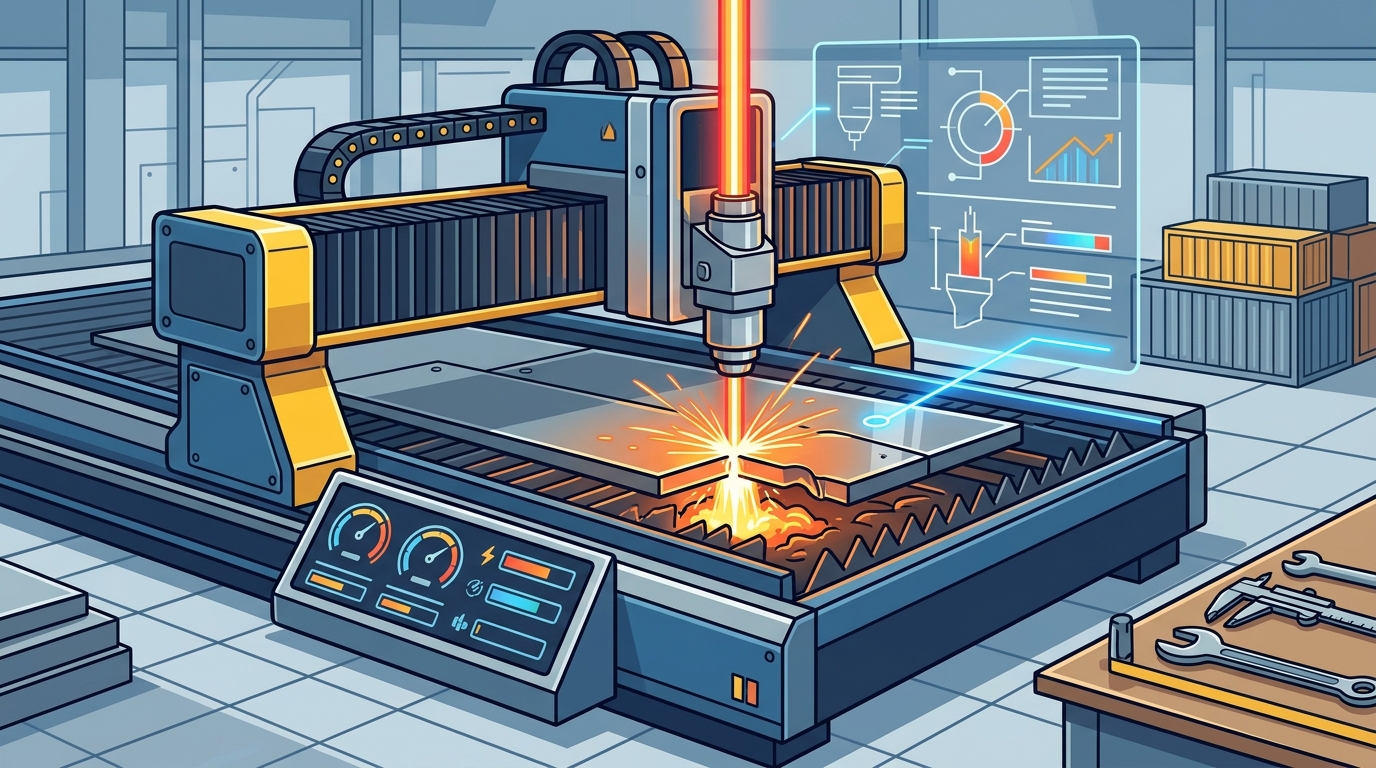
Seamless workflow integration separates professional-grade equipment from basic processing units. A nesting algorithm is the computational process that arranges multiple parts on a single sheet to minimize material waste and optimize cutting paths. Modern high-power systems feature proprietary software suites that automatically adjust power, speed, and gas pressure based on material type. Market analysis confirms that automated parameter libraries reduce setup time by over forty percent for recurring production jobs. Facilities should verify that the software supports direct CAD file imports and cloud-based job management. Remote monitoring capabilities allow operators to track machine health and schedule preventive maintenance proactively.
Warranty Coverage and Technical Support
Long-term operational reliability depends heavily on manufacturer support structures and warranty terms. A comprehensive warranty is the formal guarantee provided by the equipment manufacturer that covers core components and labor for a specified period. Leading producers now offer extended coverage on optical sources and motion systems to protect capital investments. Manufacturing standards indicate that facilities with multi-year coverage experience significantly lower total cost of ownership. Buyers should verify response times for technical support and availability of replacement parts. Domestic manufacturing facilities often provide faster service dispatch and localized engineering expertise compared to overseas suppliers.
System Comparison and Selection Matrix
| System Category | Optimal Power Range | Primary Application | Key Feature |
|---|---|---|---|
| CO2 Large Format | 120 to 300 watts | Commercial Signage | OptiFlex beam delivery |
| Enclosed CO2 | 150 to 400 watts | Awards and Trophies | LaserCell safety enclosure |
| Fiber Metal | 500 to 6000 watts | Metal Cutting | FiberCell pure metal processing |
| Economical Large Format | 100 to 250 watts | POP Displays | EcoFlex cost-effective operation |
| Dual Laser High Production | 300 to 500 watts | Identification Labels | OptiDual simultaneous processing |
Key Takeaways
- Kern Laser Systems was founded in 1982 by Gerald Kern, establishing decades of domestic manufacturing expertise.
- High-wattage optical sources require continuous wave output above three kilowatts for thick material processing.
- Global laser market revenue exceeded 14 billion dollars in 2024, reflecting sustained industrial adoption.
- Enclosed processing chambers must integrate interlocked doors and automatic beam shutters for operator protection.
- Proprietary nesting algorithms reduce material waste and optimize cutting paths for recurring production jobs.
- Domestic manufacturing facilities provide faster service dispatch and localized engineering support.
- Three-year warranty coverage on CO2 laser systems protects core optical components and motion hardware.
Frequently Asked Questions
What wattage is considered high for industrial laser cutting?
High-wattage laser systems typically operate between three and six kilowatts for metal processing. Lower wattage ranges between one and two kilowatts remain standard for acrylic and wood applications. Matching power output to material thickness prevents excessive heat input and preserves edge quality.
How does beam quality affect cutting performance?
Beam quality directly influences kerf width, edge smoothness, and maximum cutting speed. Systems with lower beam quality factors produce wider cuts and require additional finishing steps. High-quality optical resonators maintain tight focus across the entire work envelope.
Is automated focus adjustment necessary for high-power systems?
Automated focus adjustment compensates for varying material thicknesses without manual intervention. This feature maintains consistent cut quality and reduces setup time for mixed batches. Operators benefit from faster job changeovers and reduced scrap rates.
What safety certifications should I verify before purchasing?
Manufacturers should provide compliance documentation matching current occupational safety regulations. Enclosed processing chambers must feature interlocked doors and emergency stop circuits. Proper ventilation and fume extraction systems complete the safety infrastructure.
How does software integration impact production efficiency?
Integrated software suites automate parameter selection and optimize nesting layouts. Direct CAD file imports eliminate manual translation errors and streamline workflow. Remote monitoring capabilities enable proactive maintenance scheduling and uptime tracking.
What warranty coverage is standard for high-wattage equipment?
Leading manufacturers offer three-year warranties on CO2 laser sources and motion systems. Extended coverage options protect optical components and electronic control boards. Domestic production facilities typically provide faster technical support response times.
Can high-power systems process multiple material types?
Modern optical sources handle metals, acrylics, wood, and composites with parameter adjustments. Fiber systems excel at metal processing while CO2 sources dominate non-metal applications. Dual-laser configurations enable simultaneous processing of different material categories.
Ready to Upgrade Your Processing Capability?
Evaluating power delivery, cooling infrastructure, and safety compliance ensures long-term operational success. Contact our engineering team to discuss your specific material requirements and production goals. Request a consultation to explore how high-wattage systems integrate with your existing workflow. Visit our main portal at kernlasers.com to review full system specifications and application guides.