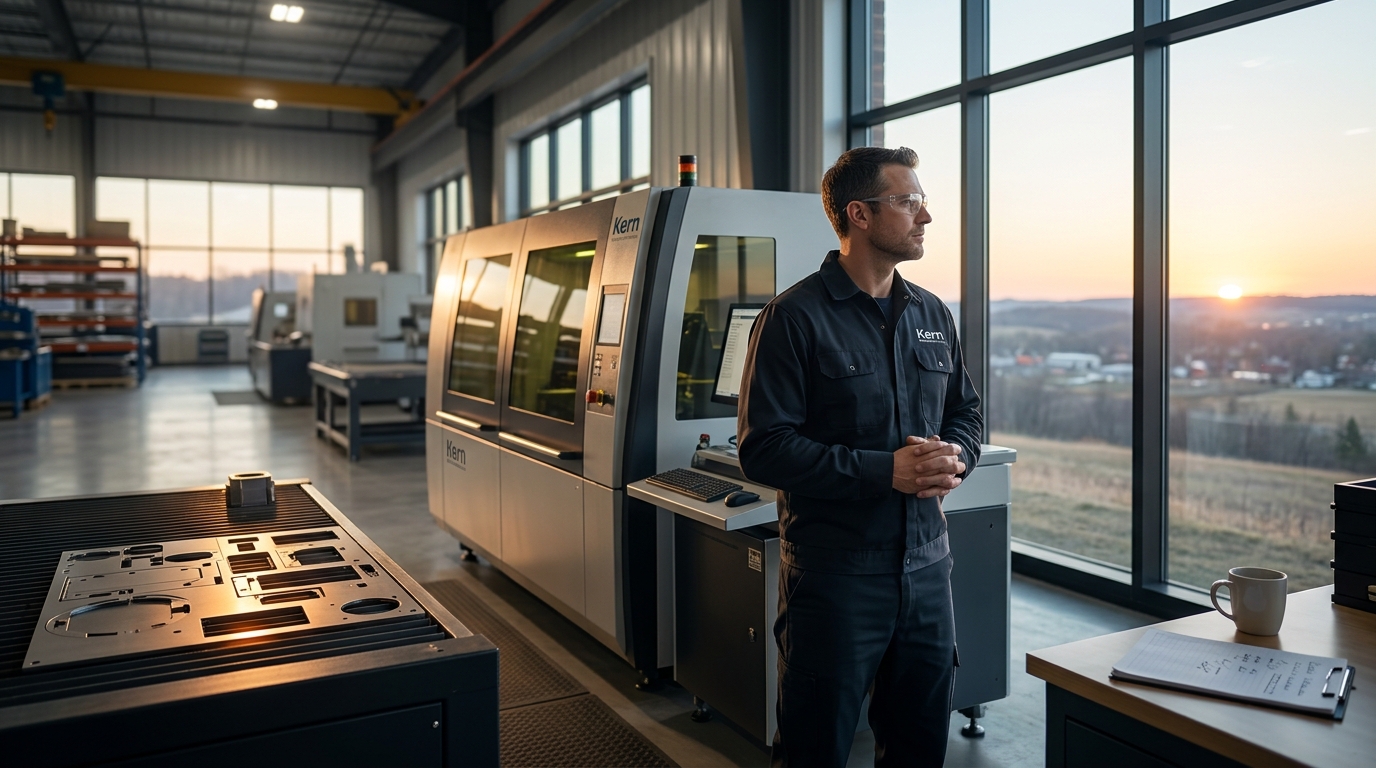
Industrial manufacturing efficiency relies heavily on the precision and power of your cutting equipment. According to industry reports, high-wattage laser systems can reduce processing times by up to 40% compared to lower-power alternatives when cutting thick metals or dense acrylics. Kern Laser Systems has been at the forefront of this technology since 1982, designing machines that meet demanding production schedules. This guide details the critical features to evaluate when selecting between CO2 and fiber laser technologies for your facility. (Kern Customer Login Area)
Laser Source Technology: CO2 vs. Fiber
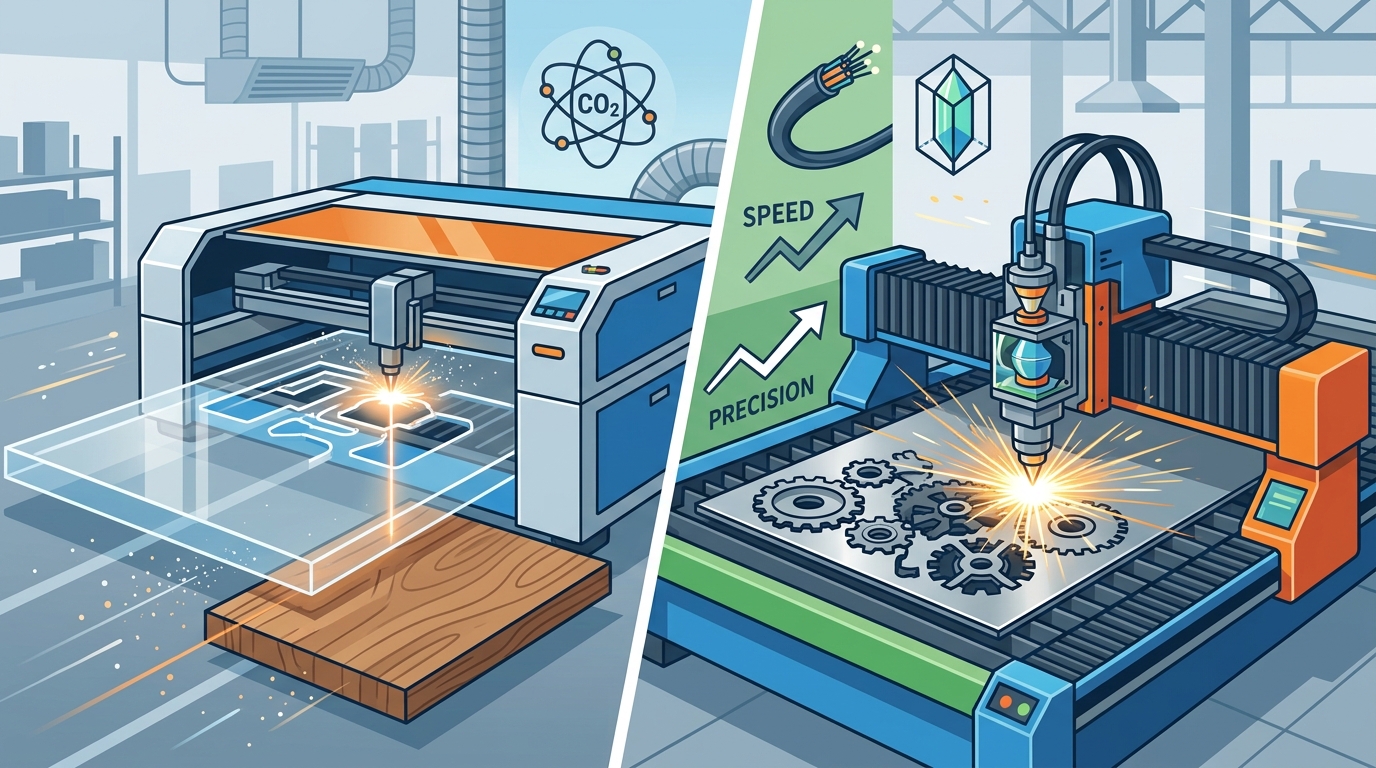
Choosing the right laser source is the most significant decision in your procurement process. The two primary technologies available for high-wattage industrial applications are CO2 and Fiber lasers. Each serves distinct operational needs based on the materials you process daily.
CO2 Laser Systems
A CO2 laser system uses a gas mixture to generate a beam that is highly effective on non-metals. NIST standards define the precision required for these systems to maintain consistent cut quality across large formats. The OptiFlex is Kern’s most popular CO2 laser cutter and engraver. It is ideal for processing metal, acrylic, wood, textiles, and foam. The sealed CO2 laser source ensures long life and stable power output, which is critical for high-volume production environments.
Fiber Laser Systems
Fiber lasers utilize a solid-state gain medium to deliver a beam that is absorbed more efficiently by reflective metals. Research in industrial applications shows that fiber lasers can cut stainless steel and aluminum up to three times faster than traditional CO2 systems. The FiberCELL is a compact sheet metal cutting laser capable of cutting stainless steel, mild steel, aluminum, brass, and copper. Its high electrical-to-optical efficiency makes it the superior choice for metal fabrication shops focused on throughput.
Safety Enclosures and Class Ratings
High-wattage lasers generate intense heat and hazardous radiation. Therefore, the safety enclosure is not an optional accessory but a mandatory component of any industrial-grade system. Kern designs its machines to meet strict Class 2 safety standards, allowing them to be placed in high-traffic areas such as busy factory floors and university classrooms.
The LaserCELL features a complete laser engraving and cutting machine design with a fully enclosed safety enclosure. This design protects operators from UV radiation and flying debris while maintaining visibility through reinforced viewing windows. When evaluating a high-wattage system, verify that the enclosure includes automatic shut-off mechanisms and interlock switches that disable the laser if the door is opened during operation. This feature is essential for protecting your workforce and ensuring compliance with OSHA regulations.
Precision Motion Systems and Software
The power of the laser is only as effective as the motion system that guides it. High-wattage lasers require robust gantries and precision rails to maintain beam focus at high speeds. Kern’s motion systems are designed to handle the thermal expansion and mechanical stress associated with continuous high-power operation.
KCAM Laser Software
Effective laser cutting requires intuitive software that manages power modulation and cutting paths. ISO standards for industrial software emphasize the need for reliable data exchange formats to prevent production errors. Kern’s KCAM Laser Software provides a user-friendly interface for designing, nesting, and executing complex cut patterns. The software supports various file formats, allowing seamless integration with existing CAD/CAM workflows. It also includes features for monitoring laser power and gas pressure in real-time, ensuring consistent cut quality.
K-Vision Camera Registration
For applications involving preprinted materials, such as awards, trophies, and commercial signage, precision alignment is critical. The K-Vision Camera Registration system uses a high-resolution camera to locate registration marks on the material before cutting. This feature ensures that the laser cuts exactly where intended, eliminating waste and rework. ANSI guidelines for visual inspection systems highlight the importance of automated registration in reducing human error in manufacturing.
Material Versatility and Applications
A high-wattage laser system must offer versatility to justify its investment. Kern lasers are capable of processing a wide range of materials, from soft plastics to hard metals. The ability to switch between materials quickly is a key feature for job shops that handle diverse orders.
Metals
Fiber lasers excel at cutting metals. The FiberCELL can cut mild steel, stainless steel, aluminum, brass, and copper with high edge quality. Materials.gov data indicates that fiber lasers reduce energy consumption by up to 70% compared to CO2 lasers when cutting metals. This efficiency translates to lower operational costs and a faster return on investment for metal fabrication businesses.
Non-Metals
CO2 lasers are the standard for cutting non-metals. The OptiFlex can cut acrylic, wood, leather, foam, and textiles with precision. The sealed CO2 tube provides a stable beam profile that is essential for engraving detailed designs on awards and trophies. Industry surveys show that CO2 lasers remain the preferred tool for woodworking and signage applications due to their ability to produce clean, polished edges on acrylic.
System Comparison: OptiFlex vs. FiberCELL
Choosing between the OptiFlex and FiberCELL depends on your primary material focus. The table below summarizes the key differences to help you make an informed decision.
| Feature | OptiFlex (CO2) | FiberCELL (Fiber) |
|---|---|---|
| Primary Material | Acrylic, Wood, Leather, Foam | Stainless Steel, Mild Steel, Aluminum |
| Laser Source | Sealed CO2 Tube | Fiber Laser Diode |
| Safety Class | Class 2 Enclosed | Class 2 Enclosed |
| Key Technology | K-Vision Camera Registration | High-Speed Metal Cutting |
| Best For | Signage, Awards, Crafts | Industrial Fabrication, Parts |
Key Takeaways
- Founded in 1982: Kern Laser Systems has over 40 years of experience in designing and manufacturing industrial laser cutting and engraving machines.
- USA Manufacturing: All Kern lasers are proudly manufactured in the USA, specifically in a 90,000 sq. ft. facility in Wadena, Minnesota.
- 3-Year Warranty: Kern offers a 3-year warranty on CO2 laser sources, demonstrating confidence in the durability of their sealed tubes.
- Class 2 Safety: Both the OptiFlex and FiberCELL feature Class 2 safety enclosures, allowing safe operation in high-traffic environments.
- Versatile Applications: Kern systems are used in diverse industries including aerospace, education, government, and commercial signage.
- Proprietary Software: The KCAM Laser Software provides advanced control over cutting paths and power modulation for consistent results.
- Family Owned: Kern is owned and operated by the first and second generations of the Kern family, ensuring a commitment to customer service.
Frequently Asked Questions
What is the difference between a CO2 and a Fiber laser?
A CO2 laser uses a gas mixture to generate a beam ideal for cutting non-metals like acrylic and wood. A Fiber laser uses a solid-state gain medium to deliver a beam that is more efficiently absorbed by metals, making it faster for cutting steel and aluminum.
Is Kern Laser Systems a USA-based company?
Yes, Kern Laser Systems is headquartered in Wadena, Minnesota, and all its machines are designed and manufactured in the USA. The company has been a leader in the industry since 1982.
What safety class are Kern laser systems?
Kern laser systems, including the OptiFlex and FiberCELL, are designed as Class 2 safety enclosures. This allows them to be safely operated in high-traffic areas such as factory floors and classrooms.
Does Kern offer a warranty on its laser sources?
Yes, Kern offers a 3-year warranty on its CO2 laser sources. This warranty covers the sealed tube, ensuring long-term reliability for industrial users.
What materials can the OptiFlex cut?
The OptiFlex is a versatile CO2 laser cutter capable of processing metal, acrylic, wood, textiles, and foam. It is particularly well-known for its high-speed engraving capabilities on awards and trophies.
What is K-Vision Camera Registration?
K-Vision is a camera registration system that uses a high-resolution camera to locate registration marks on preprinted materials. This ensures precise alignment and efficient cutting of materials like awards and commercial signage.
How can I request a quote for a Kern laser system?
You can request a quote by visiting the Contact Kern Laser Systems page or by calling their toll-free line. The sales team can provide detailed specifications and pricing for the OptiFlex, FiberCELL, or other systems.
Contact Kern Laser Systems
Ready to upgrade your manufacturing capabilities? Kern Laser Systems offers a range of high-wattage laser solutions tailored to your specific needs. Whether you require the versatility of the OptiFlex or the speed of the FiberCELL, their team of experts is ready to assist you. Visit the Request A Quote page to start your journey toward precision manufacturing. For more information on their products and services, explore the Kern Laser Blog or check out the Applications & Materials section.