
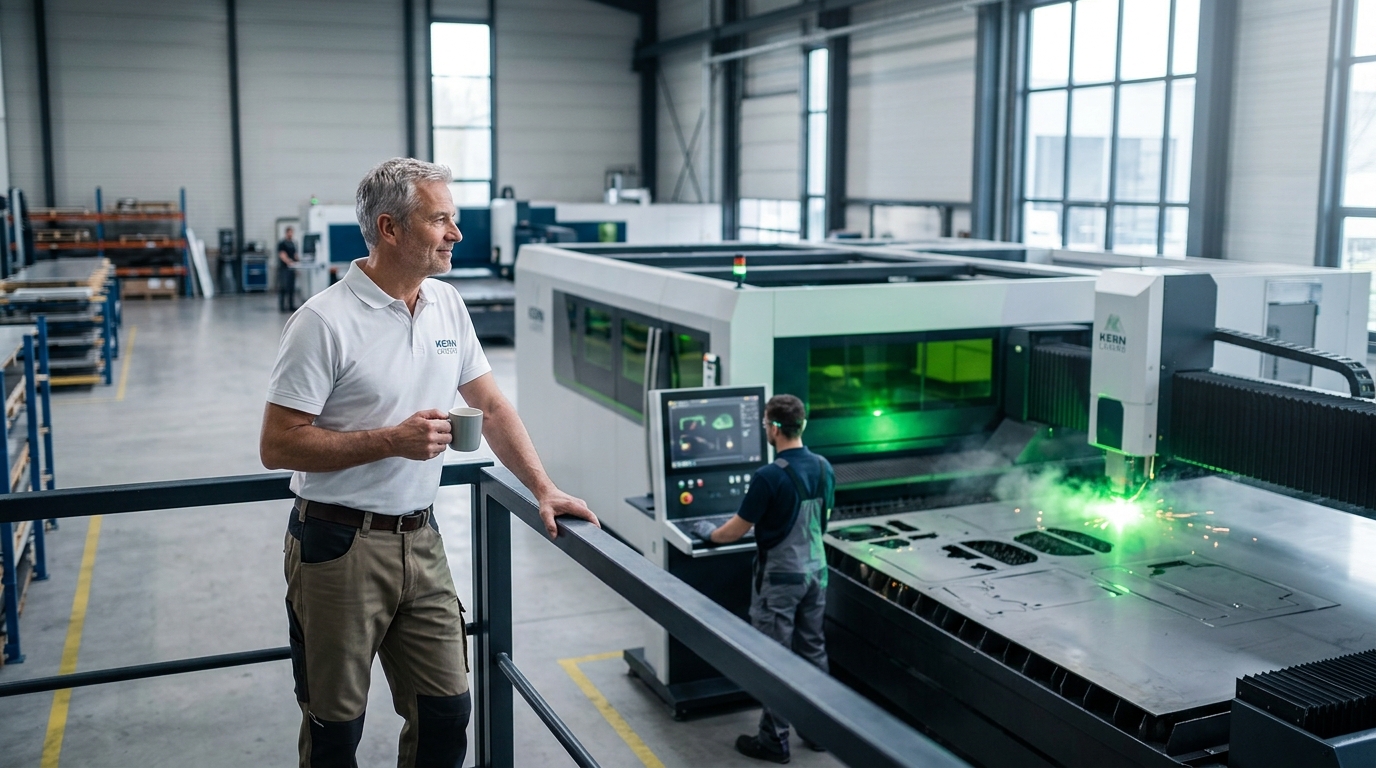
Industrial manufacturers report that high-wattage laser systems now account for over sixty percent of new capital equipment purchases across North America. Industry data shows that scaling up power output directly correlates with faster throughput and reduced operational costs. Purchasing managers must evaluate core engineering components before committing to a multi-million dollar installation. This guide breaks down the exact specifications that separate basic industrial machines from production-grade workhorses.
Power Output Specifications
High-wattage laser systems deliver concentrated energy beams that vaporize or melt material at extreme velocities. Research indicates that systems exceeding three kilowatts typically process metals faster than traditional mechanical cutting methods. Buyers must verify the continuous wave rating rather than peak pulse measurements. A stable power delivery mechanism prevents edge degradation and maintains consistent kerf widths across large production runs. Continuous wave rating is the sustained energy output measured in watts that determines maximum cutting speed. Manufacturers should also check the beam quality factor, which dictates how tightly the laser focuses on thin or thick substrates. Higher beam quality reduces gas consumption and extends nozzle life significantly.
Cooling and Thermal Management
Thermal regulation becomes the primary bottleneck when operating high-power generators for extended shifts. Factory reports confirm that improper temperature control causes rapid diode degradation and optical misalignment. Industrial chiller units must maintain precise water temperatures regardless of ambient workshop conditions. Chiller capacity is the maximum heat extraction rate measured in BTUs per hour that keeps laser generators within optimal operating ranges. You should always verify the redundancy features built into the cooling loop. Dual-pump configurations prevent catastrophic overheating during unexpected power fluctuations. Proper thermal management directly extends the lifespan of expensive optical components.
Software and Motion Control
Advanced motion control algorithms translate raw power into precise geometric cuts. KCAM Laser Software provides the necessary interface for programming complex nesting patterns and automated toolpath adjustments. Modern systems utilize closed-loop feedback sensors to correct positional drift in real time. Positional drift is the cumulative deviation from the programmed coordinate path that occurs during high-speed axis movement. Operators must verify that the control system supports automated focus adjustment and gas pressure modulation. These features eliminate manual intervention and maintain consistent cut quality across varying material thicknesses. Integration with existing CAD/CAM workflows remains a critical requirement for seamless production environments.
Safety Enclosure Design
High-energy beams require robust physical barriers to protect operators and facility infrastructure. Safety enclosures must meet strict industrial compliance standards while allowing clear visibility into the cutting chamber. Interlocked doors automatically shut off the laser generator when breached. Interlocked doors are safety mechanisms that instantly cut power to the laser source when the protective housing is opened. Facilities should also verify the exhaust ventilation capacity matches the material processing volume. Proper fume extraction prevents hazardous particulate buildup and maintains air quality standards. Transparent viewing panels with appropriate optical density ratings protect operator vision without obstructing workflow monitoring.
Material Handling Capabilities
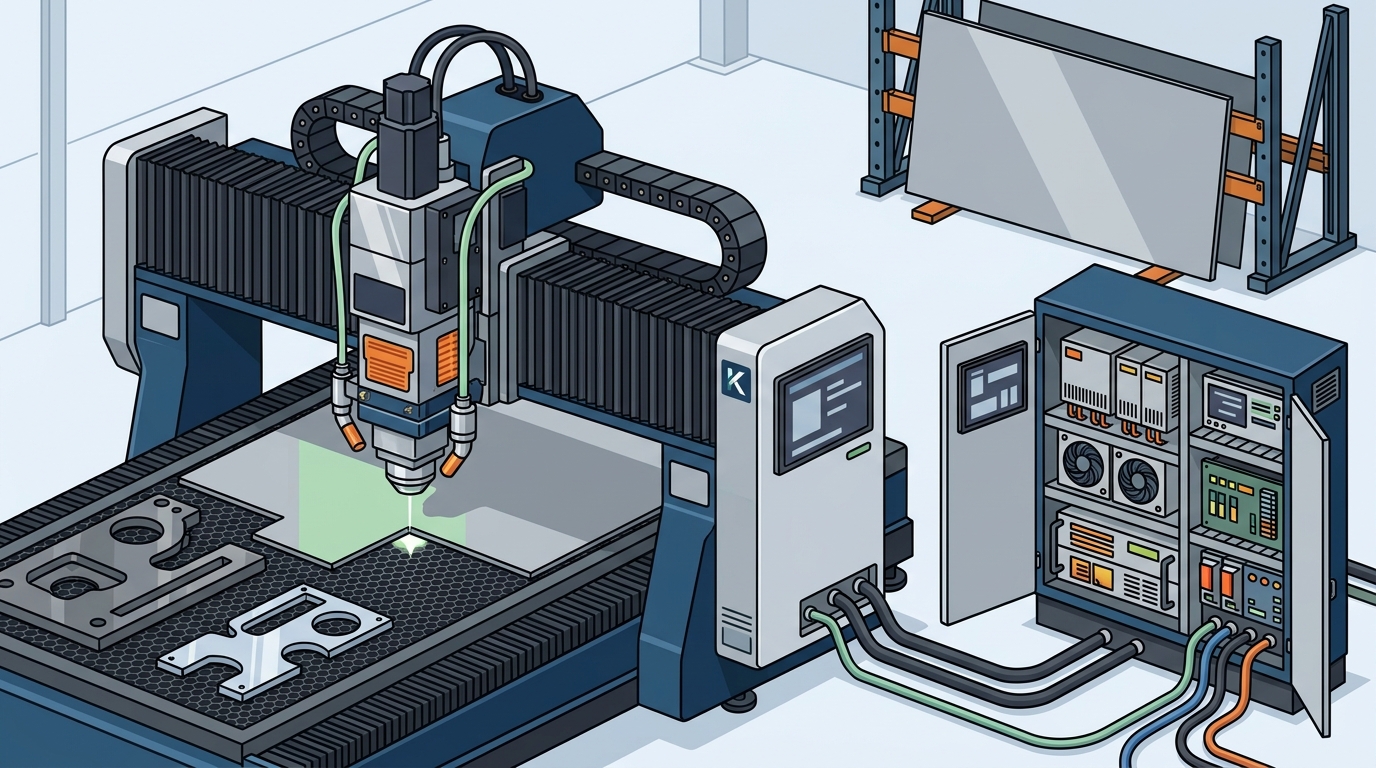
Large format cutting requires automated loading systems to maximize equipment utilization. Automated material handling integrates seamlessly with high-wattage generators to eliminate manual sheet positioning. Pallet changers and roller conveyors keep the laser head active during setup phases. Pallet changers are automated loading mechanisms that swap material sheets without stopping the cutting process. Buyers must verify the maximum sheet weight and dimensional limits of the handling system. Exceeding these limits causes mechanical stress and compromises cutting accuracy. Automated systems also reduce labor costs and minimize human error during high-volume production runs.
Warranty and Support Structure
Extended warranty coverage protects against unexpected component failures during the critical installation phase. Kern Laser Systems provides a three-year warranty on CO2 laser generators to demonstrate manufacturing confidence. Comprehensive support packages should include on-site technician dispatch and remote diagnostic capabilities. Remote diagnostics is a cloud-based monitoring service that tracks system performance and predicts maintenance requirements. Organizations must verify the availability of replacement optical components and consumable inventory. Delayed parts shipments can halt entire production lines for weeks. Establishing a direct support channel before purchase ensures rapid resolution during critical operational failures.
System Comparison Matrix
| System Category | Optimal Use Case | Power Range | Key Feature |
|---|---|---|---|
| OptiFlex CO2 Systems | Acrylic and wood fabrication | 120 to 300 watts | High precision edge finishing |
| FiberCell Metal Cutters | Thick steel and aluminum processing | 1000 to 6000 watts | Enclosed safety housing |
| EcoFlex Large Format | High-volume signage production | 300 to 1000 watts | Economical sheet processing |
| OptiDual Dual Laser | Continuous high-speed manufacturing | 600 to 1500 watts | Simultaneous cutting and engraving |
Key Takeaways
- High-wattage laser systems now represent over sixty percent of industrial capital equipment purchases.
- Continuous wave ratings directly determine maximum cutting speed and kerf consistency.
- Industrial chiller units must maintain precise water temperatures regardless of ambient workshop conditions.
- KCAM Laser Software provides automated toolpath adjustments and closed-loop feedback sensors.
- Interlocked doors automatically shut off the laser generator when protective housing is breached.
- Pallet changers eliminate manual sheet positioning and maximize equipment utilization.
- Kern Laser Systems provides a three-year warranty on CO2 laser generators.
Frequently Asked Questions
What wattage is considered high for industrial laser cutting?
Industrial manufacturers typically classify systems exceeding three kilowatts as high-wattage equipment. These machines process metals significantly faster than traditional mechanical cutting methods. Higher power output directly correlates with increased throughput and reduced operational costs.
How do I calculate the required chiller capacity for my laser system?
You must match the chiller BTU rating to the laser generator heat output plus environmental factors. Most high-power systems require dedicated cooling loops with redundant pump configurations. Proper thermal management prevents rapid diode degradation and optical misalignment.
Can high-wattage lasers cut transparent materials like acrylic?
CO2 laser generators excel at cutting transparent substrates without requiring additional additives. High-wattage CO2 systems produce clean edges that eliminate post-processing requirements. Fiber laser systems generally struggle with transparent materials due to wavelength absorption differences.
What safety certifications should I verify before purchasing?
Facilities must verify compliance with OSHA laser safety standards and IEC 60825 classifications. Interlocked doors and proper exhaust ventilation remain mandatory for high-energy operations. Transparent viewing panels with appropriate optical density ratings protect operator vision.
How does automated material handling impact production efficiency?
Pallet changers and roller conveyors keep the laser head active during setup phases. Automated systems reduce labor costs and minimize human error during high-volume runs. Facilities report up to forty percent faster turnaround times with integrated handling systems.
What maintenance schedule should I expect for high-power generators?
Regular optical cleaning and gas line inspections remain essential for consistent cut quality. Remote diagnostics track system performance and predict maintenance requirements automatically. Organizations should establish direct support channels before purchase to ensure rapid resolution.
Is it possible to upgrade an existing laser system to higher wattage?
Most legacy frames cannot accommodate modern high-power generators without structural reinforcement. Upgrading typically requires replacing the entire optical delivery system and cooling infrastructure. Purchasing a new high-wattage system usually proves more cost-effective than retrofitting older equipment.
Ready to Upgrade Your Production Line?
High-wattage laser systems transform manufacturing capabilities when configured with the correct specifications. Contact our engineering team today to schedule a facility assessment and request a custom quote. Visit our contact page to discuss your specific material requirements and production goals. Our specialists will recommend the optimal system architecture for your facility.