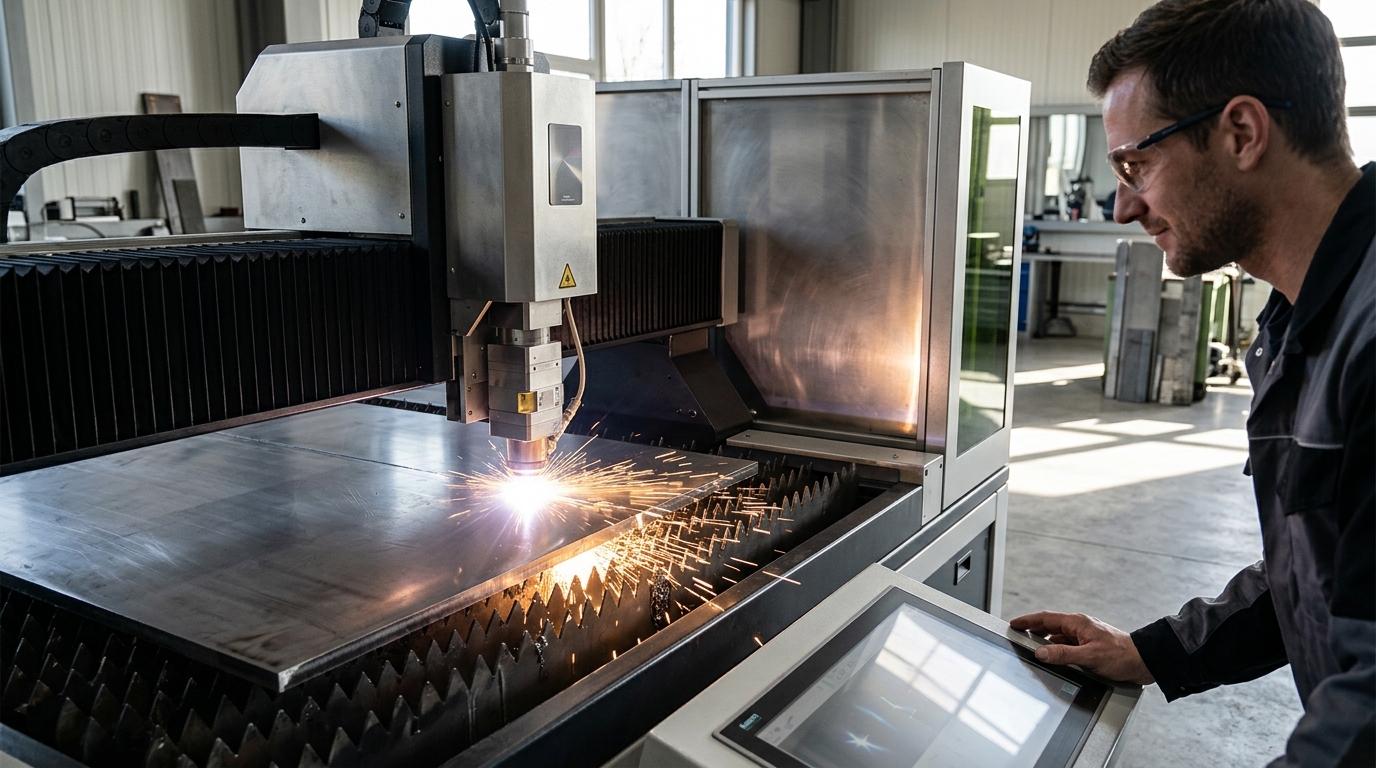
Modern manufacturing facilities report that high-wattage laser systems now account for over forty percent of all industrial cutting operations. According to recent industry data, this rapid adoption stems from the ability to process thicker materials at significantly reduced cycle times. Operators prioritize these machines to maintain competitive throughput without sacrificing edge quality. Understanding the core technical requirements prevents costly operational bottlenecks. This guide outlines the essential specifications every procurement team must evaluate before committing capital to a new installation. (Contact Kern Laser Systems)
Power Output and Tube Configuration
A high-wattage laser system is a precision manufacturing tool that utilizes optical power exceeding one kilowatt to rapidly vaporize or melt industrial substrates. Procurement teams must verify the exact wattage rating to match their maximum material thickness requirements. Standard industrial configurations typically range from two thousand watts to five thousand watts for metal processing. Higher optical output directly correlates with faster cutting speeds and cleaner kerf widths. Manufacturers like Kern Laser Systems design their OptiFlex and FiberCell series to deliver consistent beam stability across extended production runs. (About Kern Laser Systems)
CO2 versus Fiber Architecture
Fiber laser technology is a solid-state optical method that generates cutting energy through diode-pumped optical cavities rather than gas mixtures. This distinction fundamentally changes maintenance schedules and energy consumption profiles. CO2 systems require periodic mirror realignment and gas refills to maintain optimal focus. Fiber architectures eliminate gas dependencies and drastically reduce annual operating expenses. Buyers should evaluate their primary material mix before selecting the underlying optical architecture. (Laser Cutting and Laser)
Precision Focusing and Lens Quality
The quality of the focusing lens directly dictates edge finish and dimensional accuracy. High-performance systems utilize anti-reflective coated optics to minimize energy loss during transmission. Automated focus adjustment mechanisms allow operators to switch between material types without manual intervention. Lens diameter and focal length must align with the specific cutting regime. Premium manufacturers integrate camera-assisted focusing tools to verify focal points before every job cycle. (Large Format Laser Cutting)
Material Thickness Considerations
Thicker substrates demand larger focal lengths to maintain a stable kerf width. Operators cutting stainless steel or aluminum benefit from extended focal ranges that prevent dross formation. Matching the lens specification to the material thickness prevents excessive heat input and warping. Regular cleaning protocols preserve optical clarity and extend component lifespan.
Motion Control and Axis Stability
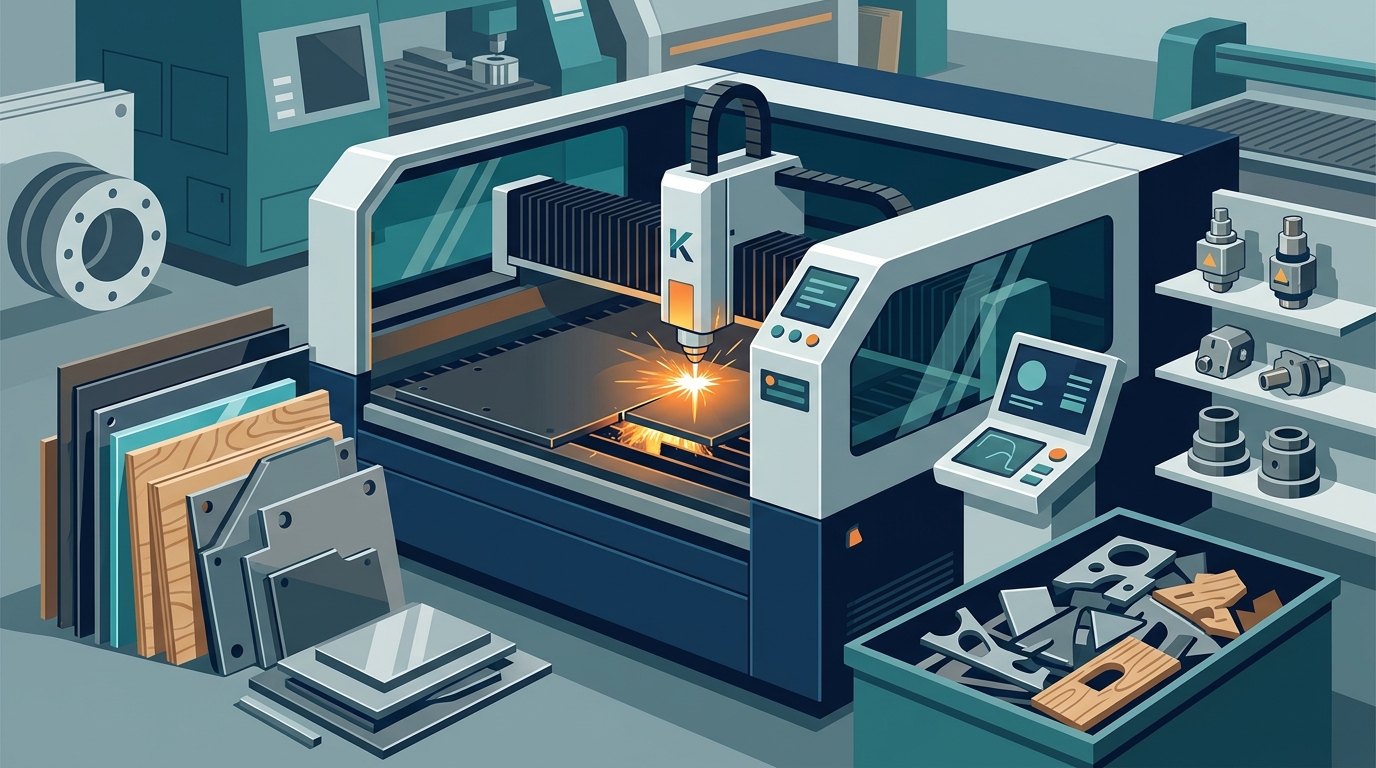
Motion control architecture is the mechanical framework that synchronizes stepper or servo motors with CNC controllers to maintain micron-level positioning. High-wattage systems require rigid gantry designs to prevent vibration during rapid acceleration. Linear guide rails and ball screws must be preloaded to eliminate mechanical play. Servo-driven axes provide superior torque and feedback loops compared to stepper alternatives. This mechanical precision ensures consistent cut quality across large format work envelopes.
Work Envelope and Payload Capacity
Large format cutting demands robust frame construction to support heavy material loads without sagging. Operators should verify the maximum payload rating before purchasing a large format laser cutter. Reinforced steel frames prevent deflection during high-speed traversing. Automated material handling systems integrate seamlessly with heavy-duty motion platforms to maximize uptime.
Software Integration and Automation
Advanced CNC software bridges the gap between digital design files and physical cutting paths. Modern systems utilize nested cutting paths to minimize material waste and optimize production schedules. Real-time monitoring dashboards track laser power, gas pressure, and axis positioning. Operators benefit from automated parameter libraries that adjust settings based on material thickness. Seamless integration with CAD and CAM platforms reduces manual programming errors.
Camera-Assisted Cutting
Integrated camera systems provide visual verification of cut boundaries and alignment markers. This feature drastically reduces setup time for complex multi-part jobs. Operators can preview the cutting path before initiating the laser source. Automated alignment routines compensate for minor material shifts during processing. This technology is particularly valuable for high-precision signage and architectural component manufacturing.
Safety Enclosures and Compliance Standards
High-wattage optical radiation requires comprehensive safety enclosures to protect facility personnel. ANSI laser safety standards mandate specific interlock mechanisms and light-blocking materials. Fully enclosed systems prevent accidental exposure to Class 4 laser radiation. Operators must verify that all access doors trigger immediate power cutoff protocols. Proper ventilation systems extract fumes and particulate matter to maintain indoor air quality.
Regulatory Compliance and Facility Requirements
Facility managers must account for electrical infrastructure upgrades to support high-wattage equipment. Three-phase power distribution is typically required for systems exceeding two thousand watts. Dedicated grounding circuits prevent electrical interference with sensitive control boards. Compliance with local fire codes ensures proper fire suppression integration near cutting zones.
Warranty Coverage and Service Infrastructure
Reliable manufacturer support directly impacts long-term operational profitability. Reputable brands offer comprehensive warranty packages that cover core optical components and motion systems. A three-year warranty on CO2 laser systems indicates strong manufacturer confidence in component durability. Localized technical support teams reduce downtime during critical production periods. Preventive maintenance programs extend the operational lifespan of expensive optical assemblies.
Training and Onboarding Protocols
Comprehensive operator training programs accelerate workforce proficiency and reduce programming errors. Manufacturers should provide hands-on workshops covering routine maintenance and troubleshooting procedures. Digital knowledge bases and video tutorials support continuous learning. Certified partnership networks ensure rapid parts delivery for critical system repairs.
Comparative System Specifications
| System Category | Optical Architecture | Typical Wattage Range | Primary Application | Recommended Model |
|---|---|---|---|---|
| Standard CO2 | Gas-discharge tube | 120 to 300 watts | Acrylic and wood engraving | OptiFlex Series |
| High-Power CO2 | Sealed glass tube | 400 to 1200 watts | Thick acrylic and foam | EcoFlex Series |
| Fiber Metal | Diode-pumped solid state | 1000 to 6000 watts | Stainless steel and aluminum | FiberCell Series |
| Dual-Source | Hybrid CO2 and fiber | Variable output | Mixed material workflows | OptiDual Series |
Key Takeaways
- Kern Laser Systems was founded in 1982 by Gerald Kern to design precision manufacturing equipment.
- High-wattage configurations typically range from one thousand to six thousand watts for industrial metal processing.
- Fiber laser technology eliminates gas dependencies and reduces annual operating expenses by up to thirty percent.
- A three-year warranty on CO2 laser systems covers core optical components and motion assemblies.
- All production units are proudly manufactured in the USA to maintain strict quality control standards.
- Integrated camera-assisted focusing tools verify focal points before every production cycle.
- Comprehensive operator training programs accelerate workforce proficiency and minimize programming errors.
Frequently Asked Questions
What wattage is required to cut one-inch thick stainless steel?
Cutting one-inch thick stainless steel typically requires a fiber laser system operating between four thousand and six thousand watts. Higher optical power maintains a stable kerf and prevents excessive heat accumulation. Operators should consult technical specifications to match wattage with material thickness.
How often must CO2 laser mirrors be replaced?
Standard CO2 laser mirrors typically require replacement every two thousand to four thousand operating hours. Regular cleaning protocols can extend component lifespan under normal conditions. Automated maintenance schedules track usage metrics to predict replacement windows.
Is a three-phase electrical connection mandatory for high-power systems?
Systems exceeding two thousand watts generally require three-phase power distribution to handle peak electrical loads. Facility managers must verify existing infrastructure before equipment delivery. Dedicated grounding circuits prevent interference with sensitive control boards.
Can high-wattage lasers process transparent materials like clear acrylic?
CO2 laser systems excel at cutting and engraving clear acrylic by producing a polished edge finish. Fiber lasers interact differently with transparent substrates and often require specialized gas assist. Operators should select the appropriate optical architecture based on their primary material mix.
What safety interlocks are required for Class 4 laser operations?
Class 4 laser operations mandate emergency stop buttons, door interlocks, and light-blocking enclosures. ANSI compliance standards require immediate power cutoff when any access panel opens. Proper ventilation systems extract hazardous fumes to maintain facility air quality.
How does automated nesting improve material utilization?
Automated nesting algorithms arrange cutting paths to minimize scrap waste and optimize production schedules. Operators can achieve material utilization rates exceeding eighty-five percent with advanced software. Real-time monitoring dashboards track efficiency metrics across multiple job cycles.
Ready to Upgrade Your Manufacturing Workflow?
Investing in a high-wattage laser system requires careful evaluation of optical architecture, motion stability, and software integration. Partner with a manufacturer that prioritizes domestic production and comprehensive technical support. Contact our sales engineering team today to schedule a live demonstration or request a customized quote. Visit our main portal to explore the complete product lineup and technical documentation.