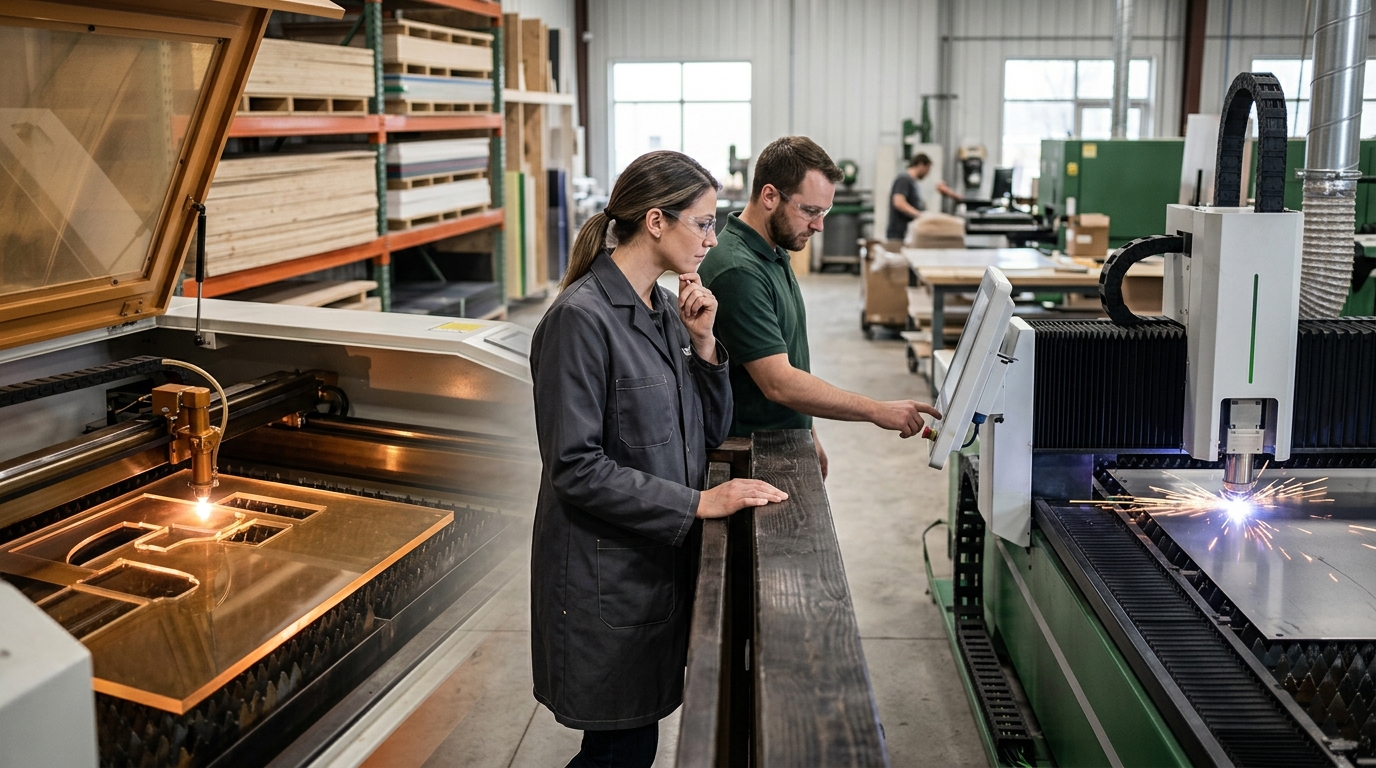
Choosing between CO2 and fiber laser cutting machines is one of the most critical decisions for any manufacturing facility. The global laser cutting market is projected to reach significant valuation milestones in the coming years, driven by the demand for precision and speed in industrial applications. According to recent industry reports, the shift toward fiber technology is accelerating, particularly in metal fabrication, while CO2 systems remain dominant in non-metal processing. Understanding the technical nuances of each system is essential for maximizing return on investment and operational efficiency. (Kern Customer Login Area)
How CO2 and Fiber Lasers Work
To make an informed decision, you must first understand the fundamental differences in how these two technologies generate their cutting beams. The core distinction lies in the medium used to produce the laser light.
CO2 lasers are defined as laser systems that use a mixture of carbon dioxide, nitrogen, and helium gases to generate the laser beam. This gas mixture is excited by an electrical discharge, producing a beam that is typically reflected through a series of mirrors to the cutting head. This technology has been the industry standard for decades, particularly for cutting non-metallic materials. The beam quality is excellent for engraving and cutting thick acrylics, woods, and textiles.
Fiber lasers are defined as laser systems that use an optical fiber doped with rare-earth elements like erbium or ytterbium as the gain medium. The laser is generated directly within the fiber and delivered to the workpiece via the same fiber optic cable. This direct delivery method results in a beam that is highly efficient and can be focused to a much smaller spot size than CO2 lasers. This precision allows for faster cutting speeds, especially on reflective metals.
The choice between these two technologies often comes down to the primary material you intend to process. While fiber lasers excel in metal cutting, CO2 lasers offer superior versatility for a broader range of non-metallic substrates.
Material Compatibility and Versatility
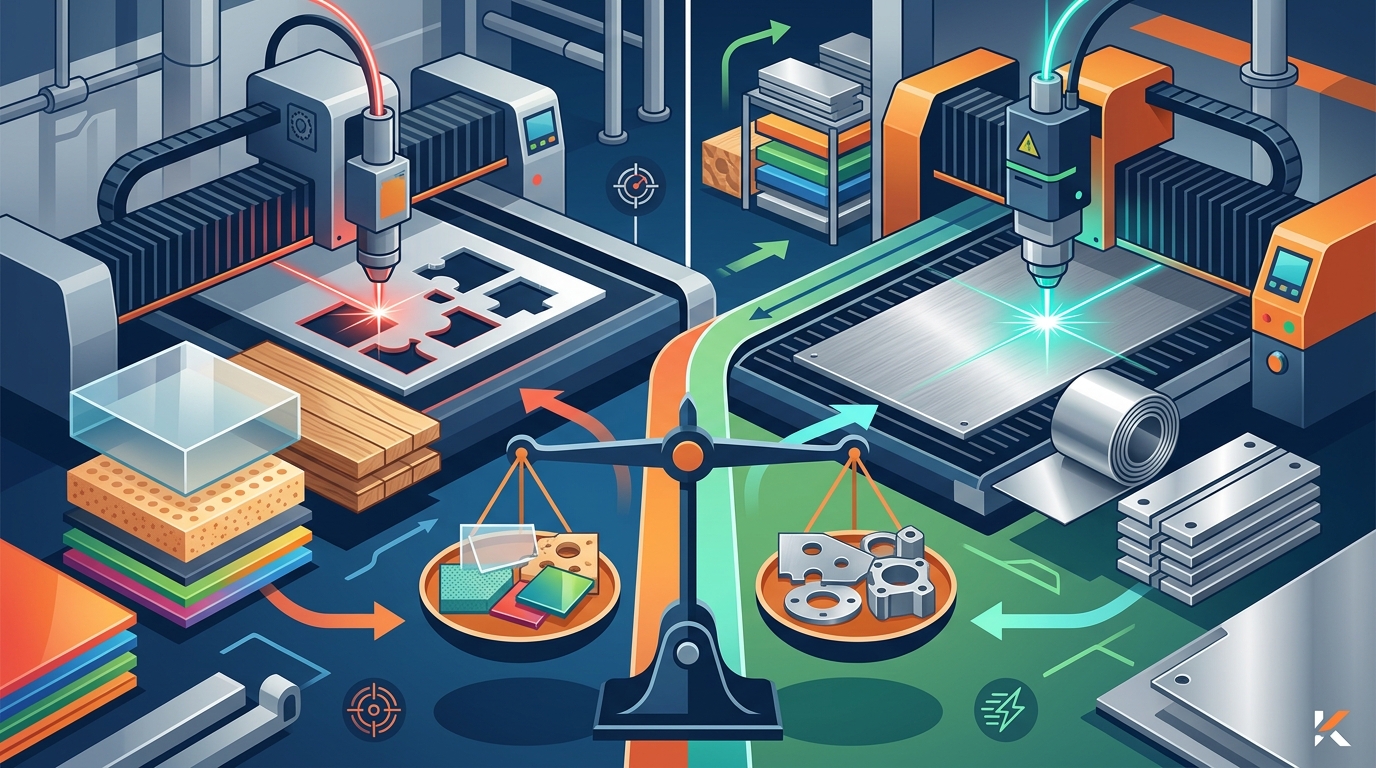
The most significant differentiator between CO2 and fiber lasers is the range of materials each can effectively process. Your existing inventory of raw materials and your target market will heavily influence this decision.
CO2 Laser Strengths
CO2 lasers are the undisputed champions of non-metal cutting. They interact efficiently with organic materials and plastics, making them the go-to choice for:
- Acrylic and Plastics: CO2 lasers cut acrylic with a polished, flame-like edge that often requires no post-processing. Fiber lasers can struggle with clear acrylics, sometimes causing cracking or poor edge quality.
- Wood and MDF: The wavelength of CO2 lasers is absorbed well by wood, allowing for deep, clean cuts and intricate engraving.
- Textiles and Leather: For apparel and upholstery industries, CO2 lasers provide precise cutting without fraying edges.
- Foam and Paper: These materials are easily processed by CO2 systems for packaging and display applications.
Fiber Laser Strengths
Fiber lasers are engineered specifically for metal cutting. They offer unparalleled speed and precision on conductive materials. Key applications include:
- Metals: Fiber lasers cut stainless steel, mild steel, aluminum, brass, and copper with exceptional speed. The high beam quality allows for thinner kerf widths and tighter tolerances.
- Reflective Metals: Modern fiber lasers have advanced anti-reflection features that handle highly reflective metals like copper and brass more effectively than older CO2 systems.
If your business model relies on a mix of metals and non-metals, a CO2 system might offer the necessary versatility. However, if your focus is strictly on metal fabrication, a fiber laser is the superior tool.
Efficiency, Speed, and Operating Costs
Operational efficiency is a major driver in the adoption of fiber laser technology. The energy consumption and cutting speed differences are substantial.
Energy Efficiency
Fiber lasers are significantly more energy-efficient than CO2 lasers. A fiber laser converts approximately 30-50% of electrical input into laser light, whereas a CO2 laser typically converts only 10-15%. This means that for the same cutting output, a fiber laser consumes far less electricity. Over the lifespan of the machine, this difference translates to thousands of dollars in savings on utility bills.
Cutting Speed
For thin to medium gauge metals, fiber lasers can cut up to three times faster than CO2 lasers. This speed advantage is critical for high-volume production environments where throughput directly impacts profitability. The faster cycle times allow manufacturers to take on more jobs and deliver them quicker to clients.
Operating Costs
While the initial investment for a fiber laser is often higher, the operating costs are lower. CO2 lasers require regular replacement of gas mixtures, mirrors, and lenses. Fiber lasers have no gas to refill and fewer optical components that degrade over time. The laser source itself is sealed and has a lifespan that often exceeds 100,000 hours, reducing long-term maintenance expenses.
Maintenance and Longevity
Maintenance requirements vary significantly between the two technologies. CO2 lasers require more frequent upkeep due to the nature of their components.
CO2 laser tubes have a limited lifespan, typically lasting between 5,000 and 10,000 hours before the output power degrades significantly. Mirrors and lenses must be cleaned and aligned regularly to maintain beam quality. Any misalignment can result in poor cut quality or machine downtime.
In contrast, fiber lasers are virtually maintenance-free. The solid-state design eliminates the need for gas refills and mirror alignments. The fiber optic delivery system is robust and resistant to misalignment. This reliability makes fiber lasers ideal for facilities with limited technical staff or those seeking to minimize unplanned downtime.
Kern Laser Systems Solutions
At Kern Laser Systems, we understand that the right choice depends on your specific production needs. Founded in 1982, Kern has been a leader in manufacturing large format laser cutting and engraving equipment. Our headquarters in Wadena, Minnesota, is home to a team of dedicated engineers who design machines that meet the demands of modern industry.
We offer a comprehensive range of laser systems to suit different applications:
| Machine Model | Technology | Best For | Key Feature |
|---|---|---|---|
| OptiFlex | CO2 | Versatile Cutting & Engraving | High-speed engraving, ideal for acrylic, wood, and metal. |
| LaserCELL | CO2 | Safety-Enclosed Processing | Class 2 safety enclosure for high-traffic areas. |
| FiberCELL | Fiber | Pure Metal Cutting | Compact sheet metal cutter with safety enclosure. |
| EcoFlex | CO2 | Economical Large Format | Entry-level large format system for cost-conscious buyers. |
Our OptiFlex system is our most popular CO2 laser cutter and engraver, offering the versatility needed for a wide range of materials. For those focused on metal, the FiberCELL provides pure metal cutting capabilities with a compact footprint. We also offer the KCAM Laser Software to ensure precise control and registration for all our machines.
Whether you need to cut thick metals or engrave delicate materials, Kern Lasers provides Made in the USA quality and reliability. Visit our blog for more insights on laser technology and applications.
Key Takeaways
- Material Matters: Use CO2 for non-metals (acrylic, wood, leather) and fiber for metals.
- Efficiency: Fiber lasers are 3-5 times more energy-efficient than CO2 systems.
- Speed: Fiber lasers cut thin to medium metals significantly faster than CO2.
- Maintenance: Fiber lasers require less maintenance due to their solid-state design.
- Longevity: Fiber laser sources can last over 100,000 hours, reducing replacement costs.
- Versatility: CO2 lasers offer broader material compatibility for mixed-use shops.
- Brand Trust: Kern Laser Systems has been manufacturing reliable laser equipment since 1982.
Frequently Asked Questions
Can a CO2 laser cut metal?
Yes, CO2 lasers can cut thin metals, but they are not as efficient or fast as fiber lasers for this purpose. They are better suited for non-metallic materials.
Which laser is better for cutting acrylic?
CO2 lasers are superior for cutting acrylic. They produce a clean, polished edge without the need for secondary finishing, which is difficult to achieve with fiber lasers.
How long does a fiber laser source last?
High-quality fiber laser sources, such as those used in Kern systems, typically last between 100,000 and 150,000 hours, which is significantly longer than CO2 laser tubes.
Is fiber laser cutting more expensive to operate?
No, fiber laser cutting is generally less expensive to operate due to lower energy consumption and reduced maintenance requirements compared to CO2 systems.
What is the Kern Laser Systems warranty?
Kern Laser Systems offers a 3-year warranty on CO2 laser sources and comprehensive support for their fiber and CO2 systems. Contact us for detailed warranty information.
Do Kern lasers come with safety enclosures?
Yes, models like the LaserCELL and FiberCELL come with Class 2 safety enclosures, making them safe for use in high-traffic areas like classrooms and busy factories.
Where are Kern Laser Systems manufactured?
Kern Laser Systems are proudly manufactured in the USA, specifically in Wadena, Minnesota, ensuring high-quality standards and domestic support.
Ready to Upgrade Your Production?
Choosing the right laser cutting machine is a significant investment in your business's future. Whether you need the versatility of a CO2 system or the speed of a fiber laser, Kern Laser Systems has the solution. Our team of experts is ready to help you find the perfect machine for your needs.
Contact Kern Laser Systems today to request a quote or schedule a consultation. Experience the difference of Made in the USA laser technology.