
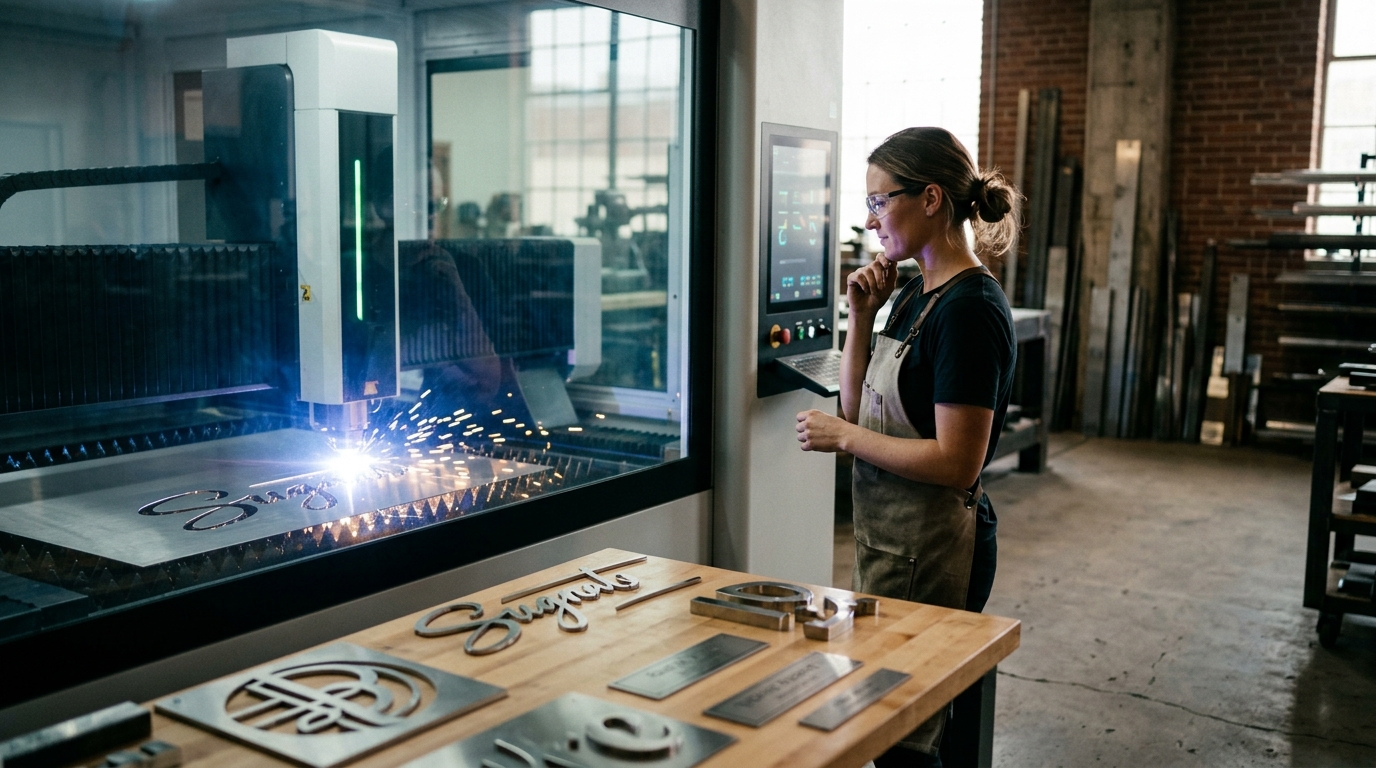
Industrial manufacturing has shifted dramatically toward high-speed metal processing, with the global fiber laser market projected to exceed significant valuation thresholds in the coming years. According to recent industry analysis, the adoption of fiber laser technology in metal fabrication has grown by over 20% annually, driven by the need for precision and reduced operational costs. This surge in adoption highlights why modern sign makers and industrial fabricators are prioritizing fiber systems over traditional CO2 lasers for metallic applications. Understanding the specific workflows for cutting metal signs and nameplates is essential for maximizing throughput and ensuring edge quality.
Understanding Fiber Laser Technology for Metal
Fiber laser cutting represents a distinct category of industrial machinery designed specifically for high-reflectivity materials. Unlike CO2 lasers, which use a gas mixture to generate light, a fiber laser uses doped optical fibers to amplify the laser beam. This fundamental difference allows for higher electrical efficiency and superior beam quality when processing metals.
Fiber laser cutting is the process of using a high-intensity beam of light delivered through an optical fiber to melt, burn, or vaporize metal. This method is particularly effective for materials like stainless steel, aluminum, and brass, which are commonly used in commercial signage and industrial nameplates.
The efficiency of fiber lasers stems from their ability to couple the laser energy directly into the material with minimal loss. This results in faster cutting speeds and narrower kerf widths compared to other laser types. For sign makers, this means intricate details can be cut with extreme precision, reducing the need for secondary finishing work. The technology has become the industry standard for metal fabrication due to its reliability and low maintenance requirements.
When evaluating laser systems for metal work, it is crucial to understand the power requirements. A typical fiber laser cutter for signage applications ranges from 500 watts to 3,000 watts, depending on the thickness of the metal. Thinner gauges require less power but benefit from the high-speed capabilities of the fiber source. For thicker metals, higher wattage ensures clean cuts without excessive dross formation.
Selecting the Right Material for Signage
The choice of metal significantly impacts the cutting process and the final aesthetic of the sign or nameplate. Different metals react differently to the high heat of the laser, requiring specific adjustments to the machine settings.
Stainless steel is a corrosion-resistant alloy containing chromium, making it ideal for outdoor signage and industrial nameplates. It offers a professional, durable finish that resists tarnishing. When cutting stainless steel, the laser beam melts the material, and assist gas, typically oxygen or nitrogen, blows the molten metal out of the kerf. Using nitrogen results in a bright, oxide-free edge, while oxygen can increase cutting speed but may leave a slightly oxidized edge.
Aluminum is another popular choice for lightweight signage and decorative panels. It is highly reflective, which can challenge the laser source if not properly managed. Modern fiber lasers handle aluminum well due to their short wavelength, which is absorbed more effectively by reflective metals than CO2 lasers. However, care must be taken to prevent back-reflection damage to the laser head.
Brass and copper present unique challenges due to their high thermal conductivity and reflectivity. Cutting these materials often requires higher power densities and specific gas pressures to achieve clean edges. Despite the challenges, the warm, golden hue of brass makes it a preferred material for high-end awards, trophies, and decorative nameplates.
When sourcing materials, ensure the metal surface is clean and free of coatings that could produce toxic fumes during cutting. Kern Laser Systems provides extensive resources on material processing, including detailed guides on laser applications and materials. Their team can assist in selecting the optimal material for your specific signage requirements.
Preparing Your Kern Laser System
Proper preparation of the laser cutting machine is critical for achieving consistent results. Kern Laser Systems has engineered its machines, such as the FiberCELL, to handle these tasks with precision and safety.
The FiberCELL is a compact sheet metal cutting laser capable of cutting stainless steel, mild steel, aluminum, brass, and copper. Its Class 2 safety enclosure allows the CNC laser system to be placed in high-traffic areas such as busy factory floors and university classrooms. This safety feature is essential for environments where operators need to monitor the cutting process closely.
Before starting the cut, ensure the lens is clean and properly focused. A dirty lens can scatter the laser beam, leading to poor cut quality and potential damage to the optics. Kern’s KCAM Laser Software provides intuitive controls for setting focus depth and nozzle height. Accurate focus is particularly important for metal cutting, as the focal point determines the energy density at the material surface.
Calibration of the machine axes is another vital step. Misalignment can cause dimensional inaccuracies in the final sign or nameplate. Regular maintenance of the rotary axis, if used for pipe or tube applications, ensures smooth operation and precise positioning. Kern’s dedication to quality is reflected in their 3-year warranty on CO2 laser sources and robust support for their fiber systems.
Additionally, verify the assist gas pressure and flow rate. For stainless steel and aluminum, nitrogen is typically used to prevent oxidation. For mild steel, oxygen is often preferred to enhance the exothermic reaction and increase cutting speed. The correct gas choice and pressure are determined by the material type and thickness.
Optimizing Cutting Parameters
Optimizing the cutting parameters is the key to achieving high-quality edges and maximizing production speed. These parameters include laser power, cutting speed, gas pressure, and focus position.
Laser power must be matched to the material thickness. Too little power will result in incomplete cuts or excessive dross, while too much power can widen the kerf and cause thermal distortion. Kern’s FiberCELL metal cutter is designed to deliver pure metal cutting performance with adjustable power settings to suit various gauges.
Cutting speed is inversely proportional to the material thickness. Thinner materials can be cut at high speeds, while thicker materials require slower speeds to ensure the laser penetrates completely. The optimal speed is found through trial and error, looking for a cut that is clean and free of striations.
Focus position plays a crucial role in cut quality. For thin metals, the focus is often set slightly below the surface to maximize energy density. For thicker metals, the focus may be set above or at the surface to allow the beam to diverge slightly, providing a wider cut width. Kern’s laser cutting technology includes advanced features like K-Vision Camera registration for precise alignment.
Gas pressure must be sufficient to blow out the molten metal but not so high that it causes turbulence and uneven edges. The nozzle diameter also affects the gas flow dynamics. Kern provides detailed technical support to help users determine the optimal settings for their specific applications.
Post-Processing and Finishing
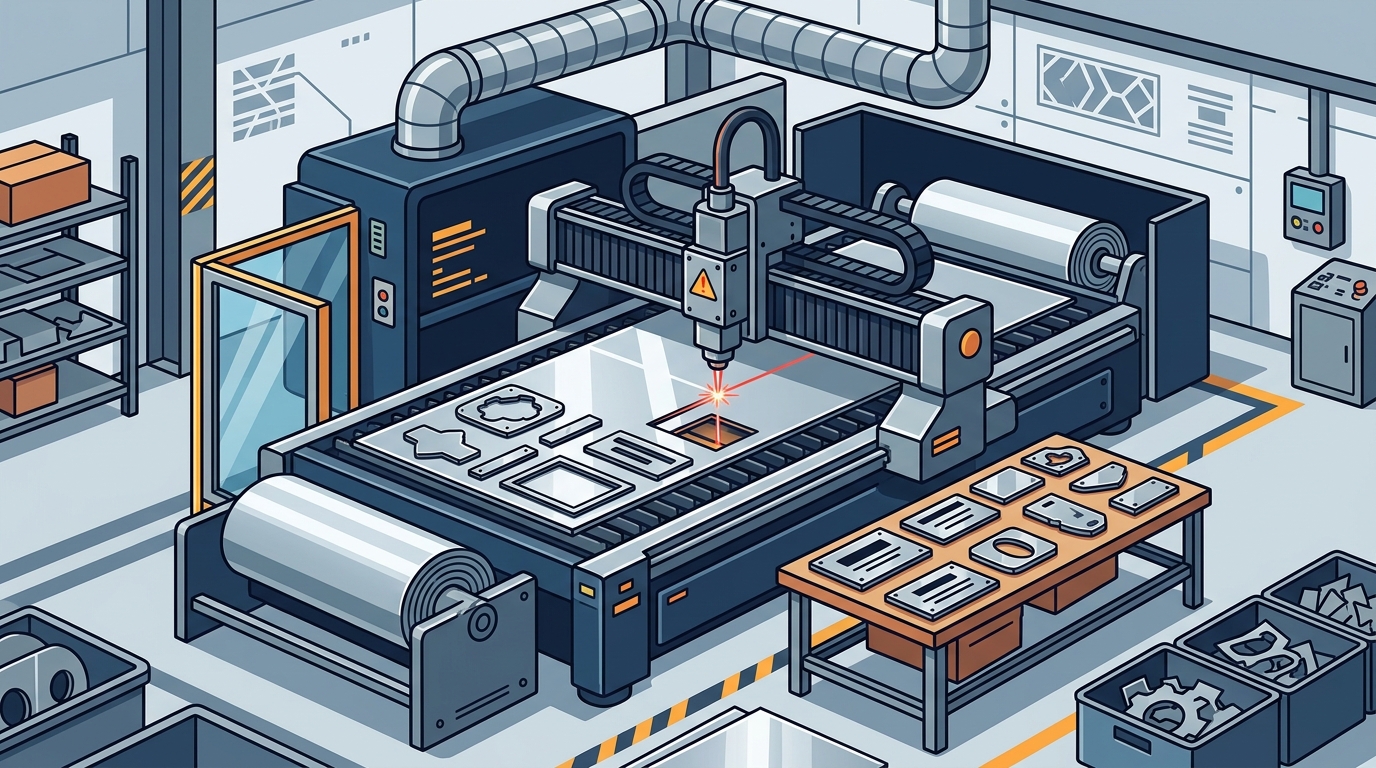
While fiber lasers produce high-quality cuts, some post-processing may be required depending on the application. Removing dross, polishing edges, and applying finishes are common steps in the signage production workflow.
Dross removal involves cleaning the bottom edge of the cut to remove any residual molten metal. This can be done manually with files or abrasives, or automatically using specialized dross removal tools. Clean edges reduce the time spent on finishing and improve the overall appearance of the sign.
Polishing can enhance the aesthetic appeal of metal signs, particularly those made from brass or stainless steel. Mechanical polishing or chemical brightening can restore the metal’s luster and remove any heat taint from the cutting process. Kern’s blog offers additional tips on material handling and finishing techniques.
For nameplates and industrial labels, engraving depth and contrast are critical. Fiber lasers can achieve deep, high-contrast engravings on coated metals, ensuring readability and durability. The precision of the fiber laser allows for fine details that are difficult to achieve with other methods.
Consider the environmental conditions where the sign will be installed. Outdoor signs require materials and finishes that resist UV radiation, moisture, and temperature fluctuations. Kern’s applications page provides examples of durable signage solutions for various industries.
Key Takeaways
- Fiber lasers offer superior efficiency and speed for cutting reflective metals like aluminum and brass compared to CO2 lasers.
- Kern Laser Systems, founded in 1982, specializes in large format laser cutting and engraving equipment, including the FiberCELL metal cutter.
- Stainless steel is the most common material for durable signage due to its corrosion resistance and professional finish.
- Proper focus position and assist gas selection are critical for achieving clean cuts without dross.
- The FiberCELL system features a Class 2 safety enclosure, making it suitable for high-traffic industrial and educational environments.
- Kern’s KCAM software provides precise control over cutting parameters and camera registration for accurate alignment.
- Regular maintenance of lenses and calibration of axes ensures consistent cut quality and dimensional accuracy.
Frequently Asked Questions
What is the difference between a fiber laser and a CO2 laser for metal cutting?
Fiber lasers use doped optical fibers to generate the laser beam, offering higher electrical efficiency and better beam quality for metals. CO2 lasers use a gas mixture and are generally less efficient for cutting reflective metals like copper and brass.
Can a fiber laser cut thick stainless steel?
Yes, fiber lasers can cut thick stainless steel, but the maximum thickness depends on the laser power. Higher wattage systems, such as 3,000-watt or 6,000-watt models, are required for thicker gauges to ensure clean penetration.
What assist gas is best for cutting aluminum?
Nitrogen is the preferred assist gas for cutting aluminum because it prevents oxidation and produces a bright, clean edge. Oxygen can be used but may result in a rougher, oxidized edge.
How does Kern Laser Systems support its customers?
Kern provides comprehensive technical support, including online resources, customer login portals, and direct assistance from their team. They also offer a 3-year warranty on CO2 laser sources and robust support for their fiber systems.
Is the FiberCELL suitable for small workshops?
Yes, the FiberCELL is a compact sheet metal cutting laser designed for versatility. Its Class 2 safety enclosure allows it to be placed in smaller workshops or high-traffic areas safely.
What materials can be processed with Kern’s laser systems?
Kern’s systems can process a wide range of materials, including metals like stainless steel, aluminum, brass, and copper, as well as non-metals like acrylic, wood, and foam, depending on the specific laser type.
How do I optimize cutting speed for thin metals?
To optimize cutting speed for thin metals, use high laser power and fast cutting speeds with appropriate gas pressure. Kern’s KCAM software can help automate these settings for consistent results.
Contact Kern Lasers
Ready to elevate your metal signage production with precision fiber laser technology? Kern Laser Systems offers tailored solutions for your manufacturing needs. Contact their team today to request a quote or schedule a demo. Visit Kern Lasers Contact Page to get started.