
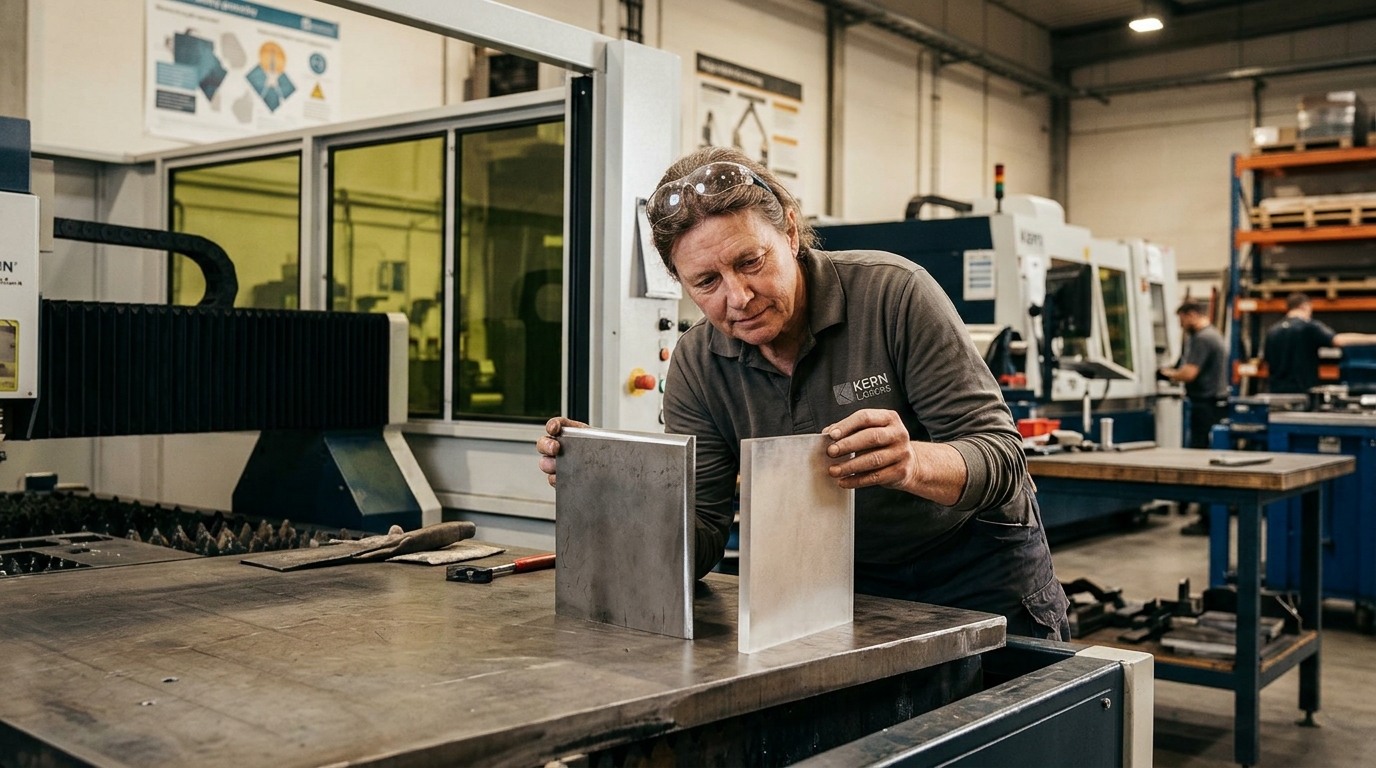
Edge quality is a critical metric for manufacturers evaluating laser cutting technology. It determines whether a part requires secondary finishing or is ready for assembly. Kern Lasers provides both CO2 and fiber systems, allowing operators to select the right tool for specific material needs. Understanding the physics behind these two technologies helps you predict the finish you will achieve on your production floor.
1. Wavelength Absorption and Material Interaction
The laser wavelength must match the material's absorption properties to achieve a clean cut. CO2 lasers emit at 10.6 microns, which is highly absorbed by non-metals like wood, acrylic, and leather. Fiber lasers emit at 1.06 microns, which is strongly absorbed by metals. When the wavelength does not match the material, the cut edge can become rough or require excessive power, leading to heat-affected zones.
2. Beam Focus and Spot Size
Fiber lasers typically offer a smaller spot size, resulting in finer kerf and sharper edges. The fiber laser beam can be focused to a much smaller point than a CO2 beam. This allows for higher power density, which vaporizes material more cleanly. For thin metals, this often results in a smoother edge with less dross compared to CO2 systems.
3. Assist Gas Selection and Pressure
The choice of assist gas directly influences the oxidation and cleaning of the cut edge. For fiber lasers cutting mild steel, oxygen is used to support combustion, which can create a slightly rougher but faster cut. Nitrogen is used for stainless steel and aluminum to prevent oxidation, yielding a cleaner, silver finish. CO2 lasers often use compressed air or nitrogen for non-metals, where the gas blows away molten material.
4. Focal Height and Nozzle Distance
Maintaining the correct distance between the nozzle and the material is vital for consistent edge quality. Kern's metal cutting systems feature an automatic focusing height follower. This device uses a capacitance sensor to track the metal surface and adjust the nozzle position. This ensures the beam remains at the optimal focal point, preventing edge tapering or inconsistent cut quality.
5. Material Thickness and Power Density
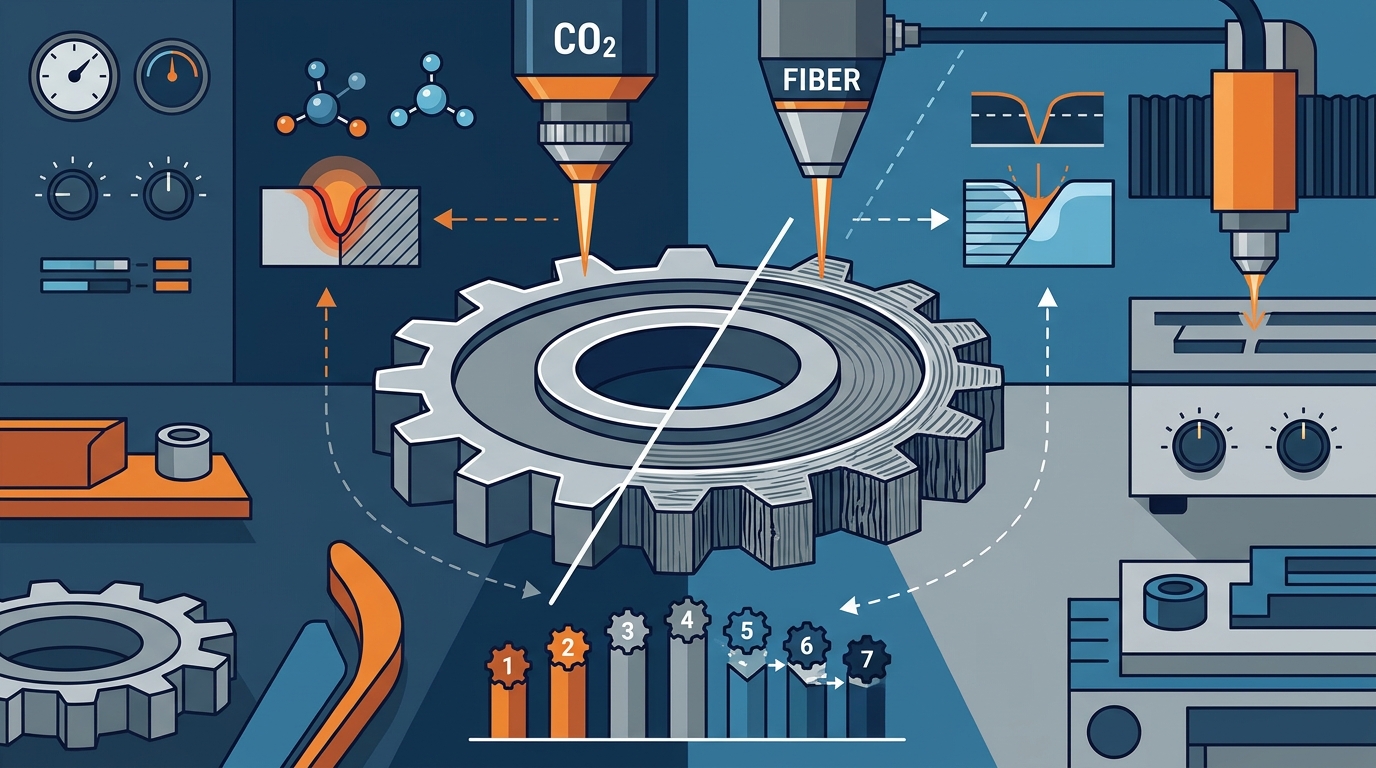
Thicker materials require higher power density to maintain a clean edge throughout the cut. As material thickness increases, the laser beam must penetrate deeper. If the power density drops below a certain threshold, the cut may stall or produce a rough, jagged edge. Fiber lasers generally handle thicker metals with better edge quality due to their higher power efficiency.
6. Cut Speed and Power Settings
Optimizing the balance between speed and power is essential for minimizing heat-affected zones. Cutting too slowly can cause excessive heat buildup, leading to a rough, oxidized edge. Cutting too fast can result in an incomplete cut or a rough, unpolished surface. Software like KCAM allows operators to fine-tune these parameters for specific materials.
7. Lens Quality and Contamination
Dirty or damaged lenses degrade beam quality, directly impacting the edge finish. Kern systems use protective cover lenses, known as K-Lens for CO2 and F-Lens for fiber, to shield the focusing lens from debris. Regular maintenance of these optics is crucial. A contaminated lens scatters the beam, resulting in a wider, less focused spot and a poorer edge quality.
Choosing the Right Laser for Your Edge Quality Needs
Selecting between CO2 and fiber lasers depends on your primary materials. If you work primarily with non-metals, a CO2 laser is the superior choice for edge quality. If your focus is on metals, a fiber laser will provide cleaner, faster cuts with less dross. Kern Lasers offers both technologies, ensuring you can match the laser source to your specific production requirements.
Frequently Asked Questions
Which laser type produces a better edge on stainless steel?
Fiber lasers generally produce a better edge on stainless steel due to their higher power density and smaller spot size. They allow for faster cutting speeds with less heat-affected zone, resulting in a cleaner finish.
Can CO2 lasers cut metal with good edge quality?
Yes, CO2 lasers can cut metals, but they are less efficient than fiber lasers. For thin metals, CO2 can produce acceptable edges, but fiber lasers are preferred for thicker or high-volume metal production.
How does assist gas affect the edge finish?
Assist gas helps blow away molten material and can influence oxidation. Nitrogen prevents oxidation for a clean finish, while oxygen supports combustion for faster cuts but may result in a rougher edge.
What is the role of the focal height in edge quality?
The focal height determines where the beam is most concentrated. Maintaining the correct focal height ensures the beam stays focused on the material, preventing edge tapering and ensuring a consistent cut.
Does lens cleanliness impact edge quality?
Yes, dirty lenses scatter the laser beam, reducing its focus and power density. This leads to a wider kerf and a rougher edge. Regular cleaning of protective lenses is essential for maintaining quality.