
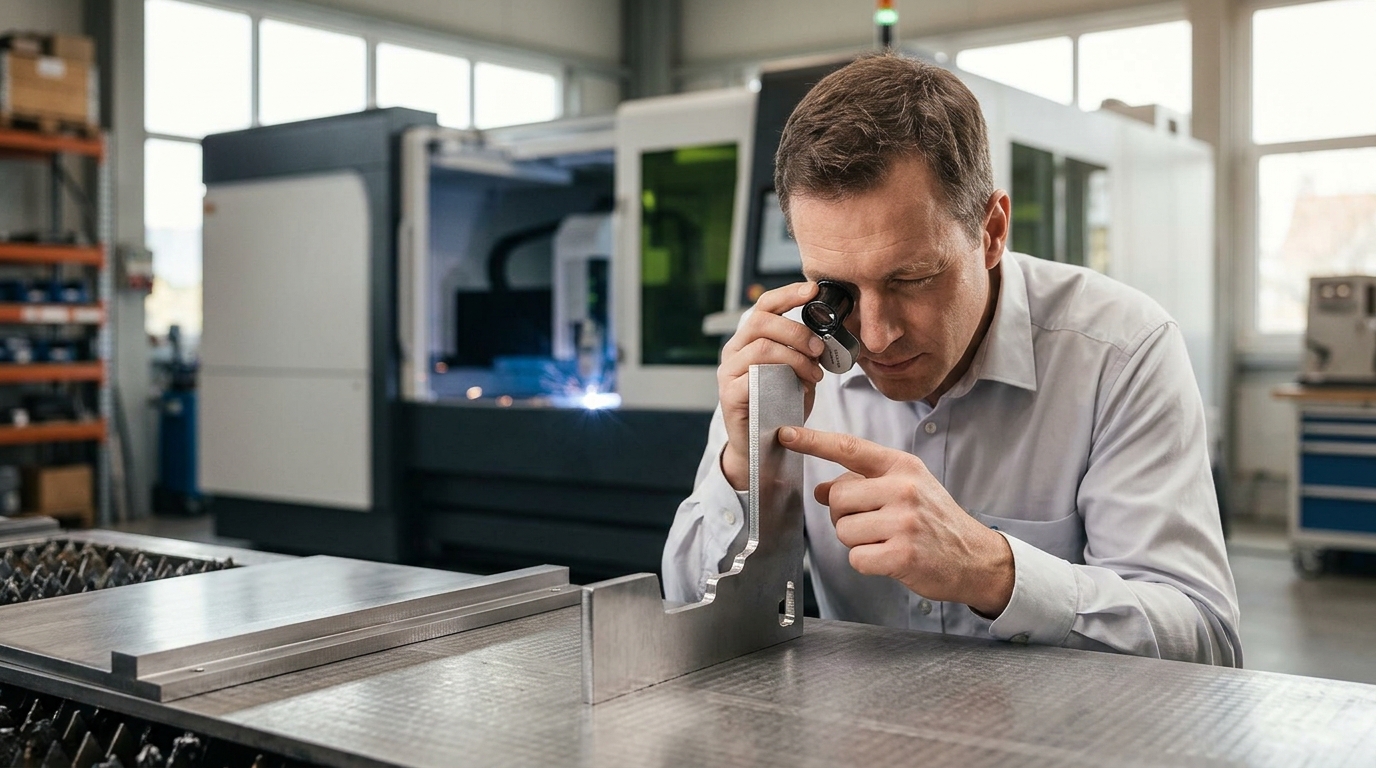
Rough edges in laser cutting are primarily caused by incorrect assist gas pressure, misaligned optics, or insufficient laser power for the material thickness. While fiber lasers generally produce cleaner edges on metals due to superior beam quality, CO2 lasers offer distinct advantages for organic materials and light gauge metals when properly configured. Understanding these mechanical and optical factors allows operators to troubleshoot quality issues effectively.
Optical Beam Quality and Spot Size
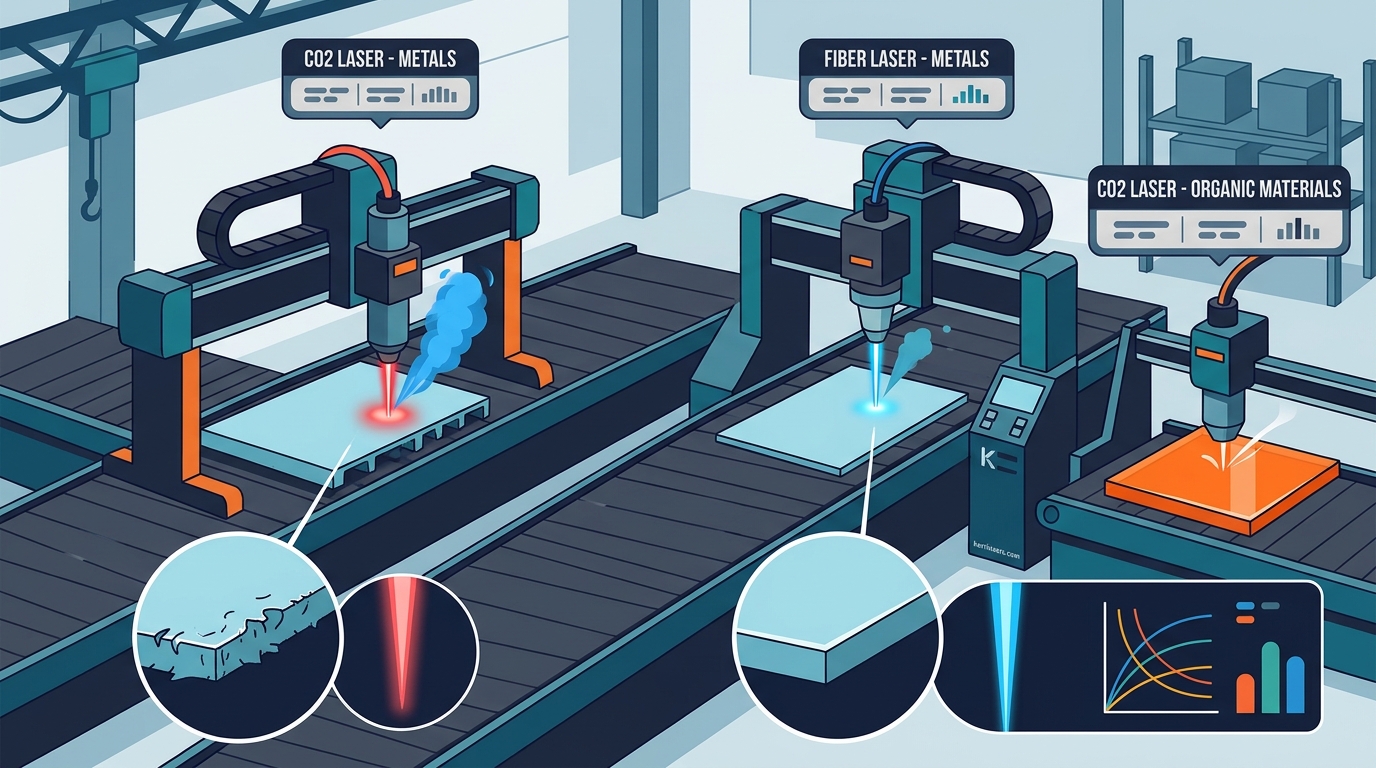
Beam quality is the fundamental determinant of edge finish. Beam quality is a measure of how well a laser beam can be focused to a small spot size. Fiber lasers typically possess a superior beam quality factor, often denoted as M-squared, which allows them to focus to a much smaller diameter than CO2 lasers. This smaller spot size results in a narrower kerf and a smoother transition between the cut and the uncut material. For example, a fiber laser can achieve a spot size of less than 0.1 millimeters, whereas a CO2 laser might focus to 0.2 or 0.3 millimeters. This difference is critical when cutting thin sheet metals where precision is paramount.
However, CO2 lasers are not inherently inferior for all materials. The wavelength of a CO2 laser, approximately 10.6 micrometers, is highly absorbed by organic materials like wood, acrylic, and leather. This high absorption rate allows for a clean, vaporized cut edge without the need for extreme focus. In contrast, fiber lasers operate at a wavelength of 1.06 micrometers, which is less absorbed by these organic materials. Therefore, for non-metallic applications, the CO2 laser often produces a superior edge finish despite its larger theoretical spot size. Operators must match the laser type to the material's absorption properties to achieve the best edge quality.
Assist Gas Dynamics and Pressure Control
The interaction between the laser beam and the assist gas is a major contributor to edge roughness. Assist gas is a stream of inert or reactive gas directed through the cutting nozzle to clear molten material from the kerf. If the gas pressure is too low, molten metal or material residue remains on the cut edge, creating dross or a rough texture. If the pressure is too high, the gas can blow back into the kerf, causing turbulence that disrupts the cut and leaves a jagged edge. For mild steel, oxygen is typically used as the assist gas, while nitrogen is preferred for stainless steel and aluminum to prevent oxidation.
Kern Laser Systems emphasizes the importance of nozzle design in managing this gas flow. The nozzle directs the gas stream and protects the optics from debris. A standard nozzle might have a 1.5mm opening, but for specific applications, a smaller 1mm nozzle can reduce splatter and regulate gas usage more effectively. For instance, using a 1mm nozzle with 100psi assist gas can significantly extend the runtime of an oxygen tank compared to a 1.5mm nozzle. This precise control over gas dynamics is essential for maintaining a consistent, smooth edge throughout the cut path. Operators should always test different nozzle sizes and pressure settings to find the optimal balance for their specific material and thickness.
Focal Point and Height Follower Accuracy
Maintaining the correct distance between the cutting head and the material is crucial for edge quality. Focal point is the specific distance from the lens where the laser beam converges to its smallest diameter. If the material is not at the correct focal point, the beam will be larger and less intense, resulting in a rough, tapered cut. In manual setups, operators must adjust the head height for each new sheet, which is time-consuming and prone to error. Automated height followers, such as the capacitance sensing height follower developed by Kern, solve this problem by continuously tracking the material surface and adjusting the nozzle position in real-time.
This technology ensures that the laser beam remains at the optimal focal point, even if the material is slightly warped or uneven. For example, when cutting a warped sheet of aluminum, a height follower will drop the nozzle to maintain a constant gap, preventing the beam from defocusing. This consistency is vital for high-volume production where edge quality must be uniform across every part. Without an automated height follower, operators risk producing parts with inconsistent edge finishes, leading to increased post-processing or scrap rates. Investing in a system with a reliable height follower is a key step in achieving professional-grade edge quality.
Material Reflectivity and Beam Protection
Reflective metals like aluminum and copper present unique challenges for laser cutting. Reflectivity is the property of a material to bounce back light energy rather than absorb it. When a laser beam strikes a highly reflective surface, a portion of the energy can reflect back into the laser source, potentially damaging the optics or the laser itself. Fiber lasers are generally more resistant to this issue due to their solid-state design, but they still require protective measures. CO2 lasers, which use a gas-based source, are more susceptible to back-reflection damage if not properly equipped with beam protection systems.
To mitigate this risk, modern laser systems incorporate beam isolators and protective cover lenses. These components absorb or deflect reflected energy, safeguarding the internal components of the laser. For example, Kern's CO2 metal cutting systems include a circular polarizer, which reduces the reflection of the laser beam off reflective metals. This ensures that more energy is absorbed by the material for efficient cutting, resulting in a cleaner edge. Operators working with reflective metals should ensure their system is equipped with the appropriate beam protection hardware to maintain both safety and edge quality.
Optics Maintenance and Lens Condition
The condition of the laser optics directly impacts the quality of the cut edge. Optical maintenance is the routine cleaning and inspection of lenses and mirrors to ensure they are free of debris and contamination. Dust, smoke, and molten metal splatter can accumulate on the F-lens (the focusing lens), causing the beam to scatter and produce a rough, uneven cut. Regular cleaning of the F-lens is essential for maintaining beam quality. Operators should inspect the lens after every job and clean it as needed using appropriate optical cleaning supplies.
Worn or damaged optics can also lead to edge roughness. If the F-lens is scratched or cracked, it will distort the beam, resulting in a poor cut quality. Replacing the F-lens is a relatively inexpensive and quick process, but neglecting it can lead to more significant damage to the focusing lens, which is more expensive to replace. Kern Laser Systems provides guidance on proper optics maintenance to help operators maximize the lifespan of their equipment. By implementing a strict maintenance schedule, operators can ensure that their laser system consistently produces high-quality edges, reducing the need for post-processing and improving overall productivity.
Key Takeaways
- Beam quality is a primary factor in edge finish, with fiber lasers generally offering superior focus for metals.
- Assist gas pressure and nozzle size must be optimized to clear molten material without causing turbulence.
- Automated height followers ensure consistent focal point alignment, critical for warped or uneven materials.
- Reflective metals require beam protection systems to prevent damage and ensure clean cuts.
- Regular optics maintenance is essential to prevent beam distortion and maintain edge quality.
- CO2 lasers excel in organic materials due to high absorption rates, despite larger spot sizes.
- Matching the laser type to the material's properties is the most effective way to achieve smooth edges.
Frequently Asked Questions
Why does my laser cut have a rough edge on aluminum?
Rough edges on aluminum are often caused by incorrect assist gas pressure or a misaligned focal point. Aluminum is highly reflective and thermally conductive, which can make it challenging to cut cleanly. Using nitrogen as an assist gas and ensuring the nozzle is at the correct distance from the material can help achieve a smoother edge.
Can a CO2 laser cut metal as cleanly as a fiber laser?
For light gauge metals, a properly configured CO2 laser can produce a clean cut. However, for thicker or more reflective metals, a fiber laser is generally superior due to its higher power density and better beam quality. CO2 lasers are best suited for thin sheets and organic materials.
How often should I clean my laser optics?
Optics should be inspected after every job and cleaned as needed. The F-lens, in particular, is prone to contamination from smoke and debris. Regular cleaning helps maintain beam quality and prevents damage to more expensive components.
What is the role of the nozzle in edge quality?
The nozzle directs the assist gas and protects the optics. The size and shape of the nozzle affect how the gas flows through the kerf. Choosing the right nozzle size for the material and thickness is crucial for achieving a clean, dross-free edge.
Does laser power affect edge quality?
Yes, laser power must be sufficient to melt or vaporize the material at the desired speed. If the power is too low, the cut will be rough and slow. If the power is too high, it can cause excessive heat-affected zones and rough edges. Optimizing power and speed is key to achieving the best edge quality.
Conclusion
Achieving smooth, high-quality edges in laser cutting requires a holistic approach that considers beam quality, assist gas dynamics, focal point alignment, and optics maintenance. While fiber lasers offer superior performance for thick and reflective metals, CO2 lasers remain a versatile choice for organic materials and light gauge metals. By understanding the specific causes of edge roughness and implementing best practices, operators can optimize their systems for consistent, professional results. For more information on how to select the right laser system for your edge quality needs, at Kern Laser Systems. Learn more: Contact Kern Laser Systems.