
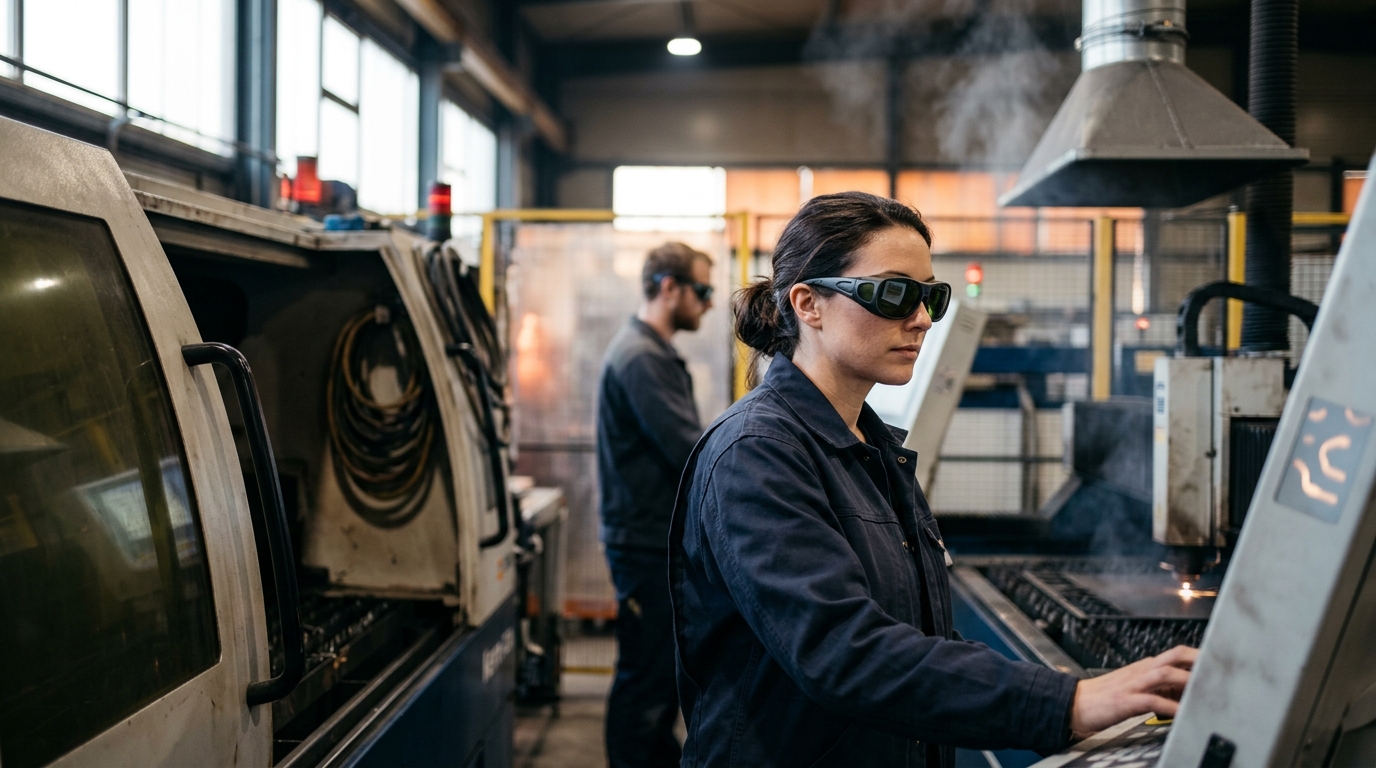
Industrial laser safety requires a layered approach to personal protective equipment (PPE) and environmental controls. Operators must use laser safety eyewear matched to the specific wavelength and power of the machine, along with appropriate clothing and respiratory protection. Kern Laser Systems emphasizes that while their equipment features robust built-in safety mechanisms, human operators remain the final line of defense against optical and thermal hazards.
Optical Protection and Laser Safety Eyewear
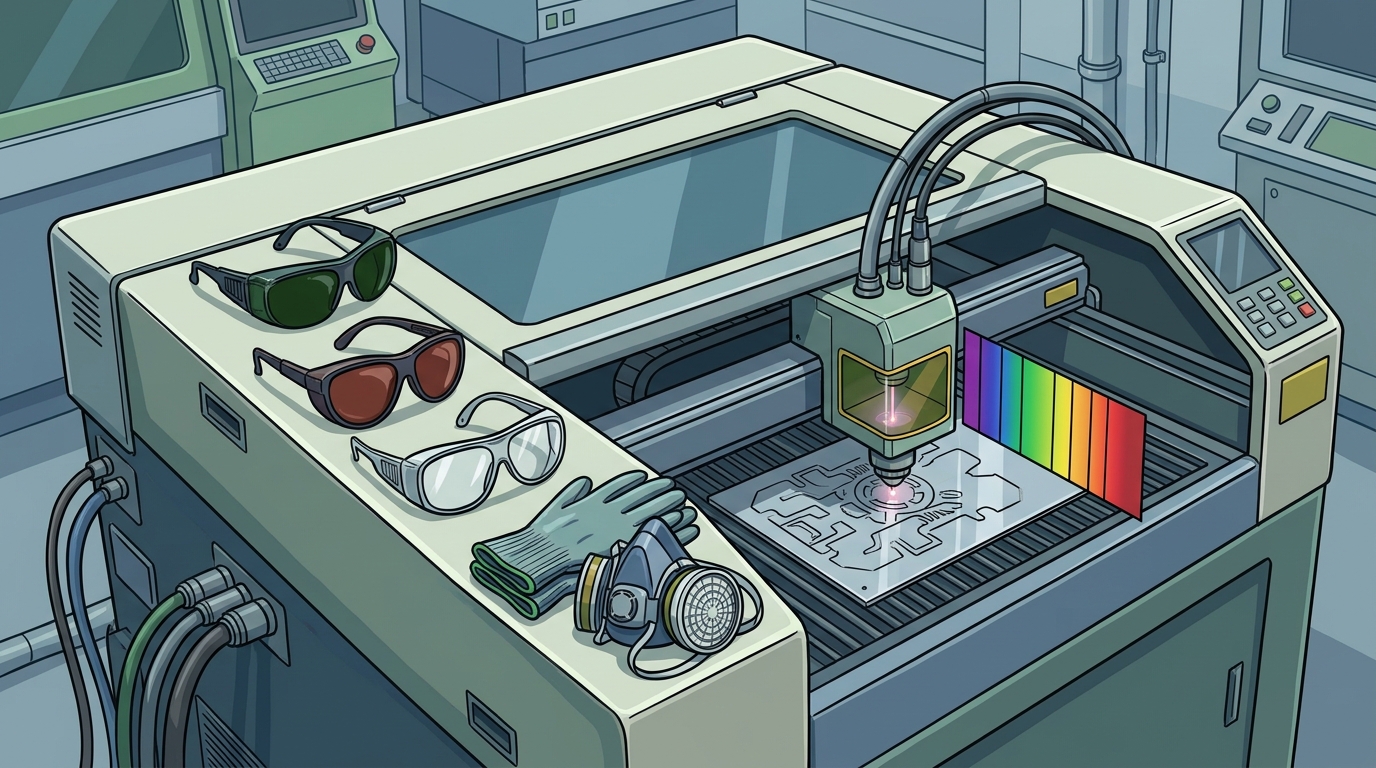
The most critical piece of protective gear is laser safety eyewear. Laser safety eyewear is a specialized optical filter designed to attenuate specific laser wavelengths to a safe level for the human eye. Unlike standard safety glasses, these filters must be rated for the exact wavelength and power output of the laser source being used. For example, a CO2 laser operating at 10.6 microns requires different filtration than a fiber laser operating at 1.06 microns.
Wearing the wrong eyewear can be just as dangerous as wearing none at all. If the optical density (OD) rating is too low, the lens may transmit enough energy to cause permanent retinal damage. Operators must verify that their eyewear covers the entire visible and infrared spectrum of the machine. At Kern Laser Systems, we provide guidance on selecting the correct OD ratings for our CO2 and fiber laser platforms to ensure operator safety during both cutting and engraving processes.
Apparel and Skin Protection
While the eyes are the primary target for laser injury, skin protection is equally important. Laser-induced skin burns can occur if the beam is reflected or if the operator is in close proximity to the work area. Flame-resistant (FR) clothing is recommended for operators working with high-power lasers, particularly those cutting materials that produce sparks or molten metal.
Long sleeves and closed-toe shoes are standard requirements in most industrial laser environments. Loose clothing, jewelry, or dangling accessories should be avoided as they can catch on moving parts or interfere with the laser head. Kern Laser Systems designs its enclosed systems, such as the LaserCELL, to minimize exposure, but operators should still adhere to strict dress codes to prevent accidental contact with hot components or debris.
Respiratory Protection and Fume Extraction
Laser processing generates fumes, particulates, and gases that can be harmful if inhaled. Respiratory protection is a vital component of the PPE strategy, especially when cutting materials like plastics, coated metals, or treated woods. The type of respirator required depends on the material being processed and the ventilation of the workspace.
For many applications, a well-maintained fume extraction system is sufficient to keep air quality safe. However, when working with materials that release toxic byproducts, such as PVC or certain anodized metals, a NIOSH-approved respirator with appropriate cartridges may be necessary. Operators should consult the Material Safety Data Sheet (MSDS) for each material to determine the specific respiratory hazards. Kern Laser Systems integrates blower systems and fume extraction options into its machines to help manage these airborne contaminants effectively.
Hearing Protection and Environmental Controls
While laser beams themselves are silent, the surrounding machinery and material processing can generate significant noise. Hearing protection is often required in industrial settings where multiple machines operate simultaneously. Prolonged exposure to high decibel levels can lead to permanent hearing loss, making earplugs or earmuffs a standard part of the PPE kit.
Environmental controls also play a role in safety. Warning signage, interlocks, and beam barriers are essential for defining the safe operating zone. Operators must be trained to recognize these controls and understand when it is safe to open the machine enclosure. Kern Laser Systems equips its machines with Class 2 and Class 4 safety features, including interlocks that cut the laser beam if the door is opened, providing an additional layer of protection for the operator.
Key Takeaways
- Laser safety eyewear must be matched to the specific wavelength and power of the laser source.
- Flame-resistant clothing and closed-toe shoes are recommended to prevent skin burns and injuries.
- Respiratory protection is required when processing materials that release toxic fumes or particulates.
- Hearing protection is necessary in noisy industrial environments to prevent long-term hearing damage.
- Environmental controls, such as interlocks and warning signage, are critical for defining safe operating zones.
- Operators must be trained on the specific hazards of their materials and the safety features of their equipment.
Frequently Asked Questions
Can I use standard safety glasses for laser protection?
No, standard safety glasses do not provide adequate protection against laser beams. You must use laser safety eyewear with the correct optical density (OD) rating for your specific laser wavelength and power.
What is the difference between Class 2 and Class 4 lasers?
Class 2 lasers are low-power and generally safe for brief exposure, while Class 4 lasers are high-power and can cause immediate eye and skin injury. Most industrial cutting and engraving systems are Class 4.
Do I need a respirator for all laser cutting jobs?
Not necessarily. It depends on the material. Cutting untreated wood or acrylic may only require good ventilation, while cutting plastics or coated metals may require a respirator with specific cartridges.
How often should I replace my laser safety eyewear?
Replace eyewear if the lenses are scratched, cracked, or if the OD rating is no longer verified. Regular inspection is crucial to ensure the filters are still effective.
Does Kern Laser Systems provide safety training?
Conclusion
Protective gear is the foundation of a safe industrial laser environment. By combining the right eyewear, apparel, and respiratory protection with proper environmental controls, operators can mitigate the risks associated with high-power laser systems. Kern Laser Systems is committed to providing equipment that prioritizes safety, but the responsibility for personal protection ultimately lies with the operator. Always consult your machine manual and safety guidelines before beginning work.