
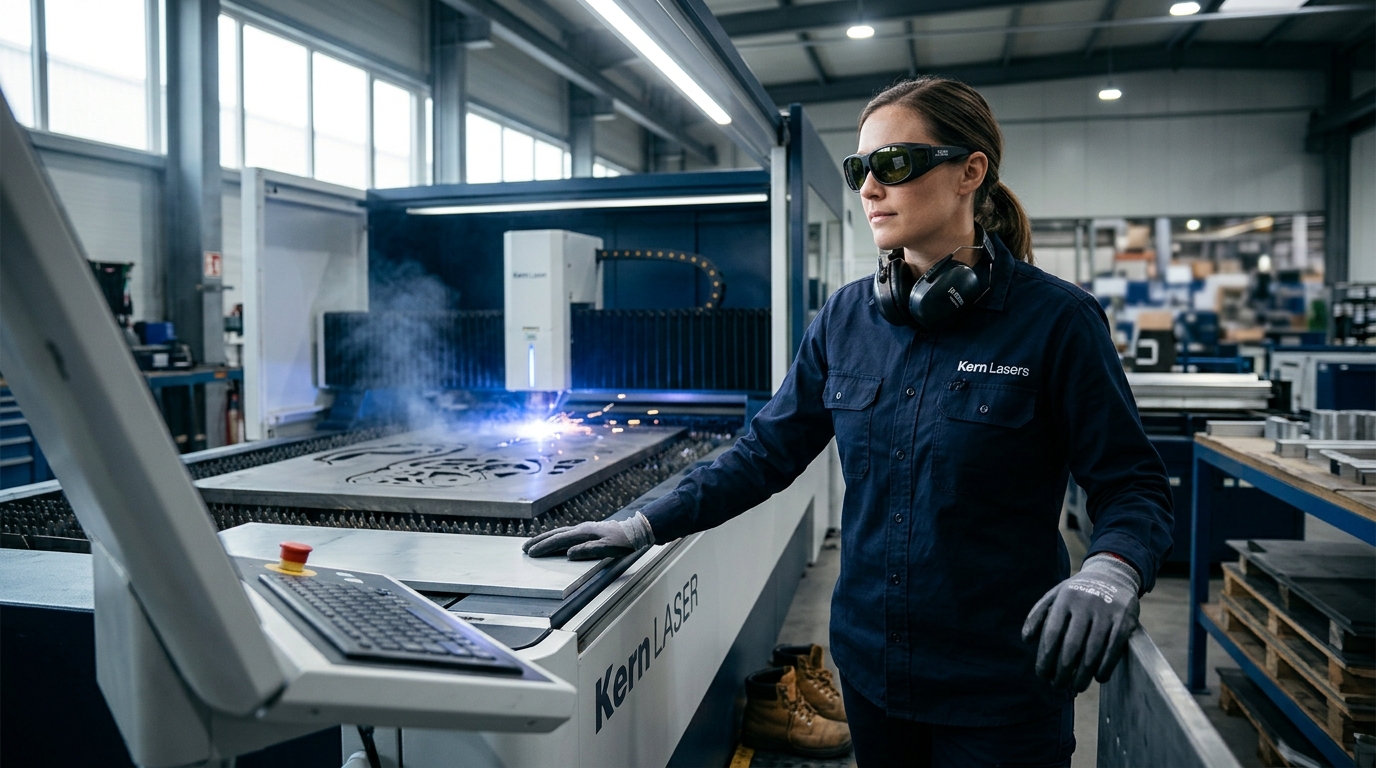
Operating industrial laser systems requires strict adherence to safety standards to prevent injury and equipment damage. Personal protective equipment (PPE) is the final line of defense in a safe laser environment. This list details the critical items every operator must wear when working with Class 4 laser systems, such as those manufactured by Kern Laser Systems.
1. Laser Safety Eyewear
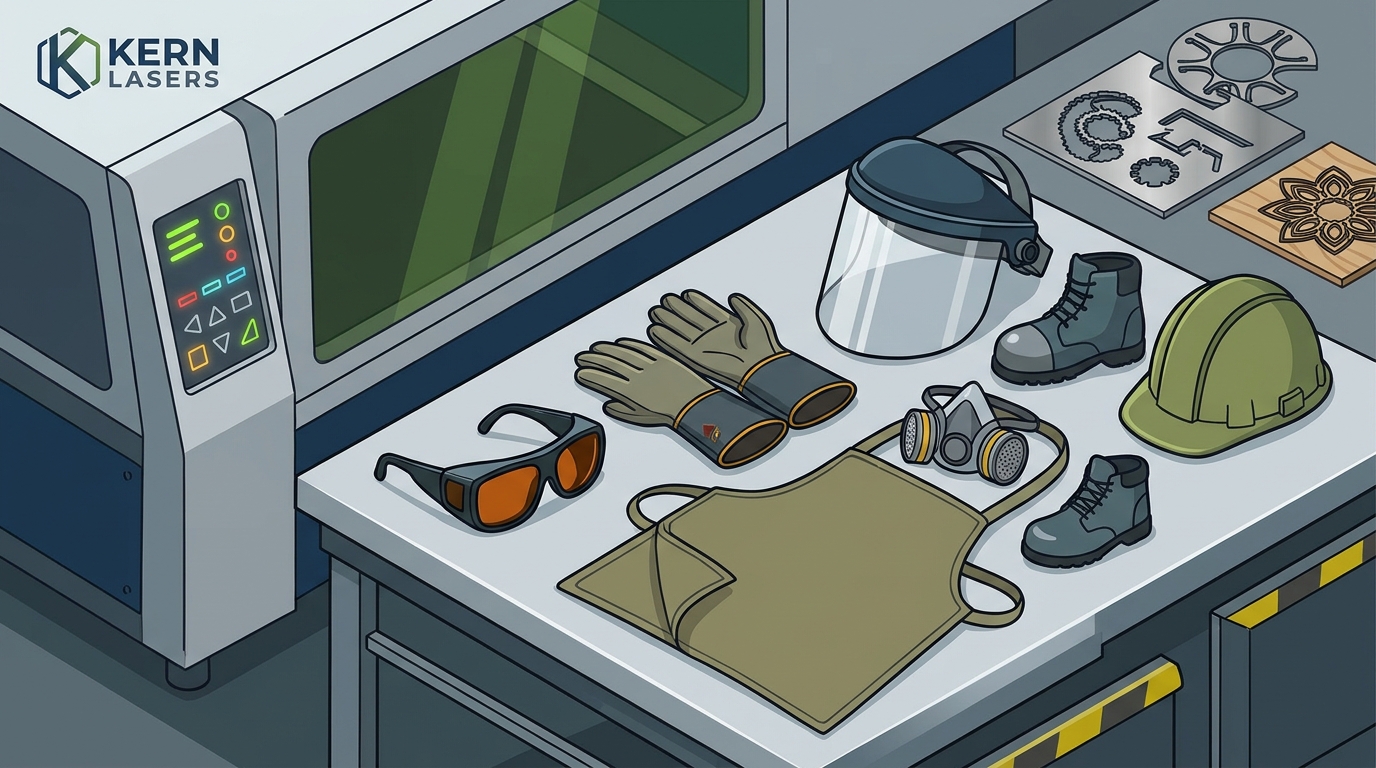
Wear ANSI Z136.1 compliant eyewear rated for your specific laser wavelength. Laser safety glasses are not one-size-fits-all; they must be selected based on the laser's wavelength and power output. For CO2 lasers, which operate at 10.6 microns, operators require specific infrared-blocking eyewear. Fiber lasers, operating at 1.06 microns, require different optical filters. Wearing the wrong eyewear can lead to severe eye damage, as the lenses may not attenuate the specific beam energy effectively.
2. Flame-Resistant Clothing
Wear long-sleeved, flame-resistant (FR) clothing to prevent burns from sparks and debris. Laser cutting generates intense heat, sparks, and molten material that can ignite synthetic fabrics. Operators should wear 100% cotton or FR-rated materials that do not melt onto the skin. Avoid loose-fitting garments that could catch on moving machine parts. The goal is to minimize the surface area of skin exposed to potential thermal hazards.
3. Hearing Protection
4. Respiratory Protection
Utilize a respirator or rely on a robust fume extraction system to avoid inhaling toxic fumes. Cutting materials like plastics, coated metals, or treated woods releases particulates and gases that can be harmful when inhaled. While a well-maintained fume extraction system is the primary control, operators should still use appropriate respiratory protection if working in areas with high particulate density. Always check the Material Safety Data Sheet (MSDS) for the material being cut to determine the correct filter type.
5. Closed-Toe Safety Footwear
Wear steel-toed or composite-toe safety boots to protect against falling heavy materials. Laser cutting tables often hold large sheets of metal, wood, or acrylic that can shift or fall. Heavy materials dropping on feet can cause severe crush injuries. Safety footwear provides the necessary impact resistance and slip resistance required in a manufacturing environment. Ensure your boots meet ASTM F2413 standards for impact and compression protection.
6. Work Gloves
Wear heat-resistant gloves when handling hot materials or sharp edges. While operators should not touch the laser beam, they frequently handle materials that have just been cut. These materials can be extremely hot to the touch and may have sharp, burr-free edges that can still cause lacerations. Leather or Kevlar-lined gloves provide a barrier against heat and cuts. Remove gloves when operating the machine controls to prevent accidental entanglement.
7. Hard Hats
Wear a hard hat if working in areas with overhead hazards or during maintenance. In many laser cutting facilities, the need for a hard hat depends on the specific shop layout. If there are overhead pipes, beams, or if the laser is located in a shared manufacturing floor with forklift traffic, a hard hat is mandatory. It protects against impact injuries from falling objects or accidental bumps with fixed structures.
Choosing the Right PPE
Selecting the correct protective equipment depends on the specific laser type and material being processed. Always consult the Laser Safety 101 guidelines provided by your equipment manufacturer. For detailed information on safety features integrated into Kern Laser Systems, review the technical documentation for your specific model. When in doubt, err on the side of caution and wear the highest level of protection appropriate for the task.
Frequently Asked Questions
What is the difference between Class 2 and Class 4 laser safety requirements?
Class 2 lasers are low-power and generally safe for brief exposure, while Class 4 lasers are high-power industrial systems that require strict PPE, including specific eyewear and interlocks. Class 4 systems, like the LaserCELL, are enclosed to prevent beam escape, but operators still need PPE for material handling and maintenance.
Can I use regular sunglasses for laser protection?
No, regular sunglasses are not designed to block high-intensity laser beams and can shatter or allow dangerous levels of energy to pass through. You must use laser safety eyewear that is specifically rated for the wavelength and power of your laser system.
Do I need a respirator if my laser has a fume extractor?
A high-quality fume extractor is the primary method of air quality control, but a respirator may still be required if the extractor is insufficient or if you are working in a confined space. Always follow your facility's air quality monitoring results and safety protocols.
What materials are safe to wear around a laser?
Natural fibers like cotton and wool are generally safer than synthetics like polyester or nylon, which can melt and stick to the skin. Flame-resistant (FR) clothing is the best option for industrial laser environments.
Where can I find the safety manual for my Kern laser?
You can access technical support and manuals through the Kern Technical Support page. This resource provides access to documentation, tutorials, and safety guidelines for all Kern systems.