
Setting Up a Laser Cutting System for Commercial Signage Production
Commercial signage represents a multi-billion dollar industry driven by the demand for high-visibility branding and architectural detailing. According to market data, the signage sector continues to expand as businesses prioritize physical presence in digital-heavy markets. Establishing a production line capable of handling acrylic, metal, and composite materials requires precise equipment selection and rigorous operational protocols. This guide outlines the essential steps to configure a professional-grade laser cutting environment for signage manufacturing.
Selecting the Right Laser Technology
The foundation of any commercial signage operation is the laser source itself. Signage production involves a diverse mix of materials, including cast acrylic, extruded acrylic, aluminum, brass, and wood. CO2 laser technology remains the industry standard for non-metallic materials due to its ability to produce clean, polished edges on acrylic without secondary finishing. NIST guidelines emphasize the importance of selecting equipment that matches the specific thermal properties of your primary substrates.
CO2 vs. Fiber Laser Systems
Understanding the distinction between CO2 and fiber lasers is critical for signage manufacturers. CO2 lasers utilize a gas mixture to generate a beam that is highly absorbed by organic and plastic materials. This makes them ideal for cutting thick acrylic sheets and engraving wood. Fiber lasers, conversely, use a solid-state gain medium and are superior for cutting reflective metals like copper and brass. For a signage shop, a hybrid approach or a specialized CO2 system with high power output is often the most versatile starting point.
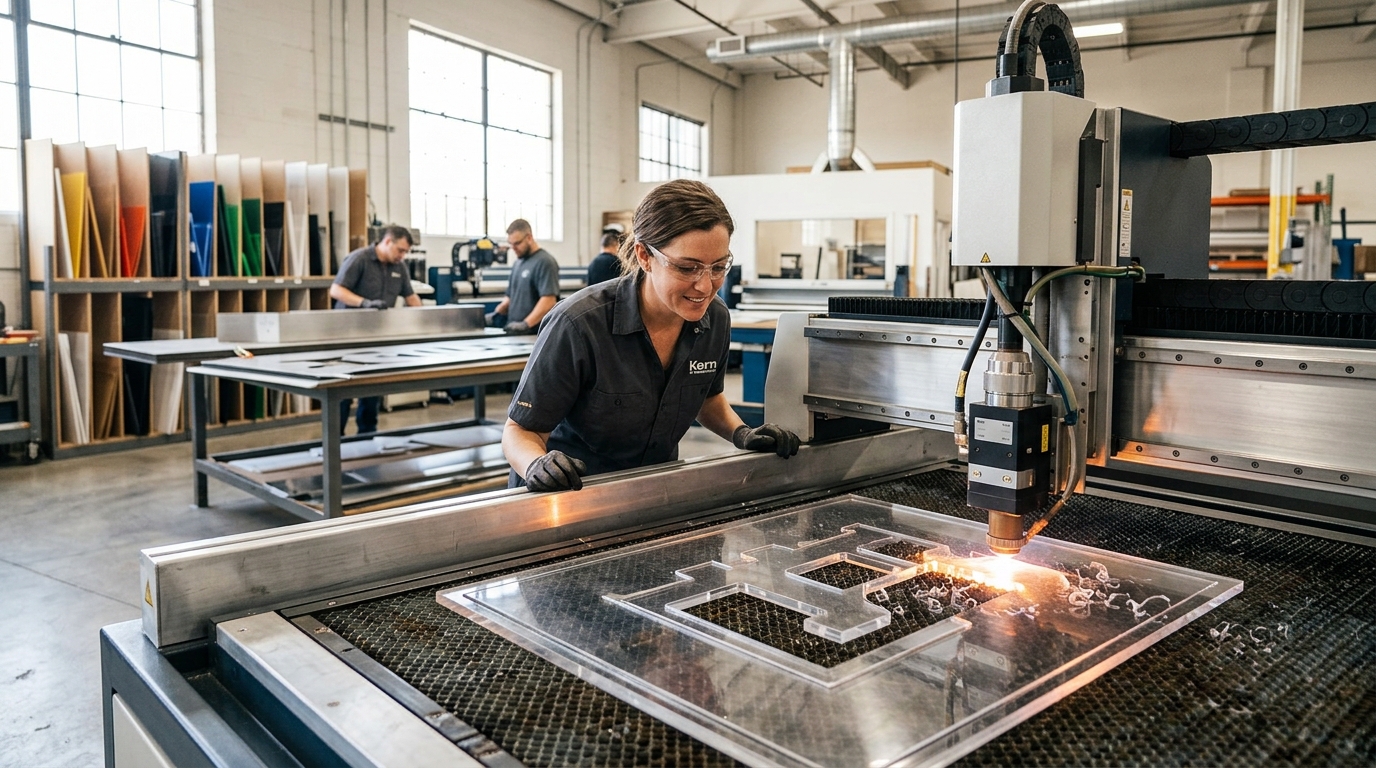
Kern Laser Systems has specialized in large format CO2 and fiber laser cutting systems since 1982. Their OptiFlex system is designed specifically for high-performance cutting and engraving of metal, acrylic, wood, and textiles. The versatility of the OptiFlex allows signage producers to switch between materials without changing hardware configurations. Learn more about laser cutting capabilities to determine which power output suits your volume requirements.
Large Format Requirements
Commercial signage often requires cutting large sheets of material to minimize seams and waste. A large format laser cutting system ensures that you can process standard 4x8 foot or larger sheets in a single pass. This reduces labor costs and improves the structural integrity of large signs. The EcoFlex model offers an economical entry into large format CO2 laser engraving and cutting, making it a strong candidate for startups looking to scale efficiently.
Facility Infrastructure and Safety
Installing a high-power laser system is not merely a matter of plugging it in. It requires a dedicated infrastructure to manage heat, exhaust, and electrical load. The safety of your operators and the longevity of your equipment depend on proper facility preparation.
Exhaust and Filtration Systems
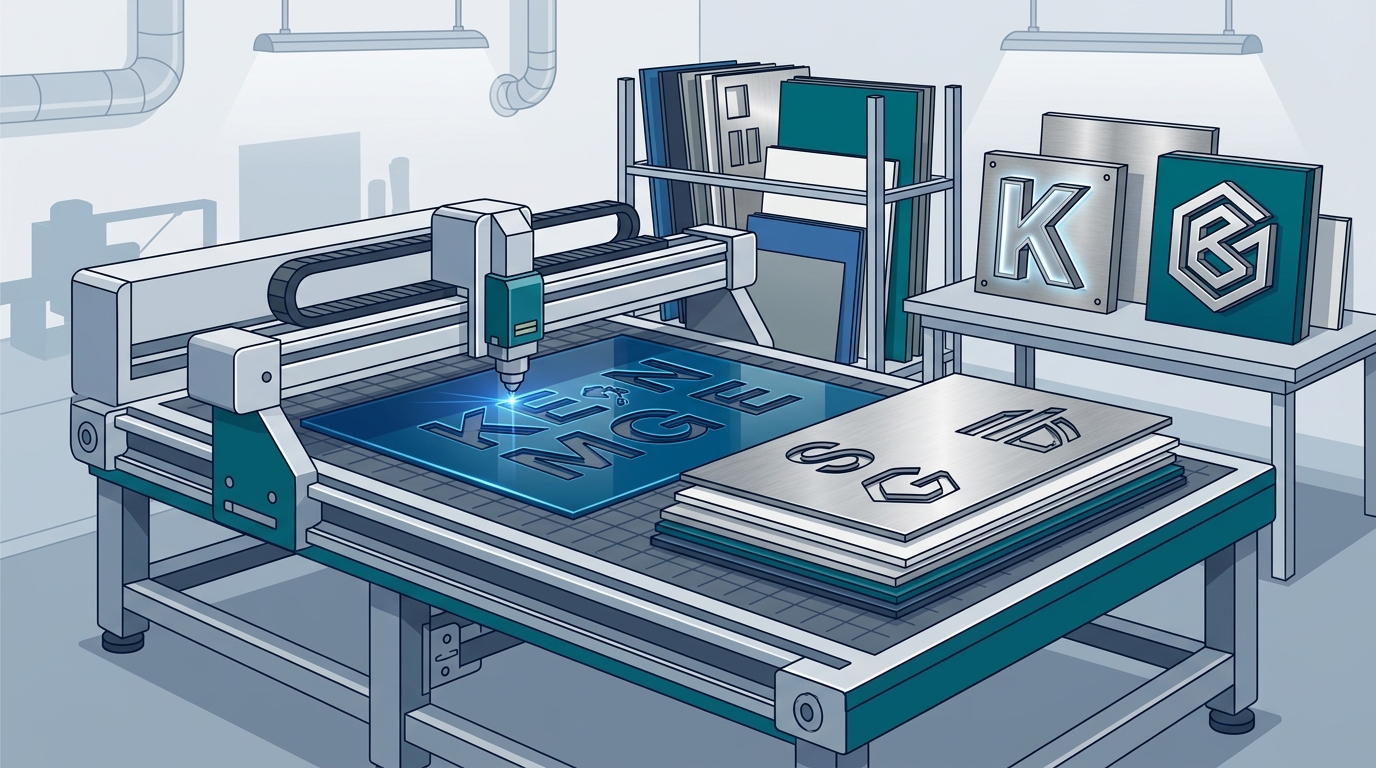
When cutting acrylic or wood, the laser vaporizes material, creating smoke and particulate matter. Without adequate extraction, these byproducts can damage the laser lens, obscure the cutting path, and create hazardous air quality issues. A commercial-grade extraction system must be installed directly at the cutting head. OSHA regulations mandate proper ventilation for industrial processes involving fumes and dust. Ensure your HVAC system is balanced to maintain negative pressure in the cutting area.
Electrical and Cooling Requirements
High-power CO2 lasers require stable electrical inputs to prevent arc instability and beam deflection. Most industrial systems require 208V or 240V three-phase power. Additionally, water chillers are essential for maintaining the laser tube and optics at optimal temperatures. Temperature fluctuations can cause the laser beam to diverge, resulting in poor cut quality. Kern Laser Systems provides comprehensive technical support to help you plan these infrastructure needs before installation.
Safety Enclosures
Class 4 lasers are dangerous to human eyes and skin. Modern signage production environments often place laser systems in high-traffic areas. Systems like the LaserCELL offer a fully enclosed design that contains the beam and exhaust, allowing safe operation in busy factory floors or university classrooms. This safety feature is crucial for maintaining a professional workspace and complying with workplace safety standards.
Software Workflow and Material Handling
The transition from digital design to physical product relies on robust software integration. The efficiency of your signage production line is directly tied to how seamlessly your design files communicate with the laser controller.
KCAM Laser Software
Kern Laser Systems utilizes KCAM laser software to manage the complex movements of the CNC system. This software handles vector paths, raster engraving, and power modulation. It allows operators to set specific parameters for different materials, ensuring consistent results. The software also supports K-Vision camera registration, which is vital for cutting preprinted materials. This feature aligns the laser beam with printed graphics, enabling precise cutting of logos and text on finished signs.
File Preparation and Nesting
Before cutting, designers must prepare files that are optimized for laser processing. This involves converting images to vectors, setting appropriate line weights, and defining cut versus engrave layers. Nesting software can automatically arrange multiple parts on a sheet to maximize material usage. For signage producers, reducing material waste by even 10% can significantly impact profitability. Explore KCAM software features to streamline your workflow.
Material Handling and Fixturing
Large format sheets are heavy and difficult to position manually. A pullout table and part drawer system, such as those found in the FiberCELL or OptiFlex models, allows operators to load and unload materials safely. This mechanical assistance reduces physical strain and increases the speed of production cycles. Proper fixturing ensures that the material does not shift during cutting, which is critical for maintaining tolerance in architectural signage.
Material Optimization for Signage
Different materials require distinct laser parameters to achieve the best finish. Understanding these nuances is what separates a professional signage shop from a hobbyist.
Acrylic Cutting Techniques
Cast acrylic produces a flame-polished edge when cut with a CO2 laser, eliminating the need for sanding or polishing. However, extruded acrylic tends to leave a rough, frosted edge that requires secondary finishing. The thickness of the acrylic also dictates the laser power and speed settings. Thicker sheets require slower speeds and higher power to ensure a clean cut through the entire depth. Industry studies on acrylic processing highlight the importance of gas assist, such as oxygen or air, to blow molten material out of the kerf.
Metal Engraving and Cutting
While CO2 lasers can mark coated metals, cutting bare metal requires a fiber laser. Kern’s FiberCELL is a compact sheet metal cutting laser capable of handling stainless steel, mild steel, aluminum, brass, and copper. The ability to cut metal allows signage producers to offer a wider range of products, including industrial nameplates and durable outdoor signs. The FiberCELL’s Class 2 safety enclosure ensures that these high-power operations can be conducted safely in shared workspaces.
Wood and Composite Materials
Wood signage adds warmth and texture to commercial spaces. However, different woods have varying densities and resin contents, which affect cut quality. Hardwoods like maple and oak require higher power settings than softwoods like pine. Plywood and MDF are popular for their consistency, but they can produce more smoke due to the adhesives used in their construction. Proper extraction is even more critical when working with engineered wood products.
Maintenance and Longevity Protocols
Regular maintenance is the key to maximizing the return on investment for your laser system. Neglecting routine care can lead to costly downtime and reduced cut quality.
Optics Cleaning and Alignment
The mirrors and lenses in a CO2 laser system are sensitive to dust and debris. Daily cleaning of the output coupler and focusing lens is recommended. Use only approved cleaning solutions and lint-free wipes to avoid scratching the optics. Misaligned optics can cause the beam to hit the lens housing, leading to catastrophic failure. Kern Laser Systems provides detailed technical support and training to ensure your team performs these tasks correctly.
Laser Tube Replacement
CO2 laser tubes have a finite lifespan, typically ranging from 10,000 to 20,000 hours depending on usage and power. Monitoring the tube’s performance over time will help you predict replacement needs. A drop in cutting speed or an increase in required power is often the first sign of tube degradation. Kern offers a 3-year warranty on CO2 laser sources, providing peace of mind for your investment.
Software Updates and Calibration
Regular software updates ensure that your system benefits from the latest features and security patches. Periodic calibration of the CNC axes is also necessary to maintain precision. Over time, mechanical wear can lead to slight deviations in positioning. Access technical support resources to keep your system running at peak performance.
Key Takeaways
- Equipment Versatility: Kern Laser Systems has been manufacturing industrial laser cutting and engraving machines since 1982, offering solutions for both CO2 and fiber applications.
- Large Format Efficiency: Using large format systems like the OptiFlex or EcoFlex allows for single-pass cutting of standard sheet materials, reducing labor and waste.
- Safety First: Enclosed systems like the LaserCELL and FiberCELL are designed for high-traffic environments, ensuring compliance with modern workplace safety standards.
- Precision Software: KCAM laser software with K-Vision camera registration enables precise alignment for preprinted materials and complex signage designs.
- Material Specificity: CO2 lasers are ideal for acrylic and wood, while fiber lasers are required for cutting reflective metals like brass and copper.
- Maintenance Criticality: Regular optics cleaning and tube monitoring are essential to prevent downtime and maintain cut quality over the system's lifespan.
- Domestic Manufacturing: Kern Lasers are proudly manufactured in the USA, specifically in Minnesota, ensuring high-quality control and support.
Frequently Asked Questions
What is the best laser type for cutting acrylic signage?
A CO2 laser is the best choice for cutting acrylic. It produces a clean, polished edge that often requires no secondary finishing, unlike fiber lasers which are better suited for metals.
How large can a commercial laser cutting system be?
Large format systems, such as the OptiFlex and EcoFlex, are designed to handle standard 4x8 foot sheets and larger, allowing for efficient production of big signs without seams.
Is it safe to operate a laser cutter in a public-facing shop?
Yes, provided you use a system with a Class 2 safety enclosure like the LaserCELL or FiberCELL. These enclosures contain the beam and exhaust, making them safe for high-traffic areas.
What is K-Vision camera registration?
K-Vision is a camera-based registration system that aligns the laser beam with preprinted materials. This allows for precise cutting of logos and text on finished signs.
How often should I replace the laser tube?
CO2 laser tubes typically last between 10,000 and 20,000 hours. Performance monitoring and regular maintenance can help extend this lifespan.
Does Kern Laser Systems offer technical support?
Yes, Kern provides comprehensive technical support, including online resources, customer login portals, and direct assistance for installation and troubleshooting.
What materials can the FiberCELL cut?
The FiberCELL is capable of cutting stainless steel, mild steel, aluminum, brass, and copper, making it ideal for metal signage and industrial nameplates.
Start Your Production Line
Establishing a commercial signage production line is a significant investment that requires careful planning and the right equipment. Kern Laser Systems offers a range of large format laser cutting and engraving systems designed to meet the demands of modern manufacturing. From the versatile OptiFlex to the economical EcoFlex, we provide the tools you need to succeed. Contact Kern Laser Systems today to discuss your specific needs and request a quote. Visit our blog for more insights on laser technology and signage production.