
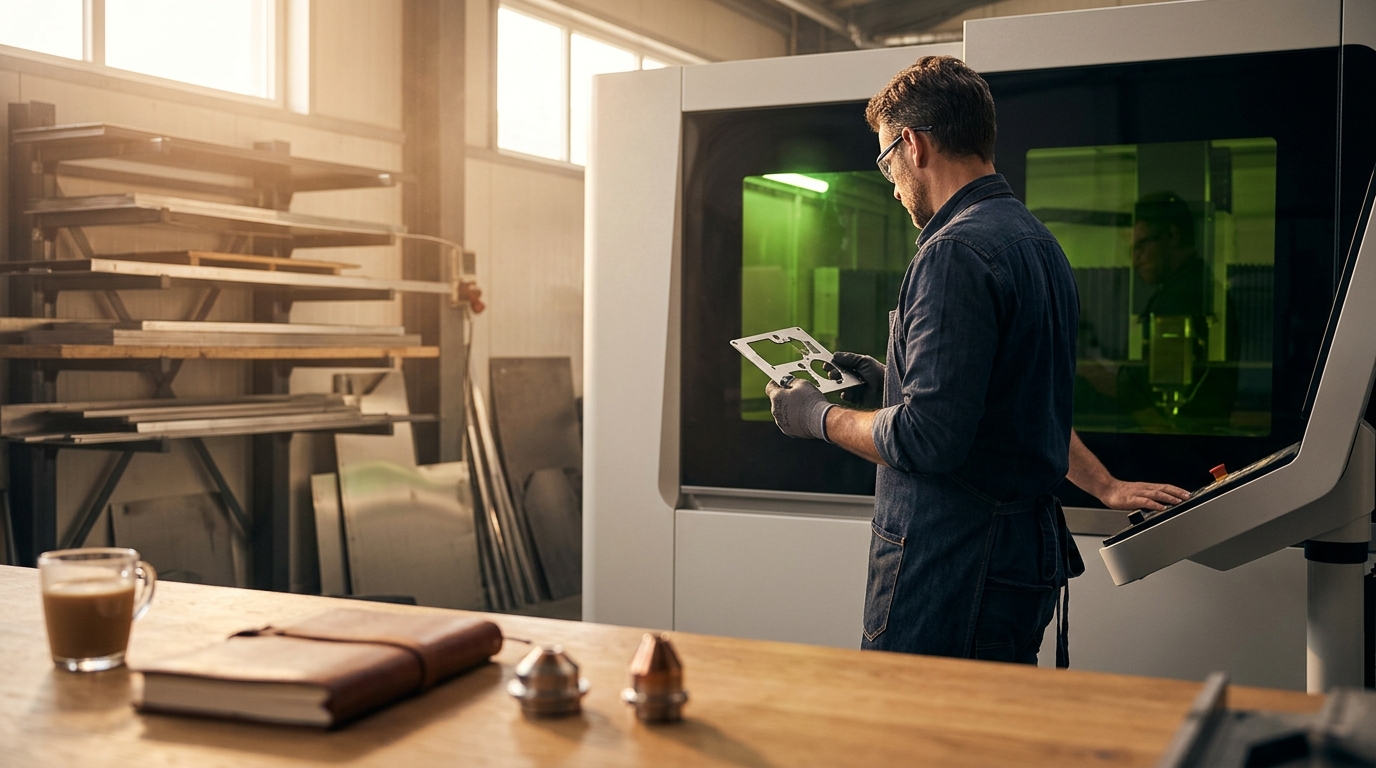
For most small to mid-sized metal fabrication shops, a 1 kW to 2 kW fiber laser is the optimal starting point. This power range efficiently cuts mild steel up to 10 mm and stainless steel up to 6 mm. Kern Lasers recommends evaluating your specific material thickness and production volume before selecting a higher wattage system.
Understanding Power Requirements
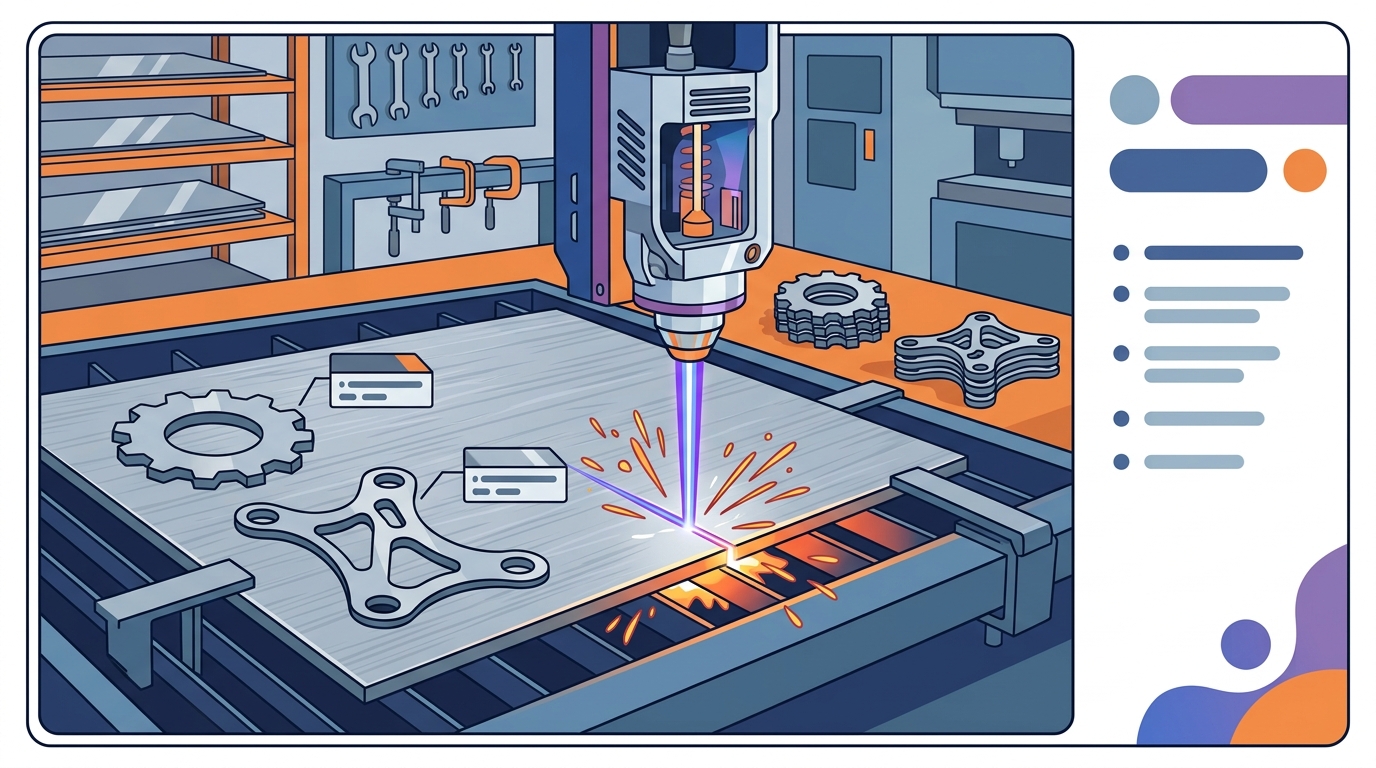
Fiber laser wattage is the primary determinant of cutting speed and maximum material thickness. Higher wattage allows the beam to melt and eject molten metal more rapidly. This directly impacts your shop's throughput and operational costs. Understanding the relationship between power and material is the first step in selecting the right machine.
For mild steel, a 1 kW laser typically cuts up to 10 mm thick. A 2 kW laser extends this capability to approximately 20 mm. For stainless steel, the limits are lower due to its higher melting point and reflectivity. A 1 kW system handles up to 6 mm, while a 2 kW system manages up to 12 mm. Aluminum requires even more power for the same thickness due to its high thermal conductivity.
It is a common misconception that more power is always better. If your primary work involves thin sheet metal, a 3 kW laser may not provide a significant speed advantage over a 1 kW unit. The extra cost may not yield a proportional return on investment. You must match the laser's capability to your actual production needs.
Material Specific Considerations
Different metals react differently to laser energy. Mild steel is the easiest to cut and requires the least power. Stainless steel is more challenging and requires a higher wattage for the same thickness. Aluminum is the most difficult common metal to cut with a fiber laser. It requires the highest power levels to achieve a clean cut.
When evaluating your work, list the specific materials you process. If you primarily cut mild steel, a 1 kW laser is likely sufficient. If you frequently work with stainless steel or aluminum, you should consider a 2 kW or 3 kW system. The challenges of cutting aluminum are well documented and require careful power selection.
Material thickness is just one factor. The quality of the cut edge also matters. Higher wattage lasers can cut thicker materials, but they may produce a rougher edge if not properly tuned. A lower wattage laser might cut a thinner material with a superior finish. You must balance speed and quality based on your customer requirements.
Production Volume and ROI
Production volume is a critical factor in determining the required wattage. High-volume shops benefit from the increased speed of higher wattage lasers. The initial cost of a 3 kW laser is higher than a 1 kW unit. However, if you are running the machine 24/7, the faster cutting speeds can pay for the difference in a shorter time.
For shops with lower production volumes, a 1 kW laser may be the more economical choice. The lower purchase price and lower operating costs can result in a better return on investment. You should calculate the cost per cut for your typical jobs. This analysis will reveal the true economic impact of different wattage levels.
Beyond Wattage: Other Key Factors
Wattage is not the only specification that matters. Beam quality, measured by M2, is a critical factor in cutting performance. A lower M2 value indicates a tighter, more focused beam. This results in cleaner cuts and faster processing speeds. High-quality beam delivery systems are essential for maximizing the potential of your laser power.
The cutting head and nozzle design also impact performance. A well-designed cutting head ensures consistent focus and gas flow. This is particularly important when cutting thicker materials. The five important features of a metal cutting laser include beam focus, nozzle design, and software capabilities. These elements work together to determine the overall performance of your system.
Software and automation features can also influence your decision. Advanced software allows for precise control of cutting parameters. This can optimize speed and quality for different materials. Automation features, such as automatic focus control, can improve consistency and reduce operator error. These features can make a lower wattage laser more effective for certain applications.
Making the Right Choice
Selecting the right fiber laser wattage requires a careful analysis of your specific needs. Consider the materials you cut, the thicknesses you process, and your production volume. A 1 kW laser is ideal for thin sheet metal and low-volume work. A 2 kW laser offers a good balance of power and cost for mid-range applications. A 3 kW laser is best for high-volume shops cutting thicker materials.
Do not be swayed by marketing claims that higher wattage is always better. The best laser for your shop is the one that meets your current needs while allowing for future growth. Consult with a laser expert to help you make an informed decision. Kern Lasers provides detailed guidance on selecting the right power level for your application.
By carefully evaluating your requirements, you can choose a fiber laser that maximizes your productivity and profitability. The right wattage selection is a critical investment in your shop's future. Take the time to analyze your needs and make a decision that aligns with your business goals.
Key Takeaways
- 1 kW fiber lasers are suitable for mild steel up to 10 mm and stainless steel up to 6 mm.
- 2 kW lasers extend cutting capabilities to 20 mm mild steel and 12 mm stainless steel.
- Aluminum requires higher wattage than steel for the same thickness due to its thermal properties.
- Production volume is a key factor in determining the economic viability of higher wattage lasers.
- Beam quality and cutting head design are as important as wattage in determining performance.
- Consult with a laser expert to match your specific material and production needs to the right power level.
Frequently Asked Questions
What is the difference between 1 kW and 2 kW fiber lasers?
A 2 kW fiber laser cuts thicker materials and at faster speeds than a 1 kW laser. The 2 kW unit is more expensive but offers greater versatility for mid-range fabrication work.
Can a 1 kW laser cut aluminum?
Yes, a 1 kW laser can cut thin aluminum, typically up to 3-4 mm. Thicker aluminum requires a higher wattage laser, such as 2 kW or 3 kW.
Is a 3 kW laser overkill for small shops?
For many small shops, a 3 kW laser may be overkill. A 1 kW or 2 kW laser is often sufficient for typical sheet metal work. Evaluate your specific material thicknesses before upgrading.
How does beam quality affect cutting speed?
Higher beam quality (lower M2 value) allows for a tighter focus, which increases cutting speed and improves edge quality. This is a critical factor in laser performance.
What is the most important factor in choosing a fiber laser?
The most important factor is matching the laser's capabilities to your specific material and production needs. Wattage is just one part of the equation; beam quality and software are also crucial.