
How to Evaluate Fiber Laser Cutting Systems for Metal Fabrication
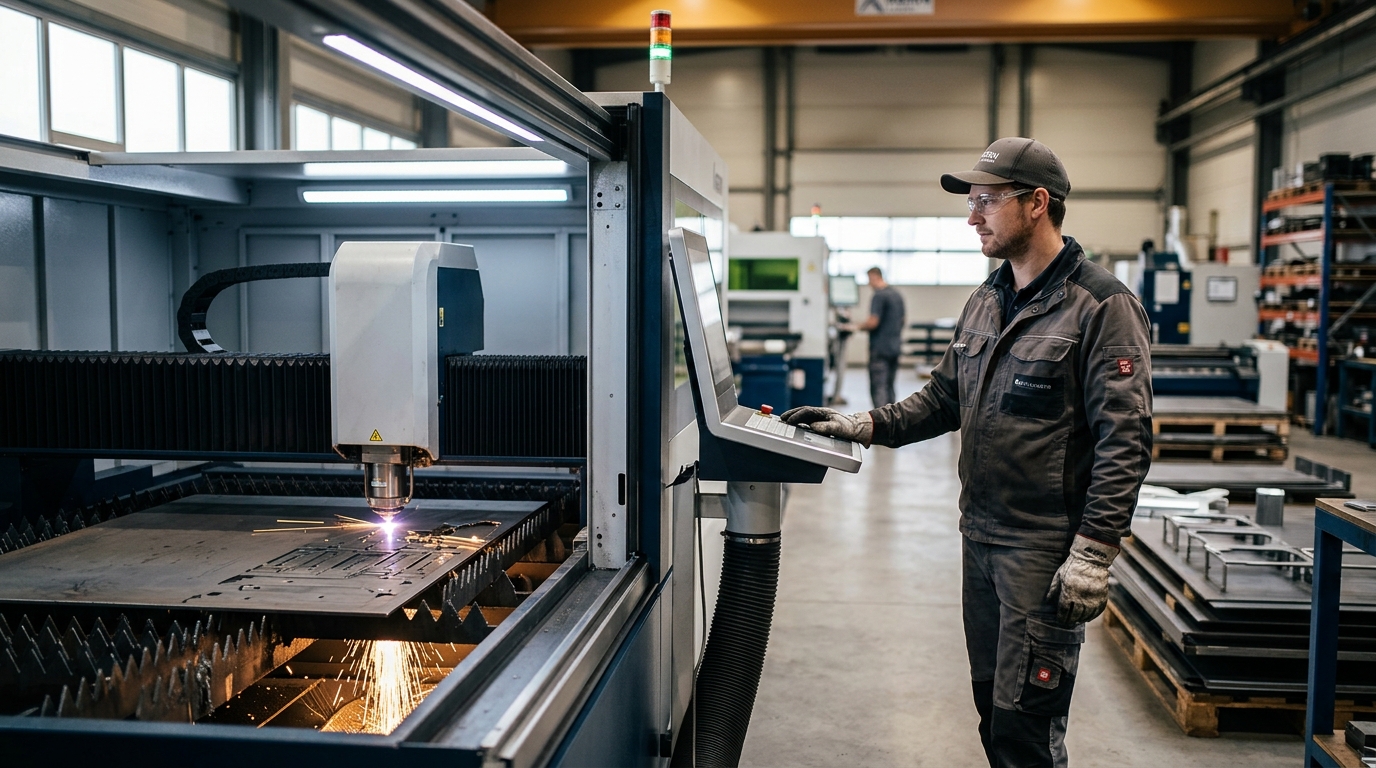
Evaluating a fiber laser cutting system requires matching laser power, assist gas capabilities, and material compatibility to your specific production goals. This guide provides a structured framework for assessing these critical factors to ensure your investment maximizes throughput and profitability. We will cover power selection, gas economics, automation, and service infrastructure to help you make an informed decision.
Laser Power Selection
Selecting the correct laser power is the most significant financial decision in acquiring a fiber laser system. Fiber laser power is the measure of energy output, typically expressed in kilowatts (kW), which directly dictates the maximum thickness of metal a machine can cut. For most sheet metal fabrication shops, the choice between 1kW, 2kW, and 3kW systems defines the scope of your business capabilities.
Matching Power to Thickness
Higher power allows for thicker cuts and faster processing speeds on thinner materials. A 1kW system is ideal for thin gauge sheet metal, such as mild steel up to 10mm or aluminum up to 6mm. If your primary work involves thicker plate or high-volume thin sheet, a 2kW or 3kW system provides the necessary headroom. At Kern Laser Systems, the FiberCELL is available in 1kW, 2kW, and 3kW configurations, allowing you to scale power to your specific material mix.
Throughput vs. Capital Cost
While higher power increases the initial capital cost, it often reduces the cost per part. Faster cutting speeds mean more parts per hour, which can offset the higher purchase price through increased revenue. Evaluate your current backlog and future growth projections. If you are consistently running your current equipment at 100% capacity, upgrading to a higher power unit is a strategic move to eliminate bottlenecks.
Assist Gas Requirements
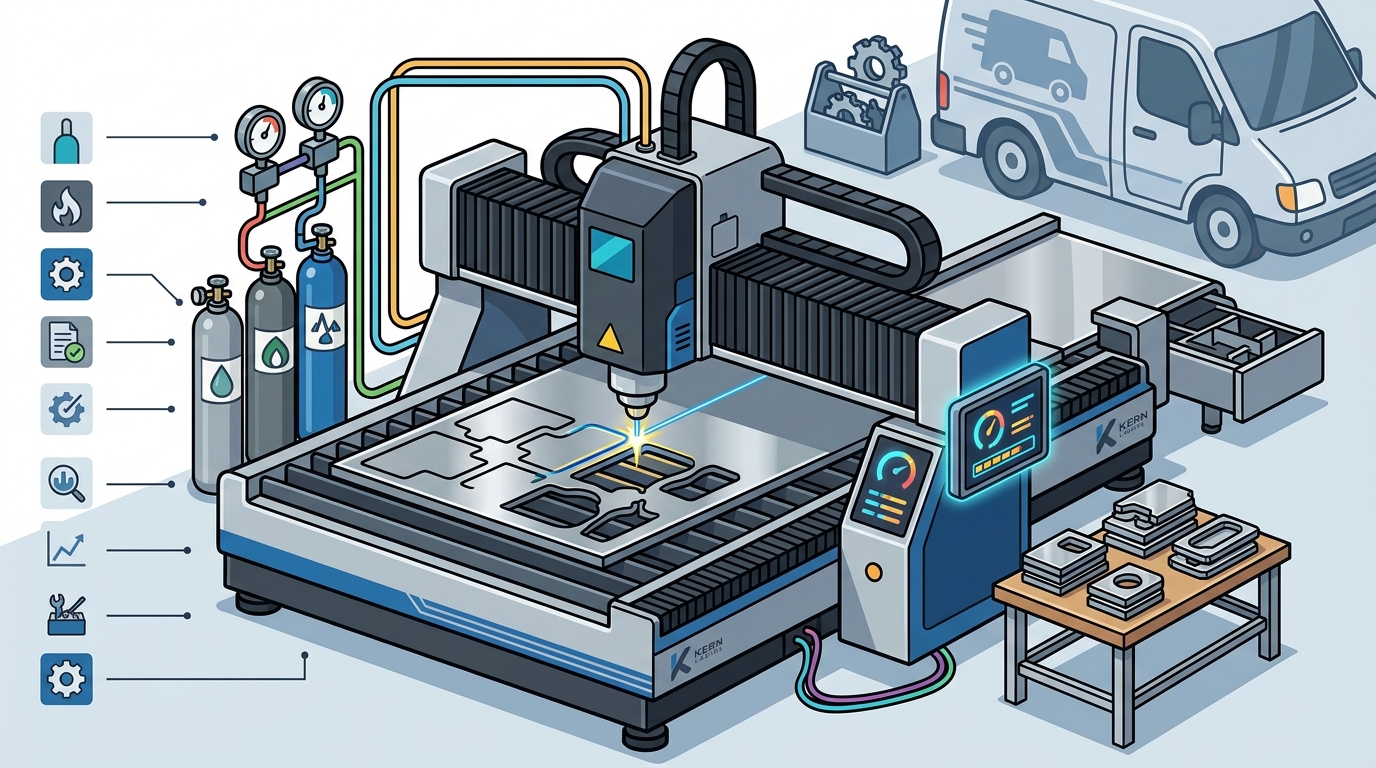
Assist gas is a compressed gas used to blow away molten metal from the kerf during the cutting process. The type of gas you use significantly impacts cut quality, speed, and edge finish. Understanding the requirements for different gases is essential for evaluating a fiber laser system's capabilities.
Oxygen vs. Nitrogen
Oxygen is the standard assist gas for cutting mild steel. It reacts exothermically with the steel, adding energy to the cut and allowing for thicker cuts at lower power levels. However, oxygen cutting produces an oxidized edge, which may require secondary finishing. Nitrogen is used for cutting stainless steel, aluminum, and copper, as it prevents oxidation and produces a clean, bright edge. Nitrogen cutting is generally slower than oxygen cutting for the same thickness of mild steel.
Gas Pressure and Flow
The pressure and flow rate of the assist gas must be sufficient to clear the kerf completely. Insufficient gas pressure can lead to dross, which is molten metal that solidifies below the cut edge. When evaluating a system, ensure the included gas supply unit or your existing infrastructure can deliver the required pressure and flow rates for your primary materials. The sheet metal laser cutter systems from Kern are designed to work with standard industrial gas supplies, ensuring compatibility with your existing setup.
Material Compatibility
Fiber lasers are highly effective for cutting a wide range of metals, but their performance varies by material. Material compatibility is the ability of a laser system to process specific metals with acceptable quality and speed. Understanding the unique properties of each metal helps you determine if a fiber laser is the right tool for your job mix.
Common Metals
Mild steel is the most common material cut with fiber lasers, benefiting from the exothermic reaction with oxygen. Stainless steel requires nitrogen to prevent oxidation, and its reflectivity demands precise beam control. Aluminum is highly reflective and conductive, making it more challenging to cut than steel. It requires higher power and careful parameter tuning to achieve a clean cut. Brass and copper are also reflective and require high-power fiber lasers to process effectively.
Reflectivity and Beam Control
Reflective metals can reflect the laser beam back into the optical path, potentially damaging the laser source. Modern fiber lasers incorporate protective optics and beam control systems to mitigate this risk. When evaluating a system, ask about the manufacturer's approach to handling reflective materials. The guide to laser cutting aluminum provides detailed insights into managing these challenges.
Assist Gas Economics
The cost of assist gas is a major ongoing expense in fiber laser operation. Assist gas economics is the analysis of the cost per part based on gas consumption, type, and efficiency. Optimizing gas usage can significantly reduce operating costs and improve profitability.
Cost Per Part
Nitrogen is more expensive than oxygen, but it may be necessary for certain materials. Calculate the cost per part for each material you cut. For example, cutting stainless steel with nitrogen will have a higher gas cost than cutting mild steel with oxygen. However, the value of a clean, oxide-free edge may justify the higher cost. Track your gas consumption and correlate it with production output to identify areas for optimization.
Efficiency and Waste
Efficient cutting parameters minimize gas usage. Excessive gas flow wastes money and can actually degrade cut quality. Modern laser control software allows for precise control of gas flow, ensuring that only the necessary amount is used. The KCAM laser software includes features that help operators optimize gas usage for different materials and thicknesses.
Automation and Workflow
Automation is a key driver of productivity in modern metal fabrication. Automation and workflow is the integration of a laser system with other processes to minimize manual handling and maximize throughput. Evaluating a system's automation capabilities is crucial for high-volume production.
Material Handling
Manual loading and unloading of sheet metal is time-consuming and labor-intensive. Automated material handling systems, such as pallet changers and robotic loaders, can significantly increase uptime. These systems allow the laser to cut continuously while operators load and unload materials. When evaluating a system, consider the space available in your facility and the level of automation that fits your production volume.
Software Integration
Seamless integration with your CAD/CAM software is essential for efficient workflow. The ability to import design files directly into the laser control software reduces setup time and minimizes errors. Look for systems that support common file formats and offer intuitive user interfaces. The laser cutting guide covers the basics of software integration and workflow optimization.
Service Infrastructure
Technical Support
Access to knowledgeable technical support is essential for troubleshooting issues and optimizing performance. Look for manufacturers that offer responsive support channels, such as phone, email, and remote diagnostics. The technical support team at Kern Laser Systems is available to assist with any questions or issues you may encounter.
Spare Parts and Training
Availability of spare parts is crucial for minimizing downtime. Ensure that the manufacturer has a reliable supply chain for critical components, such as lenses, nozzles, and electronics. Comprehensive training programs for operators and maintenance staff are also important. Training ensures that your team can perform routine maintenance and basic troubleshooting, reducing reliance on external support.
Key Takeaways
- Match laser power to your primary material thickness and production volume.
- Understand the differences between oxygen and nitrogen assist gases and their impact on cut quality and cost.
- Evaluate material compatibility, especially for reflective metals like aluminum and copper.
- Optimize assist gas usage to reduce operating costs and improve cut quality.
- Consider automation options to increase throughput and minimize manual handling.
- Choose a manufacturer with a robust service infrastructure, including technical support, spare parts, and training.
- Use software features to optimize cutting parameters and gas usage.
- Calculate the cost per part to determine the most economical gas and power combination for your materials.
Frequently Asked Questions
What is the difference between CO2 and fiber lasers for metal cutting?
Fiber lasers are more efficient and have a smaller spot size, making them faster and more precise for metal cutting. CO2 lasers are more versatile for non-metal materials. You can learn more about this in our FAQ on CO2 vs. fiber lasers.
How much power do I need for my metal fabrication shop?
It depends on the thickness of the metal you cut. A 1kW system is suitable for thin sheet, while 2kW or 3kW systems are better for thicker plate. Consult with a laser expert to determine the right power for your specific needs.
Can a fiber laser cut aluminum?
Yes, fiber lasers can cut aluminum, but it is more challenging than cutting steel due to its reflectivity and thermal conductivity. Higher power and careful parameter tuning are required.
What is the cost of assist gas?
The cost of assist gas varies by type and region. Nitrogen is more expensive than oxygen. Track your gas consumption to calculate the cost per part.
How important is automation for a fiber laser?
Automation is crucial for high-volume production. It increases uptime and reduces labor costs. Consider your production volume when deciding on automation options.
What kind of support should I expect from a laser manufacturer?
Look for responsive technical support, availability of spare parts, and comprehensive training programs. A strong service infrastructure minimizes downtime and maximizes productivity.
How do I choose the right laser system for my business?
Evaluate your material mix, production volume, and budget. Consider the power, gas requirements, automation, and service infrastructure of each system. Consult with a laser expert to make an informed decision.
What is the role of software in laser cutting?
Software controls the laser, optimizes cutting parameters, and integrates with CAD/CAM systems. Intuitive and powerful software is essential for efficient workflow and high-quality cuts.
Can I upgrade my laser system later?
Some systems allow for power upgrades or the addition of automation features. Check with the manufacturer about upgrade options before making a purchase.
Where can I find more information about fiber lasers?
Visit the Kern Laser Blog for in-depth articles on laser cutting and engraving. You can also for a personalized consultation.
Conclusion
Evaluating a fiber laser cutting system is a complex process that requires careful consideration of multiple factors. By understanding laser power selection, assist gas requirements, material compatibility, gas economics, automation, and service infrastructure, you can make an informed decision that maximizes your return on investment. Kern Laser Systems offers a range of fiber laser systems designed to meet the diverse needs of metal fabrication shops. To discuss your specific requirements, for a personalized consultation.