
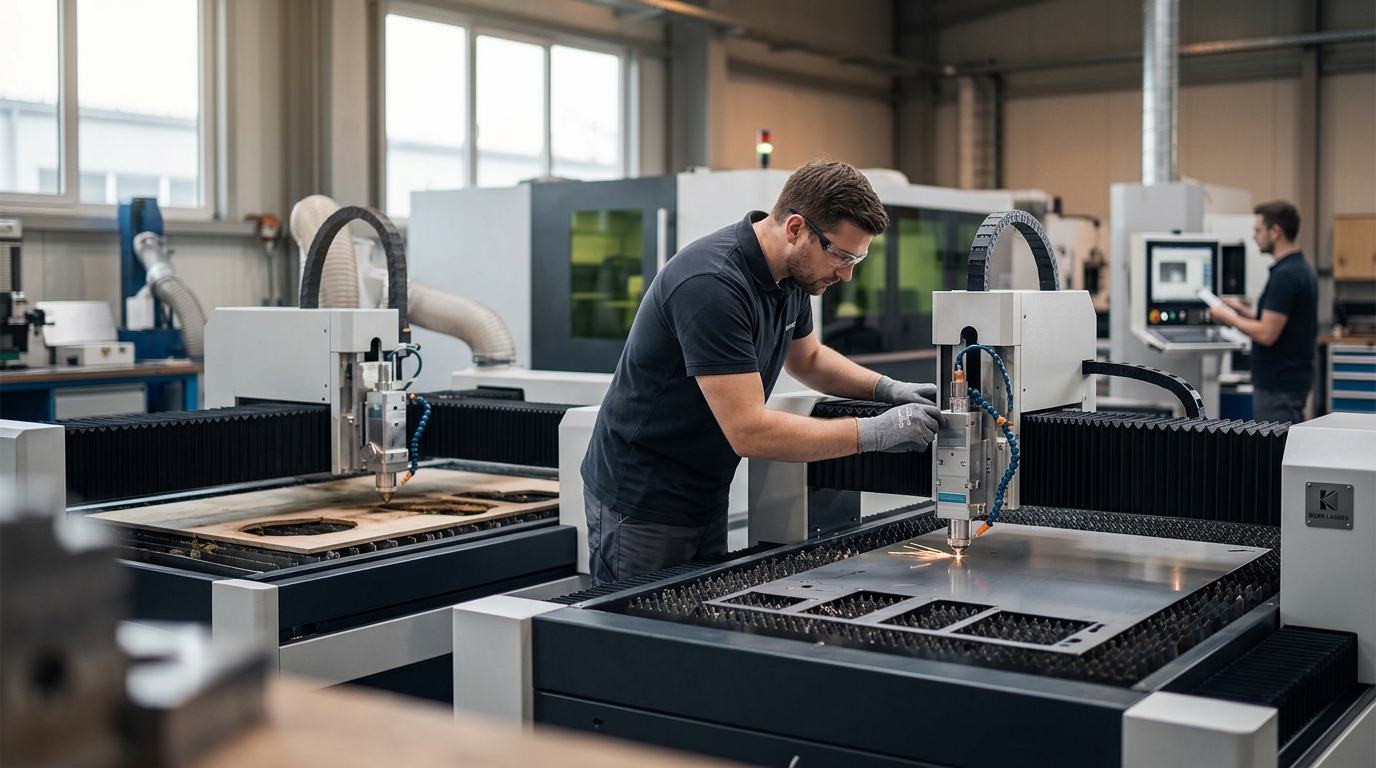
Industrial manufacturing is undergoing a rapid transformation driven by precision and speed. According to recent industry reports, the global laser cutting market is expanding at a significant rate, with businesses seeking equipment that maximizes throughput while minimizing operational costs. Choosing the right laser technology is not merely a technical decision but a strategic one that impacts your entire production workflow. This guide compares the two dominant technologies: CO2 and Fiber lasers, to help you determine which system aligns with your manufacturing goals. (Kern Customer Login Area)
Core Technology Differences
Understanding the fundamental mechanics of each laser type is the first step in making an informed decision. The primary difference lies in how the laser beam is generated and delivered to the material. (Laser Cutting and Laser)
How CO2 Lasers Work
A CO2 laser uses a gas mixture, primarily carbon dioxide, nitrogen, and helium, contained within a glass tube. An electrical discharge excites these gases, producing a laser beam that is then directed through a series of mirrors to the cutting head. This technology has been the industry standard for decades due to its ability to cut a wide variety of non-metallic materials. Industry experts note that CO2 lasers are particularly effective for materials that absorb infrared wavelengths efficiently.
How Fiber Lasers Work
Fiber lasers, on the other hand, use a solid-state gain medium. The laser is generated within a fiber optic cable and delivered directly to the workpiece. This method is highly efficient, converting a larger percentage of electrical energy into laser light compared to CO2 systems. Recent studies show that fiber lasers can achieve cutting speeds up to three times faster than CO2 lasers on thin metals, making them a preferred choice for high-volume metal fabrication.
Material Compatibility and Versatility
The versatility of a laser system is often defined by the range of materials it can process effectively. This is where the two technologies diverge most significantly.
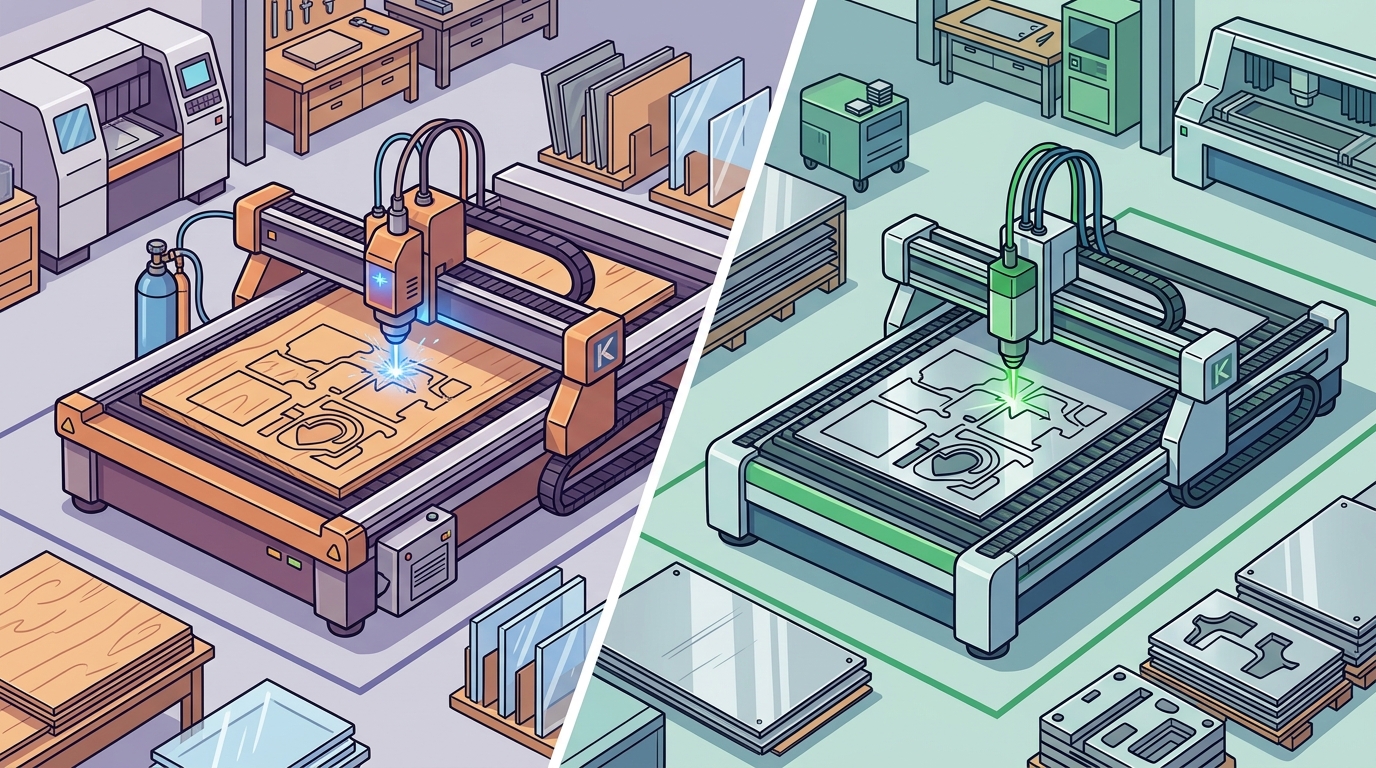
CO2 Laser Versatility
CO2 lasers are renowned for their ability to cut non-metals. They excel at processing acrylic, wood, leather, foam, and textiles. The beam quality allows for intricate engraving and precise cutting of these materials without excessive charring. For businesses involved in signage, awards, or custom fabrication, a CO2 laser is often the only viable option for these specific substrates.
Fiber Laser Precision on Metals
Fiber lasers are optimized for metal cutting. They can cut stainless steel, mild steel, aluminum, brass, and copper with exceptional precision. The shorter wavelength of fiber lasers is absorbed more efficiently by reflective metals, which can be challenging for CO2 systems. Manufacturing data indicates that fiber lasers provide cleaner edges on reflective metals, reducing the need for secondary finishing processes.
Efficiency and Operational Costs
Operational expenditure (OPEX) is a critical factor in the total cost of ownership for any industrial equipment. The efficiency of the laser source directly impacts your energy bills and maintenance schedules.
Energy Consumption
Fiber lasers are significantly more energy-efficient than CO2 lasers. They require less electrical power to generate the same amount of cutting power. Technical analyses reveal that fiber lasers can be up to three times more efficient than CO2 systems, leading to substantial savings over the lifespan of the machine.
Maintenance and Lifespan
CO2 lasers require regular maintenance, including the replacement of gas mixtures, mirrors, and the laser tube itself. The laser tube typically has a lifespan of several thousand hours. In contrast, fiber lasers have a much longer operational lifespan, often exceeding 100,000 hours. They have fewer moving parts and no gas tubes to replace, resulting in lower long-term maintenance costs.
Safety and Maintenance Requirements
Safety is paramount in any industrial environment. Both CO2 and fiber lasers require strict safety protocols, but the nature of the risks differs.
Safety Enclosures
Both laser types generate intense heat and bright light that can be hazardous to human eyes and skin. Kern Laser Systems addresses this by offering fully enclosed Class 2 safety enclosures for their FiberCELL and LaserCELL models. These enclosures allow the machines to be safely operated in high-traffic areas, such as factory floors and university classrooms, without compromising operator safety.
Operational Simplicity
Fiber lasers are generally easier to operate due to their solid-state design. They do not require the alignment of mirrors or the replenishment of gas, which simplifies daily operations. CO2 lasers require more frequent calibration and alignment to maintain optimal beam quality.
Kern Laser Systems Solutions
Kern Laser Systems has been a leader in the laser industry since 1982. Founded by Gerald Kern, the company has grown from supplying motion systems to manufacturing complete turnkey laser cutting and engraving solutions. Kern's headquarters in Wadena, Minnesota, is a hub of innovation, where over 50 full-time employees design and build each machine with pride.
OptiFlex: The Versatile CO2 Choice
The OptiFlex is Kern's most popular CO2 laser cutter and engraver. It is designed for high performance and versatility, capable of processing metal, acrylic, wood, textiles, and foam. This machine is ideal for businesses that require a single system to handle a diverse range of materials.
FiberCELL: The Metal Cutting Specialist
The FiberCELL is a compact sheet metal cutting laser that offers pure metal cutting capabilities. It can cut stainless steel, mild steel, aluminum, brass, and copper. The Class 2 safety enclosure makes it suitable for placement in busy factory floors, ensuring both productivity and safety.
EcoFlex: Economical Large Format Cutting
For businesses seeking an entry-level large format laser engraving and cutting system, the EcoFlex offers high productivity at an economical price. It is a well-known CO2 laser system that provides excellent value for small to medium-sized enterprises.
Comparison of Kern Laser Systems
| Feature | OptiFlex (CO2) | FiberCELL (Fiber) | EcoFlex (CO2) |
|---|---|---|---|
| Primary Material | Non-metals & Thin Metals | Metals | Non-metals |
| Safety Enclosure | Optional | Class 2 Enclosed | Open Frame |
| Best For | Versatile Fabrication | High-Speed Metal Cutting | Budget-Conscious Entry |
| Warranty | 3 Years on Laser Source | Standard Warranty | Standard Warranty |
Key Takeaways
- Technology Origin: Kern Laser Systems was founded in 1982 by Gerald Kern, establishing a legacy of over four decades in industrial laser manufacturing.
- Manufacturing Location: All Kern lasers are proudly manufactured in the USA, specifically in a 90,000 sq. ft. facility in Wadena, Minnesota.
- CO2 Versatility: CO2 lasers, like the OptiFlex, are superior for cutting non-metals such as acrylic, wood, and leather, offering broad material compatibility.
- Fiber Efficiency: Fiber lasers, such as the FiberCELL, offer higher energy efficiency and faster cutting speeds for metals, with a lifespan exceeding 100,000 hours.
- Safety Standards: Kern's FiberCELL and LaserCELL models feature Class 2 safety enclosures, allowing safe operation in high-traffic industrial and educational environments.
- Warranty Coverage: Kern provides a 3-year warranty on CO2 laser sources, demonstrating confidence in the durability and quality of their OptiFlex systems.
- Software Integration: Kern systems utilize KCAM Laser Software, which supports advanced features like K-Vision Camera registration for precise alignment of preprinted materials.
Frequently Asked Questions
What is the main difference between CO2 and Fiber lasers?
CO2 lasers use a gas mixture to generate a beam ideal for cutting non-metals and some metals, while Fiber lasers use a solid-state gain medium optimized for high-speed, efficient cutting of metals.
Can a CO2 laser cut metal?
Yes, CO2 lasers can cut thin metals, but they are less efficient and slower compared to Fiber lasers. They are primarily designed for non-metallic materials like acrylic, wood, and leather.
What is the lifespan of a Fiber laser source?
Fiber laser sources typically have a lifespan of over 100,000 hours, which is significantly longer than the few thousand hours typical for CO2 laser tubes.
Is it safe to operate a Kern laser in a classroom?
Yes, Kern's LaserCELL and FiberCELL models come with Class 2 safety enclosures, making them safe for use in high-traffic areas like university classrooms and busy factory floors.
Where are Kern Laser Systems manufactured?
Kern Laser Systems is proudly manufactured in the USA, with its headquarters and factory located in Wadena, Minnesota.
What materials can the OptiFlex cut?
The OptiFlex is a versatile CO2 laser system capable of cutting and engraving metal, acrylic, wood, textiles, and foam.
Does Kern offer financing options?
Yes, Kern Laser Systems offers financing options to help businesses acquire their laser cutting equipment. Visit the Contact page for more details.
Request Your Quote
Ready to upgrade your manufacturing capabilities? Whether you need the versatility of a CO2 laser or the speed of a Fiber laser, Kern Laser Systems has the solution. Contact our team today to discuss your specific needs and receive a personalized quote. Click here to request a quote and discover why thousands of manufacturers trust Kern for their laser cutting needs.