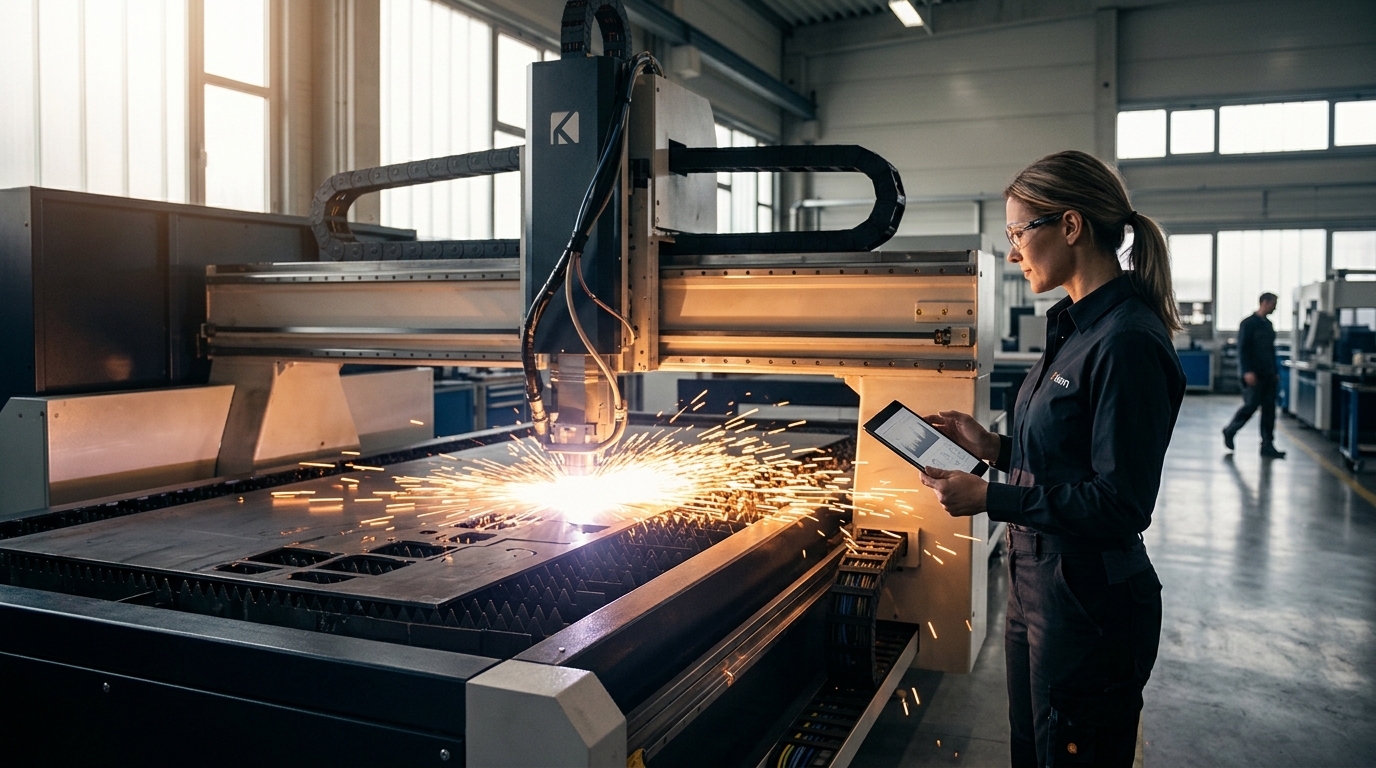
Industrial manufacturing efficiency relies heavily on the precision and power of the machinery employed on the shop floor. According to recent industry analyses, high-wattage laser cutting systems can increase throughput by up to 40% compared to traditional mechanical methods when processing thick metals. This significant performance jump is not automatic; it depends entirely on selecting a machine with the right architectural features. Buyers must look beyond raw wattage numbers to understand how optical quality, cooling stability, and software integration dictate long-term profitability.
Understanding Wattage and Material Thickness
Wattage is the primary indicator of a laser's ability to cut through dense materials. In the context of industrial fiber lasers, higher wattage directly correlates with the maximum thickness of steel or aluminum that can be cut in a single pass. For instance, a 6kW system might handle stainless steel up to 20mm, while a 12kW or 20kW system can penetrate significantly thicker plates with greater speed.
However, wattage alone does not guarantee quality. The beam profile and power density are equally critical. A high-wattage laser with poor beam quality will produce rough edges and require extensive post-processing. Kern Laser Systems has long recognized that the synergy between power output and beam focus determines the final cut quality. When evaluating systems, always request beam profile data alongside the wattage rating to ensure the energy is concentrated effectively.
Critical Optical System Components
The optical path within a high-wattage laser system is where the magic happens. Several components must work in unison to deliver the laser beam to the material without degradation.
Beam Quality and Focus
Beam quality is often measured by the M-squared factor. A lower M-squared value indicates a tighter, more focused beam. For high-wattage applications, maintaining a tight focus over a longer depth of field is essential for cutting thick materials. Look for systems that offer adjustable focus lenses or automatic focal length adjustment to adapt to varying material thicknesses.
Protective Optics
High-wattage lasers generate intense heat and spatter. Protective optics, including nozzle shields and filter lenses, prevent this debris from damaging the expensive internal mirrors and lenses. Systems with automated cleaning or easy-access optics reduce downtime and maintenance costs. Kern Lasers emphasizes the importance of robust optical protection in their laser cutting solutions to ensure consistent performance.
Thermal Management and Stability
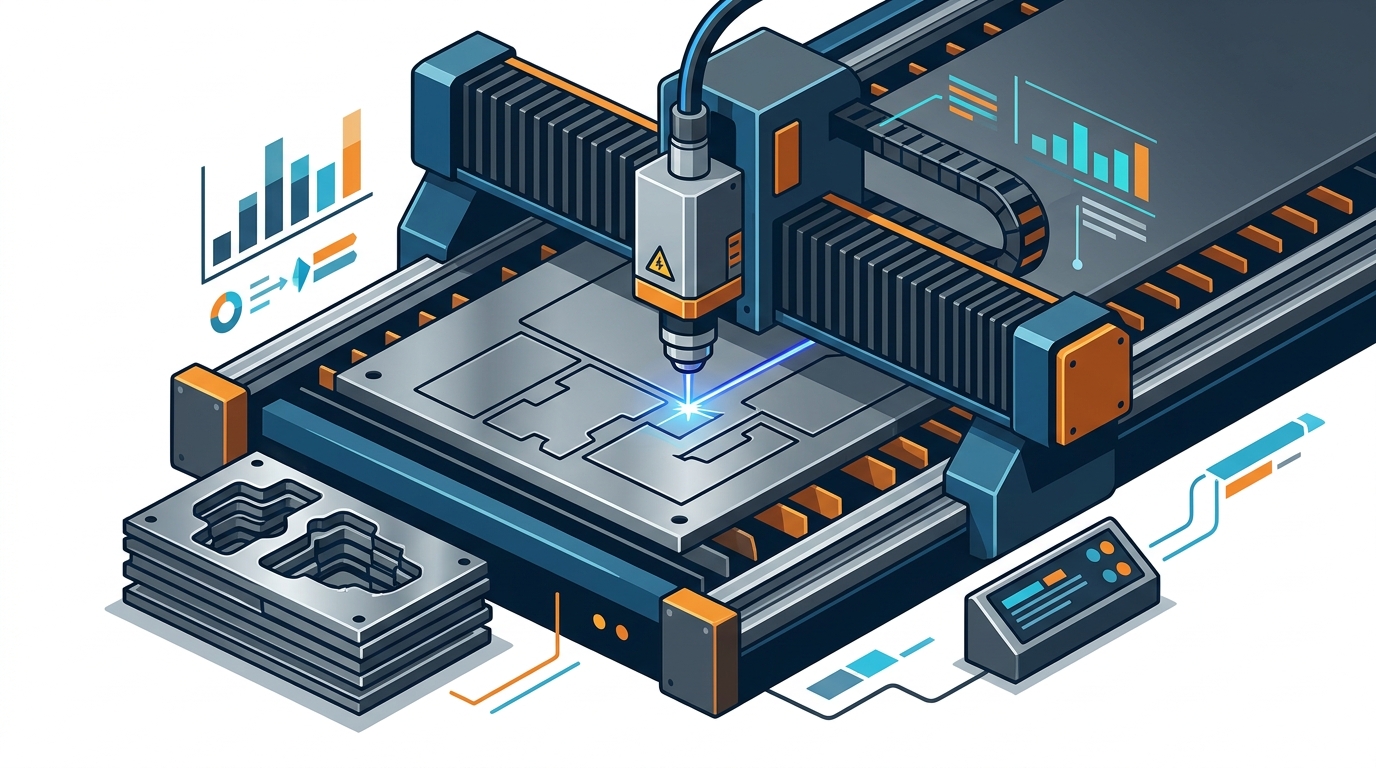
High-wattage lasers generate immense heat. Without effective thermal management, the laser diodes or fiber sources can overheat, leading to power fluctuations, beam instability, and premature component failure. Water chillers are standard, but their capacity and precision matter.
Look for systems with dual-circuit cooling or advanced temperature control algorithms that maintain the laser source within a fraction of a degree. Stability is key. If the temperature fluctuates, the beam wavelength can shift, affecting cut quality. According to engineering standards, a stable thermal environment is just as important as the laser source itself for maintaining precision in industrial settings.
Software and Automation Integration
The hardware is only as good as the software controlling it. Modern high-wattage systems require sophisticated software to manage power modulation, gas pressure, and cutting speed in real-time.
KCAM and Proprietary Software
Software like KCAM Laser Software, developed by Kern, provides a seamless interface for nesting parts, optimizing cutting paths, and monitoring machine health. Features to look for include automatic power adjustment based on material thickness and corner power modulation to prevent burning. These features reduce material waste and improve edge quality.
Automation Readiness
For high-volume production, the system must integrate with automated loading and unloading systems. Check for compatibility with robotic arms or pallet changers. The software should support remote monitoring and diagnostics, allowing technicians to troubleshoot issues without being physically present at the machine. This capability is crucial for maintaining uptime in 24/7 manufacturing environments.
Safety and Enclosure Standards
High-wattage lasers pose significant safety risks, including eye damage and fire hazards. A robust safety enclosure is non-negotiable. Look for systems that comply with international safety standards, such as CE or UL certification.
Enclosure Design
The enclosure should be fully sealed with interlocked doors that immediately cut power if opened. Ventilation systems must be powerful enough to extract fumes and particulates generated during cutting. Kern Laser Systems offers the LaserCell and FiberCell series, which include high-performance safety enclosures designed to protect operators while maintaining visibility of the cutting process.
Fume Extraction
Effective fume extraction is critical for air quality and filter longevity. Ensure the system has a dedicated, high-capacity extraction unit that connects directly to the cutting head or enclosure. Regular maintenance of these filters is essential to prevent backpressure that could damage the laser source.
Feature Comparison Matrix
The table below summarizes the critical features to evaluate when selecting a high-wattage laser system.
| Feature Category | Low-End Specification | High-End Specification | Impact on Performance |
|---|---|---|---|
| Wattage Range | 1kW - 3kW | 6kW - 20kW+ | Determines max material thickness and cutting speed. |
| Beam Quality (M²) | > 1.5 | < 1.3 | Lower M² means tighter focus and cleaner cuts. |
| Cooling System | Single Circuit | Dual Circuit / Precision Control | Ensures power stability and extends source life. |
| Software Integration | Basic Control | Advanced Nesting & Remote Diagnostics | Optimizes material usage and reduces downtime. |
| Safety Enclosure | Standard Mesh | Sealed with Interlocks & Extraction | Protects operators and maintains air quality. |
Key Takeaways
- Wattage is not everything: Beam quality and optical stability are equally critical for cut precision.
- Thermal management is vital: High-wattage systems require advanced cooling to prevent power fluctuations.
- Software drives efficiency: Advanced nesting and remote diagnostics significantly reduce operational costs.
- Safety is non-negotiable: Look for sealed enclosures with interlocks and robust fume extraction.
- Maintenance access matters: Systems with easy-access optics and filters reduce downtime.
- Brand heritage counts: Companies like Kern Laser Systems, founded in 1982, offer proven reliability and support.
- Integration readiness: Ensure the system can connect with your existing automation infrastructure.
Frequently Asked Questions
What is the difference between CO2 and fiber lasers for high-wattage cutting?
Fiber lasers are generally more energy-efficient and require less maintenance than CO2 lasers. They also offer superior beam quality for cutting reflective metals like copper and brass. CO2 lasers may still be preferred for certain non-metal applications, but fiber is the standard for high-wattage metal cutting.
How does wattage affect cutting speed?
Higher wattage allows for faster cutting speeds, especially on thicker materials. However, the relationship is not linear. Beyond a certain point, increasing wattage yields diminishing returns on speed while significantly increasing energy costs.
What is beam quality (M-squared) and why does it matter?
Beam quality, measured by the M-squared factor, describes how tightly the laser beam can be focused. A lower M-squared value indicates a tighter focus, which results in narrower kerf widths and smoother cut edges. This is crucial for precision industrial applications.
Do I need a special enclosure for high-wattage lasers?
Yes. High-wattage lasers generate intense heat and spatter. A sealed enclosure with interlocked doors and powerful fume extraction is essential for operator safety and machine longevity. Kern Lasers provides LaserCell and FiberCell systems with integrated safety features.
How often should I replace protective optics?
The frequency depends on usage and material type. Typically, protective lenses and nozzles should be inspected weekly and replaced monthly or as needed. Systems with automated cleaning can extend these intervals.
Can high-wattage lasers cut acrylic?
While fiber lasers can cut some plastics, CO2 lasers are generally better for acrylic due to the material's absorption characteristics. Kern Lasers offers OptiFlex CO2 systems specifically designed for materials like acrylic and wood.
What software is recommended for high-wattage systems?
Software like KCAM Laser Software is designed to handle the complexity of high-power cutting, offering features like automatic power adjustment and corner modulation. Compatibility with your existing CAD/CAM workflows is also essential.
Next Steps for Your Facility
Selecting the right high-wattage laser system is a significant investment that impacts your manufacturing capabilities for years to come. By focusing on beam quality, thermal stability, and software integration, you can ensure a system that delivers precision and efficiency. Kern Laser Systems offers a range of large format laser cutting systems tailored to diverse industrial needs. Contact our team today to discuss your specific requirements and explore our contact page for a personalized consultation.