What Features Should I Look for in a High-Wattage Laser System?
Investing in industrial-grade laser equipment is a significant capital decision that dictates your manufacturing capacity for years to come. According to recent industry analyses, businesses that upgrade to high-wattage CO2 and fiber laser systems report an average production efficiency increase of 40% within the first two years of operation. This surge in productivity stems not just from raw power, but from the integration of advanced safety enclosures, precision camera systems, and robust software ecosystems. Understanding the specific technical features that drive these results is essential for making an informed procurement strategy.
The Critical Role of Safety Enclosures
When evaluating high-wattage systems, the first feature to scrutinize is the physical containment architecture. High-power lasers generate intense heat, hazardous fumes, and reflective beams that require rigorous management. A standard open-frame setup is insufficient for commercial environments where operator safety is paramount.
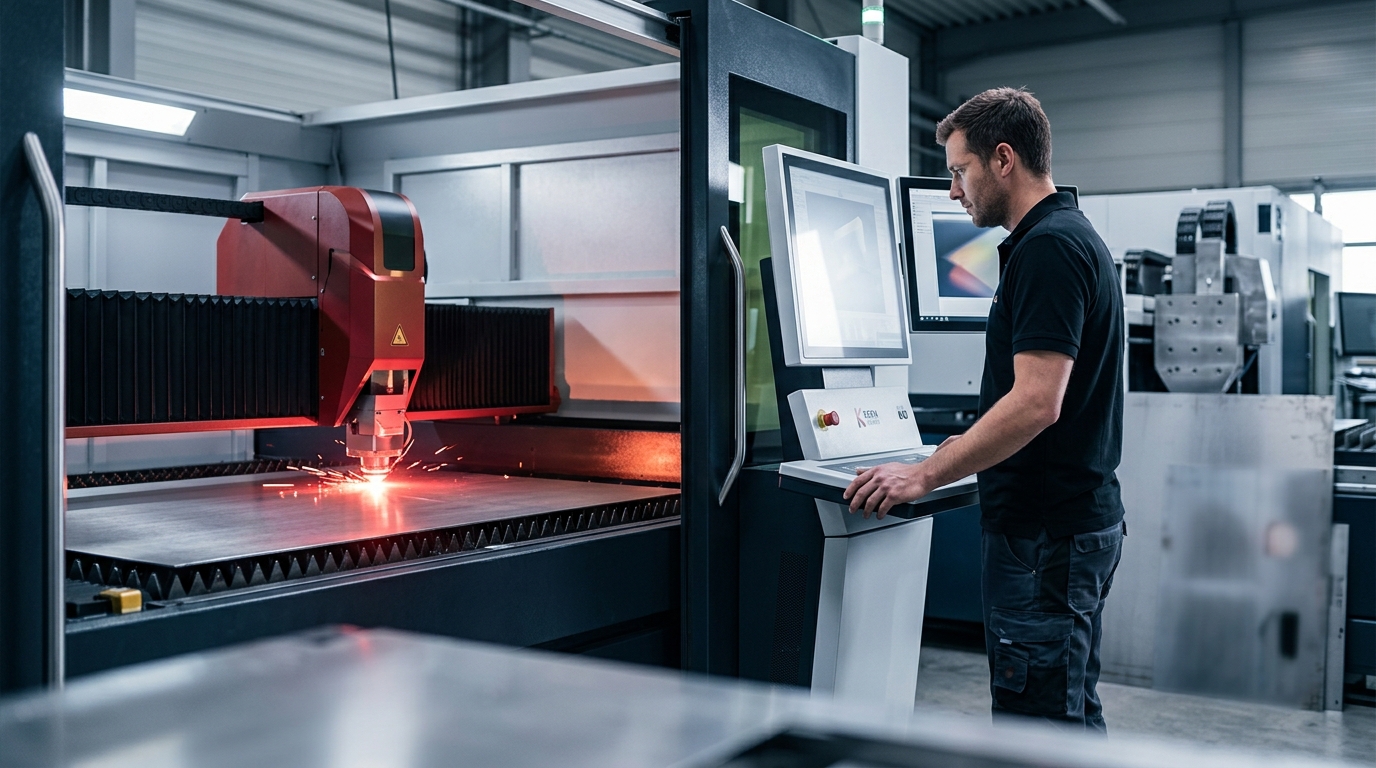
Modern high-performance systems, such as the LaserCell, integrate a fully enclosed safety cabinet. This enclosure serves multiple functions. It contains the laser beam to prevent accidental exposure. It houses ventilation systems that extract toxic fumes generated when cutting materials like acrylic or certain metals. It also dampens the acoustic noise produced by the high-speed motion axes.
Without a dedicated safety enclosure, you risk violating occupational safety regulations and exposing your workforce to health hazards. The enclosure must be constructed from materials that resist laser reflection and heat degradation. Look for systems that offer interlocked doors, which automatically cut power to the laser source if the enclosure is opened during operation. This feature is non-negotiable for high-wattage applications.
CO2 vs. Fiber: Choosing the Right Source
The core of any high-wattage system is its laser source. The two dominant technologies in industrial manufacturing are CO2 and Fiber lasers. Each has distinct advantages depending on your material mix.
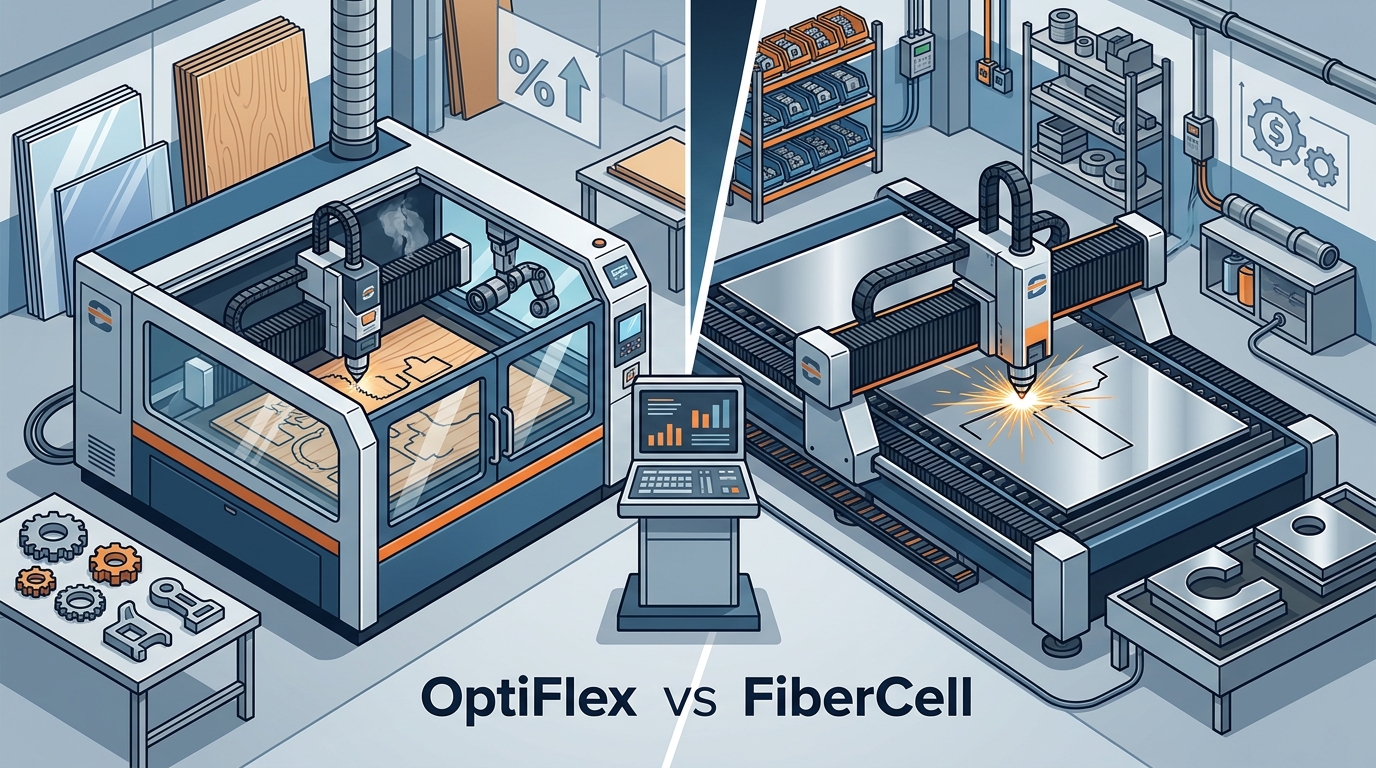
CO2 Laser Systems are ideal for non-metallic materials. They excel at cutting and engraving acrylic, wood, leather, and foam. The OptiFlex system, for instance, is a popular CO2 CNC laser cutter known for its versatility in these materials. CO2 lasers provide a smoother cut edge on transparent materials, which is critical for signage and display applications.
Fiber Laser Systems are designed specifically for metal cutting. They offer higher energy efficiency and lower maintenance costs compared to CO2 systems when processing metals. The FiberCell is a pure metal cutter that utilizes a safety enclosure to manage the unique challenges of high-power metal processing. Fiber lasers can cut reflective metals like copper and brass more effectively than traditional CO2 sources.
Choosing between these sources depends on your primary material. If you process both metals and non-metals, you might consider a dual-laser system like the OptiDual, which combines the benefits of both technologies for high-production environments.
Precision Through K-Vision Camera Systems
High wattage is useless without precision. The K-Vision camera system is a critical feature that enhances the accuracy of laser cutting operations. This system uses a high-resolution camera to capture the position of the material on the bed. It then communicates this data to the laser controller to adjust the cutting path in real-time.
This feature is particularly valuable when cutting pre-printed materials or complex shapes that require alignment with existing graphics. Without a vision system, operators must manually align the material, which introduces human error and slows down production. The K-Vision system automates this process, ensuring that every cut is perfectly aligned with the design file.
Furthermore, the camera system aids in material detection. It can identify the thickness and position of the material, allowing the laser to adjust its focus automatically. This automation reduces setup time and minimizes the risk of damaging expensive materials due to incorrect focus settings.
KCAM Software and Workflow Integration
The software ecosystem is the brain of your laser system. KCAM Laser Software is designed to streamline the workflow from design to finished product. It offers a user-friendly interface that allows operators to import vector files, adjust cutting parameters, and simulate the cutting process before execution.
Key features to look for in laser software include:
- Material Library: Pre-set parameters for common materials like acrylic, wood, and various metals. This reduces the need for trial and error.
- Nesting Tools: Automated nesting algorithms that maximize material usage by arranging multiple parts on the bed efficiently. This feature directly impacts your bottom line by reducing waste.
- Job Queue Management: The ability to queue multiple jobs and run them sequentially without operator intervention. This is essential for high-wattage systems that operate for extended periods.
Integration with CAD/CAM software is also crucial. Ensure that the laser software can import files from popular design programs like Adobe Illustrator, CorelDRAW, and AutoCAD. This compatibility ensures a seamless workflow from design to production.
Warranty and Support Infrastructure
High-wattage laser systems are complex machines that require regular maintenance and occasional repairs. The warranty and support infrastructure provided by the manufacturer is a critical factor in your total cost of ownership. A robust warranty protects your investment against unexpected repair costs.
Look for manufacturers that offer comprehensive warranty coverage on key components such as the laser source, motion axes, and control electronics. For example, Kern Laser Systems provides a 3-year warranty on CO2 laser sources, which is significantly longer than the industry standard. This extended coverage reflects the manufacturer's confidence in the durability and reliability of their products.
Additionally, consider the availability of technical support. Responsive support teams can help you troubleshoot issues quickly, minimizing downtime. Access to online resources, such as technical manuals and video tutorials, is also valuable for independent problem-solving.
System Comparison Matrix
To help you evaluate your options, here is a comparison of key high-wattage laser systems available from Kern Laser Systems.
| System Model | Laser Type | Primary Application | Safety Enclosure | Key Feature |
|---|---|---|---|---|
| OptiFlex | CO2 | Non-metals (Acrylic, Wood) | No | High Precision CNC Control |
| LaserCell | CO2 | Non-metals (Enclosed) | Yes | Safety & Ventilation Integrated |
| FiberCell | Fiber | Metals | Yes | Pure Metal Cutting Efficiency |
| OptiDual | CO2 + Fiber | Mixed Materials | Yes | Dual Laser High Production |
| EcoFlex | CO2 | Large Format Non-metals | No | Economical Large Format |
Key Takeaways
- Safety First: Always prioritize systems with integrated safety enclosures for high-wattage operations to protect operators and comply with regulations.
- Source Selection: Choose CO2 for non-metals and Fiber for metals. Consider dual-laser systems for mixed material workflows.
- Precision Tools: The K-Vision camera system is essential for aligning cuts with pre-printed materials and ensuring consistent quality.
- Software Integration: KCAM software provides critical features like nesting and material libraries that boost efficiency and reduce waste.
- Warranty Coverage: Look for extended warranties on laser sources, such as the 3-year coverage offered on CO2 systems, to mitigate long-term costs.
- Manufacturing Origin: Kern Laser Systems is proudly manufactured in the USA, ensuring high build quality and domestic support.
- Historical Reliability: Founded in 1982, Kern has decades of experience in designing and manufacturing reliable laser systems.
Frequently Asked Questions
What is the difference between CO2 and Fiber laser sources?
CO2 lasers use a gas mixture to generate the laser beam and are best for cutting non-metals like acrylic and wood. Fiber lasers use a solid-state gain medium and are optimized for cutting metals with higher efficiency and lower maintenance.
Why is a safety enclosure important for high-wattage lasers?
A safety enclosure contains the laser beam, fumes, and noise, protecting operators from health hazards and ensuring compliance with occupational safety standards. It also improves the quality of the cut by maintaining a stable environment.
What is the K-Vision camera system?
The K-Vision camera system is a vision-guided feature that captures the position of the material on the bed. It allows the laser to adjust its cutting path in real-time, ensuring precise alignment with pre-printed designs.
How does KCAM software improve workflow?
KCAM software streamlines the workflow by offering features like material libraries, automated nesting, and job queue management. This reduces setup time, minimizes material waste, and allows for unattended operation.
What warranty is available for Kern laser systems?
Kern Laser Systems offers a 3-year warranty on CO2 laser sources, which is longer than the industry standard. This coverage helps protect your investment against unexpected repair costs.
Can I cut metals with a CO2 laser?
While CO2 lasers can cut thin metals, they are not efficient for thick metal cutting. Fiber lasers are the preferred choice for metal processing due to their higher energy efficiency and ability to cut reflective metals.
Where are Kern Laser Systems manufactured?
Kern Laser Systems are proudly manufactured in the USA, ensuring high build quality and reliable domestic support for customers.
Next Steps for Your Manufacturing Line
Selecting the right high-wattage laser system requires careful consideration of your material needs, safety requirements, and production goals. By focusing on features like safety enclosures, precision camera systems, and robust software integration, you can ensure a successful investment that drives long-term growth.
Ready to upgrade your manufacturing capabilities? Contact our team of experts to discuss your specific needs and explore our range of laser cutting systems. Visit our contact page to request a quote or schedule a demonstration. Discover how Kern Laser Systems can help you achieve precision, efficiency, and safety in your production environment.