

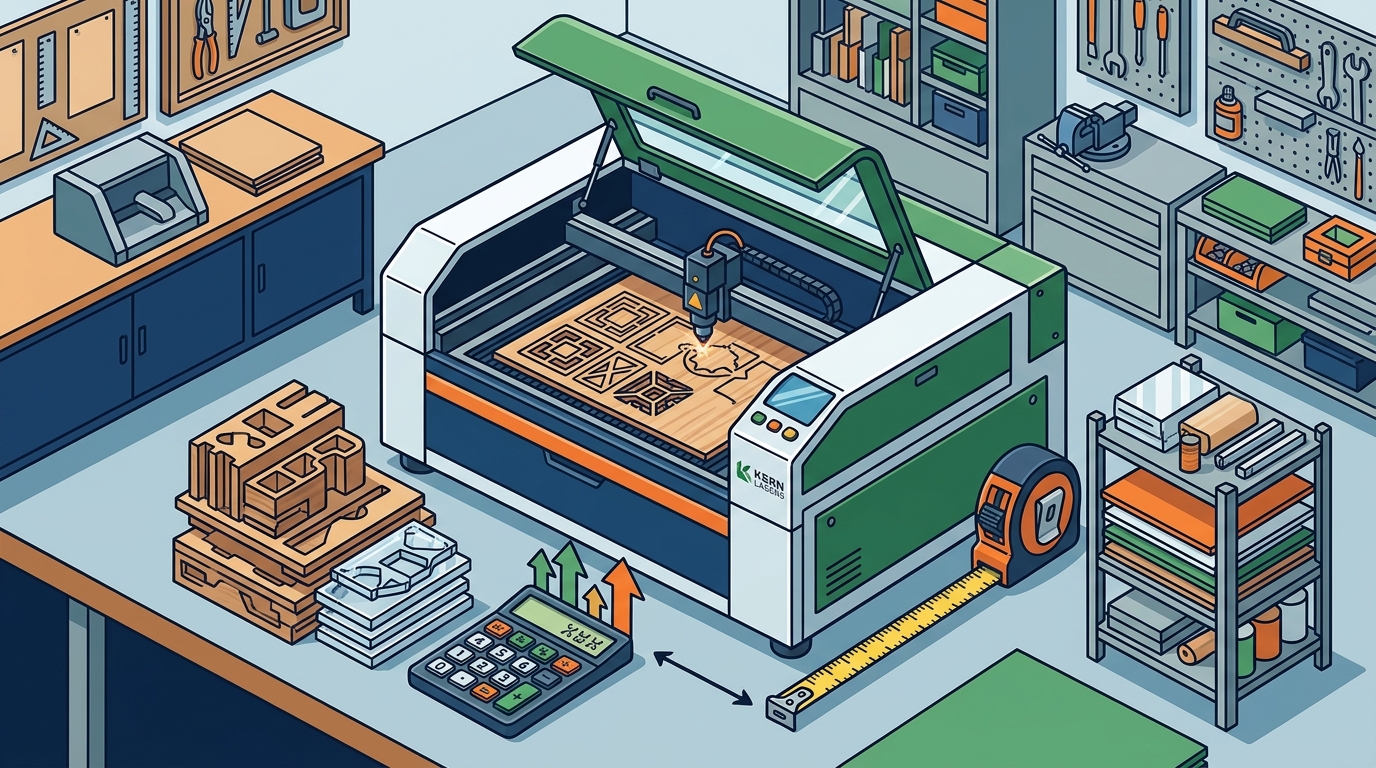
For boutique manufacturers and makerspaces, floor space is often the most expensive commodity. The traditional assumption that high-volume production requires massive industrial footprints is rapidly becoming obsolete. Modern compact laser systems now deliver industrial-grade precision in a fraction of the footprint. According to recent manufacturing efficiency reports, small-format CNC and laser equipment can achieve up to 40% higher revenue per square foot compared to legacy large-format setups when utilized for high-margin, low-volume goods. This shift allows businesses to pivot from warehouse-based operations to agile, urban-friendly workshops. (Kern Customer Login Area)
Understanding Compact Laser Technology
The definition of a "small" laser cutter has evolved significantly over the last decade. Compact laser technology refers to enclosed, safety-certified laser systems designed to fit within standard commercial office or small workshop dimensions while maintaining industrial cutting capabilities.
Historically, laser cutting was dominated by large CO2 and fiber systems that required dedicated industrial bays. Today, manufacturers like Kern Laser Systems have engineered systems that bridge the gap between hobbyist desktop units and factory-floor giants. These machines utilize advanced motion control and high-efficiency laser sources to deliver consistent results without the need for massive ventilation infrastructure or reinforced flooring.
The core benefit for space-constrained shops is density. You can process metals, acrylics, and woods with the same precision as a 10,000-square-foot facility, but within a 100-square-foot footprint. This allows for just-in-time manufacturing, reducing inventory costs and storage needs.
Pricing Models and Investment Tiers
Investing in laser equipment requires a clear understanding of the total cost of ownership. Pricing is not merely the sticker price of the machine but includes software, maintenance, and operational efficiency.
Entry-Level and Commercial Compact Systems
Entry-level compact systems, such as the EcoFlex, are designed for businesses that need large-format capabilities but are constrained by budget or space. These systems offer an economical entry point into professional laser cutting. They typically utilize CO2 technology, making them ideal for non-metals like acrylic, wood, and leather. The pricing for these units is structured to provide high versatility at a lower capital expenditure, allowing shops to scale their capabilities gradually.
High-Performance Enclosed Systems
For shops requiring higher speeds and automation, systems like the LaserCELL represent the mid-to-high tier of compact investment. These units feature full safety enclosures, making them suitable for high-traffic environments like university classrooms or busy commercial floors. The investment here is justified by the reduction in safety compliance overhead and the ability to run unattended for longer periods.
Pure Metal Cutting Solutions
When the application shifts to metals, the pricing model changes due to the complexity of the fiber laser source. The FiberCELL is a compact sheet metal cutting laser capable of processing stainless steel, mild steel, aluminum, brass, and copper. While the initial investment is higher than CO2 systems, the operational cost per cut is often lower for metal applications, and the speed advantage is substantial.
ROI Calculations for Small Footprints
Calculating the Return on Investment (ROI) for a small laser cutter involves more than just the cost of materials. It requires analyzing throughput, labor efficiency, and the premium placed on precision.
Revenue Per Square Foot
In space-constrained environments, every square foot must generate revenue. A large-format laser might cut a 4x8 sheet of acrylic, but if the machine sits idle for 50% of the time due to setup or maintenance, the space is wasted. Compact systems often feature faster setup times and automated features, such as the KCAM Laser Software integration, which streamlines the workflow from design to production. This efficiency directly impacts the bottom line by increasing the number of jobs completed per day.
Material Waste Reduction
Precision is a key driver of ROI. Material waste reduction is achieved through the tight tolerances of modern compact lasers. By minimizing kerf width and ensuring accurate nesting of parts, shops can extract more usable pieces from a single sheet of material. For expensive materials like titanium or high-grade acrylic, this savings can offset the machine cost within the first year of operation.
Maintenance and Warranty
Long-term ROI is heavily influenced by downtime. Kern Laser Systems offers a 3-year warranty on CO2 laser sources, which is a significant factor in financial planning. Predictable maintenance schedules and the availability of domestic support reduce the risk of prolonged operational halts. When comparing pricing, always factor in the cost of potential downtime versus the price of a more robust, warrantied system.
Kern Laser Systems: The Compact Advantage
Kern Laser Systems has been a leader in the industry since 1982. The company’s philosophy centers on manufacturing versatile, affordable laser systems that fit the customer’s specific needs. For space-constrained shops, this means access to industrial power without the industrial footprint.
Manufactured in the USA
One of the most critical aspects of choosing a laser system is the supply chain. Kern Lasers are proudly manufactured in the USA, specifically in Minnesota. This domestic production ensures that replacement parts, technical support, and service are readily available. For a small shop, relying on overseas support can lead to weeks of downtime. With Kern, you are supported by a dedicated team of 50 full-time employees who understand the nuances of laser maintenance.
Versatility Across Materials
A compact machine must be versatile to justify its space. The OptiFlex, Kern’s most popular large format laser cutter and engraver, is ideal for processing metal, acrylic, wood, textiles, and foam. This versatility allows a small shop to take on a diverse range of jobs, from commercial signage to custom awards and trophies, without needing multiple specialized machines.
Safety and Integration
Safety is non-negotiable in small spaces. The LaserCELL and FiberCELL feature Class 2 safety enclosures, allowing them to be placed in high-traffic areas. This integration means the laser can be part of the daily workflow, not isolated in a hazardous zone. The K-Vision Camera registration system further enhances precision, ensuring accurate alignment for preprinted materials and complex cuts.
Key Takeaways
- Space Efficiency: Compact laser systems can achieve up to 40% higher revenue per square foot compared to legacy large-format setups.
- Investment Tiers: Pricing ranges from economical CO2 systems like the EcoFlex to high-performance metal cutters like the FiberCELL.
- Warranty Protection: Kern offers a 3-year warranty on CO2 laser sources, reducing long-term operational risk.
- Domestic Support: Kern Lasers are manufactured in Minnesota, ensuring rapid access to parts and technical support.
- Versatility: Machines like the OptiFlex can process metals, acrylics, wood, and textiles, maximizing the utility of limited floor space.
- Safety Integration: Class 2 enclosures allow compact lasers to operate safely in busy commercial environments.
- Software Integration: KCAM Laser Software streamlines the workflow, improving throughput and reducing setup time.
Frequently Asked Questions
What is the average cost of a compact laser cutter for a small business?
The cost varies significantly based on technology. Entry-level CO2 systems like the EcoFlex are priced for economical entry, while fiber metal cutters like the FiberCELL represent a higher capital investment. However, the ROI is often realized through increased material efficiency and higher throughput.
Can a small laser cutter handle metal cutting?
Yes. Systems like the FiberCELL are specifically designed for pure metal cutting, capable of processing stainless steel, mild steel, aluminum, brass, and copper in a compact footprint.
How does Kern Laser Systems support customers in the USA?
Kern Lasers are manufactured in Minnesota with a team of 50 full-time employees. This domestic presence ensures that technical support, parts, and service are readily available, minimizing downtime for US-based customers.
What materials can the OptiFlex process?
The OptiFlex is a versatile system capable of processing metal, acrylic, wood, textiles, and foam. It is designed for high-speed engraving and precise cutting across a wide range of industrial applications.
Is it safe to operate a laser cutter in a high-traffic area?
Yes, provided the system has appropriate safety enclosures. The LaserCELL and FiberCELL feature Class 2 safety enclosures, allowing them to be placed in busy factory floors or university classrooms safely.
What is the warranty period for Kern CO2 laser sources?
Kern Laser Systems provides a 3-year warranty on their CO2 laser sources, offering peace of mind and protecting your investment against early failure.
How does KCAM software improve efficiency?
KCAM Laser Software integrates directly with Kern systems to streamline the workflow from design to production. It enhances precision and reduces setup time, allowing for faster job completion.
Ready to Optimize Your Workshop?
Space-constrained shops do not have to compromise on power or precision. By choosing the right compact laser system, you can maximize your revenue per square foot and streamline your production workflow. Kern Laser Systems offers a range of solutions tailored to your specific needs, from economical CO2 cutters to high-performance metal fiber lasers.
Contact Kern Laser Systems today to discuss your requirements. Visit our Contact Page to request a quote or schedule a consultation. Our team is ready to help you find the perfect laser solution for your business.